
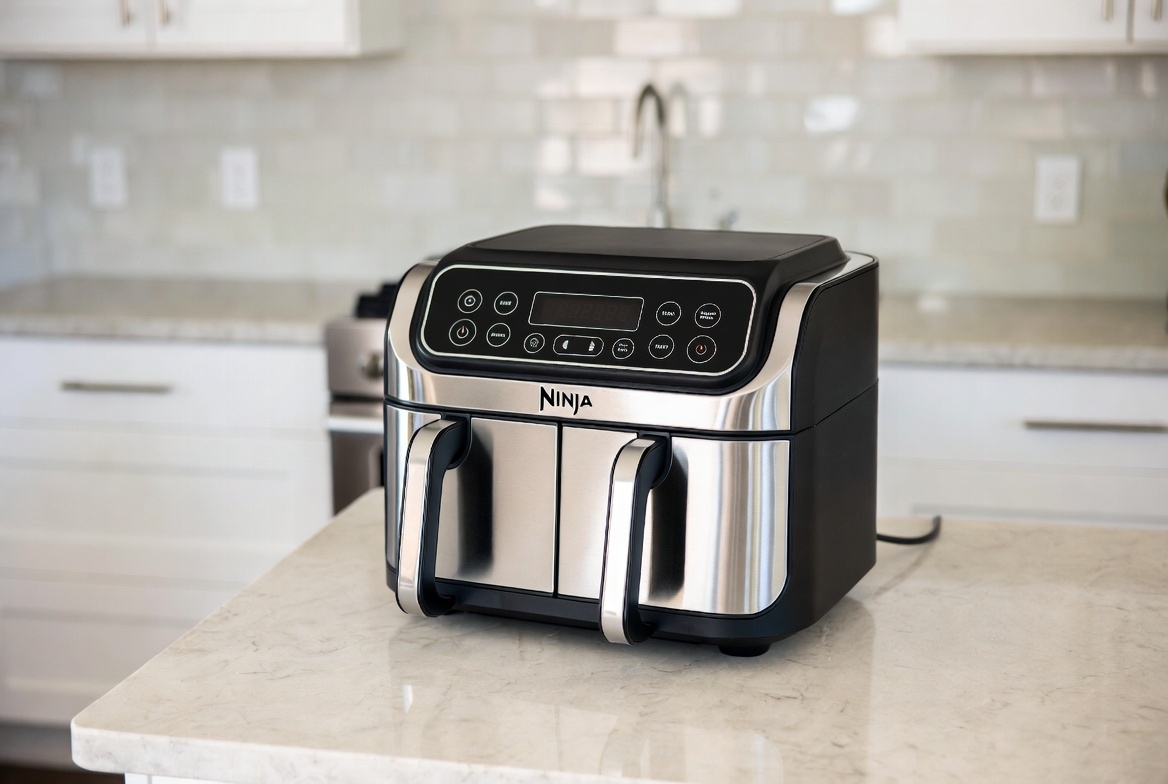
Instant vs Philips Air Fryer: Which One Is Worth Buying?
You’re standing in the kitchen appliance aisle, scrolling through online reviews, and you keep coming back to the same question: should you invest in an Instant air fryer or go with Philips? I get it. The air fryer market has exploded in recent years, and choosing between two heavyweight brands can feel overwhelming. Both have stellar reputations, passionate customer bases, and impressive cooking capabilities. But here’s the thing—they’re not the same, and understanding their differences could save you money while helping you find the perfect fit for your cooking style.
Think of this decision like choosing between two excellent restaurants. They both serve quality food, but one specializes in speed while the other focuses on precision. Let me walk you through everything you need to know to make an informed choice.
Understanding Air Fryer Technology: The Basics
Before we dive into the specifics of Instant versus Philips, let’s talk about what makes an air fryer actually work. An air fryer isn’t magic—it’s actually a countertop convection oven that circulates hot air at incredibly high speeds. This rapid air circulation cooks food quickly while creating that crispy exterior we all crave, without needing loads of oil. Both Instant and Philips use this fundamental technology, but they’ve engineered their approaches differently.
How Convection Heating Works
The heating element gets extremely hot, and a powerful fan distributes that heat evenly throughout the cooking chamber. This is where the real difference between brands emerges—the efficiency of their heating elements and fan designs determines how evenly your food cooks and how quickly it gets done.
Instant Air Fryer: What You Need to Know
The Brand Background
Instant, owned by Instant Brands, became a household name through their Instant Pot pressure cookers. When they entered the air fryer market, they brought that same “kitchen workhorse” mentality. They’ve released several models, including the Instant Vortex series, which has captured significant market share.
Key Features of Instant Air Fryers
Instant air fryers typically come with several distinctive advantages. First, they’re generally more affordable than comparable Philips models. Second, they often feature straightforward digital controls with preset cooking programs. Many Instant models include a large capacity basket, which is fantastic if you’re feeding a family or entertaining guests.
- Multiple preset cooking functions (fries, chicken, steak, vegetables, and more)
- Typically ranges from 6-quart to 10-quart capacity options
- More budget-friendly pricing
- Faster preheating times in most models
- Simple, intuitive touchscreen controls
Performance Characteristics
From my research and user feedback, Instant air fryers excel at batch cooking. If you want to make a large tray of chicken wings for game day or prepare multiple servings of French fries simultaneously, these units deliver. The basket design is usually more spacious, though sometimes at the cost of some cooking precision in certain scenarios.
Philips Air Fryer: Premium Engineering Explained
Brand Heritage and Innovation
Philips actually invented the first commercial air fryer technology back in 2010. They didn’t just create the product category—they’ve spent over a decade perfecting it. This heritage matters because it shows in their product design and cooking results. Philips air fryers carry a reputation for precision and reliability.
Signature Features of Philips Models
Philips air fryers distinguish themselves through their engineering approach. They typically feature a unique heating element configuration and proprietary fan design that they claim provides superior heat distribution and crispier results.
- Advanced TurboStar technology (in premium models) for even cooking
- Smaller, more compact footprints
- Premium build quality with steel components
- Usually priced higher than equivalent Instant models
- Emphasis on cooking consistency and precision
Performance Excellence
Philips air fryers are like the precision instruments of the air fryer world. They typically cook food more evenly, with better browning and crisping. However, they usually have smaller capacities than Instant models, which is the trade-off for that precision.
Design and Build Quality Comparison
Instant’s Design Philosophy
Instant models embrace a utilitarian design. They’re often available in metallic finishes, have clear digital displays, and feature straightforward button layouts. The overall aesthetic is “kitchen appliance” rather than “premium countertop decor.” Many users appreciate this no-nonsense approach because it means more money goes toward functionality rather than sleek design.
Philips’s Design Approach
Philips designs air fryers with aesthetics in mind. Their models typically feature premium finishes, touch controls, and a more upscale appearance. They’re the appliances you don’t mind leaving on your counter because they look intentional and sophisticated.
Material Quality
Both brands use quality materials, but they approach durability differently. Instant models often feature plastic housing with metal cooking baskets, which is cost-effective and durable. Philips tends to incorporate more stainless steel components, contributing to their premium feel and higher price point.
Cooking Performance and Results: The Real Test
Crispiness Factor
Here’s where things get interesting. Philips air fryers generally produce slightly crispier results due to their TurboStar technology, which uses a specially designed heating element and air circulation pattern. However—and this is important—Instant models produce excellent results too, especially when you shake the basket halfway through cooking.
Cooking Speed
Both brands preheat quickly, but Instant models often have a slight edge in speed. This is because they sacrifice some of the precision engineering that Philips includes, resulting in faster but sometimes less even cooking if you’re not careful.
Temperature Range and Control
Most Instant models range from 150°F to 400°F, while Philips models typically go from 140°F to 400°F. The difference is negligible for most cooking tasks, but Philips’s lower minimum temperature offers slightly more flexibility for delicate foods.
Capacity and Size Considerations
Finding the Right Size for Your Needs
This is where the models diverge significantly. Instant offers larger capacities—many models come in 8-quart or 10-quart options. Philips typically maxes out around 7 quarts. If you have a large family or frequently entertain, Instant’s capacity advantage could be a game-changer.
Countertop Space
If kitchen space is limited, Philips models’ more compact design becomes valuable. They take up less real estate while still providing adequate cooking capacity for most households. Instant models are chunkier and require more counter space.
Cooking Chamber Dimensions
Beyond overall capacity, the shape and depth of the cooking basket matter. Instant’s larger baskets are wider but sometimes shallower, while Philips baskets are more compact but accommodated differently. For foods like whole chicken or large cuts of steak, basket dimensions matter more than raw volume.
User Interface and Ease of Use
Control Panel Differences
Instant air fryers typically feature digital LED displays with physical buttons. They’re straightforward and never fail, even if the touchscreen technology ages. Philips models, particularly newer versions, use touchscreen interfaces that feel more modern but require hand-washing rather than just wiping down.
Learning Curve
If you value simplicity, Instant wins. With preset programs for common foods and clearly marked temperature and time dials, you’re cooking within minutes of unboxing. Philips models require slightly more exploration, though they’re still intuitive. The trade-off is that Philips’s interface gives you finer control once you understand it.
Smartphone Connectivity
Some premium Philips models offer app connectivity for remote monitoring, which is a nice feature if you want to check cooking progress from another room. Most Instant models don’t offer this, keeping things simple and wireless-free.
Price Point and Value for Money
Entry-Level Pricing
An Instant air fryer will typically cost between $80-$150 for a quality model. Philips models generally start around $150 and can exceed $300 for premium versions. If budget is your primary concern, Instant offers better initial value.
Long-Term Value Analysis
Here’s where it gets complex. While Instant costs less upfront, Philips’s longer lifespan and superior consistency might justify the premium for frequent users. Think of it like buying a reliable car versus a budget option—initial cost differs, but total cost of ownership depends on longevity.
Warranty and Coverage
Both brands typically offer 1-year limited warranties. Instant sometimes provides longer coverage on certain models, which adds to their value proposition. Check the specific model’s warranty terms before purchasing.
Cleaning and Maintenance Requirements
Basket and Tray Design
Both brands feature removable, dishwasher-safe baskets and trays. However, Instant’s larger baskets can be trickier to maneuver in a dishwasher due to their size. Philips’s more compact baskets fit more easily into standard dishwashers.
Maintenance Frequency
Air fryers require minimal maintenance—basically cleaning the basket after each use and occasionally wiping the heating element. Both brands make this equally straightforward. There’s no oil to dispose of or complex filters to replace, which is one of air fryers’ greatest advantages over traditional deep fryers.
Longevity and Durability
Philips models, due to their premium construction, generally last longer with consistent performance. Instant models are durable too, but some users report performance degradation after a couple of years. This isn’t universal, but it’s something to consider.
Safety Features and Protection
Built-In Safety Mechanisms
Both brands include auto-shutoff features, cool-touch exteriors, and thermal protection. These standard safety features are comparable across both lines. Neither brand has a significant advantage here, which is reassuring because safety shouldn’t be a differentiator—it should be standard.
Handle Design
Instant models typically feature larger handles that some users find easier to grip, especially with oven mitts on. Philips handles are more refined but occasionally smaller. If you have arthritis or dexterity concerns, Instant’s handle design might be preferable.
Real-World Cooking Scenarios: Which Wins?
Scenario One: Making French Fries
Both air fryers excel here. Instant’s larger capacity means you can make more fries at once without crowding the basket. Philips produces slightly crispier results. Winner? It depends—volume lover? Instant. Texture perfectionist? Philips.
Scenario Two: Roasting Vegetables
Philips’s more even heat distribution creates uniformly browned vegetables. Instant also produces great results but might require basket shaking midway through. Edge goes to Philips for hands-off convenience.
Scenario Three: Batch Cooking for Guests
Instant dominates here. With a 10-quart capacity, you can prepare multiple servings without waiting for batch cycles. For entertaining, Instant’s size advantage is decisive.
Scenario Four: Cooking Delicate Items
Philips’s finer temperature control and more precise heating make it better for delicate foods like fish or pastries. Instant can handle these foods, but requires more attention and temperature adjustment.
Energy Efficiency: Running Costs
Both air fryers use similar wattage, typically between 1400-1700 watts. This means running costs are virtually identical. Neither brand has an energy efficiency advantage that would justify a purchase decision. You’re looking at pennies per month in operating costs either way, making this a non-factor in your decision.
However, air fryers in general are more energy-efficient than traditional ovens because they cook faster and use less total energy. So whichever you choose, you’re already making an environmentally conscious decision.
Conclusion: Which Air Fryer Should You Actually Buy?
After examining both brands comprehensively, here’s my honest take: there’s no universally “correct” answer because it depends entirely on your specific needs and priorities.
Choose Instant if:
- You’re budget-conscious and want quality without premium pricing
- You cook for a large family or frequently entertain groups
- You prefer simple, straightforward controls without unnecessary complexity
- You want faster preheating and cooking times
- You value capacity over precision
Choose Philips if:
- You have a higher budget and want premium engineering
- You’re a cooking perfectionist who values texture and consistency
- Your kitchen space is limited and you need a compact appliance
- You want an air fryer that looks upscale on your countertop
- You value brand heritage and innovative technology
The reality? You’d be satisfied with either purchase. Both are excellent air fryers made by reputable companies. Instant offers better value for the money and larger capacities. Philips offers superior precision and premium build quality. Your decision ultimately hinges on whether you prioritize affordability and capacity (Instant) or precision and aesthetics (Philips).
Frequently Asked Questions
Can I use both air fryers to cook the same recipes?
Yes, absolutely. The fundamental cooking method is identical—both use rapidly circulating hot air. You might need slight temperature or time adjustments between brands, but any recipe designed for one will work with the other. You may need to adjust cooking times slightly due to capacity and heating element differences, but you won’t encounter compatibility issues.
![What Is The Best Easy Recipes for Air Fryer [In 2026]](https://homeunderstandable.com/wp-content/uploads/2026/03/Best-Easy-Recipes-for-Air-Fryer-768x516.jpg)


![5 Best Air Fryer for Chicken Cutlets [In 2026]](https://homeunderstandable.com/wp-content/uploads/2026/03/5-Best-Air-Fryer-for-Chicken-Cutlets-768x516.jpg)

![5 Best Air Fryer for 6 People [In 2026]](https://homeunderstandable.com/wp-content/uploads/2026/03/5-Best-Air-Fryer-for-6-People.jpg)