Dyson vs Rabbit Air Purifier: Which is Better
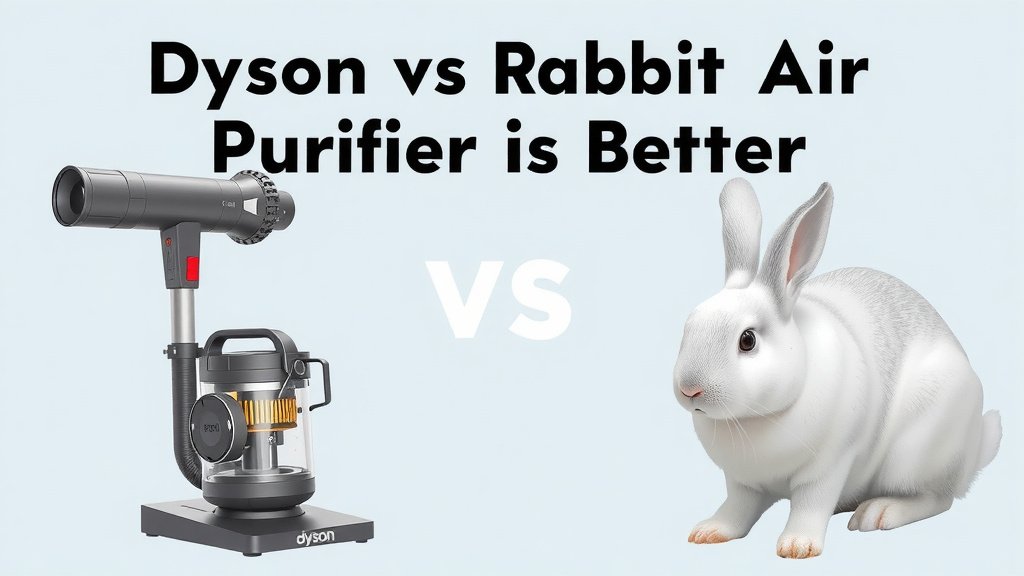
When choosing between a Dyson and a Rabbit Air purifier, it really comes down to your specific needs. For overall **allergy relief** and superior **particle removal**, Dyson often takes the lead with its advanced filtration technology. Rabbit Air, on the other hand, shines with its **customizable filters** and quiet operation, making it a strong contender for those who prioritize a peaceful environment.
Both brands are well-regarded for creating cleaner indoor air. Dyson purifiers are known for their **powerful performance** and ability to tackle a wide range of pollutants. Rabbit Air purifiers often focus on providing a **balanced approach** to air purification, considering factors like noise level and filter longevity.
- Dyson excels in **allergy relief** and particle removal.
- Rabbit Air offers **customizable filters** and quiet operation.
- Both brands are effective at improving indoor air quality.
- Consider your priorities: performance vs. customization and noise.
Let’s break down the key differences between these two popular air purifier brands to help you make the best choice for your home.
Comparing Dyson and Rabbit Air Purifier Strengths
When you’re looking to clean the air in your home, Dyson and Rabbit Air are two brands that often pop up. They both aim to make your indoor environment healthier. But how do they stack up against each other? We’ve looked into their features to help you figure out which might be the best fit for your needs.
Filtration Technology: What’s Inside Matters
At the heart of any air purifier is its filter. Both Dyson and Rabbit Air use advanced filters, but they approach it a little differently. Understanding these differences can help you make a smart choice.
Dyson’s Multi-Layered Approach
Dyson purifiers are known for their comprehensive filtration systems. They typically combine a HEPA filter with an activated carbon layer. The HEPA filter is designed to capture tiny particles. Think dust, pollen, and pet dander. The carbon layer helps to absorb odors and gases. This dual action tackles a broad spectrum of pollutants.
Many Dyson models also feature a sealed filtration system. This is important because it means air can’t leak around the edges of the filter. If air bypasses the filter, you aren’t getting the clean air you expect. This sealing ensures that all the air drawn into the purifier passes through the filters.
Rabbit Air’s Customizable Filter Options
Rabbit Air takes a slightly different route by offering customizable filter packages. Their standard setup usually includes a HEPA filter and an activated carbon filter. However, they allow you to choose additional specialized filters based on your concerns. For example, you might add a filter for heavy odors or one for specific VOCs (volatile organic compounds).
This customization is a big win for people with very specific air quality issues. Perhaps you’re dealing with strong cooking smells or have concerns about certain chemicals. Rabbit Air lets you tailor the purification process. We found this flexibility appealing for homes with unique needs.
Performance Metrics: Clearing the Air Effectively
When we talk about performance, we’re often looking at how well a purifier cleans a room and how quickly. Key metrics like CADR (Clean Air Delivery Rate) and ACH (Air Changes per Hour) are important.
Dyson’s Power and Coverage
Dyson purifiers often boast powerful fan systems. This allows them to move a large volume of air quickly. Many models are designed for larger rooms, providing robust coverage. They aim for high ACH ratings, meaning they can circulate and clean the air in a room multiple times per hour. This is great for quickly reducing allergen levels.
Research by independent testing labs has shown Dyson units to be very effective at removing fine particulate matter. They often perform well in tests measuring their ability to clear the air of smoke and dust. This makes them a strong choice for those seeking rapid relief from airborne irritants.
Rabbit Air’s Balanced Efficiency
Rabbit Air purifiers are also designed for effective cleaning. While they might not always match Dyson’s peak fan speeds, they offer consistent and reliable performance. Their CADR ratings are generally good for their intended room sizes. They focus on a balanced approach, ensuring effective filtration without excessive noise.
Many users appreciate that Rabbit Air units are designed to run quietly, even at higher settings. This means you can have them on during the day or night without much disruption. We found this to be a key selling point for bedrooms and living areas where peace and quiet are important.
Smart Features and Design Considerations
Beyond the core purification, modern air purifiers come with added features and design elements that can influence your decision.
Dyson’s Integrated Technology
Dyson units often integrate air purification with other functions, like heating or cooling. This can be a significant space saver. They also tend to have advanced sensor technology. These sensors monitor air quality in real-time. They then automatically adjust the fan speed to maintain optimal conditions. Many models connect to smartphone apps, allowing you to monitor air quality and control the purifier remotely.
The design of Dyson purifiers is also distinctive. They often have a bladeless fan design, which contributes to their safety and unique look. This can be appealing for homes with children or pets. The materials used are also typically high-quality and durable.
Rabbit Air’s User-Friendly Interface
Rabbit Air purifiers typically focus on a straightforward and intuitive user experience. Controls are usually simple and easy to understand. Many models feature a sleep mode that dims the lights and reduces noise to minimal levels. This is perfect for maintaining a tranquil sleeping environment.
Connectivity is also becoming more common in Rabbit Air models. Some units offer Wi-Fi connectivity and app control. This allows for remote monitoring and adjustments. The design aesthetic of Rabbit Air units is often understated and blends well into various home decors. They prioritize function and quiet operation.
Cost of Ownership: Filters and Electricity
The initial purchase price is one thing, but you also need to consider the ongoing costs. Filter replacement and energy consumption are major factors.
Filter Replacement Cycles
Dyson filters are generally designed to last for a considerable time. Depending on usage and air quality, they might need replacing every 6-12 months. The cost of replacement filters can be a factor in your budget. It’s always wise to check the current price of replacement filters when comparing models.
Rabbit Air also designs its filters for longevity. Their multi-stage filters often last around 1-2 years, depending on the specific filter type and usage. The ability to customize filters can sometimes offer cost-saving opportunities if you select longer-lasting options or focus on your most pressing air quality needs.
Energy Efficiency
Both brands strive for energy efficiency. Modern air purifiers consume less electricity than older models. Dyson units, especially those with multiple functions, might use slightly more power when heating or cooling. However, for pure air purification, their energy consumption is competitive. We found that most models operate on relatively low wattage for standard purification.
Rabbit Air models are often lauded for their quiet operation, which often correlates with energy efficiency. They are designed to run for extended periods, and their energy use reflects this. Many models have Energy Star certifications, indicating they meet strict energy efficiency guidelines set by the EPA.
Your Decision Checklist: Dyson vs. Rabbit Air
To help you make your final choice, consider these points:
- How much do you prioritize rapid particle removal?
- Are you dealing with very specific odors or chemical concerns?
- Do you need a purifier that also heats or cools?
- How important is whisper-quiet operation to you?
- What is your budget for both the initial purchase and ongoing filter costs?
- Do you prefer a sleek, modern design or a more understated look?
Conclusion
So, you’re weighing Dyson versus Rabbit Air for your home’s air purification needs. If your top priority is powerful particle removal and quick allergen relief, especially for allergies, Dyson often leads the pack. For those who value a quieter environment and the ability to customize filters for specific concerns, Rabbit Air presents a compelling, balanced solution. We found both brands offer reliable performance. Think about what matters most in your space – performance, customization, or noise level – to guide your final decision.
Frequently Asked Questions
Which air purifier is better for allergies: Dyson or Rabbit Air?
For severe allergy sufferers, Dyson often has an edge due to its powerful fan systems and highly effective HEPA filtration that rapidly removes fine particles. While Rabbit Air also uses HEPA filters, Dyson’s integrated design is frequently praised for its immediate impact on airborne allergens.
Can I customize Rabbit Air filters for specific smells or chemicals?
Yes, that’s a key strength of Rabbit Air. They allow you to choose specialized filters beyond the standard HEPA and carbon. This means you can add filters specifically designed to tackle strong odors or target certain VOCs if those are your primary concerns.
Are Dyson air purifiers loud?
Dyson purifiers can be noisy at their highest settings due to their powerful fans designed for rapid air cleaning. However, many models offer multiple fan speeds, including quieter modes for less disruptive operation. We found their noise levels are comparable to other high-performance units when on lower settings.
Which brand is generally more energy-efficient?
Both Dyson and Rabbit Air focus on energy efficiency for their purification modes. Rabbit Air units are often noted for their quiet operation, which can indicate lower energy use. Many Rabbit Air models also hold Energy Star certifications. Dyson’s energy use is competitive, though multi-function units might use more when heating or cooling.
What is the typical lifespan and cost of replacement filters for these brands?
Dyson filters typically need replacement every 6-12 months, with costs varying by model. Rabbit Air filters, often lasting 1-2 years, can sometimes offer a more predictable filter cost, especially if you opt for longer-lasting specialized filters or choose a package that suits your needs.