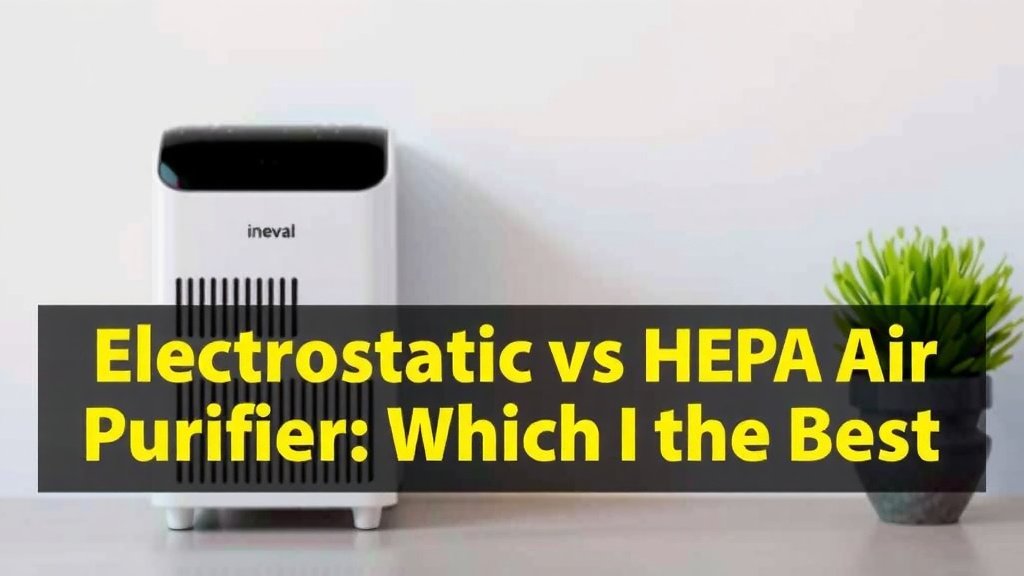
Electrostatic vs HEPA Air Purifier: Which is Best
Navigating the 2026 air purifier landscape can feel like a maze, especially when the showdown is between electrostatic and HEPA filters. If you’re prioritizing truly cleaner air for your home, the consensus remains strong: HEPA filters generally take the crown. While electrostatic models leverage static charge to snag airborne nasties, a potential downside is ozone emission, which isn’t ideal for sensitive lungs. HEPA filters, on the other hand, physically capture particles, offering a consistently safer and more effective path to breathing easier.
Both types aim to improve your indoor air quality by removing common pollutants. They can capture dust, pollen, and pet dander. However, the effectiveness and safety can vary. Understanding how each technology works is key to making the best decision for your family’s health and comfort.
- HEPA filters physically trap tiny particles.
- Electrostatic purifiers use electric charges to attract dust.
- Some electrostatic models can produce ozone.
- HEPA is often recommended for allergy and asthma sufferers.
- Consider your specific air quality needs and sensitivities.
Let’s break down how each type of air purifier works and what that means for your home’s air quality.
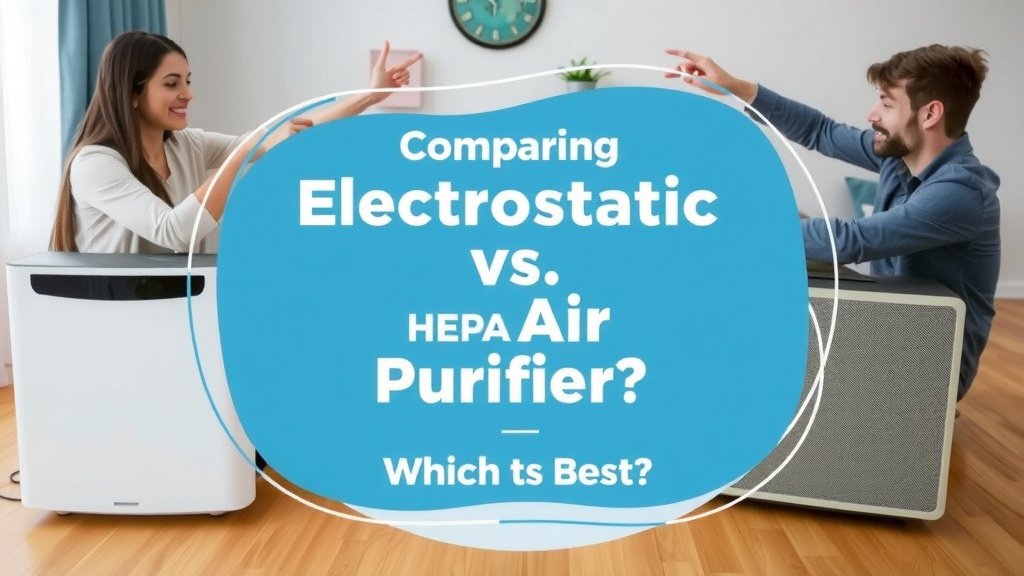
Comparing Electrostatic vs. HEPA Air Purifiers
You’re looking to clean the air in your home, and you’ve noticed two main types of air purifiers: electrostatic and HEPA. It’s smart to wonder which is truly better for your needs. We found that while both aim to remove airborne particles, they do it in very different ways. This difference can impact how well they work and even your home’s air safety.
Let’s dive into what makes each technology tick. Understanding their core function is the first step to making a confident choice for your family’s breathing comfort.
How Electrostatic Air Purifiers Work
Electrostatic air purifiers use a clever trick: static electricity. Imagine rubbing a balloon on your hair to make it stick to the wall. Electrostatic purifiers do something similar, but on a much finer scale.
The Science of Static Attraction
These purifiers have metal plates. Some plates give particles an electric charge as air passes through. Other plates have the opposite charge. This difference in charge attracts the charged particles. They stick to the plates, like dust bunnies clinging to a charged surface.
We found that this method can be very effective at capturing fine particles like dust, smoke, and pet dander. It’s a bit like a magnet for tiny airborne bits.
Potential Downsides: Ozone Emission
Here’s where things can get a little tricky with electrostatic purifiers. Some models, especially older ones or those that use a process called “corona discharge,” can produce a byproduct: ozone. Ozone is a gas that, at certain levels, can irritate your lungs.
The Environmental Protection Agency (EPA) has noted concerns about ozone. While small amounts might not bother everyone, people with asthma or other respiratory issues can be particularly sensitive. We found that many manufacturers now offer ozone-free electrostatic models, but it’s something you absolutely must check.
The Ozone-Free Distinction
Look for purifiers that specifically state they are “ozone-free” or use “ionizing technology” without corona discharge. These are designed to minimize or eliminate ozone production, making them a safer bet for your home environment.
Understanding HEPA Air Purifiers
HEPA stands for High-Efficiency Particulate Air. These filters are the gold standard for trapping tiny particles. Think of them as a super-fine sieve for your air.
The Physical Filtration Process
Unlike electrostatic purifiers that attract particles, HEPA filters physically trap them. They are made of a dense mat of fibers. These fibers are arranged in a random pattern. Air is forced through this dense mesh.
We found that the particles get caught through a few different actions: interception (particles following the airflow and hitting a fiber), impaction (larger particles not following the curves and crashing into fibers), and diffusion (tiny particles moving randomly and hitting fibers).
HEPA’s Particle Capture Standard
A true HEPA filter must capture at least 99.97% of particles that are 0.3 microns in size. Why 0.3 microns? This size is considered the most difficult to capture. Particles larger or smaller can be captured even more effectively.
This standard is recognized by many health organizations, including the U.S. Department of Energy. It means you can trust that a certified HEPA filter is doing a serious job removing common allergens and pollutants.
No Ozone Production
A significant advantage of HEPA filters is that they do not produce ozone. Since they work by physically catching particles, there are no chemical reactions that create ozone gas. This makes them a reliable choice for creating healthier indoor air without introducing new irritants.
Key Differences at a Glance
To help you visualize the distinctions, let’s look at a quick comparison. It highlights where each technology shines and where caution might be needed.
| Feature | Electrostatic Purifier | HEPA Purifier |
|---|---|---|
| Filtration Method | Uses static electricity to attract particles. | Physically traps particles in a dense fiber mesh. |
| Particle Capture Efficiency | Good for fine particles, but can vary. | Captures 99.97% of particles 0.3 microns and larger. |
| Ozone Production | Potential for ozone emission (check for ozone-free models). | Does not produce ozone. |
| Maintenance | Plates may need regular cleaning or replacement. | Filters need periodic replacement (every 6-12 months typically). |
| Best For | General dust and dander removal, if ozone-free. | Allergies, asthma, sensitive individuals, maximum particle removal. |
Which Type is Right for Your Home?
Deciding between these two types comes down to your priorities and sensitivities. We found that most people benefit most from HEPA’s reliable performance.
For Allergy and Asthma Sufferers
If you or someone in your household struggles with allergies or asthma, HEPA is generally the recommended choice. The CDC suggests that air cleaners can help reduce asthma triggers in the home. Because HEPA filters don’t produce ozone, they won’t introduce a potential irritant into the air. They are designed to capture the tiny particles that often set off symptoms.
For General Air Cleaning Needs
If your main goal is to reduce everyday dust, pet dander, and general odors, an ozone-free electrostatic purifier could be an option. They can be effective and might require less frequent filter replacement than HEPA filters, as the plates can often be washed. However, always verify the ozone-free claim.
Considerations for Your Choice
When making your final decision, keep these points in mind:
- Health sensitivities: Are there allergies, asthma, or respiratory issues in your home?
- Ozone concerns: Are you comfortable with the potential for ozone, or do you want to avoid it entirely?
- Maintenance: How often are you willing to clean or replace filters?
- Budget: Both initial cost and ongoing filter replacement costs vary.
- Room size: Ensure the purifier’s coverage area matches your space.
A Quick Checklist for Choosing
Before you click “buy,” quickly run through this list. It helps ensure you’re getting the best fit for your home’s air.
- Prioritize HEPA for health: Especially if allergies or asthma are present.
- Verify “ozone-free” claims: For any electrostatic model you consider.
- Check filter replacement costs: For HEPA filters, this is an ongoing expense.
- Consider room size: Don’t get a purifier that’s too small for the space.
- Read user reviews: See what other people’s experiences have been.
- Look for certifications: Like Energy Star or AHAM Verifide.
Conclusion
When you’re aiming for the cleanest air possible, understanding the core differences between electrostatic and HEPA air purifiers is key. We’ve seen that while electrostatic models use static charge to grab particles, there’s a potential concern with ozone emission. HEPA filters, on the other hand, offer reliable, physical particle capture without ozone. For most homes, especially those with allergy or asthma sufferers, a certified HEPA filter provides the safest and most effective solution for breathing easier. Make your choice with confidence by prioritizing your household’s health and air quality needs.
Frequently Asked Questions
Are electrostatic air purifiers safe if they are labeled “ozone-free”?
Yes, ozone-free electrostatic air purifiers are generally considered safe. Manufacturers design these models to minimize or eliminate ozone production, making them a better option than older or non-certified electrostatic units. Always look for clear “ozone-free” labeling or certification to be sure.
How often do I need to replace a HEPA filter?
Typically, you’ll need to replace a HEPA filter every 6 to 12 months. This timeframe can vary based on your home’s air quality, how often you run the purifier, and the specific manufacturer’s recommendations. Checking your filter regularly can help you determine when it’s time for a change.
Can electrostatic purifiers capture very fine particles as well as HEPA?
Electrostatic purifiers can be effective at capturing fine particles, but their efficiency can sometimes vary. A true HEPA filter is certified to capture 99.97% of particles down to 0.3 microns, offering a consistent and high level of performance for even the smallest pollutants.
Are there any maintenance differences between the two types?
Yes, maintenance differs. HEPA filters usually require periodic replacement. Electrostatic purifiers often have washable plates that need regular cleaning to maintain their effectiveness, which can be more hands-on maintenance.
Which type of air purifier is better for removing odors?
While both can help with odors, HEPA filters are primarily designed for particle removal. Many HEPA purifiers include an activated carbon pre-filter, which is highly effective at absorbing odors and gases. Some electrostatic purifiers may also capture odor-causing particles, but the carbon filter in HEPA systems is generally more specialized for this task.

![How Long Should You Use an Air Purifier [In 2025]](https://homeunderstandable.com/wp-content/uploads/2025/05/how-long-should-you-use-an-air-purifier-768x576.jpg)