
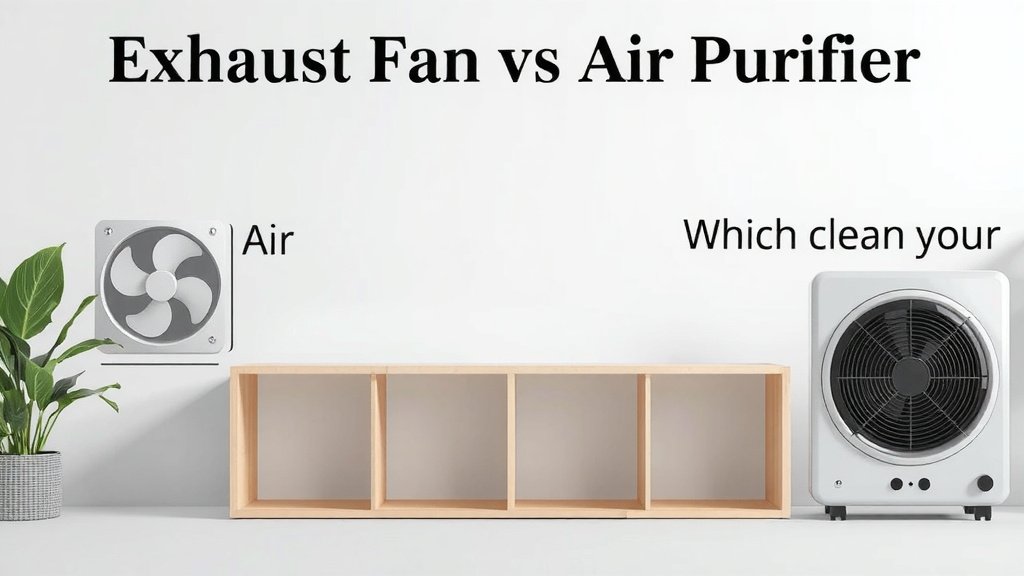
Exhaust Fan vs Air Purifier: Which Cleans Your Air Better
When you’re thinking about improving your home’s air quality, it’s easy to wonder if an exhaust fan or an air purifier is the right choice. While both help with air, they serve very different purposes. An exhaust fan removes air from a space, like your bathroom or kitchen, while an air purifier cleans the air within a room.
We often see them used interchangeably, but knowing their primary function is key. An exhaust fan is great for tackling moisture and odors at their source, preventing issues like mold. An air purifier, on the other hand, focuses on filtering out allergens, dust, and other microscopic particles that linger in your air.
Here’s a quick rundown:
- Exhaust Fans: Push air out, good for humidity and smells.
- Air Purifiers: Filter air inside, good for allergies and dust.
- They are not interchangeable; they do different jobs.
- Think about what air problem you want to solve first.
Let’s break down exactly what each appliance does and when you’d want to use them to make sure you get the best air for your home.
Exhaust Fan vs. Air Purifier: Which Do You Need?
So, you’re looking to freshen up your home’s air. It’s a smart move! Your air quality impacts your health and comfort. You might be wondering about exhaust fans and air purifiers. They both deal with air, but they do very different jobs. Think of it like this: an exhaust fan is a bouncer at the door, kicking out unwanted guests. An air purifier is a meticulous cleaner inside, catching anything that tries to sneak in or hang around. We’ll break down what each one does and help you decide which tool fits your needs.
How Exhaust Fans Work: The Air Movers
An exhaust fan’s main job is to remove air from a specific area and vent it outside. They create a negative pressure in the room, pulling stale, moist, or odor-filled air out. This is super important for preventing problems caused by trapped air.
Where You’ll Find Them
You’ll most commonly see exhaust fans in places where moisture and odors are generated. The bathroom is a prime example. Running the fan during and after a shower helps get rid of steam. This prevents mildew and that musty smell from setting in. Kitchens are another big one. They tackle cooking fumes, grease, and smells from frying or sautéing. Some models also include lights and heating elements, making them multi-functional.
The Benefits of Proper Ventilation
Using an exhaust fan correctly offers several key advantages:
- Reduces Humidity: This is their superpower! Lowering humidity levels helps prevent mold and mildew growth. It also stops condensation on windows and walls.
- Eliminates Odors: Say goodbye to lingering cooking smells or bathroom odors. Fans whisk them away before they spread.
- Improves Air Circulation: While they move air out, they also encourage fresh air to enter, creating a better air exchange.
- Removes Pollutants at the Source: They capture airborne grease, steam, and other particles right where they are created.
When an Exhaust Fan is Your Best Bet
You’ll want an exhaust fan if your main concern is dealing with immediate, source-specific air problems. This includes:
- Preventing mold in bathrooms.
- Getting rid of strong cooking smells.
- Reducing steam after showers.
- Ventilating a workshop or laundry room.
Understanding Air Purifiers: The Air Cleaners
An air purifier, on the other hand, works by cleaning the air within a room. It draws in the air, passes it through a filter system, and then releases cleaner air back into the space. They don’t vent air outside; they recirculate and purify the air already present.
The Filtration Process
Most air purifiers use a multi-stage filtration system. The most common and effective filter is a HEPA (High-Efficiency Particulate Air) filter. These are designed to capture at least 99.97% of airborne particles 0.3 microns in size (American Lung Association). Many purifiers also include pre-filters for larger particles like hair and dust bunnies, and activated carbon filters to tackle odors and gases.
What Air Purifiers Target
Air purifiers are fantastic for addressing a wide range of airborne contaminants that can affect your health and comfort:
- Allergens: Pollen, pet dander, and dust mites are common culprits for allergy sufferers. Purifiers can significantly reduce these.
- Dust: They help reduce the amount of dust that settles on surfaces.
- Smoke: Whether from cigarettes or wildfires, air purifiers can filter out smoke particles.
- Odors: Activated carbon filters are excellent at absorbing odors from cooking, pets, or smoke.
- Mold Spores: While exhaust fans prevent mold growth, purifiers can help remove existing spores from the air.
- Volatile Organic Compounds (VOCs): These are gases emitted from paints, cleaning supplies, and furniture.
When an Air Purifier Shines
An air purifier is your go-to solution if you’re looking to:
- Reduce allergy symptoms.
- Remove pet dander and odors.
- Combat dust accumulation.
- Improve overall indoor air quality in living spaces.
- Filter out smoke particles.
Key Differences at a Glance
To help make things crystal clear, let’s look at a side-by-side comparison. This table highlights the core functions and best uses for each appliance.
| Feature | Exhaust Fan | Air Purifier |
|---|---|---|
| Primary Function | Removes air from a space and vents it outside | Cleans and filters air within a room |
| How it Works | Mechanical ventilation, pushing air out | Air circulation with filtration system (HEPA, carbon) |
| Best For | Humidity, moisture, strong odors, steam | Allergens, dust, pet dander, smoke, VOCs, general air quality |
| Location | Bathrooms, kitchens, laundry rooms | Bedrooms, living rooms, offices, any enclosed space |
| Effect on Air | Replaces indoor air with outdoor air | Cleans existing indoor air |
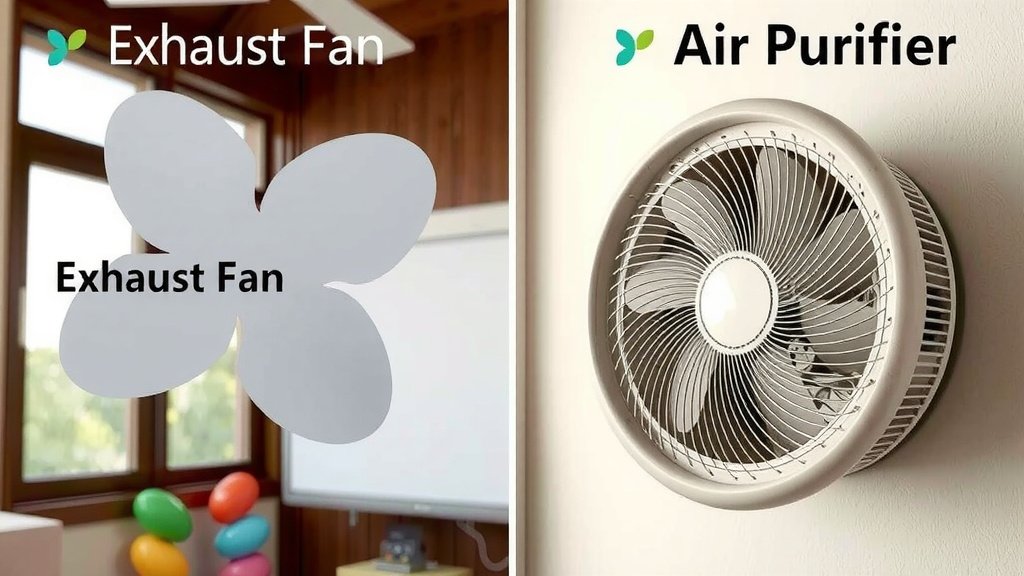
Can You Use Them Together? Absolutely!
It’s a common misconception that you have to pick one or the other. In reality, exhaust fans and air purifiers serve complementary roles in maintaining healthy indoor air. They work best when used in tandem.
A Synergistic Approach to Clean Air
Imagine you’re cooking a particularly fragrant meal. You turn on your kitchen exhaust fan to clear the smoke and odors. At the same time, an air purifier in your living room can catch any particles that might drift in or help with general air freshness. Or, in a bathroom, the exhaust fan tackles the humidity from your shower, while an air purifier in an adjacent room can help with any lingering dust or allergens. They address different air quality concerns in different ways, making your home environment healthier overall.
Making the Right Choice for Your Home
Deciding between an exhaust fan and an air purifier, or whether you need both, comes down to your specific needs and the issues you’re trying to solve. Ask yourself these questions:
- What air quality problems are you experiencing most often?
- Are you dealing with moisture and odors at a specific source, or general air “stuffiness”?
- Do you or anyone in your household suffer from allergies or asthma?
- Is there a particular room that needs more attention?
If your primary concern is moisture, preventing mold, or tackling strong, immediate odors at their source, an exhaust fan is likely your first and best option. If your goal is to reduce allergens, dust, smoke, and improve the overall air quality in your living spaces, an air purifier is the way to go. For the most complete air quality solution, using both in appropriate areas of your home is often the most effective strategy.
Conclusion
So, you’ve learned that exhaust fans and air purifiers tackle different air quality challenges. An exhaust fan is your frontline defense against moisture and strong odors at their source, like in your kitchen or bathroom. It physically removes air and vents it outside. An air purifier, on the other hand, acts as an indoor cleaner, filtering out allergens, dust, smoke, and other particles that linger in your living spaces. For the best results, consider your specific needs. If you’re battling humidity or cooking smells, an exhaust fan is key. If allergies or dust are your main concern, an air purifier will be more effective. Think about which problem you want to solve first, and you’ll make the right choice for a fresher, healthier home environment.
Frequently Asked Questions
Can I just use an exhaust fan to solve all my air quality problems?
An exhaust fan is great for removing moisture and odors at their source. However, it doesn’t filter the air within your rooms. If you have allergies or dust concerns, an exhaust fan alone won’t address those issues effectively. It’s designed to vent air outside, not to clean the air circulating in your home.
Do air purifiers help with bathroom humidity?
Air purifiers can help remove mold spores from the air, which can be present in humid environments. However, they don’t actively remove moisture from the air like an exhaust fan does. For preventing mold and mildew growth from showers or baths, an exhaust fan is your primary tool.
How often should I run my exhaust fan?
You should run your exhaust fan in the bathroom during and for about 15-20 minutes after showering or bathing to effectively remove moisture. In the kitchen, run it while cooking, especially when frying or sautéing, to clear out grease and strong odors. Proper use prevents damage and improves air quality.
Will an air purifier get rid of cooking smells?
Yes, many air purifiers are equipped with activated carbon filters that are excellent at absorbing odors, including those from cooking. While an exhaust fan vents smells directly outside, an air purifier can capture lingering cooking odors that might spread to other parts of your home.
Can I install an exhaust fan in my bedroom?
Exhaust fans are typically installed in areas where moisture or odors are generated, like bathrooms and kitchens. They vent air outside. While you could install one, it’s generally not recommended for bedrooms as it would vent conditioned air from your home. An air purifier is a much better choice for improving air quality in living and sleeping areas.

![What Is The Best Air Purifier for My Home [In 2026]](https://homeunderstandable.com/wp-content/uploads/2025/05/best-air-purifier-for-my-home.jpg)