Hospital Air Purification Methods Explained
Hospitals purify air using a combination of advanced filtration systems, **germicidal irradiation**, and **careful ventilation strategies**. This multi-layered approach is designed to remove airborne pathogens, allergens, and other contaminants. It ensures a **safer environment** for patients and healthcare workers alike.
You might be surprised by the sophisticated technology involved. Beyond just filtering, hospitals often employ **UV light sterilization** and negative pressure rooms. These methods actively kill or contain harmful particles. This maintains high air quality standards critical for **infection control**.
- Hospitals use HEPA filters for particle removal.
- UV-C light kills viruses and bacteria.
- Ventilation systems control airflow direction and exchange.
- Negative pressure rooms prevent contamination spread.
Let’s walk through exactly how these systems work to keep hospital air clean and healthy.
Keeping the air inside hospitals clean is super important. It helps patients heal faster and protects everyone from catching new germs. Hospitals use a mix of smart strategies to achieve this. Let’s dive into how they make sure the air you breathe is as pure as possible.
How Hospitals Keep the Air Clean and Safe
Hospitals employ several layers of defense to purify the air.
The Power of Filtration: Removing Tiny Particles
Filtration is a primary method hospitals use. Think of it like a very, very powerful vacuum cleaner for the air.
HEPA Filters: The Gold Standard
You’ve probably heard of HEPA filters. They stand for High-Efficiency Particulate Air. These filters are incredibly effective. They can capture at least 99.97% of particles. This includes dust, pollen, mold spores, and bacteria. The holes in a HEPA filter are tiny. They are about 0.3 microns in size. This means even the smallest airborne nasties get trapped. Many hospital rooms and common areas use HEPA filters to clean the air continuously (CDC).
Pre-filters: The First Line of Defense
Before air hits the main HEPA filter, it often passes through a pre-filter. These are less dense filters. They catch larger particles like lint and hair. This helps the more expensive HEPA filters last longer. It’s like putting a screen door on your house. It stops the big stuff first.
Killing Germs in the Air: Beyond Filtration
Filtration removes particles, but some methods actually kill or inactivate the germs. This is crucial for preventing infections.
UV-C Germicidal Irradiation (UVGI)
This is a powerful tool hospitals use. It involves using ultraviolet light, specifically the UV-C spectrum. This light is like a germicidal sword. It damages the DNA of microorganisms. This includes viruses, bacteria, and mold. The UV-C light can be used in a few ways. It can be shone directly onto air as it passes through a system. Or, it can be installed in the ventilation ducts. Sometimes, it’s used to disinfect surfaces too. Many experts recommend UVGI as a supplementary measure to HEPA filtration (NIH).
How UV-C Works on Germs
When UV-C light hits a germ, it penetrates its cell or viral casing. It then scrambles the germ’s genetic material. This makes it unable to reproduce or cause infection. It’s a very effective way to neutralize airborne pathogens. It’s especially helpful in areas with high-risk patients.
Ventilation Strategies: Controlling Airflow
How air moves within a hospital is just as important as cleaning it. Hospitals have carefully designed ventilation systems.
Air Exchange Rates: Fresh Air In, Contaminated Air Out
Hospitals aim for high air exchange rates. This means fresh, filtered air is pumped into rooms frequently. Simultaneously, older, potentially contaminated air is removed. The number of times the air in a room is completely replaced per hour is the air exchange rate. For general hospital areas, this is often 4-6 exchanges per hour. For operating rooms or isolation rooms, it can be much higher, sometimes 20 or more exchanges per hour (Cleveland Clinic).
Directional Airflow: Keeping Contamination Contained
Hospitals carefully control the direction air flows. In patient rooms, air often flows from cleaner areas into less clean areas. This helps prevent germs from spreading from one patient’s room to a hallway or another patient. Imagine a gentle breeze pushing away dust bunnies. It’s a similar principle for germs.
Special Rooms: Isolating Potential Threats
Some areas in a hospital require extra protection. These are often isolation rooms.
Negative Pressure Rooms
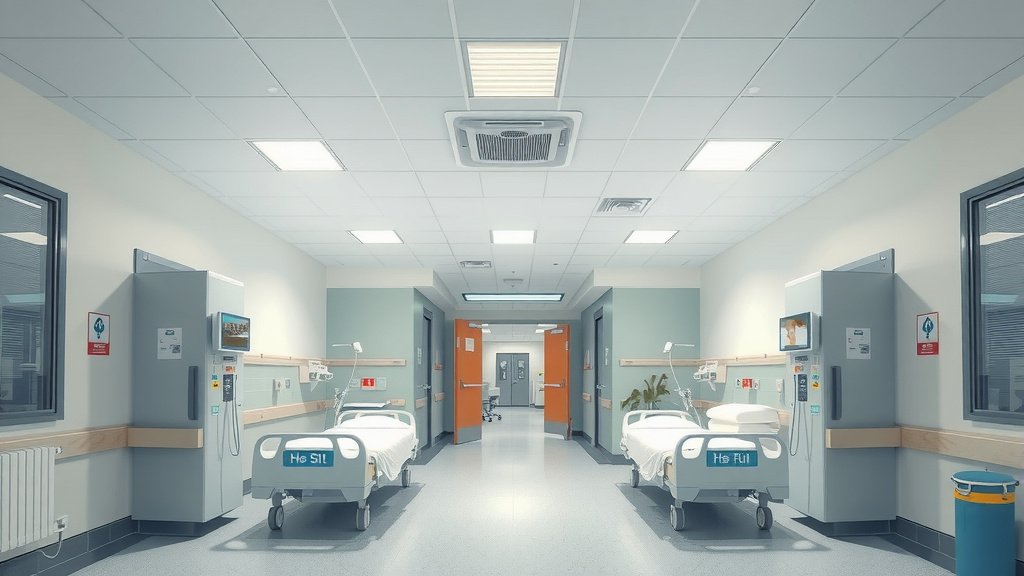
These rooms are designed to contain airborne diseases. Think of diseases like tuberculosis or COVID-19. In a negative pressure room, the air pressure is lower than the surrounding areas. This means air is always flowing *into* the room from the hallway. It never flows *out* into the hallway. This prevents any airborne particles from escaping the room. When you leave the room, you pass through a special airlock. This ensures no contaminated air follows you. These rooms are vital for infection control.
Positive Pressure Rooms
On the flip side, some rooms need positive pressure. These are often for patients with weakened immune systems. Think of someone undergoing chemotherapy. In a positive pressure room, the air pressure is higher than the surroundings. This means air flows *out* of the room into the hallway. This pushes any airborne germs *away* from the patient. It helps protect them from infections in the hospital environment.
A Quick Look at Air Purification Methods
Here’s a simple breakdown of the main techniques:
- HEPA Filters: Trap tiny particles like dust and bacteria.
- UV-C Light: Kills viruses and bacteria in the air.
- Ventilation Systems: Control how often air is replaced and where it flows.
- Negative Pressure Rooms: Keep infectious germs inside a room.
- Positive Pressure Rooms: Keep germs out of a vulnerable patient’s room.
Maintenance is Key to Clean Air
Even the best systems need regular care. Hospitals have strict schedules for cleaning and maintenance. Filters are changed regularly. UV bulbs are replaced when their effectiveness wanes. Ventilation systems are inspected and cleaned. This ensures everything works as it should, all the time. It’s a constant effort to maintain the highest air quality standards.
Conclusion
You’ve learned that hospitals use a smart, multi-step approach to purify the air. They combine powerful HEPA filters with germ-killing UV-C light. Smart ventilation ensures fresh air and controls airflow direction. Special negative and positive pressure rooms add another layer of safety. This whole system works together to protect everyone in the hospital. To help maintain these clean air standards, remember to always follow hospital guidelines for hygiene and to report any concerns you may have about the air quality during your visit.
Frequently Asked Questions
How often are hospital air filters changed?
Hospitals have strict maintenance schedules for changing air filters. This is usually done regularly, often on a monthly or quarterly basis. The exact frequency depends on the filter type and the specific air handling system used in each area of the hospital.
Can UV-C light harm people in the room?
When used in enclosed systems within ventilation ducts or for surface disinfection, UV-C light is generally safe. Direct exposure to UV-C light can be harmful to skin and eyes, so hospitals ensure it’s only activated when rooms are unoccupied or properly shielded.
Do all hospital rooms have special pressure controls?
No, not all hospital rooms have specialized pressure controls. Negative and positive pressure rooms are typically reserved for areas where infection control is most critical, such as operating rooms, isolation units for contagious diseases, or protective environments for immunocompromised patients.
What happens if a hospital’s air purification system fails?
Hospitals have backup systems and contingency plans in place. If a primary air purification component fails, emergency protocols are activated to maintain air quality and prevent the spread of infection until repairs can be made.
Are these air purification methods also used in homes?
Some of these technologies, like HEPA filters and UV-C purifiers, are available for home use. However, the scale, sophistication, and constant monitoring of hospital-grade systems are far more advanced than what is typically found in a residential setting.