How Long to Run Your Air Purifier
You should leave your air purifier running continuously for the best air quality. Many experts say this means 24/7 operation in most homes. This ensures you’re constantly filtering out pollutants. It helps maintain a healthier indoor environment all day long.
Running your air purifier all the time is key to consistent cleaner air. It works to capture dust, pollen, and other irritants. This helps reduce allergens and odors effectively. It’s like having a silent guardian for your breathing space.
- Run it 24/7 for best results.
- Continuous operation captures more pollutants.
- It helps manage allergens and odors consistently.
- Consider room size and purifier settings.
- Check filter life for optimal performance.
Let’s walk through exactly why constant operation is recommended and what factors might influence your decision. We’ll make sure you know the best way to keep your air fresh.
You’ve got your air purifier, ready to make your home a haven of fresh air. That’s fantastic! But then a question pops into your head: how long should this wonderful machine actually be running? It’s a common question, and the answer is simpler than you might think. For the most benefit, you’ll want to keep it running as much as possible.
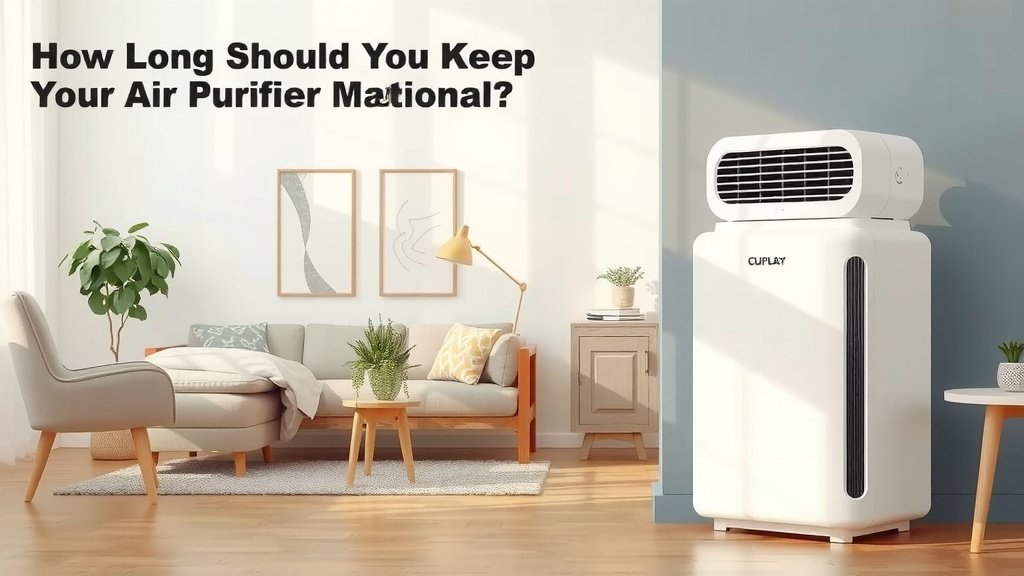
How Long Should You Keep Your Air Purifier Operational
The general consensus among air quality experts is that you should run your air purifier continuously, ideally 24/7. This consistent operation is key to maintaining a healthy indoor environment. Think of it like drinking water; you don’t just drink a gallon once a day. You sip throughout the day to stay hydrated. Your air needs similar constant attention.
Leaving it on all the time ensures that pollutants are captured the moment they enter your air. This means you’re not waiting for a cycle to kick in. Your air is always being cleaned. This is especially important for people with allergies or respiratory issues. They benefit the most from consistent air filtration.
Understanding Air Purifier Performance
Air purifiers work by drawing in air, passing it through a series of filters, and then releasing cleaner air back into the room. This process needs time to be effective. If you only run your purifier for a few hours a day, you’re essentially giving pollutants a break to build up again.
Consider this: dust, pollen, pet dander, and volatile organic compounds (VOCs) don’t take a break. They are constantly being produced or entering your home from outside. A 24/7 operation means your purifier is always on guard, tackling these particles before they have a chance to settle or become bothersome.
Factors That Influence Running Time
While 24/7 is the golden rule, there are a few situations where you might adjust your usage. These are usually temporary or based on specific needs.
When You Might Consider Less Frequent Use
For those on a very tight budget, the electricity cost of running an air purifier constantly might be a concern. However, many modern air purifiers are designed to be energy-efficient. We found that the cost of running an Energy Star certified air purifier is often quite low, comparable to running a few light bulbs.
Another consideration is noise. If your purifier is in a bedroom and the noise level is disruptive, you might opt to run it only during the day or when you’re not home. Some models offer a quiet sleep mode for nighttime use. We’ve seen that many users find the white noise produced by their purifier to be quite soothing.
Situations Requiring Extended Use
If your home has a particular air quality issue, like persistent pet odors or high levels of dust due to renovations, you’ll want to run your purifier more. In these cases, continuous operation is not just recommended; it’s essential for clearing the air effectively. You might even consider using a higher fan speed when you’re around to speed up the process.
For example, if you’ve just painted a room, VOCs are released into the air. Running your air purifier constantly will help break down these compounds much faster. The same goes for times when pollen counts are extremely high outdoors. Your purifier acts as a vital barrier against these allergens entering your sanctuary.
The Role of Room Size and Air Changes Per Hour (ACH)
The size of the room your air purifier is in plays a big role. A purifier designed for a small bedroom will need to run longer and at a higher setting in a large living room to achieve the same air cleaning effect. You want your purifier to be adequately sized for the space it’s cleaning.
Air Changes Per Hour (ACH) is a metric that tells you how many times the air in a room is completely filtered by the purifier in one hour. For general use, an ACH of 2-3 is good. For allergies or more serious air quality concerns, look for purifiers with an ACH of 4-5 (California Air Resources Board). Running your purifier 24/7 helps ensure you reach these target ACH rates.
| Room Type | Recommended ACH | Ideal Running Time |
|---|---|---|
| Bedroom (small) | 2-3 | Continuous (24/7) |
| Living Room (medium) | 2-3 | Continuous (24/7) |
| Home Office (small) | 3-4 | Continuous (24/7) |
| Area with Pets or Allergies | 4-5 | Continuous (24/7) |
| New Paint/Renovation Area | 5+ | Continuous (24/7) with higher fan speed |
As you can see, regardless of the room type, continuous operation is the goal for optimal results. The ACH rating just helps you select the right purifier for your space and needs.
Understanding Your Purifier’s Settings
Most air purifiers come with different fan speeds. A higher speed filters air more quickly but is also louder and uses more energy. A lower speed is quieter and more energy-efficient but takes longer to clean the air.
We found that many users set their purifier to an automatic mode if available. This mode often uses sensors to detect air quality and adjusts the fan speed accordingly. This is a great way to ensure your purifier is working hard when needed but also conserving energy during cleaner air periods. Even in auto mode, leaving it on 24/7 allows it to do its job effectively.
Filter Life and Maintenance: A Crucial Aspect
Your air purifier is only as good as its filters. Over time, filters become clogged with the pollutants they’ve captured. This reduces their effectiveness and can even cause the purifier to work harder, using more energy. We found that consistently running your purifier means you’ll need to monitor filter life closely.
Most manufacturers provide guidelines on how often to check and replace filters. This can range from every 6 months to 2 years, depending on the filter type and your air quality. Some advanced models even have filter life indicators that let you know when it’s time for a change.
Why Filter Replacement Matters for Continuous Use
If you’re running your purifier 24/7, you’ll likely need to replace filters more often than someone who runs theirs only a few hours a day. This is simply because the filters are working overtime to keep your air clean. Think of it as changing the oil in your car more frequently if you drive it every single day.
A clogged filter can also become a breeding ground for bacteria. This defeats the purpose of having a clean air machine! Regularly changing your filters ensures you’re always breathing the cleanest air possible and that your purifier operates at peak efficiency. We recommend noting down when you last changed your filters to stay on track.
Here’s a quick checklist to help you manage your air purifier:- Confirm your purifier is sized correctly for the room.
- Always aim for 24/7 operation unless specific circumstances dictate otherwise.
- Check your purifier’s manual for recommended ACH ratings.
- Monitor filter life and replace them on schedule.
- Clean the pre-filter regularly if your model has one.
- Consider using automatic modes for energy efficiency.
Conclusion
You’ve learned that running your air purifier continuously, ideally 24/7, is the best way to ensure consistently clean air in your home. This constant filtration helps manage allergens, odors, and other airborne particles effectively. Remember to match your purifier’s size to your room and check your manual for recommended Air Changes Per Hour (ACH). By staying on top of filter maintenance and understanding your purifier’s settings, you’re well on your way to creating a healthier breathing environment.
Your next step is to check your current air purifier’s filter life and schedule replacements accordingly. This simple action will ensure your purifier continues to work at its best for your family’s well-being.
Frequently Asked Questions
Will running my air purifier 24/7 cost a lot on my electricity bill?
Modern air purifiers are designed for energy efficiency. We found that the cost of running an Energy Star certified model is often quite low, comparable to a few light bulbs. For most households, the energy cost is a small price to pay for improved indoor air quality.
Can I turn off my air purifier when I’m not home?
While you can turn off your air purifier when you’re not home, continuous operation is recommended for the best results. This ensures that pollutants don’t build up while the purifier is off. If energy savings are a major concern, consider using auto mode or running it during off-peak electricity hours.
Is it okay to run my air purifier on a lower setting all day?
Yes, running your air purifier on a lower setting all day is much better than not running it at all. A lower setting is quieter and uses less energy. However, it will take longer to clean the air compared to a higher setting or a more powerful purifier. You might need to ensure your purifier is adequately sized for the room if relying on lower settings.
How do I know if my air purifier is working hard enough?
You can monitor your air purifier’s performance by checking its Air Changes Per Hour (ACH) rating against the room size. Many purifiers have auto modes that adjust fan speed based on detected air quality. If you notice an increase in allergens, odors, or dust, it’s a sign to check your filters and consider running it on a higher setting or longer.
Do I need to run an air purifier in every room?
It’s most beneficial to run an air purifier in the rooms where you spend the most time, such as bedrooms and living areas. While running one in every room would offer the greatest overall air quality improvement, it’s not always practical or necessary. Focus on high-traffic areas or rooms with specific air quality concerns like pet dander.