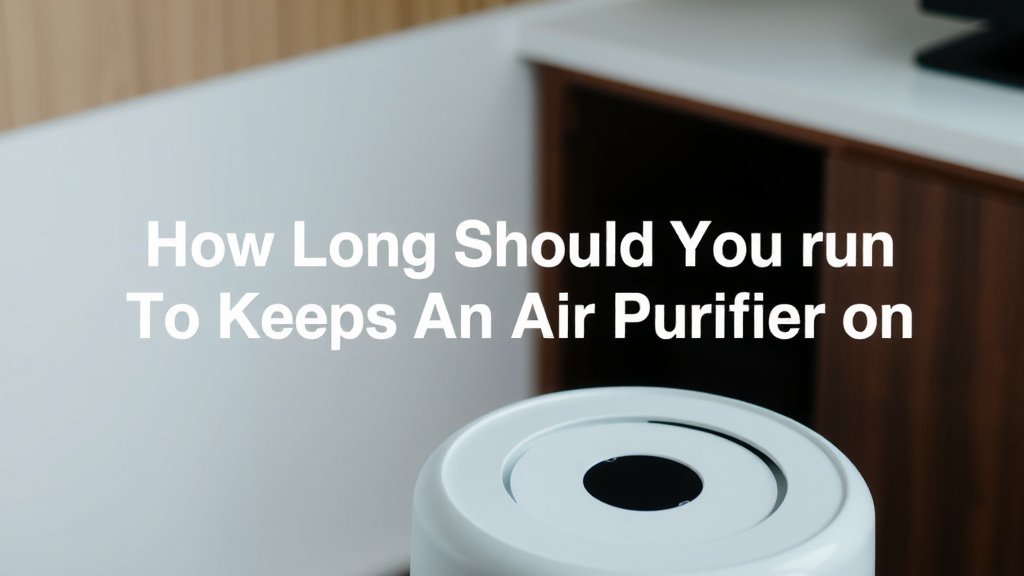
How Long Should You Run Your Air Purifier
You can keep your air purifier on all the time for the best air quality. Continuous operation helps maintain cleaner air consistently. Many users find leaving it on provides the most benefits for health and comfort.
For optimal results, running your air purifier 24/7 is often recommended. This ensures that pollutants are captured as soon as they enter your home. It’s especially helpful for those with allergies or respiratory issues, providing a constant shield against airborne irritants.
- Keep your air purifier running all day and night.
- This ensures the best possible air quality.
- It helps catch pollutants as they appear.
- Many people with allergies benefit greatly.
- It provides a consistent defense against irritants.
Let’s walk through exactly why running your air purifier non-stop is the way to go, and what factors might influence your decision.
How Long Should Your Air Purifier Run Each Day?
You might be wondering how many hours a day your air purifier truly needs to run. The simplest answer is: as much as possible. For the best results, keeping your air purifier on continuously is the most effective strategy.
Think of your air purifier like a tireless guardian for your indoor air. It’s constantly working to remove dust, pollen, pet dander, smoke, and other irritants. Letting it run 24/7 means it’s always on duty, catching these tiny troublemakers the moment they appear.
The Case for Continuous Operation
Why is running it all the time such a good idea? It boils down to consistency. Indoor air can become polluted quickly. Factors like cooking, showering, and even just opening a door can introduce new particles. A continuously running air purifier ensures your home environment stays cleaner and healthier around the clock.
Many experts suggest continuous operation is key to maintaining optimal air quality. It’s like a filter for your lungs, but for your entire home. The longer it runs, the more it can filter out.
Why Constant Filtration Matters
Imagine a leaky faucet. If you only turn on the wrench for a few hours a day, you’ll still have a puddle. Air purification works similarly. Pollutants don’t take breaks. They’re always present in the air, waiting to settle or be inhaled. Continuous operation means you’re always one step ahead.
This is especially important for people with allergies or asthma. Those tiny particles can trigger symptoms quickly. A non-stop purifier provides a constant shield, offering much-needed relief and a more comfortable living space. Studies have shown that consistent air filtration can significantly reduce allergy symptoms (NIH).
Catching Pollutants Before They Settle
Airborne particles don’t just float around forever. They eventually settle on surfaces like furniture, carpets, and floors. While vacuuming helps, continuously filtering the air prevents a large portion from settling in the first place. This means less dust buildup and an overall cleaner home.
Your air purifier acts like a mini-cyclone, pulling in air and trapping particles in its filter. The more it runs, the more air it processes. This means fewer particles have the chance to become a permanent fixture in your home.
Factors Influencing Your Run Time
While 24/7 is generally the recommendation, a few things might influence how you use your air purifier. These aren’t reasons to turn it off completely, but rather to adjust settings or placement.
Your Home’s Specific Needs
Do you live in a busy city with high pollution levels? Do you have multiple pets? Are you a frequent cook who loves to sear steaks? If you answered yes to any of these, your air might need more frequent filtering. Running your purifier on a higher setting or more consistently can help manage these increased pollutant loads.
On the other hand, if you live in a very rural area with clean air and no pets, you might not need it running on its highest setting constantly. However, even in cleaner environments, indoor air can be more polluted than outdoor air due to off-gassing from furniture and cleaning products (EPA). So, continuous use is still beneficial.
Health Conditions and Sensitivities
As mentioned, if you or anyone in your household suffers from allergies, asthma, or other respiratory conditions, keeping the purifier on all the time is highly advised. It’s a proactive step towards managing symptoms and improving respiratory health.
Many medical professionals recommend continuous air purification for individuals with chronic respiratory issues. It creates a sanctuary of cleaner air within your home, minimizing exposure to triggers. The Mayo Clinic often suggests air purifiers as part of a strategy to manage asthma symptoms.
Energy Consumption and Cost
This is a common concern. Will running an air purifier 24/7 significantly increase your electricity bill? Modern air purifiers are designed to be quite energy-efficient. Many use as little electricity as a standard LED light bulb.
The actual cost depends on the model’s wattage and your local electricity rates. However, many users find the benefits to air quality and health far outweigh the modest increase in energy costs. You can often find the energy usage listed on the product’s specifications or Energy Star rating. Some units have eco-modes that reduce power consumption.
Noise Levels
Air purifiers do make noise, especially on higher settings. If you’re sensitive to sound, running it on high all night might not be ideal. Many models offer different fan speeds, including a “sleep mode” or low setting that operates very quietly.
Using the quietest setting continuously can still provide a good level of filtration without disturbing your sleep. You might also consider placing the purifier in areas where noise is less of a concern, like a living room or home office, during the day, and in your bedroom at night on its lowest setting.
When You Might Not Need It On
Are there ever times you can turn it off? For most people, the answer is no, if you want to maintain consistently clean air. However, if you are leaving your home for an extended period, like a vacation, you might consider turning it off to save energy. But remember, the moment you return, the air inside can start to accumulate pollutants again.
For short absences, like running errands, it’s usually best to leave it running. The quick cycle of pollutants entering and settling is already happening. Turning it off and on frequently can be less efficient than just letting it run.
Maximizing Your Air Purifier’s Effectiveness
To get the most out of your air purifier, remember these simple tips:
- Run it continuously for best results.
- Place it in the room where you spend the most time.
- Change or clean the filters as recommended by the manufacturer.
- Ensure it’s the right size for your room.
- Use lower settings at night if noise is an issue.
- Keep windows and doors closed while it’s running to maximize efficiency.
Conclusion
For the cleanest indoor air, your air purifier should ideally run continuously. Keeping it on 24/7 ensures a constant defense against pollutants, which is especially beneficial for those with allergies or respiratory concerns. While energy use and noise are valid considerations, modern units are often efficient, and quiet modes can help. Remember to match your purifier’s size to your room and change filters regularly. Make it a habit to leave your air purifier running, and you’ll breathe easier in your home.
Frequently Asked Questions
Do I need to run my air purifier all day and night?
Yes, for the best air quality, running your air purifier 24/7 is highly recommended. Continuous operation helps capture pollutants as they enter your home, providing consistent relief from allergens and irritants. This ongoing filtration offers the most health benefits.
Will leaving my air purifier on all the time increase my electricity bill a lot?
Most modern air purifiers are designed to be energy-efficient, often using about as much electricity as a small light bulb. While there will be a slight increase, the cost is usually modest and can be worth it for improved air quality and health benefits. Check your model’s energy rating for specifics.
Can I turn off my air purifier when I’m not home?
While you can turn it off to save energy when you’re away for extended periods like a vacation, it’s best to leave it running for shorter absences. Pollutants can start accumulating again as soon as you leave. For daily errands, continuous operation is more effective.
Is it okay to use a lower setting at night if my air purifier is too loud?
Absolutely. Many air purifiers have a quiet “sleep mode” or low fan setting perfect for nighttime use. Running it on this quieter setting continuously is much better than turning it off completely. It still filters the air effectively without disturbing your sleep.
How often should I change the filters on an air purifier that runs 24/7?
Filter replacement frequency depends on your model and the air quality in your home, but generally, running a purifier 24/7 might mean needing to change filters a bit sooner than less frequent use. Always follow the manufacturer’s recommendations for your specific unit. This ensures it stays effective.