Choosing a Home Air Purifier: Your Essential Guide
Choosing a home air purifier means looking for a unit that can effectively remove **allergens and pollutants** from your indoor air. You’ll want to consider the room size it’s meant for and the types of air issues you’re trying to solve, like pet dander or smoke odors. A good purifier will use a multi-stage filtration system to capture tiny particles.
Beyond basic filtration, think about the CADR (Clean Air Delivery Rate). This rating tells you how quickly a purifier can clean the air in a specific room. Many experts also recommend looking for models with a HEPA filter, as these are designed to trap 99.97% of airborne particles. We found that understanding these key features is essential for making the right choice.
- Size matters: Match the purifier to your room dimensions.
- Filter type is key: Look for HEPA and activated carbon filters.
- CADR rating shows speed: Higher means faster air cleaning.
- Consider noise levels: Especially for bedrooms.
- Check filter replacement costs: Factor this into your budget.
Let’s walk through exactly how to pick the best air purifier for your home’s unique needs.
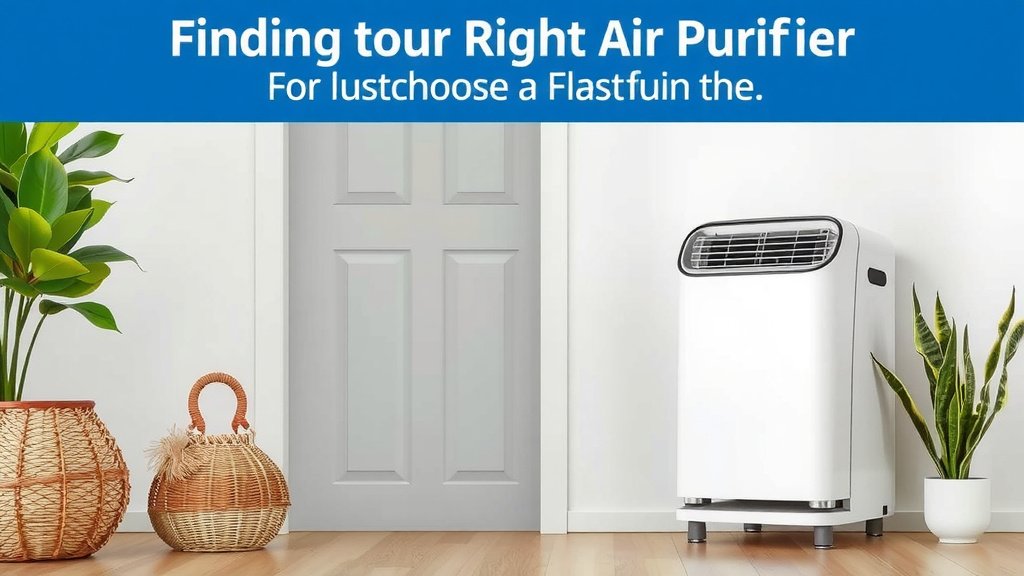
Finding the Right Air Purifier for Your Home
Choosing an air purifier can seem overwhelming, but we’re here to break it down. You want to breathe easier, right? It starts with understanding what makes a purifier work well for your specific needs. We’ve researched what matters most, and it boils down to a few key areas.
Understanding Air Purifier Technology
At its core, an air purifier is designed to remove pollutants from the air in your home. Think of it like a high-tech fan with a serious filter. It pulls in air, pushes it through filters, and releases cleaner air back into the room. The effectiveness depends on the type and quality of those filters.
The Power of HEPA Filters
You’ll see the term “HEPA” a lot, and for good reason. HEPA stands for High-Efficiency Particulate Air. These filters are incredibly effective at capturing tiny particles. We found that a true HEPA filter is designed to trap at least 99.97% of airborne particles that are 0.3 microns in size. That’s smaller than many bacteria and viruses!
- Captures allergens like pollen and pet dander.
- Removes mold spores and dust mites.
- Traps microscopic particles you can’t even see.
Activated Carbon: The Odor and Gas Fighter
While HEPA filters tackle particles, activated carbon filters are your go-to for odors, gases, and volatile organic compounds (VOCs). These filters are made from carbon that has been treated to be extremely porous. This porosity allows them to adsorb (a fancy word for trapping on the surface) unpleasant smells and chemical fumes.
We found that for homes with smokers, pets, or where cooking odors linger, an air purifier with a substantial activated carbon filter is a must-have. It makes a noticeable difference in overall air freshness.
Pre-filters for Extended Lifespan
Many purifiers also include a pre-filter. This is usually a mesh layer that catches larger particles like hair and lint. Why is this important? It helps protect the more expensive HEPA and carbon filters, extending their life. We found that a good pre-filter can save you money on replacement filters over time.
Matching the Purifier to Your Space
One of the biggest factors in choosing an air purifier is the size of the room it will be used in. A small unit won’t do much in a large living room, and an oversized one might be overkill for a tiny bedroom.
Understanding Room Size Ratings
Air purifiers are typically rated for specific room square footage. This rating tells you the maximum size of the room the unit can effectively clean. It’s important to look at this number carefully. If your room is 300 square feet, you’ll want a purifier rated for at least that, and ideally a bit more for better performance.
The Importance of CADR
CADR stands for Clean Air Delivery Rate. This is a rating system developed by AHAM (Association of Home Appliance Manufacturers) that measures how quickly an air purifier can clean a room of smoke, dust, and pollen. You’ll often see three CADR numbers on a box: one for smoke, one for dust, and one for pollen.
We found that higher CADR numbers mean the purifier works faster and more efficiently. For example, a CADR of 200 for smoke means it can clean a smoky room of 200 square feet in about 12 minutes. Think of it like the speed limit for clean air!
| Pollutant | What it means | Higher is… |
|---|---|---|
| Smoke | How quickly smoke particles are removed. | Better for odors and smoke. |
| Dust | How quickly dust particles are removed. | Better for general air cleanliness. |
| Pollen | How quickly pollen particles are removed. | Great for allergy sufferers. |
Air Changes Per Hour (ACH)
Another related metric is Air Changes Per Hour (ACH). This indicates how many times the air purifier can cycle all the air in a room within one hour. For most homes, an ACH of 4 or 5 is considered good. This means the air is filtered 4 to 5 times every hour, offering excellent air quality.
Other Features to Consider
Beyond the core filtration and room size, there are other features that can make a big difference in your day-to-day experience with an air purifier.
Noise Levels: Can You Sleep?
Air purifiers have fans, and fans make noise. Some units are whisper-quiet, while others can sound like a small engine. We found that if you plan to use the purifier in a bedroom or a home office where quiet is important, checking the decibel (dB) rating is essential. Many models have multiple fan speeds, with the lowest settings being the quietest.
Energy Efficiency and Costs
Air purifiers run on electricity, so they contribute to your energy bill. Look for Energy Star certified models, which are designed to be more energy-efficient. Also, don’t forget the cost of replacement filters. These can add up over time, so factor that into your budget when making your choice.
Smart Features and Controls
Many modern air purifiers come with smart features. These can include Wi-Fi connectivity, app control, air quality sensors that automatically adjust fan speed, and filter replacement indicators. While not essential, these can add convenience and allow you to monitor your air quality remotely.
Here’s a quick checklist to help you narrow down your options:
- Match the purifier’s room size rating to your space.
- Ensure it has a true HEPA filter for particle removal.
- Look for a substantial activated carbon filter if odors are an issue.
- Check the CADR ratings for smoke, dust, and pollen.
- Consider the noise level, especially for bedrooms.
- Factor in the ongoing cost of replacement filters.
Conclusion
You’re now equipped to choose the perfect air purifier for your home. Remember to consider your room size and match it with the purifier’s capabilities. Always look for a true HEPA filter to capture microscopic particles and activated carbon if odors or gases are a concern. Checking the CADR ratings will help you understand its cleaning speed.
By balancing filter technology, room size, and features like noise level and ongoing costs, you’re making a smart investment in your indoor air quality. Take the next step today by identifying your primary air concerns and selecting a unit that directly addresses them for a fresher, healthier living space.
Frequently Asked Questions
Do I really need an air purifier if I don’t have allergies?
Yes, even without allergies, an air purifier can benefit your home. They capture common indoor pollutants like dust, pet dander, and even microscopic particles from cooking or cleaning products. This leads to generally cleaner air and can reduce general respiratory irritation for everyone in the household.
How often do I need to replace the filters?
Filter replacement frequency varies by model and usage, but generally, HEPA filters need replacement every 6-12 months. Activated carbon filters might need changing more often, sometimes every 3-6 months, especially if you deal with strong odors. Your purifier’s manual will provide specific recommendations.
Can an air purifier really get rid of pet odors?
Absolutely, especially if the air purifier has a substantial activated carbon filter. This type of filter is designed to adsorb odors and gases. Combined with a HEPA filter for dander and fur, it can significantly reduce pet-related smells and allergens in your home.
What’s the difference between a HEPA filter and a “HEPA-type” filter?
A true HEPA filter is certified to capture at least 99.97% of airborne particles 0.3 microns in size. A “HEPA-type” or “HEPA-like” filter may capture some particles, but it doesn’t meet the same rigorous standard. For the best particle removal, always look for “True HEPA” or “100% HEPA.”
Is a small, inexpensive air purifier good enough for a large room?
Generally, no. An air purifier needs to be appropriately sized for the room to be effective. Using a small unit in a large space means it will run constantly and may not be able to circulate and clean the air adequately. Always match the purifier’s room size rating to your actual room dimensions.