Best Top Loader Washing Machine: Your 2026 Buying Guide
Choosing the best top-loader washing machine depends on your needs. We found that models offering deep water wash options and energy efficiency are top contenders. Look for features like multiple wash cycles and durable build quality.
Top-loaders are known for their simplicity and accessibility. They often come with a lower price point than front-loaders. Many models now include advanced settings for better fabric care and stain removal. You’ll want to consider drum size and spin speed.
- The best top-loader offers deep water and energy savings.
- Consider ease of use and fabric care features.
- Drum capacity and spin speed are important factors.
- Many top-loaders provide great value for their cost.
Let’s dive into the specifics to help you find the perfect top-loader for your laundry room.
Finding Your Ideal Top-Loading Washing Machine
When you’re looking for a new washing machine, the top-loader often comes to mind. They’re a familiar sight in many homes. You might be wondering what makes a top-loader the best choice for you. We’ve looked into what makes these machines stand out. You’ll find they offer a great mix of performance and ease of use.
The key is to match the machine’s features to your household’s needs. Think about the types of laundry you do most often. Do you have large loads or delicate items? Are you concerned about water usage? We found that machines offering deep water wash options and energy efficiency tend to be popular. Durability and build quality are also huge factors. You want a machine that will last.
Key Features That Matter in Top-Loaders
What separates a good top-loader from a great one? It often comes down to a few smart features. These can make your laundry routine much easier. Let’s break down the most important aspects to consider.
Capacity: How Much Can It Hold?
First, think about the size of your loads. Do you have a large family with piles of laundry? Or are you mostly washing for one or two people? Top-loaders come in various capacities. You’ll see them measured in cubic feet. A smaller capacity might be around 3 cubic feet. Larger models can reach 5 cubic feet or more. We found that for a family of four, a capacity of 4 to 4.5 cubic feet is often a good sweet spot.
Wash Cycles and Settings: More Than Just ‘Normal’
Most top-loaders have basic cycles like normal, heavy-duty, and delicates. But the best models offer much more. Look for specialized cycles like steam cleaning or sanitizing. These can be great for tackling tough stains or for allergy sufferers. Many machines now have sensors that adjust water levels and wash times automatically. This is a big help for efficiency.
Deep Water Wash: A Game Changer?
Some top-loaders let you add more water for a deeper soak. This is fantastic for heavily soiled items. It ensures clothes get fully submerged and cleaned thoroughly. We found this feature particularly useful for items like muddy sports uniforms or greasy work clothes. It really gives your laundry a more robust clean.
Energy and Water Efficiency Ratings
You’ll want to check the ENERGY STAR certification. Machines with this label use less energy and water. This saves you money on utility bills. It’s also better for the environment. Some machines achieve this through high-efficiency (HE) wash systems. They use less water but spin faster to get clothes clean.
Spin Speed: How Dry Do You Want Them?
Spin speed is measured in revolutions per minute (RPM). A higher RPM means the drum spins faster. This extracts more water from your clothes. They come out of the washer drier. This can reduce your drying time. We found that models with spin speeds of 1,000 RPM or higher are quite effective. This means less time spent waiting for clothes to dry.
Understanding Different Types of Top-Loaders
It’s not just about features; the internal design matters too. Top-loaders generally fall into two main categories.
Traditional Agitator Models
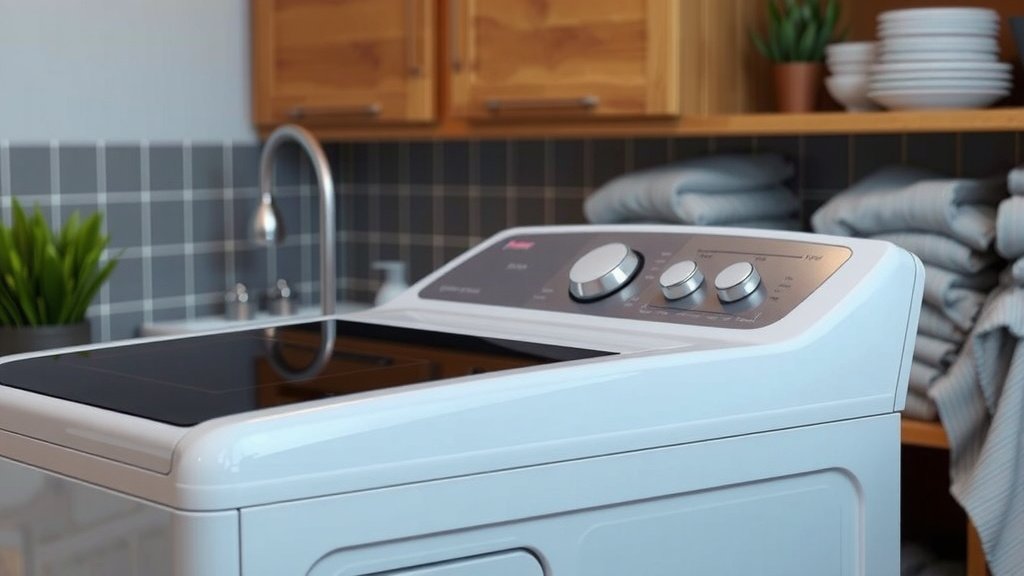
These are the top-loaders many of us grew up with. They have a central post, the agitator, that twists and turns clothes. This is very effective at scrubbing out dirt. However, agitators can be rough on fabrics. They also tend to use more water than other types. You’ll often find these models are more budget-friendly.
High-Efficiency (HE) Impeller Models
These machines use a low-profile cone or disc at the bottom of the tub. This is called an impeller. It spins and tumbles clothes around, rubbing them against each other. HE models use less water. They are gentler on your clothes. Many experts say they offer a good balance of cleaning power and fabric care (Maytag).
Considering Your Budget and Needs
The price range for top-loaders is wide. You can find basic models for a few hundred dollars. High-end models with all the bells and whistles can cost $1,000 or more. Think about what features are truly essential for your household.
Here’s a quick checklist to guide your decision:
- Load size: Match capacity to your family’s needs.
- Water level options: Do you need deep water washes?
- Energy Star rating: Look for savings on utilities.
- Spin speed: Faster means less drying time.
- Specialty cycles: Consider steam or sanitize options.
- Brand reputation: Research reliability and customer reviews.
We found that investing a little more upfront in a reliable, feature-rich model often pays off. You’ll enjoy better cleaning performance and fewer service calls down the line. It’s about finding that sweet spot that works for your wallet and your laundry!
Conclusion
You’ve learned that the best top-loader washing machine fits your unique laundry needs. We found that focusing on capacity, specialized wash cycles, and efficiency ratings like ENERGY STAR will guide your choice. Whether you prefer a traditional agitator or a gentler HE impeller model, a durable machine is key. Now, take these insights and find the perfect top-loader that makes your laundry routine easier and more effective. Your next great wash awaits!
Frequently Asked Questions
How do I know if a top-loader will be gentle enough for my clothes?
Look for high-efficiency (HE) impeller models. They use a different mechanism than older agitator types. Impellers tumble clothes gently against each other. We found this method to be much kinder to fabrics.
Is a deep water wash option really necessary?
A deep water wash is helpful for heavily soiled items. It ensures clothes are fully submerged for a more thorough clean. If you often tackle tough stains, we found this feature very beneficial.
What’s the difference between an agitator and an impeller top-loader?
Agitator models have a central post that twists and turns clothes, which can be rougher. Impeller models use a low-profile disc at the bottom to move clothes. We found impeller models to be gentler and more water-efficient.
How much should I expect to spend on a good top-loader?
The price range is wide, from a few hundred to over $1,000. We found that investing a bit more in a reliable model with essential features often saves money long-term.
Are top-loaders more or less energy efficient than front-loaders?
Generally, HE top-loaders can be quite energy efficient. Always check for the ENERGY STAR certification. We found that these models use less water and electricity compared to older machines.
![7 Best Washer And Dryer For Small Spaces [In 2026]](https://homeunderstandable.com/wp-content/uploads/2026/08/7-best-washer-and-dryer-for-small-spaces-in-2026-featured-768x432.jpg)
![7 Best Washing Machine For Small Household [In 2026]](https://homeunderstandable.com/wp-content/uploads/2026/08/7-best-washing-machine-for-small-household-in-2026-featured-768x432.jpg)