
Which Washing Machine Should You Buy? Your Guide
Choosing the right washing machine depends on your needs, budget, and space. For most households, a front-load washer offers better cleaning and efficiency, though top-load models can be more affordable. Consider capacity and the types of cycles you’ll use most often to find your perfect match.
The washing machine market offers many options, from basic agitator models to high-efficiency smart machines. You’ll want to think about energy usage and water conservation, as well as special features like steam cleaning or sanitizing cycles. We found that balancing cost with performance is key for a long-term purchase.
- Capacity Matters: Match drum size to your laundry loads.
- Front vs. Top Load: Front-loaders are gentler and more efficient.
- Energy Star Certified: Saves money and helps the environment.
- Special Features: Consider steam, sanitize, or quick wash options.
- Budget: Set a price range before you start shopping.
Let’s walk through the key factors to help you decide which washing machine is the best fit for your home.
Picking the Perfect Washer for Your Home
Choosing the right washing machine can feel like a big decision. After all, it’s a major appliance that you’ll use for years. We’ve found that understanding a few key factors makes the process much simpler. Your goal is to find a machine that cleans your clothes well, fits your lifestyle, and doesn’t break the bank.
Understanding Washing Machine Types
The first step is knowing the basic types of washers available. Each has its own pros and cons.
Top-Load Washers: The Classic Choice
These are the machines many of us grew up with. They have a lid on top that opens to reveal the drum. They’re generally easier to load because you don’t have to bend over as much. Many find them more affordable upfront, too.
Agitator vs. Impeller Top-Loaders
Within top-loaders, there are two main styles. Agitator models have a central post that twists and turns clothes. This style is great for tough stains but can be harsher on fabrics. Impeller models, often called High-Efficiency (HE) top-loaders, have a low-profile cone or disc at the bottom. They use less water and are gentler on clothes. We found that HE top-loaders offer a good balance of cleaning power and fabric care.
Front-Load Washers: The Modern Workhorse
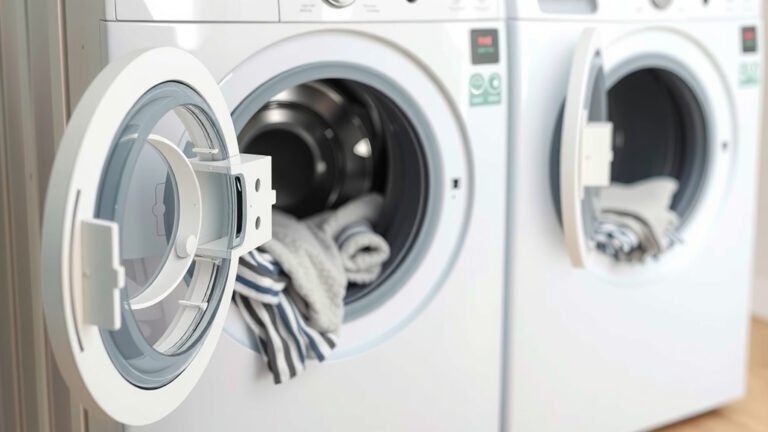
Front-loaders have a door on the front, like a dryer. They tumble clothes through a smaller amount of water. Many people prefer them because they’re incredibly efficient with water and energy. They also tend to clean clothes more gently, which is great for delicates and extending the life of your wardrobe. A bonus is that they often spin faster, meaning clothes come out drier, cutting down on dryer time.
Pros and Cons of Front-Loaders
The biggest advantage is their superior cleaning performance and efficiency. They’re often quieter too. On the downside, they usually cost more initially. You’ll also need to bend down to load and unload, which might be a concern for some. Some users also mention that front-loaders can develop mold or mildew around the door seal if not wiped down regularly. Keeping the door ajar between washes helps prevent this.
Key Features to Consider
Beyond the basic type, lots of features can make your laundry routine easier and more effective. Think about what’s most important to you.
Capacity: How Much Laundry Do You Do?
Washing machine capacity is measured in cubic feet. It tells you how much laundry can fit inside the drum. If you have a large family or tend to do big loads, you’ll want a larger capacity machine (5.0 cubic feet or more). For smaller households or individuals, a medium capacity (3.5 to 4.5 cubic feet) might be perfectly fine. We found that choosing the right capacity can save you time by reducing the number of loads you need to run.
Energy and Water Efficiency
Look for the Energy Star certification. Appliances with this label meet strict energy efficiency guidelines set by the EPA. This means they use less energy and water, saving you money on utility bills over time. Many experts agree that opting for Energy Star certified appliances is a smart choice for both your wallet and the environment (EPA).
Specialized Wash Cycles and Features
Most washers come with standard cycles like Normal, Delicates, and Heavy Duty. But many offer advanced options that can be super helpful:
- Steam Cycles: These use steam to help remove tough stains and allergens. They can also help reduce wrinkles.
- Sanitize Cycles: Perfect for households with babies or anyone with allergies, these cycles use high heat to kill bacteria and germs.
- Quick Wash: Need a favorite outfit clean in a hurry? This cycle is designed for lightly soiled items and is much faster than a standard wash.
- Smart Features: Some newer machines connect to your smartphone. You can start or stop cycles remotely, get notifications when a load is done, or even diagnose problems.
- Deep Fill Option: If you prefer older, top-load models but want more water, this option lets you add extra water to the tub.
Making Your Budget Work
Washing machines range from a few hundred dollars to well over a thousand. It’s wise to set a budget early. Generally, basic top-load agitator models are the least expensive. HE top-loaders and standard front-loaders are in the mid-range. High-end front-loaders with all the bells and whistles will be at the higher end.
Remember to factor in potential installation costs or delivery fees. We found that sometimes spending a little more upfront on an efficient model can lead to savings in the long run through lower utility bills.
A Quick Comparison: Top-Load vs. Front-Load
To help you visualize the differences, here’s a quick rundown:
| Feature | Top-Load (Agitator) | Top-Load (Impeller/HE) | Front-Load |
|---|---|---|---|
| Cleaning Action | Tumbles clothes with central post; can be rough | Tumbles clothes with impeller; gentler | Tumbles clothes in water; very gentle |
| Water Usage | High | Moderate to Low | Very Low |
| Energy Usage | Moderate to High | Low | Very Low |
| Price (Initial) | Lowest | Mid-Range | Higher |
| Ergonomics | Easy to load, no bending | Easy to load, no bending | Requires bending |
| Spin Speed | Lower | Moderate | Higher (drier clothes) |
Your Laundry Day Checklist
Before you head out to shop or browse online, consider these points:
- What is your budget for this purchase?
- How many people are in your household?
- How many laundry loads do you do weekly?
- Do you wash a lot of bulky items like comforters?
- Are fabric care and water/energy efficiency priorities?
- Do you have any physical limitations that make bending difficult?
Answering these questions will help narrow down your choices considerably. You’re well on your way to finding a washing machine that makes laundry day a little less of a chore!
Conclusion
You’re now equipped to choose the best washing machine for your home. We’ve covered the key differences between top-load and front-load models. You also know how important capacity, efficiency, and special features are. Setting your budget early will guide your decision effectively. Your next step is to review your laundry habits and space. Then, confidently select a machine that will simplify your chores for years to come. Happy washing!
Frequently Asked Questions
Are front-load washing machines worth the extra cost?
Often, yes. Front-load washers use less water and energy, which saves you money on utility bills over time. They also clean clothes more gently, extending the life of your wardrobe. While the upfront cost is higher, the long-term savings and performance can make them a smart investment.
How do I know what washing machine capacity I need?
Consider your household size and laundry frequency. For individuals or couples, a medium capacity (around 3.5 to 4.5 cubic feet) is usually sufficient. Larger families or those who wash bulky items often will benefit from a larger capacity (5.0 cubic feet or more) to reduce the number of loads.
What does Energy Star certification mean for a washing machine?
An Energy Star certified washing machine meets strict energy efficiency guidelines. This means it uses less water and electricity compared to standard models. Choosing an Energy Star appliance helps lower your utility bills and reduces your environmental impact.
Should I prioritize special wash cycles like steam or sanitize?
It depends on your needs. Steam cycles are great for tougher stains and reducing allergens. Sanitize cycles are ideal for households with babies or allergy sufferers, killing germs with high heat. If these are concerns for you, these features can be very beneficial.
Are older, simpler washing machines still a good buy?
For basic needs and tighter budgets, traditional top-load agitator models can still be a good choice. They are often less expensive upfront. However, they use more water and energy and can be rougher on clothes. For most people, a more modern HE top-loader or front-loader offers better overall value.
![7 Best Price For Stackable Washer And Dryer [In 2026]](https://homeunderstandable.com/wp-content/uploads/2026/09/7-best-price-for-stackable-washer-and-dryer-in-2026-featured-768x432.jpg)
![7 Best Small Washer For Apartment [In 2026]](https://homeunderstandable.com/wp-content/uploads/2026/08/7-best-small-washer-for-apartment-in-2026-featured-768x432.jpg)
![7 Best Washing Machine For One Person [In 2026]](https://homeunderstandable.com/wp-content/uploads/2026/08/7-best-washing-machine-for-one-person-in-2026-featured-768x432.jpg)