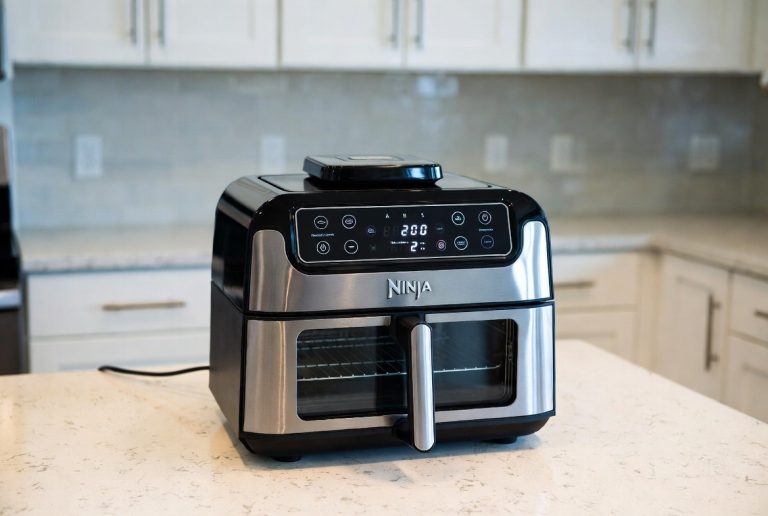
Ninja Air Fryer 4Qt vs 5.5 Qt: Which One Should You Buy?
If you’re standing in the kitchen appliance aisle, staring at two Ninja air fryer models and wondering which one deserves a spot on your countertop, you’re not alone. The choice between a 4-quart and 5.5-quart air fryer can feel surprisingly complicated, even though it seems like a simple size question on the surface. Let me walk you through everything you need to know to make the right decision for your specific cooking needs.
Understanding Air Fryer Capacity: Why Size Matters More Than You Think
When we talk about air fryer capacity, we’re essentially discussing how much food you can cook in a single batch. Think of it like comparing a compact car to a sedan—both get you where you need to go, but one handles highway trips with a family much better than the other. The capacity of your air fryer directly impacts your cooking efficiency, meal prep time, and whether you’ll need to cook in multiple batches for family gatherings.
The difference between 4 quarts and 5.5 quarts might sound modest on paper, but that extra 1.5 quarts translates to approximately 37 percent more cooking space. For families or anyone who meal preps regularly, this seemingly small difference can dramatically change your cooking experience.
The Ninja 4-Quart Air Fryer: Compact Power for Smaller Households
Who Is the 4-Quart Model Perfect For?
The 4-quart Ninja air fryer is ideal if you’re cooking for one to three people regularly. It’s the minimalist’s dream—compact enough to store easily, powerful enough to deliver restaurant-quality results, and efficient for daily cooking without excessive food waste. If your kitchen space is at a premium, this model won’t dominate your countertop real estate.
Young professionals living in apartments, couples without children, and single parents often find the 4-quart capacity perfectly suits their lifestyle. You’re not sacrificing quality or versatility; you’re simply choosing a model that matches your actual cooking volume.
Cooking Performance and Speed
Don’t let the smaller size fool you into thinking this model is less powerful. Ninja has engineered their 4-quart models with impressive air circulation technology that crisps food just as effectively as their larger counterparts. Your chicken wings will be golden and crispy, your vegetables perfectly roasted, and your frozen fries absolutely delicious—all in roughly the same timeframe as the bigger model.
The heating element distributes heat evenly throughout the chamber, so you won’t experience those frustrating cold spots or inconsistent cooking results that plague some lower-quality air fryers.
Storage and Counter Space Considerations
Here’s something people don’t talk about enough: your kitchen layout matters. If you have limited counter space, the 4-quart model becomes much more practical. It’s easier to store in cabinets or closets, and it won’t monopolize your prep area. This is particularly important if you have a galley kitchen or limited square footage to work with.
Cost Factor for the 4-Quart Model
Generally speaking, the 4-quart Ninja air fryer costs less than its 5.5-quart sibling. If you’re budget-conscious or new to air frying and want to test the waters before investing heavily, this model makes financial sense. The price difference isn’t dramatic—we’re talking roughly fifty to seventy dollars in many cases—but every penny counts when you’re building your kitchen arsenal.
The Ninja 5.5-Quart Air Fryer: Family-Sized Cooking Made Easy
Ideal User Profile for the 5.5-Quart Model
If you’re feeding four or more people regularly, the 5.5-quart capacity becomes genuinely valuable. Families with teenagers, parents who entertain frequently, or anyone who practices meal prepping for the week ahead will appreciate the extra cooking real estate. You can prepare enough chicken breasts for multiple days without running multiple cooking cycles.
This model shines when you’re making Thanksgiving sides, preparing appetizers for a party, or cooking enough protein to last several days. The efficiency gains compound when you consider how much time you save by not waiting for the second or third batch to finish cooking.
Batch Cooking Advantages
Let me paint a realistic scenario: you want to prepare healthy lunches for five days. With the 4-quart model, you might need two batches to prepare enough seasoned chicken breast. With the 5.5-quart model, you accomplish this in one cycle. Over the course of a month, this difference adds up to meaningful time savings—we’re talking hours potentially.
For fitness enthusiasts who meal prep, busy parents coordinating multiple schedules, or anyone serious about streamlining their cooking process, the larger capacity becomes genuinely transformative.
Versatility for Entertaining
Do you enjoy hosting dinner parties or casual gatherings? The 5.5-quart air fryer becomes your secret weapon. You can prepare a vegetable medley, homemade chicken nuggets, and crispy appetizers without constantly rotating batches or keeping food warm in the oven while waiting for the next round to finish.
Your guests will marvel at how quickly you served multiple hot dishes without appearing stressed, and honestly, they’ll never guess everything came from a single appliance.
Space Requirements and Kitchen Integration
Here’s where you need to be honest with yourself: is countertop space available? The 5.5-quart model is noticeably larger—roughly similar in footprint to a microwave. If you’re considering this size, make sure you’ve genuinely identified where it will live. A beautiful air fryer stuffed in a cabinet defeats its purpose because you’ll use it less frequently.
Measure your intended spot carefully. Check that cabinet doors open completely when the appliance sits there, and confirm it won’t block ventilation or create a fire hazard with your stove.
Investment and Long-Term Value
While the 5.5-quart model costs more upfront, consider the long-term value proposition. If you use an air fryer multiple times weekly, the time savings alone justify the extra investment. You’re essentially purchasing efficiency and convenience, which many people find worth the additional expense.
Direct Comparison: 4Qt vs 5.5Qt Performance Metrics
Cooking Temperature and Power Output
Both models reach similar maximum temperatures and maintain consistent heat throughout the cooking chamber. Neither has a power advantage over the other—they’re engineered for equivalent performance in their respective size categories. Your food quality won’t differ based on which size you choose.
Energy Consumption Differences
The 4-quart model consumes slightly less electricity per cooking cycle, though the difference is modest. If you’re incredibly energy-conscious, the smaller model has a minor advantage. However, the larger model’s superior batch capacity means fewer total cooking cycles needed, which can offset the slightly higher per-cycle consumption over time.
Cooking Time Comparisons
Interestingly, cooking times are remarkably similar between the two models for equivalent items. A batch of chicken wings takes approximately the same duration regardless of air fryer size. However, when you factor in the larger model’s capacity to cook more food simultaneously, you’re effectively cooking faster in terms of volume per unit time.
Cleaning and Maintenance
Both models feature removable, dishwasher-safe baskets and straightforward cleaning processes. The 5.5-quart model does have a larger basket to wash by hand if you prefer, but this is a trivial difference that shouldn’t influence your decision significantly.
Decision-Making Framework: How to Choose Between These Models
Assess Your Household Size Honestly
Start with an accurate picture of how many people you’re regularly cooking for. Don’t overestimate based on occasional dinner parties. Focus on your typical weeknight cooking. Are you usually preparing meals for two or three people? The 4-quart model likely suffices. Do you consistently cook for four or more? The 5.5-quart capacity becomes genuinely useful.
Consider Your Cooking Habits and Frequency
How often do you cook? Daily users who prepare multiple recipes will appreciate the larger model’s efficiency. Occasional users might find the 4-quart perfectly adequate. If you’re planning to air fry three times weekly versus three times monthly, the capacity needs differ substantially.
Evaluate Your Available Kitchen Space
Measure your intended location carefully. Don’t assume space that doesn’t actually exist. Visit a store and physically look at both models if possible. Sometimes what seems spacious turns out to be surprisingly cramped once the appliance is there.
Calculate Your Budget Reality
Be realistic about what you can spend. The price difference is meaningful for some budgets. If choosing the larger model forces you to sacrifice another kitchen upgrade you genuinely need, the 4-quart makes more sense financially.
Think About Future Lifestyle Changes
Are you planning to expand your household? Is a new job commute making meal prep more critical? Will your cooking needs likely increase? Sometimes buying for your future needs makes more sense than purchasing for your current situation, even if it feels like overkill today.
Real-World Usage Scenarios and Practical Examples
Scenario One: The Single Professional
Marcus is a 28-year-old software engineer who lives alone and works long hours. He meal preps every Sunday for the week ahead, preparing protein and vegetables for roughly five dinners. The 4-quart model perfectly suits his needs—it fits in his small kitchen, costs less initially, and has enough capacity for his weekly prep session with maybe one repeat cycle for larger vegetable portions. His decision: 4-quart is ideal.
Scenario Two: The Growing Family
Jennifer has two children and often hosts playdates and family dinners. She’s discovered her family loves air-fried foods and wants to replace her conventional oven cooking for many recipes. With regular cooking for four to five people plus guests, the 5.5-quart model becomes genuinely valuable. She can prepare appetizers, main courses, and sides in single batches, dramatically streamlining her cooking process. Her decision: 5.5-quart is worth the investment.
Scenario Three: The Fitness Enthusiast
David is serious about fitness and meal preps chicken breast, fish, and roasted vegetables six days weekly. He’s consistently cooking for one person but in large quantities for multiple meals. The 5.5-quart model dramatically reduces his cooking time—he can prepare two days’ worth of protein in a single batch rather than multiple cycles. For his specific use case, the larger model provides genuine efficiency gains. His decision: 5.5-quart, despite living alone.
Common Misconceptions About Air Fryer Sizes
Myth: Smaller Models Are Less Powerful
This isn’t true. The 4-quart model delivers equivalent cooking power and heat distribution. Size doesn’t determine cooking quality—engineering does, and Ninja excels at both sizes.
Myth: You’ll Definitely Outgrow a 4-Quart Model
Many people purchase larger appliances than they actually need, predicting future usage that never materializes. Be honest about your realistic cooking needs rather than buying for an imaginary scenario.
Myth: The 5.5-Quart Doubles Your Cooking Speed
The extra capacity doesn’t make cooking twice as fast—it makes your batch size larger. Cooking times remain similar. The speed advantage comes from fewer total batches needed, not from faster individual cycles.
Warranty, Support, and Longevity Considerations
Both Ninja models typically come with comparable warranties—usually one year from the manufacturer. Customer support is equally responsive regardless of model size. Longevity depends more on usage patterns and maintenance than on which capacity you choose.
Keep your air fryer clean, avoid extreme temperature shocks, and follow the manufacturer’s guidelines, and either model should last several years of reliable service.
Where to Purchase and Price Monitoring Tips
Both models are widely available through Amazon, Walmart, Target, Best Buy, and Ninja’s official website. Prices fluctuate seasonally—you’ll often find better deals during holiday sales or end-of-season clearance events. If you’re flexible on timing, waiting for a promotion might save you meaningful money.
Sign up for price tracking on Amazon or check Camelcamelcamel to monitor price history before purchasing. Sometimes the difference between the two models shrinks during sales, making the larger capacity more attractive value-wise.
Conclusion
The choice between the Ninja 4-quart and 5.5-quart air fryer ultimately depends on three primary factors: your household size, your available kitchen space, and your budget. There’s no universally correct answer—only the right choice for your specific circumstances.
Choose the 4-quart model if you’re cooking for one to three people regularly, have limited counter space, prefer a lower upfront investment, or are new to air frying and want to test the waters. This size delivers everything you need for excellent cooking results without excess bulk.
Choose the 5.5-quart model if you’re feeding four or more people regularly, enjoy entertaining, practice meal prepping, have adequate kitchen space, and value the time savings from larger batch cooking. The extra capacity provides genuine efficiency gains for larger households or frequent cooks.
Both models are genuinely excellent appliances that will serve you well for years. The “best” choice is simply the one that aligns with your real-world cooking needs and circumstances, not hypothetical scenarios or aspirational future situations. Make an honest assessment of your actual cooking patterns, measure your available space, consider your budget, and trust that either option will deliver the crispy, delicious air-fried foods you’re craving.
Frequently Asked Questions
Can I Cook Frozen Foods in Both Models with Equally Good Results?
Absolutely. Both the 4-quart and 5.5-quart Ninja models excel at cooking frozen foods. The circulating hot air effectively crisps frozen items whether you’re using the smaller or larger capacity model. Cooking times remain virtually identical between the two sizes for the same frozen items. The only advantage the larger model provides is batch size—you can cook more frozen fries or chicken nuggets simultaneously, not that they’ll cook faster or taste noticeably different.
Is It Worth Paying Extra for the 5.5-Quart Model If I Live Alone?
It depends on your specific cooking habits. If you meal prep aggressively—preparing multiple days’ worth of food in single cooking sessions—the larger capacity can provide genuine time savings justifying the extra cost. However, if you cook fresh each day in smaller portions, the 4-quart model serves your needs perfectly well. Consider your actual cooking patterns rather than your household size alone.
Will the 5.5-Quart Model Fit Standard Cabinet Spaces?
This varies depending on your specific cabinet dimensions. The 5.5-quart Ninja air fryer is roughly 15 inches long, 13 inches wide, and 14 inches tall—similar to a microwave. Standard kitchen cabinets vary in dimensions, so measure your intended storage space carefully before purchasing. Many people find it easier to keep the larger model on their countertop permanently rather than attempting to store it.
Do Both Models Have the Same Cooking Functions and Programs?
Generally, yes. Both the 4-quart and 5.5-quart models feature similar cooking pre
![What Is The Best Black Friday Deals for Air Fryers [In 2026]](https://homeunderstandable.com/wp-content/uploads/2026/03/Best-Black-Friday-Deals-for-Air-Fryers-768x516.jpg)
![What Is The Best Chicken Brine for Air Fryer [In 2026]](https://homeunderstandable.com/wp-content/uploads/2026/03/Best-Chicken-Brine-for-Air-Fryer-768x516.jpg)
![What Is The Best Batter for Air Fryer Chicken Tenders [In 2026]](https://homeunderstandable.com/wp-content/uploads/2026/03/Best-Batter-for-Air-Fryer-Chicken-Tenders-768x516.jpg)
![What Is The Best Chicken Tender Recipe for Air Fryer [In 2026]](https://homeunderstandable.com/wp-content/uploads/2026/03/Best-Chicken-Tender-Recipe-for-Air-Fryer-768x516.jpg)