
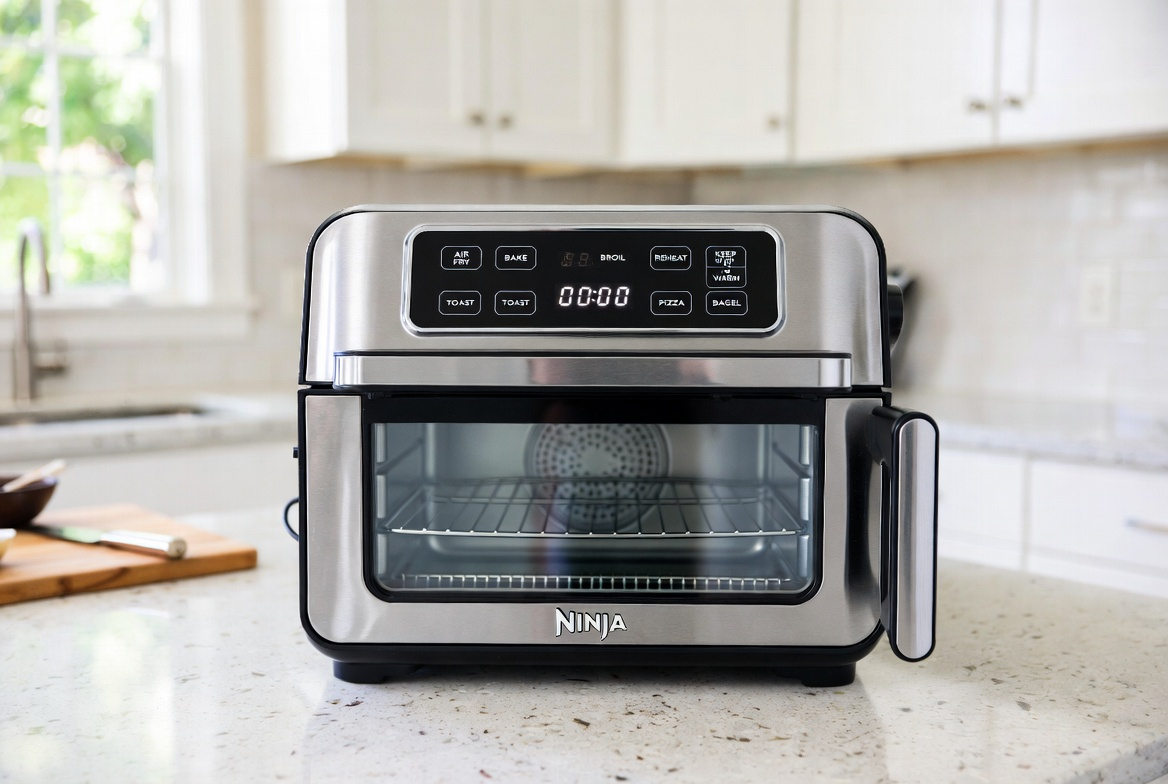
Ninja 8 Quart vs 10 Quart Air Fryer: Which One Should You Really Buy?
If you’re standing in the kitchen appliance aisle trying to decide between a Ninja 8 quart and a Ninja 10 quart air fryer, you’re probably feeling a bit overwhelmed. Both models promise to revolutionize the way you cook, but which one is actually right for your kitchen and lifestyle? Let me walk you through everything you need to know to make the best decision.
Understanding Air Fryer Capacity: Why Size Actually Matters
Think of air fryer capacity like choosing between a compact car and a full-size sedan. Sure, they both get you where you need to go, but the journey feels different. When we talk about an 8 quart versus a 10 quart air fryer, we’re discussing how much food you can cook simultaneously. This isn’t just a number on a box—it directly impacts your cooking experience, meal preparation time, and how well the appliance fits your family’s needs.
The difference between 8 and 10 quarts might sound modest, but those extra 2 quarts represent roughly a 25 percent increase in cooking capacity. For busy families or meal preppers, this can be the difference between making one batch of chicken wings and making enough to feed everyone at once.
What Does Quart Capacity Actually Mean?
A quart is a unit of volume measurement, and when manufacturers list their air fryer as 8 or 10 quarts, they’re telling you how much food can fit inside the cooking basket at once. This translates to real-world cooking scenarios. An 8 quart model typically lets you cook about 4 to 5 pounds of food in a single batch, while a 10 quart model handles roughly 5 to 6 pounds comfortably.
The Ninja 8 Quart Air Fryer: Perfect for Most Households
The Ninja 8 quart air fryer represents a sweet spot for many home cooks. It’s large enough to handle legitimate family dinners without being so enormous that it takes over your entire countertop. Let me break down what makes this model appealing to so many people.
Size and Countertop Real Estate
One of the biggest advantages of the 8 quart model is its footprint. It’s noticeably more compact than its 10 quart sibling, making it a realistic option if you have limited counter space. Most modern kitchens aren’t exactly sprawling, and many of us have to make tough choices about appliance placement. The 8 quart takes up less valuable real estate while still delivering impressive cooking capacity.
Performance and Cooking Speed
The 8 quart Ninja heats up quickly and distributes air circulation efficiently throughout the basket. Because there’s slightly less volume to fill, the hot air reaches and crisps your food consistently. You’ll find that cooking times are generally quick, and the results are reliably crispy on the outside and tender on the inside.
Energy Consumption
A smaller air fryer naturally uses less electricity than a larger model. If you’re conscious about your power bills, the 8 quart will be kinder to your energy consumption. Over time, this can add up to meaningful savings, especially if you use your air fryer several times per week.
Price Point
Generally speaking, the 8 quart model carries a lower price tag than the 10 quart version. If budget is a consideration, this model gets you into the air frying world without requiring as large an investment. You’re still getting premium Ninja quality, just in a slightly smaller package.
Who Should Choose the 8 Quart Model?
- Couples or small families with three to four members
- People with limited kitchen counter space
- Budget-conscious shoppers who want quality without maximum price
- Those who cook for their household most nights but don’t frequently entertain large groups
- Anyone looking to minimize energy consumption
The Ninja 10 Quart Air Fryer: For the Ambitious Cook
The Ninja 10 quart air fryer is the overachiever in this comparison. It’s designed for people who view cooking as a serious endeavor and want the flexibility to handle almost any culinary situation. Let’s explore what this model brings to the table.
Maximum Cooking Capacity
The most obvious advantage of the 10 quart model is sheer capacity. You can cook significantly more food in one batch. Imagine preparing an entire Thanksgiving side dish spread simultaneously, or feeding a gathering of ten people without requiring multiple cooking rounds. This is genuinely liberating if you love entertaining or have a larger household.
Batch Cooking and Meal Prep
For meal preppers, the 10 quart is a game changer. You can prepare multiple portions of proteins, vegetables, and other components in single batches. If you’re someone who dedicates a Sunday afternoon to preparing meals for the entire week, this capacity becomes incredibly valuable. You’ll spend less time standing at the stove and more time actually enjoying your meals.
Versatility in Food Types
The larger cooking space means you can experiment with different cooking arrangements. You might cook some items on one part of the basket while using a different zone for something else. The extra space provides more flexibility in how you approach meal preparation.
Height and Depth Considerations
The 10 quart model is bigger in all dimensions. It occupies more countertop space and has a taller profile. This isn’t necessarily bad, but it’s definitely something to measure before purchasing. Make sure you’re not buying an air fryer that won’t physically fit in your kitchen layout.
Who Should Choose the 10 Quart Model?
- Large families with five or more members
- People who frequently entertain guests at dinner parties
- Serious meal prep enthusiasts
- Those with spacious kitchen countertops
- Anyone who wants maximum flexibility and doesn’t want to repeat cooking cycles
Direct Comparison: Head-to-Head Features
Temperature Range and Precision
Both Ninja models operate within similar temperature ranges, typically between 105 and 400 degrees Fahrenheit. This means you’re getting comparable precision and control regardless of which size you choose. The heating elements are equally responsive, so you won’t sacrifice cooking quality by choosing the smaller model.
Cooking Functions and Presets
Ninja has equipped both models with multiple cooking functions. You’ll find air fry, roast, broil, and other preset options on both the 8 and 10 quart versions. The difference isn’t in what you can do, but rather how much of it you can do at once.
Ease of Cleaning
Both models feature dishwasher-safe baskets and accessories, which makes cleanup straightforward. The 8 quart basket is obviously smaller, so it fits more easily into standard dishwashers without requiring special maneuvering. The 10 quart might require a bit more strategic placement, but it’s still designed with user convenience in mind.
Durability and Build Quality
Ninja doesn’t compromise on build quality between these two models. Both are constructed with similar materials and engineering standards. You can expect years of reliable performance from either option. The warranty coverage is typically comparable as well.
Storage and Kitchen Space Considerations
Where you’ll keep your air fryer matters more than some people realize. An 8 quart model measures roughly 14 by 10 inches at its base, while a 10 quart takes up approximately 17 by 12 inches. If you have a small kitchen with limited counter space, those additional inches can be the difference between keeping your air fryer out and accessible or relegating it to a storage cabinet.
Some people have dedicated appliance garages or kitchen islands where larger appliances live. If you’re in this situation, the extra size of the 10 quart becomes less of a concern. However, if you rely on your kitchen counter for prep work and storage, the 8 quart’s smaller footprint might be the more practical choice.
Cooking Performance: Getting Consistent Results
Air Circulation Patterns
Both models use Ninja’s proven air circulation technology to cook food evenly. The key difference is that with a smaller basket, the 8 quart might achieve slightly more uniform heat distribution due to reduced volume. However, both models produce excellent, crispy results. The difference in cooking quality is negligible for most home cooking purposes.
Cooking Times Across Models
Generally, similar foods take roughly the same time to cook in both models. A chicken breast might take 15 minutes in either basket. However, if you completely fill the 10 quart basket, cooking times might extend slightly because the air needs to circulate through more volume. For lighter loads, cooking times remain comparable.
Cost Analysis: Balancing Budget and Benefit
Initial Purchase Price
The 8 quart typically costs between $150 and $250, while the 10 quart ranges from $200 to $350, depending on which specific Ninja model you’re looking at and current promotions. That price difference might seem significant when you’re standing at the store, but consider the value proposition.
Long-Term Value Calculation
If you use your air fryer multiple times weekly, the 10 quart’s capacity could save you time that has genuine value. Conversely, if you’re a light user, the 8 quart offers everything you need at a lower price point. Think about how often you cook and how many people you’re typically feeding.
Real-World Scenarios: Which Model Fits Your Life?
Scenario One: The Small Family
If you’re cooking for yourself and one other person most evenings, the 8 quart is honestly all you’ll ever need. You’ll easily fit two pieces of salmon, a bowl of vegetables, and some fries in a single batch. There’s no point in paying extra for capacity you won’t use.
Scenario Two: The Growing Household
A family of five or six benefits from the 10 quart’s extra space. Getting everyone fed simultaneously, rather than making multiple batches, transforms the dinner experience. You also reduce overall cooking time and energy consumption by consolidating meals into fewer batches.
Scenario Three: The Entertaining Host
If you’re someone who loves cooking for groups, the 10 quart becomes a worthwhile investment. Appetizers, sides, and mains can be prepared in impressive quantities without constant monitoring and basket swapping.
Scenario Four: The Meal Prep Master
Dedicated meal preppers often find the 10 quart’s capacity transformative. You can prepare a week’s worth of proteins and sides in a single afternoon, then portion them out as needed throughout the week.
Potential Drawbacks to Consider
8 Quart Limitations
The primary limitation is capacity. If you’re feeding a large group or doing serious meal prep, you’ll need to make multiple batches. This extends cooking time and requires patience. It’s not a significant problem for most home cooks, but it’s worth acknowledging.
10 Quart Considerations
The larger model demands counter space and can feel imposing in smaller kitchens. It also costs more upfront. If you rarely cook for more than three or four people, you might feel like you’ve overpaid for capacity you never utilize. Storage becomes a consideration if you lack space.
Making Your Final Decision
Choosing between these two models ultimately comes down to your kitchen space, budget, household size, and cooking frequency. There’s no universally correct answer, only the right answer for your specific situation.
Ask yourself these questions: How many people do I typically cook for? Do I have the counter space for a larger appliance? Will I use the extra capacity regularly? What’s my budget? Once you’ve honestly answered these questions, your decision should become clear.
Conclusion
Both the Ninja 8 quart and 10 quart air fryers represent excellent investments in your kitchen. The 8 quart model is ideal for smaller households, limited kitchen space, and budget-conscious shoppers who want reliable air frying without excess capacity. It delivers impressive cooking performance in a compact package at a reasonable price point.
The 10 quart model serves those with larger families, frequent entertaining needs, or serious meal prep aspirations. The extra capacity justifies the additional investment for the right person, but represents unnecessary expense for those who won’t utilize it. Both models share Ninja’s proven quality and reliability, so you’re truly just deciding on the right size for your lifestyle. Think honestly about your needs, measure your counter space, and make the choice that will bring you the most cooking joy and convenience.
Frequently Asked Questions
Can I fit a whole chicken in either the 8 or 10 quart Ninja air fryer?
A whole chicken typically weighs around 4 to 5 pounds, and both the 8 and 10 quart models can accommodate this. However, the 10 quart gives you more maneuvering room and allows for better air circulation around the bird. In the 8 quart, you might need to position it carefully to ensure it cooks evenly. Both will work, but the 10 quart offers more flexibility for whole birds.
How much time does the 8 quart versus 10 quart take to preheat?
Both models preheat to temperature in approximately 3 to 5 minutes. The size difference doesn’t significantly impact preheating time since the heating element’s power remains consistent. You’ll experience virtually no difference in preheating speed between the two models.
Are replacement parts easier to find for the 8 quart model?
Both models use widely available Ninja replacement parts. The 8 quart’s smaller size means accessories like baskets and racks are sometimes slightly less expensive, but both are readily available through Ninja’s official channels and authorized retailers. Parts availability isn’t really a deciding factor between these two models.
Will the 10 quart air fryer fit under my kitchen cabinets?
The 10 quart model typically stands about 13 to 14 inches tall, while the 8 quart is usually around 11 to 12 inches. This is an important measurement to take before purchasing. Measure the clearance under your cabinets carefully. If you have standard kitchen cabinets that sit 18 inches above the counter, both models will fit, but the 8 quart leaves more clearance.
Can I use both models for reheating leftovers, and which is more economical?
Both models work excellently for reheating food and maintaining crispiness that a microwave simply cannot achieve. The 8 quart uses slightly less electricity for reheating smaller portions, making it more economical for daily reheating tasks. However, if you’re reheating large quantities, the 10 quart’s ability to handle everything in one batch reduces total energy consumption. For typical reheating of leftovers for one or two people, the 8 quart is more efficient.
“`
![What Is The Best Batter for Air Fryer Chicken Tenders [In 2026]](https://homeunderstandable.com/wp-content/uploads/2026/03/Best-Batter-for-Air-Fryer-Chicken-Tenders-768x516.jpg)
![What Is The Best Air Fryer for Family of Four [In 2026]](https://homeunderstandable.com/wp-content/uploads/2026/03/Best-Air-Fryer-for-Family-of-Four-768x516.jpg)

![What Is The Best Costco Frozen Food for Air Fryer [In 2026]](https://homeunderstandable.com/wp-content/uploads/2026/03/Best-Costco-Frozen-Food-for-Air-Fryer-768x516.jpg)