
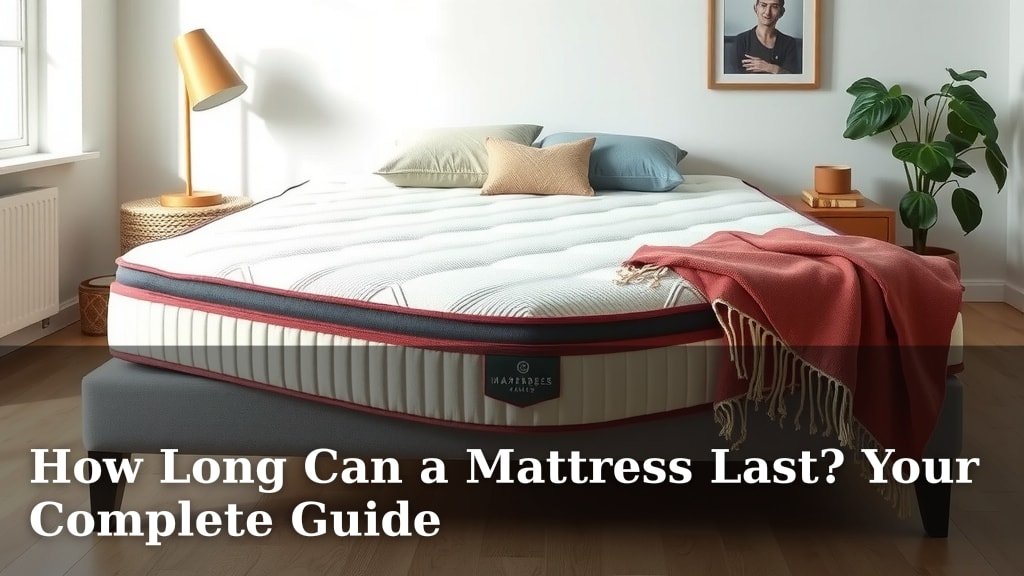
How Long Can a Mattress Last? Your Complete Guide
So, how long can a mattress last? Typically, you can expect a mattress to last between 7 to 10 years. This lifespan can vary based on the type of mattress, how well you care for it, and your sleeping habits. Knowing when to replace yours is key for a good night’s sleep.
The quality of your mattress plays a big role. A high-quality mattress will often last longer than a budget-friendly option. Factors like your body weight and how often the mattress is used also impact its durability. We found that proper maintenance can extend its life considerably.
- Mattresses generally last 7-10 years.
- Quality matters for mattress longevity.
- Proper care can help your mattress last longer.
- Signs of wear indicate it’s time for a new one.
Ready to figure out if your mattress is past its prime? Let’s dive into the signs that signal it’s time for a replacement and what factors influence how long your mattress will serve you well.
“`htmlUnderstanding Your Mattress’s Lifespan
So, you’re wondering how long you can count on your trusty mattress? You’re not alone! Most mattresses are designed to last for about 7 to 10 years. Think of it like a car; it has a certain mileage before it starts needing major repairs or a replacement. Your mattress is no different. Several factors play a role in how long yours will comfortably support your sleep.
Factors Affecting Mattress Durability
The longevity of your mattress isn’t set in stone. It’s a dynamic lifespan influenced by several elements. We found that understanding these can help you get the most out of your current mattress and make a smarter choice for your next one. It’s a bit like caring for a plant; some things help it thrive, while others can cause it to wilt sooner.
Mattress Type Matters
Different mattress constructions have varying lifespans. For instance, innerspring mattresses tend to have a shorter life expectancy, often around 6-8 years. This is because the coils can lose their support over time. Memory foam and latex mattresses, on the other hand, generally last longer. Many of these can provide great support for 10 years or even more. Hybrid mattresses, which combine coils with foam layers, usually fall somewhere in between, often lasting 7-10 years.
Your Sleeping Habits and Body Weight
Believe it or not, how you sleep and your body weight can impact your mattress. If you’re a heavier individual, your mattress will experience more compression. This can lead to wear and tear happening faster. Similarly, if you tend to sleep in one position constantly, that area of the mattress might get more use. We found that consistent use, especially under significant pressure, can speed up the aging process for any mattress.
Mattress Quality and Construction
The materials used and the overall quality of the mattress play a significant part. A high-density foam or a mattress with superior coil count will likely hold up better than a budget-friendly option. Manufacturers often use better materials and more robust construction techniques for premium models. This is why a higher initial investment can sometimes mean a longer service life. Many experts suggest looking at the warranty period as a general indicator of the manufacturer’s confidence in its product’s durability.
Signs Your Mattress Needs Replacing
Are you waking up with aches and pains? Does your mattress look saggy or feel lumpy? These are clear indicators that your mattress is past its prime. Ignoring these signs can lead to poor sleep quality and physical discomfort. Let’s walk through the common signals that tell you it’s time for a change.
Visible Sagging and Lumps
When you can see or feel significant dips or mounds on your mattress surface, it’s a pretty good sign that the internal support system has failed. This is particularly true for older innerspring models where coils can break or shift. Foam mattresses can develop permanent body impressions. If the indentation is deep enough that you feel like you’re sleeping in a valley, it’s definitely time to consider a replacement.
Increased Aches and Pains
Waking up feeling stiff, sore, or with unexplained back pain can be a direct result of a worn-out mattress. A mattress that has lost its support can no longer keep your spine properly aligned throughout the night. Many sleep specialists emphasize that proper spinal alignment is key to waking up refreshed. If your aches and pains started around the same time your mattress started feeling “off,” the connection is likely very strong.
Allergies and Odors
Over time, mattresses can accumulate dust mites, dead skin cells, and allergens. If you’ve noticed an increase in sneezing, congestion, or general allergy symptoms, especially in the bedroom, your mattress could be the culprit. Furthermore, persistent musty or unpleasant odors that cleaning doesn’t resolve are a sign that your mattress is breaking down internally or harboring unwanted guests. Many guidelines suggest that a mattress that smells bad is likely no longer hygienic (CDC).
Torn Fabric or Damaged Edges
While not always impacting comfort directly, visible damage to the mattress fabric or edges can indicate deeper structural issues. If the seams are ripping or the edge support is crumbling, the overall integrity of the mattress is compromised. This can lead to further sagging and a less stable sleeping surface.
How to Extend Your Mattress’s Life
The good news is you can often get more life out of your mattress with a little regular care. These simple steps can help protect your investment and ensure you continue to get a good night’s sleep. Think of it as routine maintenance for your sleep sanctuary.
Use a Mattress Protector
This is one of the easiest and most effective ways to protect your mattress. A good quality mattress protector shields your mattress from spills, stains, sweat, and allergens. Many protectors are waterproof and breathable, preventing moisture from reaching the mattress core. We found that using a protector can significantly reduce wear and tear from bodily fluids and accidental spills.
Rotate and Flip Your Mattress
For many mattress types, regular rotation (turning it head-to-toe) and flipping (if it’s double-sided) can help ensure even wear. Experts recommend doing this every 3-6 months. For single-sided mattresses, rotating is still beneficial. This prevents one area from bearing the brunt of the pressure. Check your mattress manufacturer’s guidelines, as not all mattresses are designed to be flipped.
Provide Proper Support
Ensure your mattress is placed on a sturdy and appropriate foundation. This could be a box spring, a slatted bed frame, or an adjustable base. Inadequate support can cause the mattress to sag prematurely. If you have a slatted frame, ensure the slats are close enough together to adequately support the mattress material. Many mattress warranties are voided if improper support is used.
Keep it Clean
Beyond using a protector, regular cleaning helps maintain hygiene and can identify issues early. Vacuuming your mattress every few months can remove dust and debris. For minor stains, spot clean with a mild detergent and water. Avoid soaking the mattress, as excess moisture can damage internal components and encourage mold growth.
Avoid Jumping or Standing on Your Mattress
While it might seem obvious, avoid activities that put excessive stress on the mattress. Jumping, especially for children, can break down coils and foam layers much faster than normal use. Treating your mattress gently will help it last longer.
Checklist for Mattress Health:
- Rotate your mattress every 3-6 months.
- Use a high-quality mattress protector at all times.
- Ensure your bed frame provides adequate, even support.
- Vacuum your mattress surface periodically.
- Spot clean spills immediately with a mild solution.
- Avoid jumping or excessive bouncing on the bed.
Conclusion
You’ve learned that a mattress typically lasts 7 to 10 years. Quality, type, and how you treat it all play a role. Watch for sagging, lumps, and new aches and pains. These are your mattress’s way of saying it’s time for a change. By using a protector, rotating, and providing good support, you can extend its life. Now that you know the signs, take a moment to assess your current mattress. If it’s showing its age, it’s time to start shopping for a new one to ensure you get restful sleep.
Frequently Asked Questions How do I know if my mattress is too old?
Look for visible signs like sagging, lumps, or worn fabric. If you’re waking up with new aches and pains or experiencing increased allergy symptoms, your mattress might be past its prime. These are clear indicators that it’s no longer providing adequate support or a clean sleeping surface.
Can I extend the life of my current mattress?
Yes, you can! Using a high-quality mattress protector is a must. Regularly rotating your mattress every 3-6 months also helps ensure even wear. Make sure your bed frame provides proper, solid support to prevent premature sagging.
What is the average lifespan for different mattress types?
Innerspring mattresses typically last around 6-8 years. Memory foam and latex mattresses often last longer, with many reaching 10 years or more. Hybrid mattresses usually fall in the middle, offering about 7-10 years of good support.
Why do body weight and sleeping habits affect mattress life?
Heavier individuals place more pressure on a mattress, which can cause materials to break down faster. Consistent sleeping in the same position can also lead to uneven wear and indentations over time. This increased and concentrated use speeds up the aging process.
Are there any warranties that guarantee mattress lifespan?
Many mattress manufacturers offer warranties, often ranging from 5 to 20 years. While a longer warranty can suggest better quality and durability, it doesn’t always guarantee the mattress will feel supportive for that entire duration. Always check the specific terms and conditions of your mattress warranty.

![What Is The Best Orthopedic Mattress for Side Sleepers [In 2026]](https://homeunderstandable.com/wp-content/uploads/2025/08/Best-Orthopedic-Mattress-for-Side-Sleepers.jpg)

![What Is The Best Mattress for Arthritic Joints [In 2026]](https://homeunderstandable.com/wp-content/uploads/2025/11/Best-Mattress-for-Arthritic-Joints.jpg)
![What Is The Best Mattress For Hip And Low Back Pain [In 2026]](https://homeunderstandable.com/wp-content/uploads/2025/12/Best-Mattress-For-Hip-And-Low-Back-Pain.jpg)