Furnace Filter vs Air Purifier: Which is Better for Your Home
When you’re wondering whether a furnace filter vs. air purifier is the right choice for your home, remember this: furnace filters primarily protect your HVAC system, while air purifiers are designed to clean the air you breathe. Think of your furnace filter as a bodyguard for your furnace, catching the big stuff. An air purifier is more like a personal trainer for your lungs, actively removing smaller, harmful particles from the air. They serve different, though sometimes overlapping, purposes in maintaining your home’s air quality.
Many homeowners use both to create a healthier living environment. A furnace filter helps maintain your heating and cooling system’s efficiency. An air purifier can tackle those microscopic irritants that filters might miss. We found that understanding their primary jobs helps you make the best choice for your specific needs. It’s not always an either/or situation; they can work together beautifully for cleaner air.
- Furnace filters protect your HVAC system from dust and debris.
- Air purifiers actively clean the air for better breathing.
- They serve different primary functions.
- Both can contribute to a healthier home environment.
- Consider your specific air quality goals.
Let’s break down what each does and how they can best work for your home’s air. We’ll look at their strengths and weaknesses side-by-side.
Understanding Your Home’s Air: Filter vs. Purifier Basics
When you’re thinking about improving your home’s air quality, you’ve probably come across furnace filters and air purifiers. They sound similar, but they actually do different jobs. Understanding these differences is key to choosing the right solution for your needs. Think of it this way: your furnace filter is like a doorman for your HVAC system. Your air purifier is more like a private security detail for the air you breathe inside.
What Does a Furnace Filter Actually Do?
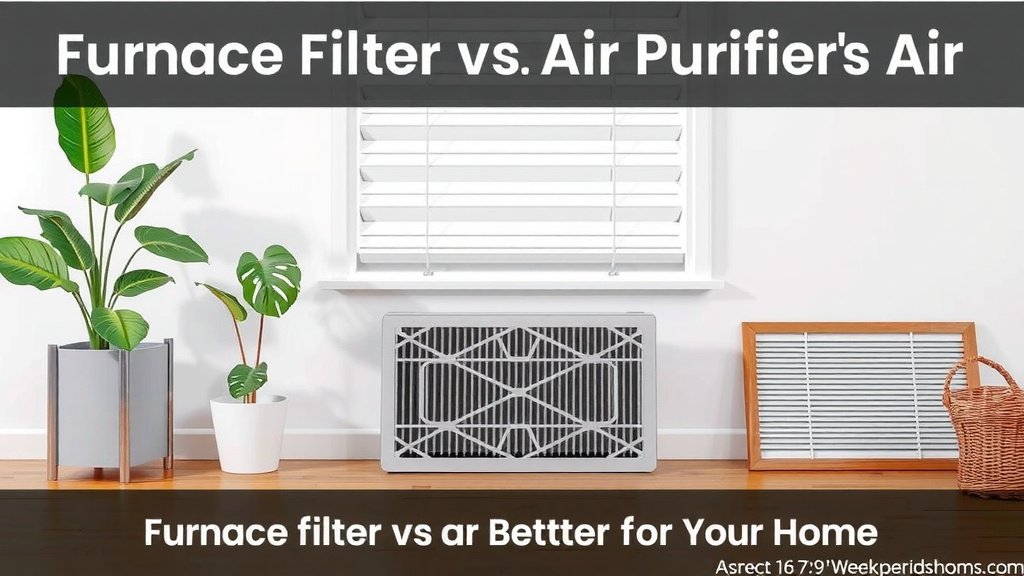
Your furnace filter’s main job is to protect your heating and cooling system. It sits inside your furnace or air handler. Its purpose is to catch larger particles like dust, lint, and pet hair before they get into your system’s sensitive components. If these particles get in, they can clog up your system. This makes it work harder and less efficiently. It can even lead to costly repairs down the line. So, a furnace filter is really about HVAC system health.
The Role of MERV Ratings
You’ll see furnace filters rated by MERV, which stands for Minimum Efficiency Reporting Value. This tells you how effective the filter is at capturing different sizes of particles. A lower MERV rating (like 1-4) captures larger particles. A higher MERV rating (like 11-13) captures smaller ones. For most homes, a MERV rating between 8 and 13 is a good balance. It captures enough to protect your system without overly restricting airflow.
What About Air Purifiers?
An air purifier, on the other hand, is designed to clean the air you breathe within a specific room or area. These devices actively pull in air, pass it through a series of filters, and then release cleaner air back into the room. They are built to target smaller, often invisible, airborne irritants. These can include things like smoke, pollen, mold spores, and even some bacteria and viruses. Many experts suggest air purifiers for people with allergies or respiratory issues (Cleveland Clinic).
Common Air Purifier Technologies
Air purifiers often use a combination of filtering technologies. The most common is a HEPA (High-Efficiency Particulate Air) filter. A true HEPA filter can capture at least 99.97% of particles 0.3 microns in size. Many units also include activated carbon filters. These are great for trapping odors and volatile organic compounds (VOCs) from things like cleaning products or new furniture. Some use UV-C light or ionizers, though these technologies can sometimes have drawbacks or be less effective for certain pollutants.
Furnace Filter vs. Air Purifier: Key Differences in Functionality
The biggest distinction lies in their primary purpose. Your furnace filter is a gatekeeper for your HVAC. It prevents your furnace from becoming a dusty, clogged mess. An air purifier is an active cleaner for the air you inhale directly. While both deal with air quality, their focus is different. Research consistently shows that furnace filters primarily protect equipment, while purifiers focus on occupant health.
Coverage Area and Scope
A furnace filter affects the air circulating throughout your entire home, as long as your HVAC system is running. It cleans the air that passes through the system. An air purifier typically works in a single room or a defined area. Its effectiveness is limited to the space where it’s placed. You might need multiple air purifiers for larger homes. This is unlike a single furnace filter that serves the whole house.
Particle Size Targeted
Furnace filters, especially standard ones, are best at catching larger particles like dust bunnies and pet fur. While higher MERV filters can catch smaller particles, they might not be as efficient as a dedicated air purifier with a HEPA filter. Air purifiers, particularly those with HEPA filters, are specifically designed to capture the very fine particles that can deeply affect air quality and respiratory health. These tiny particles are often the ones that cause allergy symptoms (CDC).
When to Choose Which (or Both!)
Deciding between a furnace filter and an air purifier, or if you need both, depends on your goals. Are you mainly trying to keep your furnace running smoothly? Or are you looking to breathe cleaner air, especially if you have allergies or live in an area with poor outdoor air quality?
Optimizing Your HVAC System
If your main concern is the longevity and efficiency of your heating and cooling system, a good quality furnace filter is essential. Regularly changing your furnace filter is one of the simplest maintenance tasks you can do. We found that a MERV 8-13 filter is usually sufficient for most residential needs. It provides good protection without straining your system.
Targeting Specific Air Quality Concerns
For issues like lingering odors, smoke, pet dander, pollen, or if someone in your home suffers from asthma or allergies, an air purifier can be a great addition. They offer targeted cleaning for the air you’re actively breathing. Research suggests that air purifiers can significantly reduce indoor allergens and improve respiratory comfort (NIH).
The Power of Using Both
Many homeowners find that using both a furnace filter and an air purifier provides the best overall air quality solution. Your furnace filter keeps the big stuff out of your HVAC system. Your air purifier tackles the microscopic irritants in your living space. This dual approach ensures your system runs efficiently and your family breathes cleaner air. It’s a strategy that offers comprehensive protection.
| Feature | Furnace Filter | Air Purifier |
|---|---|---|
| Primary Purpose | Protect HVAC system from dust & debris | Clean the air you breathe for health |
| Coverage Area | Whole house (when HVAC runs) | Specific room or area |
| Target Particle Size | Larger particles (dust, lint) to medium (higher MERV) | Very fine particles (pollen, smoke, allergens) |
| Key Technology | Fibrous media (MERV rating) | HEPA, Activated Carbon, etc. |
| Best For | HVAC efficiency & longevity | Allergies, odors, specific air pollutants |
Your Air Quality Checklist
To help you decide what’s best for your home, consider these quick points:
- Do you have allergy or asthma symptoms?
- Are there persistent odors in your home?
- Do you have pets that shed a lot?
- Is your HVAC system regularly maintained?
- Are you concerned about microscopic airborne irritants?
- Do you want to improve overall indoor air freshness?
Conclusion
You’ve learned that furnace filters and air purifiers have distinct roles in your home’s air quality. A furnace filter is your HVAC system’s best friend, protecting it from dust and debris. An air purifier is your personal lung’s bodyguard, actively removing microscopic irritants from the air you breathe. While a furnace filter keeps your system running efficiently, an air purifier targets specific concerns like allergies and odors in your living space. For the most comprehensive approach to cleaner air, many homeowners find using both offers the best defense. Now, consider your home’s unique needs and take the next step by selecting the right filtration and purification solutions for your family.
Frequently Asked Questions
Can a furnace filter alone improve my allergies?
A furnace filter can help somewhat by catching larger allergens like pet dander and pollen that circulate through your HVAC system. However, they are not as effective as dedicated air purifiers at capturing the very fine particles that often trigger allergy symptoms. For significant allergy relief, an air purifier is usually a better choice.
How often should I replace my furnace filter?
You should typically replace your furnace filter every 1 to 3 months, depending on the filter type and your home environment. Homes with pets or high dust levels may require more frequent changes. Checking your filter monthly is a good practice to see if it’s visibly dirty.
Do air purifiers use a lot of electricity?
Most modern air purifiers are designed to be energy-efficient. Their electricity consumption varies by size and features, but many are comparable to running a small appliance or a few light bulbs. Look for ENERGY STAR certified models for the best efficiency.
Can I put a high-MERV furnace filter in any HVAC system?
While a higher MERV rating offers better filtration, it can also restrict airflow. This might strain your HVAC system, especially older ones not designed for it. Always check your system’s manual or consult a professional before installing a high-MERV filter to ensure compatibility and avoid potential damage.
Are air purifiers effective against smoke from wildfires?
Yes, air purifiers with HEPA filters and activated carbon are very effective at removing smoke particles and odors associated with wildfires. The HEPA filter captures the fine particulate matter, while the carbon filter absorbs the smoke’s chemical compounds and smells. Placing them in your main living areas can greatly improve indoor air quality during smoke events.
![5 Best Hepa Air Purifier for Covid-19 [In 2026]](https://homeunderstandable.com/wp-content/uploads/2025/05/best-hepa-air-purifier-for-covid-19-clorox-smart-air-purifiers-review-768x768.jpg)