
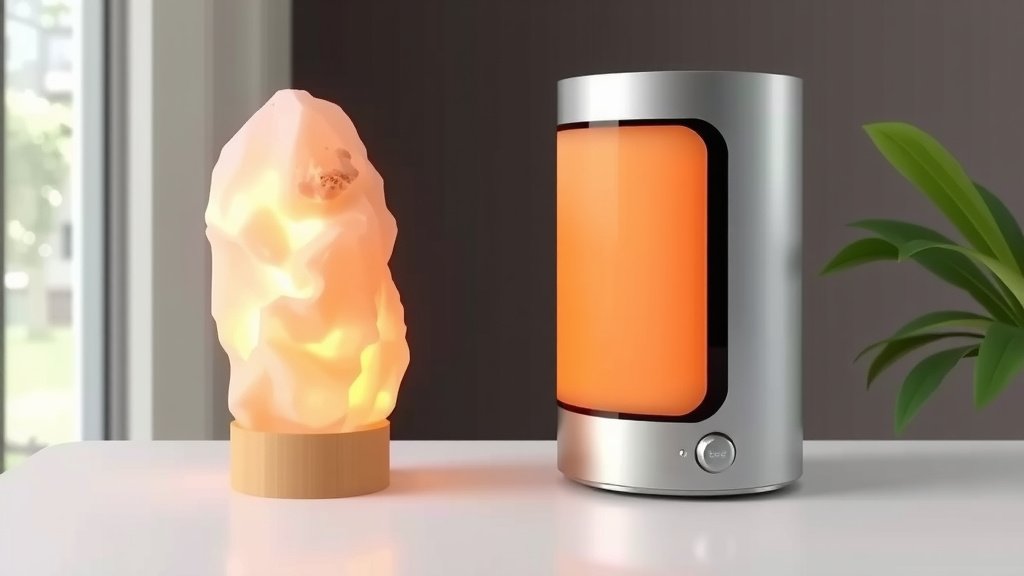
Himalayan Salt Lamp vs Air Purifier: Which Cleans Your Air
When comparing a Himalayan salt lamp vs. an air purifier, remember they offer very different benefits. A Himalayan salt lamp is primarily for ambiance and decoration, not air purification. An air purifier is specifically designed to actively remove pollutants from your air.
While salt lamps may attract some moisture and dust particles due to their hygroscopic nature, they don’t have the filtration technology of a true air purifier. Think of a salt lamp as a mood enhancer and an air purifier as a health-focused appliance. We found that focusing on what each device *actually does* helps clear up the confusion.
- Salt lamps are mainly for decor and mood.
- Air purifiers actively clean your air.
- Salt lamps don’t filter air like purifiers do.
- Choose based on your needs: decor or air quality.
- They aren’t interchangeable solutions.
Let’s break down what each of these popular home items actually does, so you can make the best choice for your space.
Comparing Salt Lamps and Air Purifiers for Your Home
When you’re thinking about improving your home’s atmosphere, both Himalayan salt lamps and air purifiers might pop into your mind. But do they really do the same thing? We’ve looked into it, and the short answer is no. They serve very different purposes.
A salt lamp is mostly about creating a cozy vibe. An air purifier is designed to actually clean the air you breathe. Let’s get into the details so you know what you’re really getting.
What Does a Himalayan Salt Lamp Actually Do?
You’ve probably seen them – those warm, glowing pinkish-orange lamps. They’re made from chunks of salt mined from the Himalayas.
The Hygroscopic Nature of Salt Lamps
Salt is naturally hygroscopic. This means it attracts water molecules from the air. These water molecules often carry tiny particles like dust, pollen, and even some airborne bacteria.
The idea is that as the lamp heats up, any moisture and particles it attracted might get trapped on the salt’s surface. When the lamp cools, the moisture evaporates, theoretically leaving the impurities behind. We found that this effect is quite minimal in real-world home conditions.
Salt Lamps for Ambiance and Decor
Most people buy salt lamps for their unique, soothing glow. They can create a relaxing mood, making a room feel warmer and more inviting. This is their primary function.
Many users enjoy them for their aesthetic appeal. They look great on a nightstand or in a living room. Think of them as a stylish night light with a natural, earthy look.
Debunking Air Purification Claims
You might hear claims that salt lamps purify the air. While they attract some moisture and particles, they don’t have filters or fans to actively remove them from the air and contain them. Research has not shown them to be effective air purifiers. You can’t compare their capabilities to a dedicated air cleaning device.
How Air Purifiers Work to Clean Your Air
Air purifiers are built with a specific goal: to remove pollutants from your indoor air. They use technology to actively filter out particles you can’t see.
The Mechanics of Air Purification
Air purifiers typically use a fan to draw air into the unit. This air then passes through one or more filters. These filters are designed to trap different types of airborne contaminants.
Common Filter Types
The most common filter is a HEPA (High-Efficiency Particulate Air) filter. These are highly effective at capturing very small particles. We found that a true HEPA filter can trap at least 99.97% of particles 0.3 microns in size.
Other filters often include activated carbon filters. These are good for absorbing odors, gases, and volatile organic compounds (VOCs) that a HEPA filter can’t catch. Some units also have pre-filters to catch larger debris like pet hair.
What Air Purifiers Actually Remove
Air purifiers are designed to tackle a range of air quality issues. They can reduce:
- Dust and dust mites
- Pollen and pet dander
- Mold spores
- Smoke particles
- Bacteria and some viruses
- Odors from cooking or pets
- Chemicals from cleaning products or new furniture
The effectiveness depends on the type of purifier and the quality of its filters. Many health organizations suggest using air purifiers to help manage allergies and asthma symptoms (CDC).
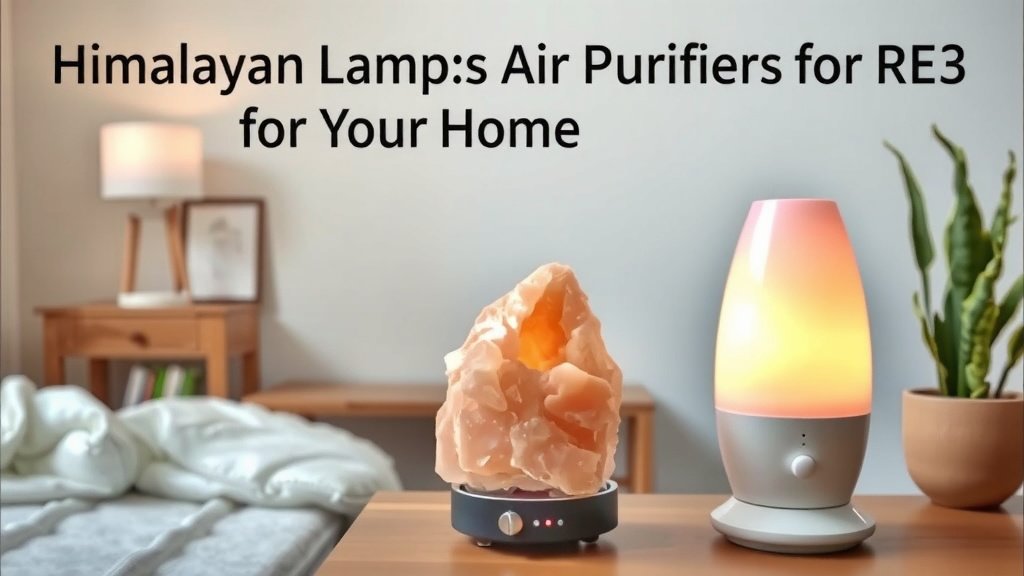
Direct Comparison: Salt Lamp vs. Air Purifier
Let’s put them side-by-side so the differences are crystal clear. It’s important to understand their core functions.
Here’s a breakdown:
| Feature | Himalayan Salt Lamp | Air Purifier |
|---|---|---|
| Primary Function | Ambiance, decor, mood lighting | Air purification, removal of airborne pollutants |
| Mechanism | Hygroscopic attraction (attracts moisture/particles) | Fan draws air through filters (HEPA, carbon) |
| Air Cleaning Ability | Minimal, not a primary function | High, designed specifically for this purpose |
| Pollutants Removed | May trap some dust/moisture on surface | Dust, pollen, dander, smoke, odors, VOCs, bacteria |
| Maintenance | Occasional dusting, bulb replacement | Regular filter replacement, cleaning |
| Cost | Generally lower initial cost | Varies widely; filters are an ongoing cost |
Choosing Based on Your Needs
Are you looking to create a cozy atmosphere or improve your home’s air quality? This is the main question you need to ask yourself.
If your goal is to add a warm, ambient glow to your room and enjoy its decorative charm, a salt lamp is a great choice. It’s about the feeling and the look.
If you or someone in your household suffers from allergies, asthma, or you’re concerned about odors, smoke, or general indoor air quality, an air purifier is what you need. It’s an appliance focused on health and cleanliness.
When to Consider Each Device
It’s not about one being “better” than the other, but rather about which one fits your specific needs.
For the Ambiance Seeker
You want your home to feel like a sanctuary. You enjoy soft lighting and decor that adds personality. You might choose a salt lamp to complement your existing decor. It’s an easy way to add a touch of natural beauty and warmth.
For the Health-Conscious Homeowner
You prioritize clean air for your family. You might have pets, live in an area with pollution, or want to reduce allergens. In this case, investing in a quality air purifier is the sensible step. Many people find they breathe easier and sleep better with one.
Can You Use Both?
Absolutely! Many people enjoy the benefits of both. You can use a salt lamp for its mood-setting qualities in your living room or bedroom, and have an air purifier running in areas where air quality is more of a concern, like the bedroom or main living space.
They aren’t mutually exclusive. Think of it this way: a salt lamp is like adding a beautiful candle for mood, while an air purifier is like cleaning the windows to let in fresh air. Both can contribute to a more pleasant home environment, but they do so in entirely different ways.
Key Takeaways for Your Decision
To wrap up your decision-making process, here’s a quick checklist:
- Do you want better mood lighting or cleaner air?
- Are you dealing with allergies or respiratory issues?
- Is your main goal decor or air filtration?
- Understand that salt lamps attract moisture, not actively filter air.
- Air purifiers use fans and filters to capture particles.
- Choose the device that aligns with your primary health or aesthetic goals.
Conclusion
As we’ve seen, Himalayan salt lamps and air purifiers serve distinctly different purposes in your home. A salt lamp is primarily for creating a cozy ambiance and adding decorative warmth. It’s about the mood and aesthetic appeal it brings to your space. An air purifier, on the other hand, is a health-focused appliance designed to actively remove airborne pollutants like allergens, dust, and odors using advanced filtration systems. Neither is a substitute for the other. To make the best choice, consider if your main goal is enhancing your home’s atmosphere or improving its air quality. If you desire both, you can certainly use them together. Your next step is to decide which of these benefits is most important for your home environment right now.
Frequently Asked Questions
Do Himalayan salt lamps really ionize the air?
Research and findings indicate that the claim of salt lamps significantly ionizing the air is not well-supported. While they may release a very small number of ions, this effect is generally considered negligible compared to dedicated air ionizers or natural processes. You shouldn’t rely on a salt lamp for this benefit.
Can a salt lamp help with allergies?
Himalayan salt lamps are not designed or proven to alleviate allergy symptoms. While they might attract some dust particles to their surface due to being hygroscopic, they lack the filtration capabilities to actively remove allergens from the air. For allergy relief, an air purifier with a HEPA filter is recommended.
How often do I need to replace the filters in an air purifier?
Filter replacement frequency for air purifiers varies by model and usage. Generally, HEPA filters should be replaced every 6 to 12 months, and carbon filters may need replacement more frequently, often every 3 to 6 months, especially if you use the purifier for odor control. Always check your manufacturer’s recommendations.
Are salt lamps safe to leave on all night?
Yes, Himalayan salt lamps are generally safe to leave on for extended periods, including overnight. They use low-wattage bulbs and don’t pose a fire hazard when used properly. Their warm glow can even serve as a soothing night light for some individuals.
Can I put an air purifier and a salt lamp in the same room?
Absolutely. Using both a salt lamp and an air purifier in the same room is perfectly fine and can even be beneficial. The salt lamp will contribute to the room’s ambiance, while the air purifier works to maintain cleaner air quality. They complement each other by addressing different aspects of your home environment.
![5 Best Air Purifier for Office Space [In 2026]](https://homeunderstandable.com/wp-content/uploads/2025/05/best-air-purifier-for-office-space-enhance-air-quality-effortlessly-768x384.jpg)
![What Is The Best Air Purifier for Car Exhaust [In 2026]](https://homeunderstandable.com/wp-content/uploads/2025/06/best-air-purifier-for-car-exhaust.jpg)

