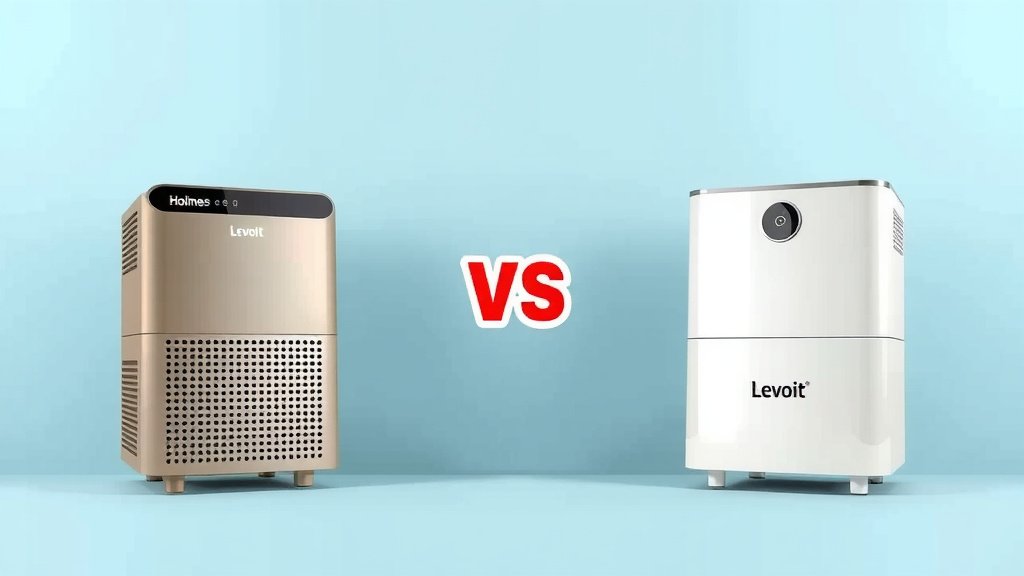
Holmes vs Levoit Air Purifiers: Which is Best
When deciding between a Holmes and a Levoit air purifier, Levoit often takes the lead for many homes. Levoit purifiers tend to offer a stronger filtration system, especially for fine particles, and are generally praised for their quieter operation, making them a popular choice for bedrooms. Holmes purifiers can be a more budget-friendly option, but may not capture allergens and odors as effectively.
Choosing the right air purifier depends on your specific needs. Are you battling allergies, pet dander, or cooking odors? Both Holmes and Levoit offer various models designed to tackle different air quality issues. We’ve researched and found that understanding the CADR ratings and filter types is key to making the best choice for your family’s health and comfort.
- Levoit often wins for better filtration and quieter performance.
- Holmes can be a more affordable starting point.
- Consider your main concerns: allergies, odors, or just general freshness.
- Check the Clean Air Delivery Rate (CADR) for each model.
- Filter types (HEPA, activated carbon) matter for what they can remove.
Let’s break down what makes each brand stand out and help you figure out which one is the perfect fit for your home’s air.
Comparing Holmes and Levoit Air Purifiers for Your Home
When you’re looking to improve your indoor air quality, choosing between brands like Holmes and Levoit can feel like a big decision. We’ve researched both to help you see which one might be the better fit for your household’s needs. Both brands offer a range of models, but they often differ in their core strengths and price points.
Filtration Power: What’s Really Getting Trapped?
The heart of any air purifier is its filter. This is where the magic happens, trapping those tiny particles that can make you sneeze or feel unwell. We found that Levoit often focuses on multi-stage filtration systems.
Levoit’s Filtration Approach
Levoit purifiers typically feature a three-stage filtration process. This usually includes a pre-filter to catch larger particles like pet hair and dust bunnies. Next, a High-Efficiency Particulate Air (HEPA) filter is designed to capture about 99.97% of airborne particles down to 0.3 microns. Think dust mites, pollen, and mold spores. Finally, an activated carbon filter works to absorb odors from cooking, smoke, and even pet smells.
This comprehensive approach means Levoit models are often recommended for people with allergies or sensitivities. We found that this system is very effective at addressing a wide range of common indoor air pollutants.
Holmes’ Filtration Capabilities
Holmes air purifiers also use HEPA filters on many of their models, aiming for similar particle capture rates. Some Holmes units may include an activated carbon component for odor reduction. However, research suggests that the depth and effectiveness of these odor-absorbing filters can vary more widely compared to premium Levoit models.
While Holmes purifiers can certainly improve air quality, particularly for general dust and larger allergens, they might not tackle strong odors or the very finest microscopic particles with the same punch as some Levoit counterparts. If pet odors or cooking smells are a major concern, you might want to look closely at the specific filter specifications for Holmes units.
Performance Metrics: Noise and Airflow
Beyond just filtering, how well and how quietly an air purifier works is a big deal, especially if you plan to use it in a bedroom or living area.
Noise Levels: A Quieter Choice?
One area where Levoit frequently shines is in its quiet operation. Many users and reviews point out that Levoit purifiers, particularly their smaller or mid-sized models, operate at very low decibel levels on their lowest settings. This makes them ideal for sleeping environments.
We found that while Holmes units are not necessarily loud, they can sometimes be noticeably more audible than Levoit models on comparable settings. If you’re sensitive to noise or need absolute quiet for a nursery, this could be a deciding factor.
Clean Air Delivery Rate (CADR)
The CADR rating tells you how quickly an air purifier can clean the air in a room. It’s measured for three common pollutants: smoke, dust, and pollen. A higher CADR means faster cleaning.
Both brands offer models with varying CADR ratings, so it’s essential to check this number for the specific unit you’re considering. For a small room, a lower CADR might suffice. For larger spaces or more intense air quality issues, you’ll want a higher CADR. We recommend matching the purifier’s CADR to the size of your room, as suggested by organizations like the Association of Home Appliance Manufacturers (AHAM).
Design and User Experience
Sometimes, the little things make a big difference in your day-to-day experience with an appliance.
Aesthetics and Footprint
Levoit often opts for a modern, minimalist design that blends well into most home decor. They tend to have a smaller footprint, which is great for apartments or smaller rooms. Holmes models can be a bit more varied in their appearance, sometimes appearing more utilitarian.
Ease of Use and Features
When it comes to operation, both brands generally offer straightforward controls. Many Levoit models include features like auto mode, timers, and filter replacement indicators, adding convenience. Some Holmes units may also have these features, but it’s model-dependent. We found that checking the user manual or product descriptions for specific features is always a good idea.
Cost Considerations: Budget vs. Long-Term Value
Price is almost always a factor, and there’s a noticeable difference between these two brands in many cases.
Upfront Purchase Price
Holmes air purifiers are often positioned as a more budget-friendly option. You can typically find a Holmes unit for a lower initial investment compared to a comparable Levoit model. If you’re on a tighter budget or just starting out with air purifiers, Holmes can be an accessible choice.
Filter Replacement Costs
It’s important to factor in the ongoing cost of replacement filters. While Levoit’s initial purchase price might be higher, their filters are often readily available and competitively priced for their performance. For Holmes, you’ll want to research the cost and availability of replacement filters for the specific model you choose to ensure it remains an affordable option long-term. We found that filter costs can add up over the lifespan of the purifier.
Which Brand is Right For You? A Quick Checklist
To help you narrow it down, consider these points:
- Are you primarily concerned with allergies, pet dander, and fine dust?
- Do strong cooking or smoke odors need tackling?
- Is quiet operation essential for your bedroom or workspace?
- What is your budget for both the initial purchase and ongoing filter replacements?
- How large is the room you need to purify?
Making Your Final Choice
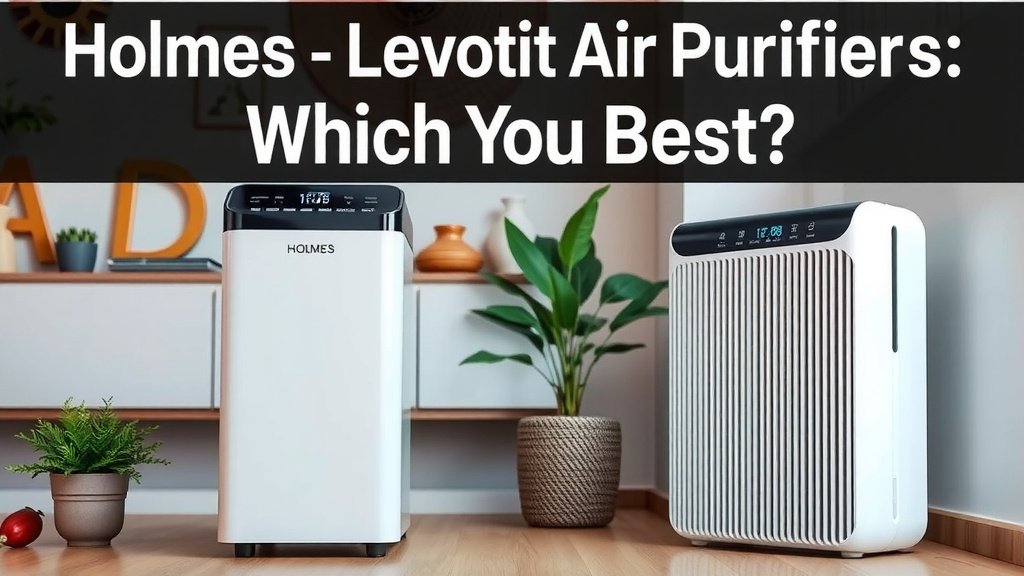
Based on our research, Levoit often stands out for its advanced multi-stage filtration, quieter operation, and modern design, making it a popular choice for those prioritizing allergy relief and a peaceful environment. Holmes can be a great entry-level option, offering basic air purification at a more affordable price point. Your personal priorities—whether that’s the deepest clean, the quietest hum, or the gentlest impact on your wallet—will guide you to the best fit.
Conclusion
When comparing Holmes and Levoit air purifiers, your choice boils down to your top priorities. If you’re targeting allergies, seeking quieter operation, and prefer a modern aesthetic, Levoit often emerges as the stronger contender. For those on a tighter budget who need basic air cleaning, Holmes provides an accessible entry point. We’ve found that understanding your specific needs, like room size and the type of pollutants you’re most concerned about, is key. Your next step is to match a purifier’s CADR rating and filter type to your home’s unique environment for the best results.
Frequently Asked Questions
Are Levoit air purifiers significantly quieter than Holmes?
Based on user feedback and our research, Levoit models are generally reported to operate more quietly, especially on lower fan speeds. This makes them a preferred choice for bedrooms and quiet living spaces. While Holmes units are not excessively loud, they can be more noticeable than comparable Levoit purifiers.
Which brand is better for pet owners?
For pet owners, Levoit often has an edge due to its robust three-stage filtration, which includes a strong activated carbon filter for odors and a high-efficiency HEPA filter for dander. While Holmes can help, Levoit’s filtration is frequently more effective at capturing fine pet allergens and neutralizing persistent pet smells.
How do I know which CADR rating is right for my room?
You should match the air purifier’s CADR rating to the size of your room. A general rule of thumb is to choose a purifier with a CADR that is at least two-thirds of the room’s square footage. For example, a room that is 150 square feet would benefit from a CADR of at least 100 for smoke, dust, and pollen.
Are Holmes filters harder to find or more expensive long-term?
The availability and cost of replacement filters can vary by specific Holmes model. We recommend checking the current price and availability of filters for any Holmes unit you consider before purchasing. While Holmes might have a lower upfront cost, ensure the ongoing filter expense fits your budget.
Can a Holmes air purifier handle strong cooking odors as well as a Levoit?
Generally, Levoit’s advanced activated carbon filters are more effective at absorbing a wider range of odors, including strong cooking smells. While some Holmes models include carbon filters, their capacity and effectiveness for intense odors might be less pronounced than what Levoit typically offers. For significant odor issues, Levoit is often the more capable choice.