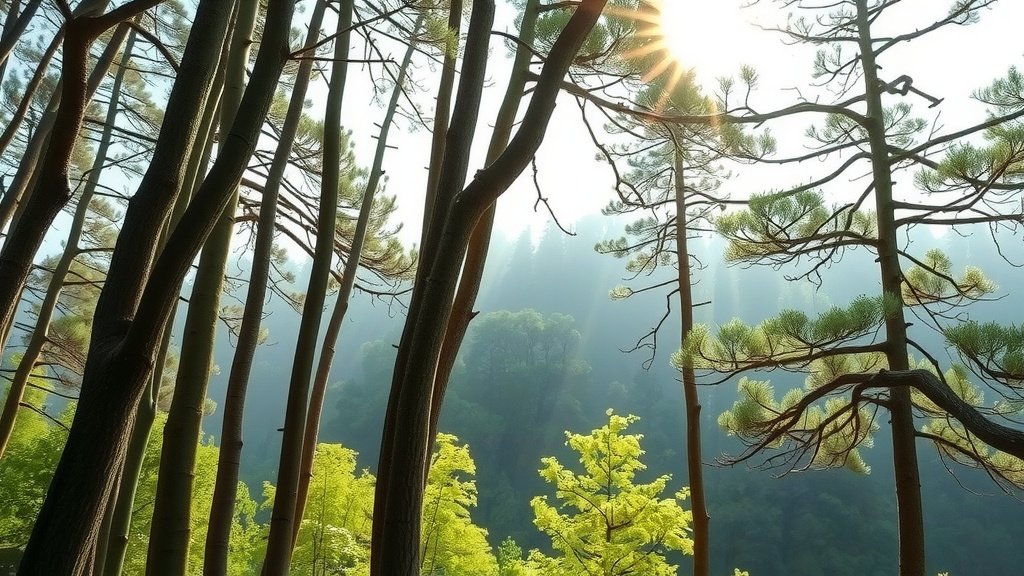
How Forests Purify Air: Nature’s Incredible Air Filter
Forests purify your air through a natural, amazing process. Trees and plants absorb harmful gases like carbon dioxide and release clean oxygen. This helps reduce pollution and makes the air healthier for everyone to breathe. It’s like the Earth’s own giant, green air filter at work!
Think of every leaf as a tiny, hardworking lung for the planet. They pull in pollutants that can harm us and turn them into the very air we need to live. Many scientists agree that forests play a vital role in maintaining our atmosphere’s balance. They also help cool things down!
- Forests clean your air by absorbing bad gases.
- They release fresh oxygen for you to breathe.
- Trees act as a natural filter for pollution.
- Forests are essential for a healthy planet.
Ready to learn more about this incredible natural system? Below, we’ll walk you through exactly how forests perform this vital air-cleaning job, step by step.
How Forests Help Clean Up Our Air
You might wonder how those big, beautiful trees actually make the air cleaner. It’s a natural wonder! Forests are like giant, green factories. They take in air pollutants you can’t see and convert them into something good. This process is essential for life on Earth. Many scientists agree that forests are one of the planet’s most powerful air purifiers.
Photosynthesis: The Magical Food-Making Process
The main way forests clean your air is through a process called photosynthesis. You might remember this from school! It’s how plants make their own food using sunlight. But it does so much more than just feed the tree.
Taking In Carbon Dioxide
Trees and plants have tiny pores on their leaves, like little mouths. These are called stomata. Through these stomata, they breathe in carbon dioxide (CO2) from the air. This is the same CO2 that humans produce when we burn fossil fuels or even just exhale. CO2 is a major greenhouse gas. Too much of it can warm up our planet.
Releasing Oxygen
During photosynthesis, trees use sunlight as energy. They combine the carbon dioxide they’ve taken in with water absorbed from the soil. The result? They create sugars for their own growth. As a byproduct, they release fresh oxygen (O2) back into the atmosphere. This is the oxygen you and I need to breathe to survive! So, for every bit of CO2 they take, they give us back clean air.
Beyond CO2: Filtering Other Pollutants
Forests don’t just stop at carbon dioxide. They are also great at filtering out other harmful pollutants from the air. Think of them as a giant, natural air filter.
Capturing Particulate Matter
Air pollution isn’t just gases. It also includes tiny solid particles, like dust, soot, and smoke. These are called particulate matter. They are bad for your lungs and can cause many health problems. The leaves of trees, with their rough surfaces, are excellent at trapping these particles. They stick to the leaves and are then washed to the ground by rain.
Absorbing Ground-Level Ozone
Ground-level ozone is another air pollutant that’s harmful to health. It’s not the same as the ozone layer high up in the atmosphere that protects us from the sun. This ground-level ozone can irritate your lungs. Forests can absorb a significant amount of this ozone through their leaves, helping to clean the air near the ground where we live and play.
Removing Nitrogen Oxides
Nitrogen oxides are gases that contribute to smog and acid rain. Forests have been found to absorb these gases as well. This removal helps improve air quality and protect nearby ecosystems from damage. It’s a win-win for everyone!
The Role of Soil and Microbes
It’s not just the trees themselves that do the cleaning. The forest floor and the soil beneath play a vital role too. Soil is teeming with tiny organisms, like bacteria and fungi. These microbes help break down pollutants that fall to the ground. They essentially “eat” and neutralize some harmful substances, further purifying the air and water.
Forests as Natural Air Conditioners
Besides cleaning the air, forests also help regulate temperature. Through a process called transpiration, trees release water vapor into the atmosphere. This is like sweating for a tree! It has a cooling effect on the surrounding area, much like a natural air conditioner. This can help combat urban heat islands, where cities tend to be much hotter than rural areas.
A Checklist for a Greener Breath
So, what can you take away from this? Here are a few simple points to remember:
- Trees breathe in CO2 and release life-giving oxygen.
- Leaves trap tiny pollution particles.
- Forests help reduce harmful ground-level ozone.
- Soil microbes also help clean up pollutants.
- Trees cool down the air around them.
- Forests are essential for a healthy planet.
Why This Matters for Your Health
When forests are healthy and abundant, the air you breathe is cleaner. This leads to fewer respiratory problems and better overall health for communities. Supporting forest conservation and planting trees can have a direct positive impact on your well-being. It’s a simple yet powerful way to invest in your health and the planet’s future. The work of a forest is constant, ensuring a healthier environment for all.
Conclusion
You’ve learned how forests are Earth’s natural air filters! From using photosynthesis to turn carbon dioxide into life-giving oxygen to trapping tiny pollution particles on their leaves, trees are constantly working for your health. The soil and even tree transpiration play vital roles in keeping our air clean and cool. Supporting forests is a direct investment in your well-being and the planet’s future. So, the next time you enjoy a breath of fresh air, remember the amazing work of your local trees and forests. Consider planting a tree or supporting conservation efforts in your community to help them continue their essential job.
Frequently Asked Questions
Do all trees purify air the same way?
Research shows that while all trees contribute to air purification through photosynthesis, their effectiveness can vary. Factors like leaf surface area, growth rate, and species type influence how much pollution they can absorb. Larger, denser forests generally offer greater air-cleaning benefits.
How does planting a single tree help purify the air?
Even a single tree makes a difference! It actively absorbs carbon dioxide from your environment and releases oxygen. Over time, its leaves can also trap dust and other small particles. Planting more trees in urban areas is especially helpful for combating localized air pollution.
Can forests remove viruses or bacteria from the air?
Forests are primarily known for filtering gases and particulate matter. While some airborne pathogens might get trapped on leaf surfaces, forests aren’t a direct defense against viruses or bacteria in the way that an air purifier might be. Their main benefit is reducing the overall pollution load.
What happens to the pollutants that trees absorb?
Carbon dioxide is used by the tree for photosynthesis, becoming part of its growth. Other pollutants, like particulate matter, are trapped on leaves and washed to the soil by rain. Here, soil microbes can help break down some of these substances, neutralizing them.
Are urban trees as effective at cleaning air as trees in a large forest?
Urban trees provide many benefits, including air purification. However, a large, dense forest with many trees working together will have a much more significant impact on air quality than a few scattered trees in a city. The sheer scale of a forest allows for more extensive absorption and filtering.