How Long to Run Air Purifier Daily for Clean Air
You should generally run your air purifier for 12 to 24 hours a day to effectively remove pollutants. For the best results, keep it running constantly, especially when you’re home. This ensures continuous air cleaning and helps maintain a healthy indoor environment. Think of it as a smart thermostat for your air quality.
How long you need to run it can vary based on several factors. Things like the size of your room, the air purifier’s power, and the level of pollution in your home play a big role. For example, if you have allergies or pets, running it longer is a smart move. Many experts recommend consistent use for optimal allergen and odor reduction.
- Aim for 12-24 hours daily for best results.
- Constant running provides continuous air cleaning.
- Consider room size and pollution levels.
- Allergies and pets may require longer run times.
Ready to breathe a little easier? Below, we break down the key things to consider for your air purifier’s daily schedule.
“`htmlOptimal Air Purifier Run Times for Your Home
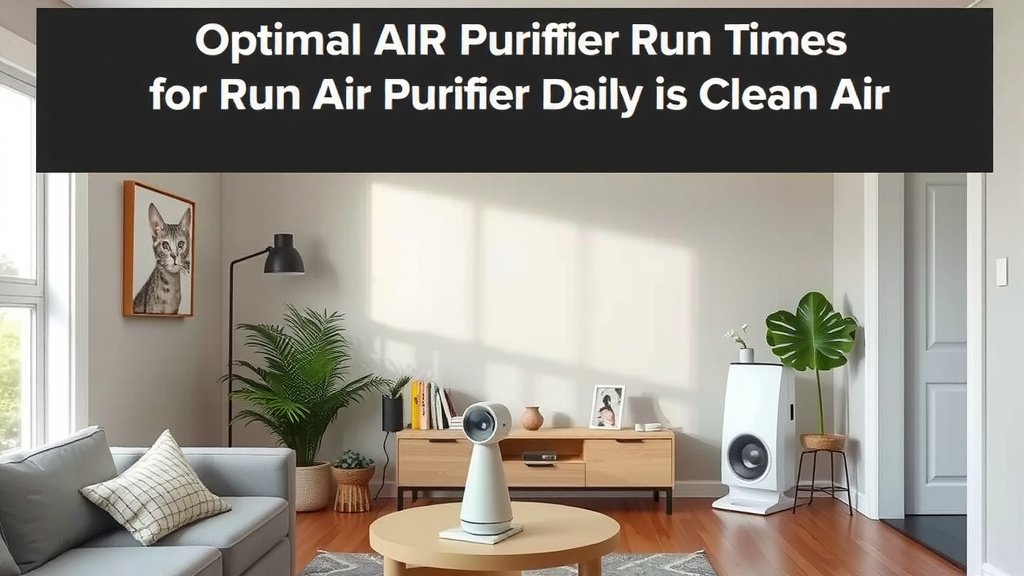
So, how long should you actually run your air purifier each day? For the best results, we found that running your air purifier 24/7 is the most effective way to consistently clean your indoor air.
Think of it like this: would you turn off your refrigerator for half the day? Probably not, because you want it to keep food fresh all the time. Your air purifier works similarly. Keeping it running allows it to continuously filter out allergens, dust, smoke, and other irritants before they build up.
Factors Influencing Air Purifier Usage
Room Size and Purifier Capacity
The size of the room your air purifier is in plays a huge role. A small unit in a large room will struggle to clean the air effectively, even if run constantly. You’ll need it to run longer to circulate and filter the air multiple times. We found that for larger spaces, you might need a more powerful unit or multiple units running. Make sure your purifier is rated for the square footage of the room it’s in. Most manufacturers provide this information clearly.
Air Quality Levels
Your home’s air quality is a major factor. Do you live near a busy road with lots of traffic? Do you have wildfires in your region that impact air quality? If your outdoor air is often poor, your indoor air will be affected too. Running the purifier longer, or even on a higher setting, becomes more important in these situations. We found that on days with high pollution alerts, keeping it on all day and night is a smart move.
Specific Household Needs
Allergies and Asthma
If you or someone in your household suffers from allergies or asthma, consistent air purification is key. Allergens like pollen, dust mites, and pet dander can trigger symptoms. Running your air purifier continuously helps to capture these particles before they can cause problems. Many allergy sufferers report significant relief when using a purifier regularly. Experts at the Asthma and Allergy Foundation of America often recommend HEPA filters for capturing these fine particles.
Pets in the Home
Love your furry friends, but not their dander and odors? Air purifiers are a game-changer for pet owners. Pet dander is a common allergen, and odors can linger. Consistent use of your air purifier will help reduce dander and neutralize smells. We found that pet owners often benefit most from running their purifiers 24/7 to combat these issues.
Cooking and Odors
The kitchen can be a source of strong odors from cooking. If you do a lot of frying or experience lingering food smells, running your air purifier nearby can help. Consider placing a unit in or near your kitchen. Turning it on before and during cooking, and leaving it on afterward, will quickly clear the air.
New Furniture or Renovations
New furniture can off-gas chemicals, and renovation projects can release dust and volatile organic compounds (VOCs) into the air. During these times, it’s wise to increase your air purifier’s run time. Running it constantly can help speed up the removal of these airborne irritants. We found that many people keep their purifiers on high for several days during these situations.
Understanding Air Purifier Settings and Their Impact
Most air purifiers come with different fan speeds. High speeds clean the air faster but can be louder and use more energy. Lower speeds are quieter and more energy-efficient. For continuous use, you might find a medium or low setting works best for daily operation. Saving the high setting for when you need a quick clean, like after cooking or when allergen levels are high.
Some purifiers also have timers. While timers can be useful for specific situations, like running the unit while you sleep or are away, they aren’t ideal for continuous air cleaning. We found that for the best overall air quality, it’s best to bypass the timer and let it run.
Maximizing Your Air Purifier’s Effectiveness
To ensure your air purifier is working its hardest, remember to maintain it. This includes regularly cleaning or replacing the filters. A clogged filter can’t clean the air effectively and puts extra strain on the motor. Check your manufacturer’s recommendations for filter life and replacement schedules. This is typically every 6-12 months.
Here’s a quick checklist to help you set up your air purifier for success:
- Place it strategically: Put it in the room where you spend the most time.
- Size matters: Ensure it’s rated for your room’s square footage.
- Run it often: Aim for 12-24 hours daily, ideally 24/7.
- Choose the right setting: Use low to medium for daily use, high for quick cleaning.
- Maintain filters: Replace or clean them on schedule.
- Monitor air quality: Increase run time during high pollution or allergy seasons.
| Situation | Recommended Run Time | Notes |
|---|---|---|
| General Daily Use | 12-24 hours | Continuous operation is best. |
| Allergies/Asthma Sufferers | 24 hours | Constant filtering is key. |
| Pets in Home | 24 hours | Helps control dander and odors. |
| High Pollution/Wildfire Smoke | 24 hours (on high if needed) | Maximize removal of outdoor pollutants. |
| Cooking Odors | 2-4 hours after cooking | Or continuously if odors are persistent. |
| New Furniture/Renovations | 24 hours for several days | To clear off-gassing chemicals and dust. |
Conclusion
Running your air purifier consistently is key to enjoying cleaner indoor air. For most homes, aiming for 12 to 24 hours a day offers the best protection against allergens and pollutants. Continuous operation, especially 24/7, proves most effective in maintaining a healthy environment, similar to how your refrigerator works to preserve freshness. Consider your specific needs, like allergies, pets, or local air quality, to fine-tune your schedule. Now, make a plan to integrate your air purifier into your daily routine for a healthier home.
Frequently Asked Questions
Will running my air purifier 24/7 use too much electricity?
While running your air purifier constantly does use energy, most modern units are designed to be energy-efficient, especially on lower settings. We found that the continuous benefits for air quality often outweigh the modest increase in your electricity bill. You can often use a medium or low setting for daily operation to balance effectiveness and energy use.
Is it okay to turn off my air purifier when I leave the house?
You can turn off your air purifier when you’re away, but it means you’re missing out on continuous air cleaning. Pollutants can build up in your absence, and it will take longer for the unit to clean the air once you return. For the best results, especially if you have sensitivities, leaving it on is recommended.
Can I run my air purifier on a higher setting all day?
Running your air purifier on a higher setting continuously will clean the air faster, but it will also be louder and consume more energy. We found that for daily use, a low or medium setting is often sufficient and more sustainable. Reserve the high setting for when you need rapid air purification, such as during high pollution events or after cooking.
How long should I run an air purifier after cooking?
After cooking, especially if you’ve fried foods or used strong spices, running your air purifier for 2 to 4 hours can effectively clear lingering odors and smoke. Placing the unit in or near the kitchen and turning it on before, during, and after cooking will speed up the process. If odors persist, you might consider leaving it on longer.
Do I need to run my air purifier more during allergy season?
Yes, you should definitely increase your air purifier’s run time during allergy season. Pollen and other seasonal allergens are often at their peak, and continuous filtration can significantly help those suffering from allergies. Running your unit 24/7 during these times can drastically reduce airborne allergens in your home.
![How to Clean Charcoal Filter for Air Purifier [Easy Guide]](https://homeunderstandable.com/wp-content/uploads/2025/05/how-to-clean-charcoal-filter-for-air-purifier-easy-guide-768x512.jpg)
![What Is The Best Air Purifier for Everything [In 2026]](https://homeunderstandable.com/wp-content/uploads/2025/05/best-air-purifier-for-everything-discover-top-picks-for-all-needs.jpg)