
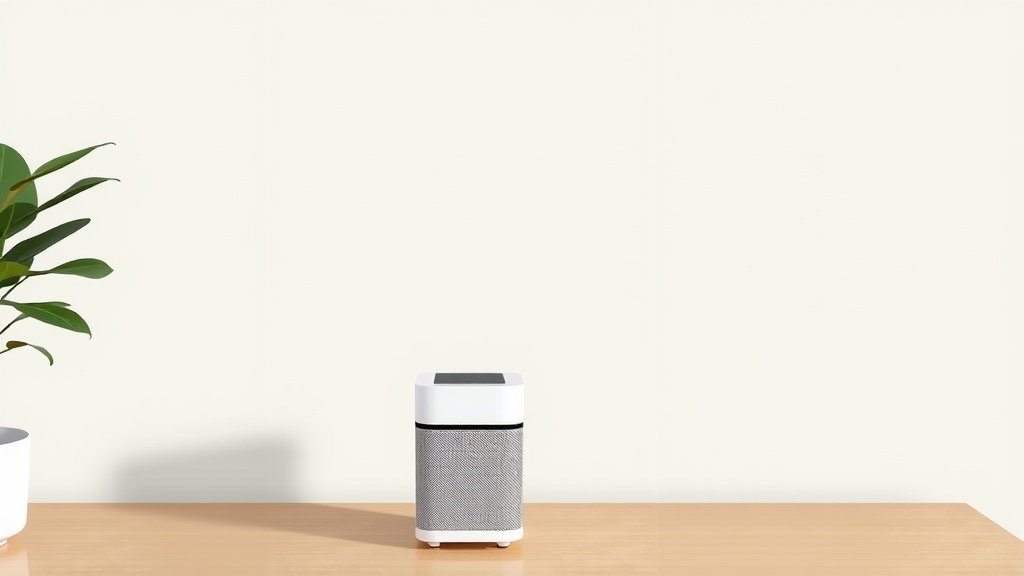
How to Choose the Right Air Purifier for Your Home
Choosing a good air purifier means looking for models that are certified by AHAM for their performance. You also want one with a True HEPA filter that captures 99.97% of particles. These filters are excellent for removing allergens and pollutants from your home’s air.
It’s important to find an air purifier that fits your room size. Too small, and it won’t do much. Too big, and you might be wasting energy. We found that checking the CADR ratings helps you match the purifier’s power to your space effectively.
- Look for AHAM certification for proven performance.
- Prioritize True HEPA filters for maximum particle capture.
- Match the purifier’s room coverage to your space.
- Check the Clean Air Delivery Rate (CADR).
- Consider noise levels and energy efficiency.
Let’s walk through the key features and specifications you should consider to find the best air purifier for your needs.
Finding the Right Air Purifier for Your Home
You want cleaner air, and that’s a smart goal. But with so many options, how do you pick the right one? We’ll guide you through the essential features to consider. This way, you can breathe easier knowing you’ve made a well-informed choice.
Understanding the Core Technologies
Air purifiers work using different methods. Knowing these will help you choose one that targets your specific air quality concerns.
HEPA Filters: The Gold Standard for Particles
When people talk about air purifiers, True HEPA filters often come up first. And for good reason! These filters are designed to capture tiny particles. We’re talking about dust mites, pollen, pet dander, and even mold spores. Many experts say a True HEPA filter is essential for allergy sufferers (Cleveland Clinic).
A True HEPA filter must trap at least 99.97% of airborne particles. These particles need to be at least 0.3 microns in size. Think of it like a super-fine sieve for your air. If your main concern is allergens or fine dust, a HEPA filter is your best friend.
Activated Carbon Filters: Tackling Odors and VOCs
Beyond particles, you might have issues with odors or volatile organic compounds (VOCs). VOCs come from everyday things like cleaning supplies, furniture, and even air fresheners. These can cause headaches or irritation for some people. Activated carbon filters are excellent for this.
Carbon filters have a porous structure. This allows them to adsorb (think of it like sticky trapping) gases and odors. The more carbon in the filter, the better it will perform. If you’re dealing with cooking smells, pet odors, or chemical fumes, look for a model with a substantial carbon filter.
Other Filter Types and Technologies
You might see other technologies like UV-C light or ionizers. UV-C light aims to kill germs. Ionizers release charged particles into the air. While some people find these helpful, we found that the effectiveness of these technologies can vary. Some can even produce ozone, which can be an irritant (EPA). For most homes, focusing on a good HEPA and carbon filter combination is the safest and most effective route.
Matching the Purifier to Your Space
A powerful air purifier won’t help much if it’s too small for your room. Likewise, an oversized unit can be wasteful. This is where room size and CADR ratings come into play.
Understanding Room Size Coverage
Most air purifiers will state the square footage they can effectively cover. This is usually based on how many times the air in the room is exchanged per hour. For a home with average air quality, 4-5 air changes per hour (ACH) is often recommended. If someone in your home has severe allergies or asthma, you might want a unit that offers even more ACH.
What is CADR and Why It Matters
CADR stands for Clean Air Delivery Rate. It’s a standardized measure developed by AHAM (Association of Home Appliance Manufacturers). This rating tells you how quickly an air purifier can clean the air in a room. There are three CADR ratings: one for smoke, one for pollen, and one for dust.
Higher CADR numbers mean faster air cleaning. To get a good match, we found it helpful to compare the CADR rating to your room size. A general rule of thumb is that the CADR rating for smoke should be roughly two-thirds of the square footage of the room. For example, a 150 sq ft room might do well with a purifier having a smoke CADR of 100 or higher.
| Pollutant | Measures How Quickly It Cleans… | Higher Rating Means… |
|---|---|---|
| Smoke | Tobacco smoke particles | Faster removal of smoke odors and particles |
| Pollen | Pollen particles | Faster relief for pollen allergy sufferers |
| Dust | Dust particles | More efficient removal of household dust |
AHAM Certification: A Mark of Trust
We mentioned AHAM earlier. Looking for the AHAM Verifide mark on a product is a good idea. This means the unit has been independently tested for its CADR ratings and room coverage. It assures you that the manufacturer’s claims are backed by objective data. You can often find AHAM-certified models easily on retailer sites.
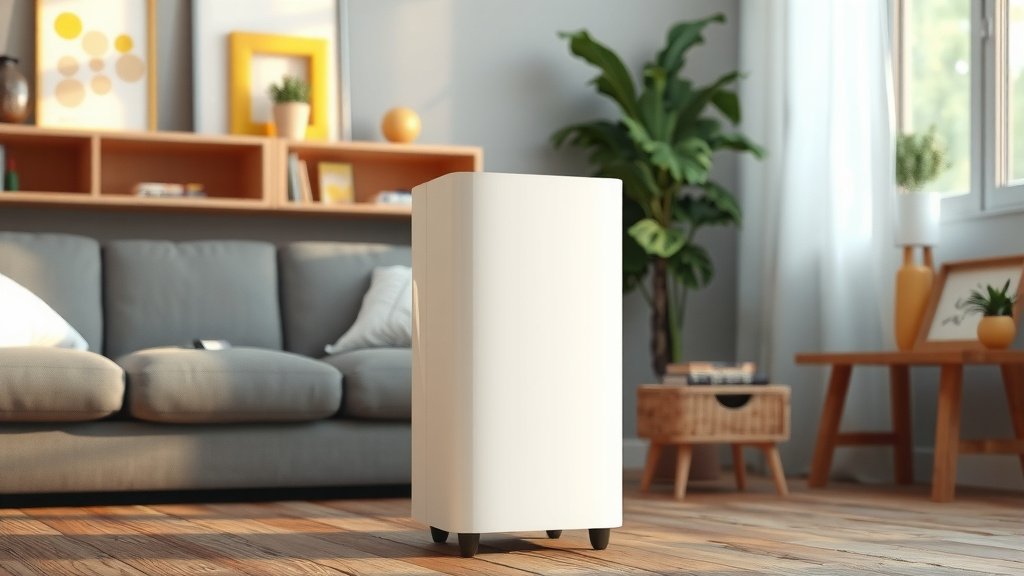
Considering Practical Features
Beyond filtration and power, a few other features can make a big difference in your daily experience with an air purifier.
Noise Levels: Peaceful or Annoying?
Air purifiers have fans, and fans make noise. This noise level is usually measured in decibels (dB). A quiet setting might be around 20-30 dB, which is similar to a whisper. A higher setting could reach 50-60 dB, which is like normal conversation. Think about where you’ll place the purifier. If it’s in your bedroom, you’ll definitely want a quiet model for sleeping.
Energy Efficiency: Saving Power and Money
Air purifiers run for many hours a day, so energy consumption is a factor. Look for models with an Energy Star certification. This means they meet strict energy efficiency guidelines set by the U.S. Environmental Protection Agency. While these units might have a slightly higher upfront cost, they can save you money on electricity bills over time.
Filter Replacement: Ongoing Costs and Convenience
Remember that filters need to be replaced periodically. This is an ongoing cost. Check how often the filters need replacing and how much they cost. Some brands offer subscription services for filters, which can be convenient. Others require you to reorder manually. Also, consider how easy it is to access and change the filters. You don’t want to struggle with it every few months.
Additional Features to Consider
Some air purifiers come with extra bells and whistles. These can include:
- Timers: Set the purifier to turn off after a certain period.
- Auto Mode: Uses sensors to adjust fan speed based on air quality.
- Air Quality Indicators: Lights or displays show you the current air quality.
- Remote Controls or App Connectivity: Allows for easy operation.
While nice to have, don’t let these features distract you from the core performance of the filter and CADR rating. For many, a simple, effective unit is perfectly sufficient.
Quick Checklist for Choosing Your Air Purifier
Here’s a quick summary to help you remember the key points:
- Filter Type: Prioritize True HEPA and a good activated carbon filter.
- Room Size: Match the purifier’s coverage area to your room.
- CADR Rating: Ensure it’s suitable for your room size (especially smoke CADR).
- AHAM Certified: Look for the AHAM Verifide mark for tested performance.
- Noise Level: Check the decibel ratings for different fan speeds.
- Replacement Filters: Factor in the cost and availability of replacement filters.
Conclusion
You’ve now got the knowledge to pick an air purifier that truly works for your home. Remember to focus on True HEPA filters and check the CADR ratings against your room size. Don’t forget about AHAM certification for verified performance. Considering noise and ongoing filter costs will also lead to a better long-term experience. Take these steps, and you’ll be well on your way to breathing cleaner, fresher air in your living space. Your next step is to start comparing models based on these key factors.
Frequently Asked Questions
Do I really need an air purifier if I don’t have allergies?
Even if you don’t suffer from allergies, an air purifier can still benefit your home. They help remove common indoor pollutants like dust, pet dander, and odors. This can lead to generally better indoor air quality for everyone in your household.
How often do I need to replace the HEPA filter?
Filter replacement frequency depends on the model and how often you use the purifier. Most manufacturers recommend replacing HEPA filters every 6 to 12 months. Always check your purifier’s manual for specific guidelines.
What does AHAM certification actually mean for me?
AHAM certification means the air purifier has been independently tested for its performance. It confirms the Clean Air Delivery Rate (CADR) and recommended room size claims are accurate. This helps you trust the manufacturer’s specifications.
Is an air purifier with an ozone generator a good idea?
We generally advise caution with ozone generators. While they can remove odors, ozone itself can be an irritant and harmful to your respiratory system. For most homes, focusing on HEPA and carbon filters is a safer and equally effective approach.
Can I put a large air purifier in a small room?
While you can put a larger unit in a smaller room, it’s often not the most efficient choice. A unit designed for a larger space might cycle the air too quickly in a small room, potentially wasting energy. It’s best to match the purifier’s capacity to your specific room dimensions.

![5 Best Dyson Air Purifier for Large Room [In 2026]](https://homeunderstandable.com/wp-content/uploads/2025/05/best-dyson-air-purifier-for-large-room-top-models-reviewed-768x384.jpg)