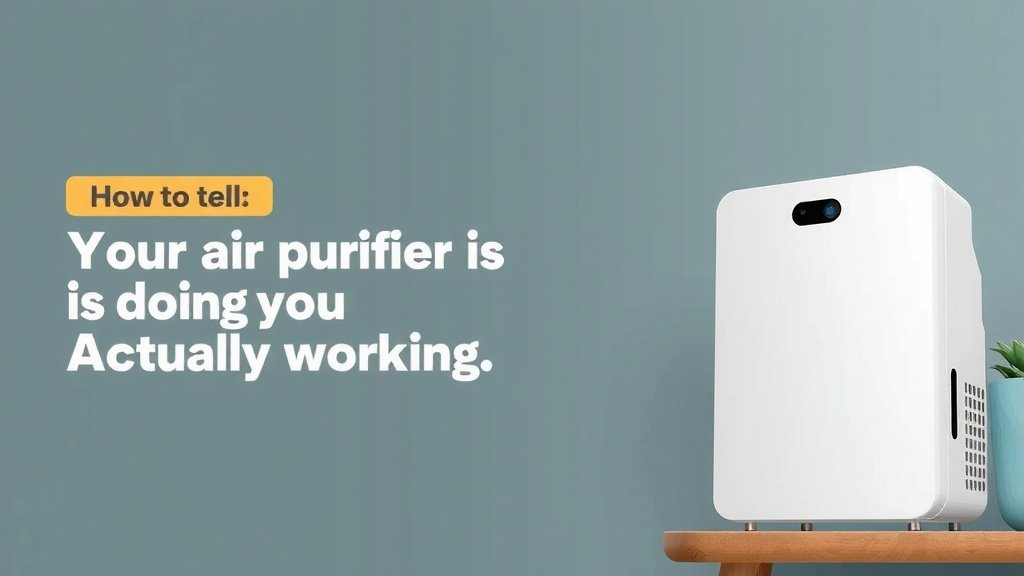
How to Tell if Your Air Purifier is Actually Working
Yes, you can definitely tell if your air purifier is working by looking for several key signs. The most obvious indicators include **cleaner-smelling air**, a **noticeable reduction in airborne particles**, and the purifier’s **fan or indicator lights being active**. Your air purifier is designed to actively clean your air, and these signs confirm it’s doing its job.
It’s easy to wonder if that quiet hum is actually making a difference. We found that beyond the basic checks, paying attention to **your home’s overall air quality** and how quickly **odors dissipate** can also tell you a lot. Many experts say that observing changes in allergy symptoms or dust accumulation is a good way to gauge effectiveness.
- Check for cleaner-smelling air.
- Look for a reduction in dust and particles.
- Ensure the fan and lights are on.
- Observe how quickly odors disappear.
- Notice if allergy symptoms improve.
Let’s walk through the specific signs to look for, so you can be confident your air purifier is keeping your home’s air fresh and clean.
Confirming Your Air Purifier Is Doing Its Job
You’ve invested in an air purifier, and now you want to know if it’s actually cleaning your air. It’s a common question! You’re not alone in wondering if that quiet hum is making a difference. Thankfully, there are several clear signs that your air purifier is actively working to improve your home’s air quality.
Simple Checks You Can Do Today
Listen and Look: The Basic Operational Signs
The first and most obvious way to tell your air purifier is working is to observe its basic operation. Is it turned on? Can you hear the fan running? Most air purifiers have indicator lights that show they are powered on and functioning. If you can hear a gentle whirring sound or see a power light glowing, that’s a **good initial sign**.
If your model has different fan speed settings, try adjusting them. You should notice a change in the sound and airflow. This confirms the motor is responding and moving air through the system. Think of it like checking if your car’s engine is running; if it’s making noise and the dashboard lights are on, you’re likely good to go.
Feel the Airflow
A simple way to check is to place your hand near the air outlet. You should feel a **gentle stream of air** being pushed out. This airflow is what carries the air through the purifier’s filters. If you feel air moving, it means the fan is working and drawing air in.
Some purifiers are designed to be quieter than others. If yours is almost silent, you might need to get a bit closer. Try feeling for the air movement on a low setting first, then increase the fan speed. The difference in airflow should be **detectable and consistent**.
Visually Inspect the Filters
This might sound obvious, but checking your filters is a **direct indicator** of your purifier’s activity. Over time, as the filters trap pollutants, they will start to look dirty. A brand-new filter is usually bright white. As it works, it will accumulate dust, pet dander, and other particles, gradually changing color.
The rate at which your filters change color depends on your air quality and how long you run the purifier. In a home with pets or higher pollution levels, you might see changes sooner. If you’ve had your purifier for a while and the filters still look pristine white, it could mean it’s not running as much as you think, or perhaps the filters aren’t seating correctly.
What to Look For on the Filters
You’re generally looking for **visible dust and grime**. Pre-filters, which catch larger particles like hair and dust bunnies, will show this most clearly. The HEPA filter will trap finer particles, so it might appear gray or discolored rather than heavily soiled with large debris. This visual change is a **concrete sign** that the filter is capturing pollutants.
Assessing Your Home’s Air Quality
Noticeable Changes in Odor Elimination
One of the primary reasons people use air purifiers is to combat unwanted smells. If your air purifier is working, you should notice a **reduction in lingering odors**. This could be anything from cooking smells and pet odors to smoke or musty basement smells.
Think about how quickly a strong scent disappears after you’ve cooked fish or had guests over. If you notice these odors dissipating much faster than they used to, your air purifier is likely **doing a great job**. Conversely, if smells seem to hang around just as long as before, it might be time to check on your unit.
Less Dust Accumulation
Air purifiers are fantastic at capturing airborne dust particles. If you’ve noticed a **decrease in the amount of dust** settling on your furniture, shelves, and other surfaces, your purifier is actively removing these particles from the air. This is a subtle but very effective way to gauge its performance.
Many people find they need to dust less frequently after running an air purifier consistently. This reduction in dust is a **direct benefit** of the circulating air being filtered. Keep in mind that dust also comes from sources like open windows and walking around, so you won’t eliminate it entirely, but you should see a noticeable difference.
Relief from Allergy Symptoms
For those who suffer from allergies or asthma, an air purifier can be a lifesaver. If your symptoms, such as sneezing, coughing, watery eyes, or congestion, have **reduced since you started using the purifier**, it’s a strong indication it’s working effectively. Pollutants like pollen, pet dander, and mold spores are common triggers for these symptoms.
Many experts suggest that an improvement in allergy symptoms is one of the **most telling signs** that an air purifier is cleaning the air. If you’re breathing easier and experiencing fewer allergy flare-ups, your purifier is likely capturing those airborne irritants. Always consult with a healthcare professional for managing allergies, but an air purifier can be a helpful tool.
Advanced Checks and Maintenance
Using Air Quality Monitors
For a more objective measure, consider using an air quality monitor. These devices measure various pollutants in your air, such as particulate matter (PM2.5) and volatile organic compounds (VOCs). You can run the monitor with the air purifier off for a baseline reading, and then with the purifier on to see the **difference in readings**.
A good air quality monitor can show you real-time data. You’ll see the numbers drop as the purifier works. This provides **concrete evidence** of your purifier’s effectiveness and can help you identify specific pollutants it’s targeting. It’s like having a built-in report card for your air!
Checking Filter Replacement Indicators
Many modern air purifiers come with a filter replacement indicator light. This light will illuminate when the filters have reached the end of their lifespan and need to be changed. While this doesn’t directly tell you if it’s working *right now*, it implies it has been working **hard enough** to warrant a replacement.
If your filter indicator light has never come on, and you’ve had the unit for a long time, it might be worth checking the manual or contacting the manufacturer. It’s possible the indicator is malfunctioning, or your air quality is so good that the filters aren’t getting dirty quickly. However, **regular filter replacement** is key to maintaining performance.
Understanding Your Model’s Features
Some air purifiers have smart features or companion apps that can provide detailed information about air quality and filter life. These apps can often show you **historical data** and current readings, giving you a clear picture of how your purifier is performing over time.
Look into your specific model’s capabilities. Does it have a display showing air quality levels? Does the app offer reports? These features are designed to give you **peace of mind** and confirmation that your device is operating as expected. It’s like having a personal air quality assistant!
A Quick Checklist to Confirm Your Purifier’s Performance
- Does the unit power on and have indicator lights lit?
- Can you feel air being drawn in and expelled from the unit?
- Are cooking or pet odors dissipating more quickly than before?
- Have you noticed less dust settling on surfaces?
- Are your allergy or asthma symptoms improving?
- Do the filters show signs of collecting dust and particles?
Conclusion
You’ve learned several straightforward ways to confirm your air purifier is working hard for you. By listening for the fan, feeling the airflow, and checking your filters, you get immediate operational feedback. Beyond that, noticing cleaner-smelling air, less dust, and improved allergy symptoms are strong indicators that it’s actively improving your home’s environment. Don’t forget to consider air quality monitors for objective data. Keep these checks in mind, and you can feel confident your air purifier is delivering fresh, clean air to your living space. Now, go give your purifier a quick once-over to ensure it’s running at its best!
Frequently Asked Questions
How often should I check if my air purifier is working?
It’s a good idea to perform a quick operational check, like feeling the airflow or listening for the fan, every few weeks. Visual filter checks can be done monthly or whenever you notice changes in air quality. More thorough checks, especially with an air quality monitor, can be done quarterly.
My air purifier is very quiet. How can I be sure it’s working?
Even quiet units move air. Try placing your hand near the air outlet to feel for a gentle breeze, especially on a lower setting. You can also check if the power indicator lights are on and if the filter replacement indicator (if applicable) is functioning. If you’re still unsure, an air quality monitor can provide objective proof.
Can the filters look clean even if the purifier is working?
Yes, in very clean environments or if you run your purifier on lower settings, the filters might take longer to show visible dirt. However, they are still trapping particles. If you have pets, allergies, or live in a high-pollution area, filters should show signs of use within a few months.
My air smells better, but I still see dust. Is my purifier not working?
Air purifiers excel at capturing airborne particles, but they don’t prevent dust from settling from other sources, like open windows or daily activities. If you notice a general reduction in how quickly dust accumulates on surfaces, your purifier is likely still effective. You might just need to dust less frequently, not eliminate it entirely.
What if my air purifier’s filter indicator light never comes on?
This could mean your air quality is exceptionally good, or the indicator might be malfunctioning. Consult your owner’s manual for troubleshooting steps. Many manuals will give you a recommended replacement schedule based on usage hours, regardless of the indicator light. It’s still wise to visually inspect your filters periodically.
![What Is The Best Air Purifier for Ceramic Studio [In 2026]](https://homeunderstandable.com/wp-content/uploads/2025/06/best-air-purifier-for-ceramic-studio-enhance-air-quality-creativity-768x320.jpg)
![5 Best Air Purifier for Commercial Use [In 2026]](https://homeunderstandable.com/wp-content/uploads/2025/06/best-air-purifier-for-commercial-use-top-picks-for-large-spaces-768x512.jpg)