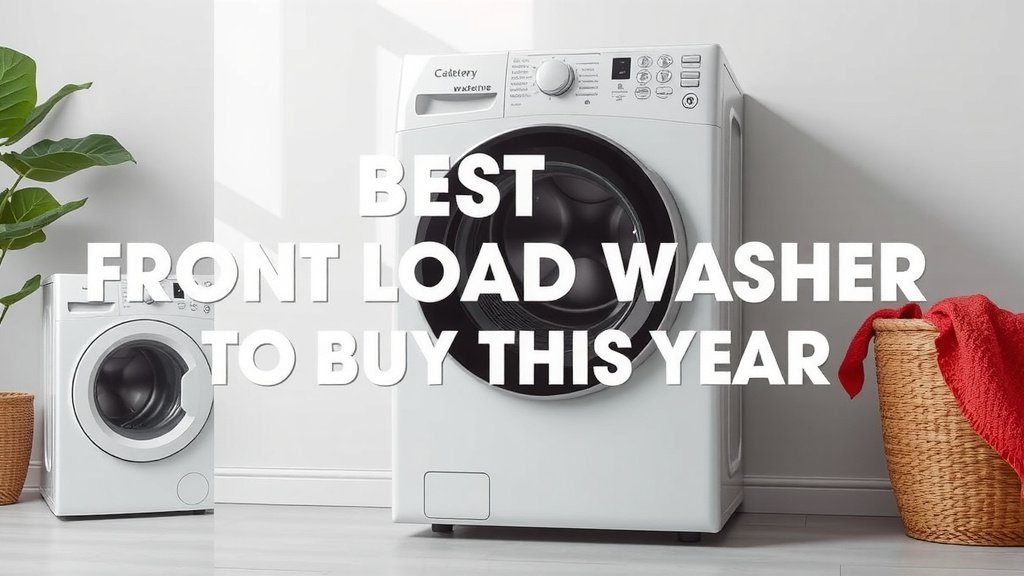
Best Front Load Washer to Buy This Year
Choosing the right front load washer involves balancing capacity, efficiency, and your specific budget. Look for models with high Energy Star ratings to save on utility bills. Consider the wash cycles you’ll use most often, like delicates or heavy-duty options. Always check user reviews for insights on durability and noise levels.
Front loaders are known for their gentler wash action and better water conservation. Many offer advanced features like steam cleaning or smart connectivity. We found that models with sanitize cycles are excellent for allergy sufferers. It’s important to research brands that consistently receive good ratings for customer service.
- Consider your laundry needs: load size and frequency.
- Prioritize energy and water efficiency.
- Look for specialized wash cycles you’ll actually use.
- Read reviews for reliability and noise.
- Match features to your budget and desired convenience.
Ready to find the perfect machine for your home? Let’s break down what to look for when you’re deciding which front load washer to buy.
Choosing Your Next Front Load Washer
Deciding which front load washer to bring home can feel overwhelming. But don’t worry, we’re here to help you navigate the options. We’ve researched many models and found that focusing on a few key areas makes the decision much simpler. Think of it like picking a new favorite chair – you want comfort, style, and something that works perfectly for your needs.
Capacity: How Much Laundry Do You Tackle?
First, let’s talk about size. How much laundry do you typically wash at once? Are you often doing loads for a big family, or is it usually just for one or two people? This is probably the most important factor when selecting a washer.
Standard vs. Large Capacity
Most front load washers fall into two main categories: standard and large capacity. Standard models are usually around 3.5 to 4.0 cubic feet. These are perfectly fine for smaller households or for those who do laundry more frequently. You can still fit a decent amount in them.
Large capacity washers often start at 4.5 cubic feet and can go up to 5.5 cubic feet or even larger. These are fantastic if you have a family or if you prefer to do fewer, bigger loads. Imagine washing your king-size comforter without a struggle – that’s the magic of a large capacity machine!
Consider Your Space
While you might dream of the largest washer available, remember to measure your laundry space. You need enough room for the washer itself, plus some clearance for hoses and ventilation. Also, think about the door swing. Front loaders have doors that swing outward, so make sure you have ample space for it to open fully.
Efficiency Matters: Saving Water and Energy
Front load washers are already known for being more water-efficient than their top-loading counterparts. They use less water because the drum tumbles clothes through a smaller amount of water at the bottom. But you can take this efficiency even further.
Look for the Energy Star Label
The Energy Star label is your best friend when shopping for appliances. Products with this certification meet strict energy efficiency guidelines set by the U.S. Environmental Protection Agency. This means they use less energy and water, saving you money on your utility bills over time. We found that Energy Star certified models can significantly reduce your household’s environmental impact.
When you see the Energy Star logo, you know the machine has been tested and verified. This is a reliable indicator of good performance in terms of resource conservation.
Water Usage
Pay attention to the gallons per load listed on the yellow EnergyGuide label. Front loaders typically use between 13 to 25 gallons per load. The lower the number, the better it is for your water bill and the planet. Some advanced models even have sensors that adjust water levels based on the load size.
Wash Cycles and Features You’ll Actually Use
Washers come with a dizzying array of cycles and features. It’s easy to get swayed by fancy names, but we encourage you to think practically. Which cycles do you see yourself using regularly?
Common & Essential Cycles
Most front loaders come with standard cycles like Normal, Delicates, Heavy Duty, and Permanent Press. These cover the majority of your laundry needs. If you have specific items, like workout gear or baby clothes, look for specialized cycles.
- Normal/Cotton: For everyday items.
- Delicates/Hand Wash: For freeing up your hands on delicate fabrics.
- Heavy Duty: For heavily soiled items that need extra scrubbing power.
- Permanent Press: Helps reduce wrinkles in synthetic fabrics.
Advanced Features to Consider
Many modern front loaders offer extra features that can be quite useful:
- Sanitize Cycle: This uses higher temperatures to kill bacteria and allergens. It’s a fantastic feature for allergy sufferers or if you have a household with young children or pets. Many experts suggest this cycle for households with high hygiene needs (Cleveland Clinic).
- Steam Cleaning: Steam can help loosen dirt and remove allergens and wrinkles more effectively. It’s like giving your clothes a spa treatment.
- Smart Connectivity: Some washers can connect to your smartphone via Wi-Fi. You can start or stop cycles remotely, receive notifications when laundry is done, and even download new cycles.
- Quick Wash: For when you’re in a rush, this cycle cleans smaller loads in under 30 minutes.
Don’t pay extra for features you’ll never use. Think about your typical laundry day and what would genuinely make it easier.
Reliability and Durability: Investing in Longevity
When you buy a new appliance, you want it to last. Washer reliability is key to avoiding costly repairs and frustration.
Brand Reputation
Some brands consistently receive high marks for reliability and customer satisfaction. We’ve found that looking at consumer reports and user reviews can give you a good sense of a brand’s track record. While no appliance is perfect, certain brands tend to have fewer issues reported.
User Reviews Are Gold
Don’t underestimate the power of user reviews. Real people share their experiences with washing performance, noise levels, and any problems they encountered. Pay attention to reviews that mention long-term ownership. How did the washer hold up after a few years? We found that common complaints often highlight issues like excessive noise or recurring error codes.
Consider noise levels, too. If your laundry room is near a living area, a quieter machine might be worth a little extra investment. Some models specifically advertise low noise operation.
Budgeting for Your Front Load Washer
Front load washers span a wide price range. Your budget will naturally play a big role in your decision.
Entry-Level vs. Premium Models
Basic front load washers with essential cycles can be quite affordable. These are great if you need a reliable machine without all the bells and whistles. On the other hand, premium models with steam, smart features, and specialized cycles will cost more. We’ve seen that the price jump often corresponds with the number of advanced features included.
Long-Term Cost of Ownership
Remember to factor in the long-term savings from energy and water efficiency. An Energy Star certified washer might have a higher upfront cost, but it could save you hundreds of dollars over its lifespan. Think of it as a smart investment in your home.
Quick Checklist for Your Purchase
To help you summarize, here’s a quick rundown of things to consider:
- Measure your laundry space and doorway.
- Determine the capacity that fits your household size.
- Look for the Energy Star certification.
- Identify 2-3 wash cycles you’ll use most often.
- Read recent user reviews for reliability.
- Set a realistic budget, considering long-term savings.
Conclusion
You’re now ready to select a front load washer that perfectly suits your home. Remember to prioritize your laundry habits and available space. Energy efficiency and the right wash cycles will save you money and hassle. Always check user reviews for real-world performance and reliability before you buy. Taking these steps ensures you invest in a machine that truly meets your needs. Your next great laundry day awaits!
Frequently Asked Questions
How often should I clean my front load washer?
It’s a good idea to clean your front load washer at least once a month. This prevents mold and mildew buildup, which can cause odors. You can often use a specialized washer cleaner or a simple mix of vinegar and baking soda.
Are front load washers more expensive to repair?
Generally, front load washers can sometimes have more complex components, which might make certain repairs more costly. However, their overall reliability is often good, and fewer repairs may be needed compared to older models.
Can I stack a dryer on top of a front load washer?
Yes, many front load washers are designed to be stackable with a matching dryer. You’ll typically need a specific stacking kit for safety and stability. Always check the manufacturer’s recommendations for compatibility.
What is the average lifespan of a front load washer?
With proper maintenance and regular cleaning, a front load washer can last anywhere from 10 to 15 years. Following the manufacturer’s care instructions will help maximize its lifespan.
Are smart features on front load washers worth the extra cost?
Smart features like app control can be convenient for remote operation and notifications. Whether they’re worth it depends on your lifestyle and how much you value remote connectivity. For some, they add significant convenience, while others find them unnecessary.
![7 Best Clothes Washer Brands [In 2026]](https://homeunderstandable.com/wp-content/uploads/2026/08/7-best-clothes-washer-brands-in-2026-featured-768x432.jpg)