Stackable Washer Dryer Depth: What You Need to Know
Stackable washer and dryer units typically range from 27 to 30 inches in width. This is a common depth for most standard laundry appliances, whether they’re stacked or side-by-side. You’ll want to measure your available laundry space carefully to ensure a proper fit.
When considering stackable units, depth is a key measurement. It’s not just about fitting the appliance into the space. You also need enough clearance for door swings and ventilation. Many stackable models are designed to fit into standard closets or smaller laundry rooms.
- Stackable washers and dryers are usually 27-30 inches wide.
- Depth is crucial for installation and access.
- Consider clearance for doors and ventilation.
- Measure your laundry space before buying.
Ready to find the perfect stackable unit for your home? Let’s break down the typical dimensions and what you need to consider for your specific setup.
Understanding the Depth of Stackable Washer and Dryer Units
So, you’re thinking about a stackable washer and dryer? That’s a smart move for saving space! But before you click “buy,” let’s talk about depth. It’s a measurement that often gets overlooked but is super important for getting your laundry setup just right.
We found that most stackable units have a depth that’s pretty standard, similar to their side-by-side counterparts. However, knowing the exact numbers and what they mean for your room is key. Let’s dive into the specifics to help you measure like a pro.
Typical Depth Ranges for Stackable Appliances
The Standard Footprint: What to Expect
When we talk about the depth of a stackable washer and dryer, we’re generally referring to the main body of the appliance itself, not including the hoses or the space needed for the doors to open.
Research shows that the typical depth for a stackable washer and dryer unit falls between 27 and 30 inches. This range ensures they fit within standard laundry room or closet dimensions. Think of it as the ‘box’ size.
Why Depth Matters More Than You Think
It’s not just about squeezing the unit into a tight spot. The depth impacts how easily you can access the controls, load and unload laundry, and even how much space you have to maneuver around the machines.
We’ve seen homeowners run into trouble when they didn’t account for the full picture. A unit that fits perfectly against the wall might be a nightmare if you can’t reach the detergent or if the dryer door scrapes against something when it opens.
Factors Influencing the Depth of Your Stackable Unit
Appliance Design and Technology
Manufacturers design these units with efficiency in mind.
Some stackable models might be slightly deeper to accommodate larger capacities or advanced features like steam cycles. Others opt for a more compact design to maximize space-saving potential.
We found that front-loading machines often have a slightly deeper profile than top-loading ones, even in a stacked configuration. This is due to the drum mechanism and door design.
Integrated vs. Separate Units
Are you looking at an all-in-one unit, or a separate washer and dryer that are designed to stack?
An all-in-one unit is essentially one machine that performs both washing and drying functions. These can sometimes have a slightly different depth profile compared to a traditional stacked pair.
For separate units, the depth of the washer and the dryer should be consistent for a clean, flush look and stable stacking. We found that most manufacturers offer kits to ensure they fit securely.
Essential Clearance Considerations Beyond the Appliance Depth
Door Swing Space
This is where that depth measurement gets a little more complicated. The depth of the appliance itself is just the starting point. You need to account for the space the doors swing open.
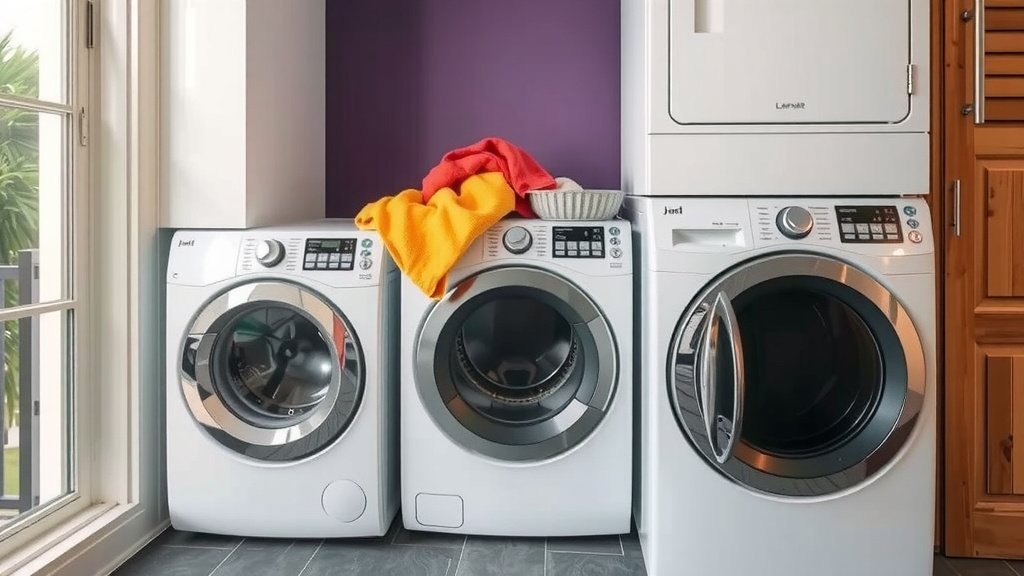
Most front-load washers and dryers have doors that swing outwards. For a stackable unit, the dryer door is typically on top. You need enough room for that door to open fully without hitting cabinets, walls, or other obstacles.
We recommend measuring at least 18 to 24 inches of clearance in front of the dryer door for comfortable access. A little extra space is always better than not enough!
Ventilation and Hose Connections
Appliances need to breathe! Proper ventilation is crucial for the efficient and safe operation of your dryer, especially.
You’ll need space behind the unit for the dryer vent hose to connect and for air to circulate. Cramming too much back there can lead to longer drying times and even pose a fire hazard.
Many experts suggest leaving at least 4 to 6 inches of space behind the unit for ventilation and hose hookups (National Fire Protection Association). This ensures your dryer works its best and stays safe.
Electrical and Water Hookups
Don’t forget about where the power and water come in!
The depth of your stackable unit needs to accommodate these connections without putting strain on the hoses or cords. Sometimes, the hookups are recessed, but other times they protrude.
We found that a few extra inches behind the unit can make a big difference in making these connections neatly and safely.
How to Measure Your Space Accurately
Measure, Measure, Measure!
It sounds simple, but you’d be surprised how many people skip this step. Grab your trusty tape measure and get to it!
First, measure the width of your intended space. Then, measure the depth from the wall to the edge of any cabinets or obstacles. Finally, measure the height to ensure the stacked unit will fit.
Check Your Existing Appliances (If Applicable)
If you’re replacing an old unit, measure its depth. This gives you a baseline.
However, remember that new models might have slightly different dimensions or require more clearance. Don’t assume the new one will fit exactly like the old one did.
The “Door Swing” Test
Open the doors of any existing cabinets or appliances in the area. See how they swing.
Imagine the stackable unit’s dryer door swinging open. Will it bump into anything? Will you be able to reach in and pull out clothes easily? This visual test can save you a lot of headaches.
Comparing Depths: A Quick Look at Common Models
To give you a clearer picture, let’s look at some typical depth measurements. Remember, these are general guidelines, and actual measurements can vary by model and brand.
| Appliance Type | Typical Depth (inches) | Clearance Needed (Approx.) |
|---|---|---|
| Stackable Washer Body | 27 – 30 | N/A (part of total depth) |
| Stackable Dryer Body | 27 – 30 | N/A (part of total depth) |
| Total Stacked Unit Depth (Appliance Only) | 54 – 60 (approx. height of two stacked) | N/A |
| Space Behind Unit (for vents/hoses) | N/A | 4 – 6 |
| Space in Front (for door swing) | N/A | 18 – 24 |
This table helps visualize how the appliance depth combines with necessary clearances. Always check the manufacturer’s specifications for exact measurements!
Checklist for Ensuring Proper Fit
Before you commit to a stackable washer and dryer, run through this quick checklist:
- Measure the width of your laundry space.
- Measure the depth from wall to any obstructions.
- Measure the height of your available space.
- Account for the dryer door swing clearance.
- Factor in space for rear ventilation and hoses.
- Consult the manufacturer’s specs for exact dimensions.
Conclusion
You’ve learned that stackable washer and dryer depth is typically between 27 and 30 inches for the appliance itself. But remember, this is just the starting point. You also need to carefully consider the essential clearances for door swings (about 18-24 inches) and rear ventilation (around 4-6 inches). Failing to account for these extra spaces can lead to installation headaches and operational issues. By measuring your laundry space thoroughly and consulting manufacturer specs, you’ll ensure your new stackable unit fits perfectly and functions beautifully. Take that tape measure to your laundry area today and get ready for a more organized space!
Frequently Asked Questions
What is the average depth of a stackable washer and dryer unit?
Research shows that the main body of most stackable washer and dryer units measures between 27 and 30 inches deep. This measurement refers to the appliance itself, before accounting for any necessary installation clearances.
Do I need extra space behind a stackable washer and dryer?
Yes, you absolutely do. We found that leaving about 4 to 6 inches of space behind the unit is recommended. This allows for proper ventilation, hose connections, and prevents kinks that can affect performance and safety.
How much space is needed in front of a stackable dryer for the door?
For comfortable and safe operation, you should plan for around 18 to 24 inches of clearance in front of the dryer door. This space is needed for the door to swing open fully, allowing you to easily load and unload laundry.
Are all-in-one stackable units the same depth as separate units?
Generally, they are quite similar, but there can be slight variations. An all-in-one unit might have a slightly different depth profile than a separate washer and dryer designed to stack. Always check the specific model’s dimensions.
Can I put a stackable washer and dryer in a closet?
Yes, stackable units are often designed for closets. Just be sure to measure the closet’s depth and width carefully, and account for the door swing and ventilation space needed when the machines are in operation.
![7 Best Low Cost Washer Dryer [In 2026]](https://homeunderstandable.com/wp-content/uploads/2026/09/7-best-low-cost-washer-dryer-in-2026-featured-768x432.jpg)
![7 Best Stackable Washer Dryer For Apartments [In 2026]](https://homeunderstandable.com/wp-content/uploads/2026/09/7-best-stackable-washer-dryer-for-apartments-in-2026-featured-768x432.jpg)