
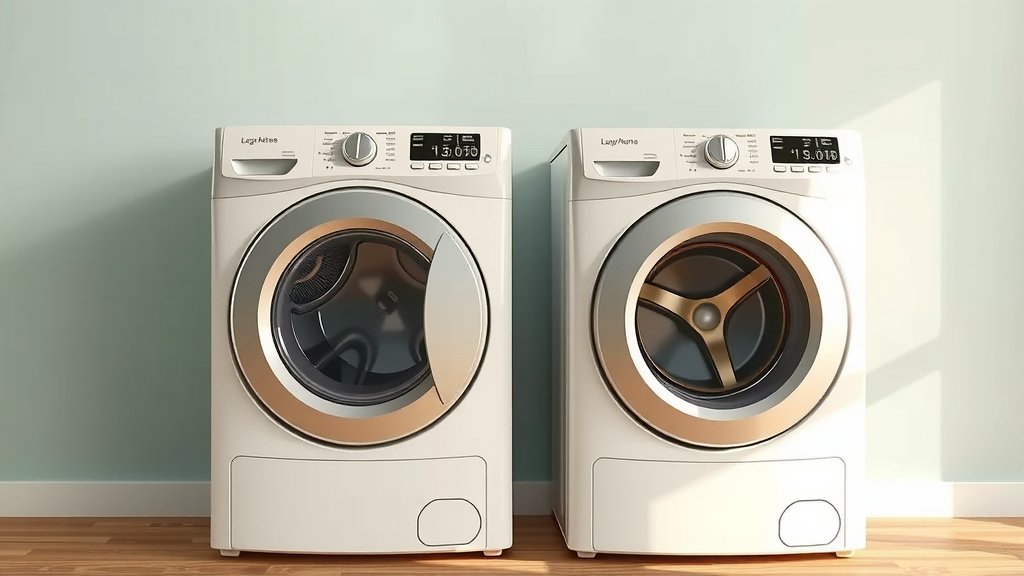
Standard Washer and Dryer Sizes Explained
A standard washer and dryer typically measures around 27 inches wide. This is the most common size you’ll find in U.S. homes. If you’re measuring your laundry space, remember to account for about 6 inches of extra space for hoses and ventilation.
When choosing new appliances, understanding dimensions is key for a perfect fit. Beyond width, depth and height also matter. Many stacked units also come in different configurations to maximize space in smaller laundry rooms.
- Standard width is usually 27 inches.
- Depth is often around 30-34 inches.
- Height can range from 36-40 inches for front-loaders.
- Stacked units have different dimensions.
- Always measure your space first.
We’ve gathered all the essential dimensions and considerations to help you pick the right washer and dryer for your home. Let’s get your laundry space sorted!
Understanding Standard Washer and Dryer Dimensions
So, you’re on the hunt for a new washer and dryer, or maybe you’re just curious about what fits where. It’s a surprisingly common question! Knowing the typical sizes is your first step to a laundry room that feels just right, not cramped or cavernous. You want your machines to slide in smoothly and leave enough room to, you know, actually do laundry.
The “Standard” Size: Width and What It Means for You
When we talk about a standard washer and dryer size, most people picture the common 27-inch width. This is the dimension you’ll find for the vast majority of top-loading and front-loading machines sold in the U.S. Think of it as the golden rule for laundry appliances. It’s designed to fit through standard doorways and, more importantly, into typical laundry spaces.
Front-Loaders vs. Top-Loaders: A Size Comparison
While 27 inches is the common width, there can be slight variations. Front-load washers and dryers tend to be a bit more uniform in their external dimensions. Top-loaders, especially older models or those with more basic designs, can sometimes be a hair narrower or wider. But generally, stick with 27 inches as your baseline.
Depth: Don’t Forget This Crucial Measurement
The depth is just as important as the width. You don’t want your washing machine sticking out so far that it blocks a walkway or makes it hard to open a door. Standard depths for most washers and dryers typically range from 30 to 34 inches. This measurement usually includes the door or lid when it’s closed.
However, we found that some high-capacity machines or those with advanced features can be a bit deeper. Always check the manufacturer’s specifications for the exact depth, especially if your laundry area is snug. You’ll also need to consider the space for the water hoses and power cord at the back.
Height: Checking the Vertical Clearance
The height of your appliances matters, especially if you’re considering stacking them or if you have cabinets above your laundry machines. For standard, side-by-side front-load washers and dryers, the height is often around 36 to 40 inches. These are typically designed to sit comfortably on the floor.
Understanding Top-Loader Height
Top-loading machines are generally a bit taller than front-loaders when you consider the lid is open. When closed, their height is often comparable to front-loaders, around the 36-40 inch mark. If you’re loading laundry from the top, you’ll want enough headroom to comfortably toss in your clothes.
Compact and Apartment-Sized Options
What if 27 inches is too wide for your space? Don’t worry! There are also compact washer and dryer units available. These are often around 24 inches wide. They’re perfect for smaller apartments, RVs, or tiny homes where every inch counts. These units might have smaller capacities, but they get the job done.
The Magic of Stackable Washer and Dryer Units
For those with very limited floor space, stackable washer and dryer sets Explore our guide to the best stackable washer and dryer sets for space-saving solutions. are a lifesaver. These units are designed to fit one on top of the other, usually with the dryer mounted above the washer. This arrangement can dramatically save space. A common width for stackable units is also 27 inches, but their combined height can be substantial.
Dimensions of Stacked Units
When stacked, the height can range from 70 to over 80 inches. You’ll need to ensure you have sufficient vertical clearance. Think of it like stacking two standard machines; it’s basically doubling the height, plus a bit more for the stacking kit or the unit’s frame. It’s vital to measure your ceiling height, doorways, and any staircases the units might need to travel up.
Washer-Dryer Combos: A Different Beast
Another space-saving option is the all-in-one washer-dryer combo. These machines wash and dry clothes in a single drum. They are typically the same width as compact units, around 24 inches. Their depth and height are also comparable to a standard front-load washer. While convenient, they often have smaller capacities and longer cycle times, as drying can take quite a while in a single unit (CDC).

Essential Measurements: What You Absolutely Need to Know
Before you fall in love with a new laundry set, let’s do a quick checklist of what you need to measure in your home. It’s like packing for a trip; you don’t want to get there and realize you forgot something important!
Measure Your Laundry Space Carefully
This is the most critical step. Don’t just eyeball it!
- Width: Measure the opening of your laundry alcove or the space between walls.
- Depth: Measure from the wall to the edge of your counter or any obstructions.
- Height: Measure from the floor to the ceiling or any overhead cabinets.
Account for Clearance and Connections
Remember, the machine’s dimensions aren’t the only thing you need to consider. You’ll need about 6 inches of clearance behind the machines for hoses, vents, and electrical connections. This space prevents kinking hoses and ensures proper airflow for the dryer. We found that neglecting this can lead to operational issues down the line.
Don’t Forget Doorways and Hallways
Can the new washer and dryer actually get *to* your laundry room? Measure the width of your doorways, hallways, and any stairwells. Standard doorways are typically 30-32 inches wide, but some older homes might have narrower openings. You don’t want to order a perfect-fit appliance only to find it can’t make it through the door!
A Quick Comparison Table
Here’s a handy little table to summarize what we’ve discussed. It’s not an exhaustive list, but it covers the most common scenarios you’ll encounter.
| Appliance Type | Typical Width | Typical Depth | Typical Height |
|---|---|---|---|
| Standard Front-Load Washer/Dryer | 27 inches | 30-34 inches | 36-40 inches |
| Standard Top-Load Washer/Dryer | 27 inches | 28-32 inches | 36-40 inches |
| Compact Washer/Dryer | 24 inches | 25-28 inches | 33-36 inches |
| Stacked Unit (Combined) | 27 inches | 30-34 inches | 70-80+ inches |
Your Laundry Room Ready Checklist
Let’s make sure your laundry space is prepped and ready for its new occupants. Follow these simple steps:
- Measure your laundry area width, depth, and height.
- Check that machines fit through all doorways and hallways.
- Allow for 6 inches of clearance behind units.
- Confirm adequate electrical outlet and water hookup access.
- Note ceiling height for stacked units.
- Verify dryer vent path is clear and accessible.
Conclusion
Navigating the world of washer and dryer sizes doesn’t have to be overwhelming. You’ve learned that a standard washer and dryer typically measures around 27 inches wide, with depths ranging from 30-34 inches. For tighter spaces, compact 24-inch units and versatile stackable options exist, but always remember to measure carefully. Planning ahead and taking accurate measurements of your laundry space, doorways, and hallways ensures your new appliances will fit perfectly. Your next step is simple: grab your tape measure, confirm your space’s dimensions, and then confidently shop for laundry machines that will make chore day a breeze!
Frequently Asked Questions
Will a standard 27-inch washer and dryer fit through my house doors?
Most standard doorways are about 30-32 inches wide, so a 27-inch washer or dryer should fit through them. However, older homes might have narrower doorways. We always recommend measuring your doorways and hallways before you buy to avoid any delivery surprises.
How much space do I really need behind the washer and dryer?
You’ll need about 6 inches of clearance behind your machines. This space is essential for connecting water hoses, vent hoses, and power cords without kinking them. It also allows for proper airflow, which is important for efficient drying and preventing overheating.
Are stacked washer and dryer units always 27 inches wide?
Yes, most stackable washer and dryer units are also around 27 inches wide, just like their standard counterparts. The main difference is their combined height, which can be over 80 inches. Ensure you have enough vertical clearance and that the units can be maneuvered into place.
What’s the difference in size between a front-load and a top-load washer?
While both are typically 27 inches wide, front-load washers and dryers tend to have more consistent external dimensions. Top-loaders can sometimes vary slightly in width or depth, especially older models. Depth is often the most noticeable difference, with front-loaders sometimes being a bit deeper due to their internal mechanisms.
Can I buy a washer and dryer that is narrower than 27 inches?
Absolutely! If 27 inches is too wide for your laundry area, you can opt for compact washer and dryer units. These are commonly around 24 inches wide and are perfect for smaller apartments, RVs, or homes where space is at a premium.
![7 Best Compact Washing Machines For Apartments [In 2026]](https://homeunderstandable.com/wp-content/uploads/2026/08/7-best-compact-washing-machines-for-apartments-in-2026-featured-768x432.jpg)
![7 Best Deals On Washers And Dryers Right Now [In 2026]](https://homeunderstandable.com/wp-content/uploads/2026/09/7-best-deals-on-washers-and-dryers-right-now-in-2026-featured-768x432.jpg)
![7 The Best Washing Machine Front Load [In 2026]](https://homeunderstandable.com/wp-content/uploads/2026/09/7-the-best-washing-machine-front-load-in-2026-featured-768x432.jpg)