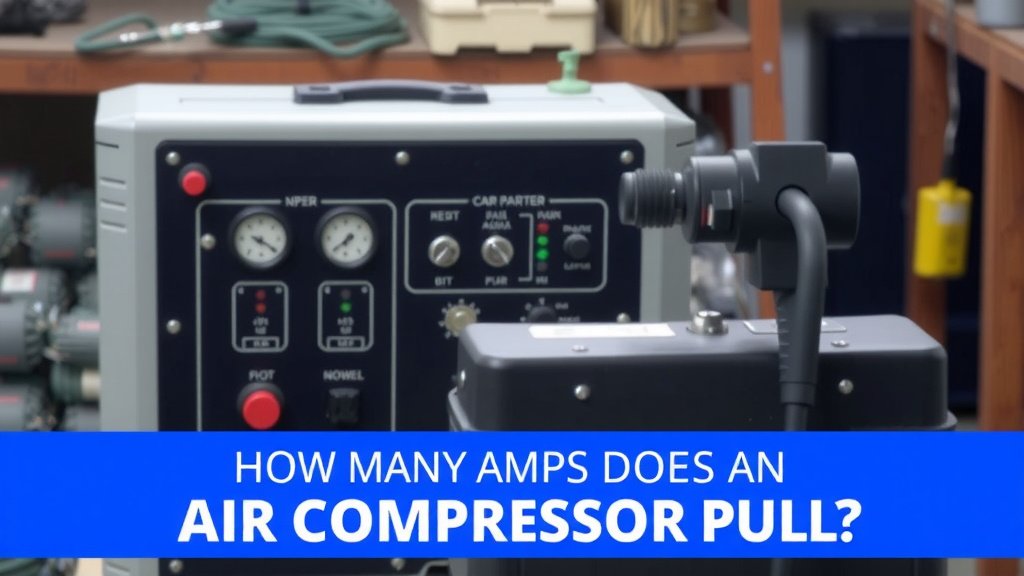
How Many Amps Does An Air Compressor Pull
The number of amps an air compressor pulls can vary greatly, but most household models typically run between 10 to 15 amps for smaller units and can go up to 20 to 30 amps or more for larger, industrial-grade compressors. Understanding this range is key to choosing the right compressor for your needs and ensuring your electrical system can handle it.
When you’re powering up an air compressor, you’re essentially asking your outlet to provide a burst of energy. Smaller compressors might need as little as 10 amps, similar to a toaster. Bigger ones, however, can demand much more, sometimes requiring a dedicated circuit to avoid tripping breakers. It’s all about matching the compressor’s needs to your home’s electrical capacity.
- Air compressors pull varying amps.
- Small units usually draw 10-15 amps.
- Larger compressors can need 20-30 amps or more.
- Check your compressor’s label for exact amp draw.
- Ensure your electrical circuit can handle the load.
Let’s dive into the specifics of air compressor amperage and how to figure out exactly what you need.
Understanding Your Air Compressor’s Amperage Needs
So, you’re curious about how much electrical power your air compressor uses. This is a smart question to ask before you plug it in. Understanding the amperage (amps) your air compressor pulls is essential for avoiding tripped breakers and ensuring your tools get the consistent power they need to perform.
The amperage draw isn’t a one-size-fits-all number. It really depends on the size and type of the air compressor. Think of it like different vehicles: a compact car sips fuel, while a large truck guzzles it. Your air compressor works the same way with electricity. The size and type of air compressor, including whether it’s a 1 cylinder vs 2 cylinder model, directly impacts its electrical needs.
What Does Amperage Actually Mean for Your Compressor?
Amperage, or amps, is a measure of the rate of electrical current. It tells you how much electricity is flowing through a circuit at any given moment. Your air compressor’s motor needs a certain amount of this flow to turn the pump and build pressure. The higher the amps, the more power it’s drawing.
This is why you’ll see different amp ratings for different compressors. A small, portable compressor designed for inflating tires might only need a few amps. On the other hand, a big, stationary unit meant for a professional shop will demand much more juice. You wouldn’t try to power a home with a car battery, right? It’s a similar concept with electricity.
Typical Amperage Ranges for Air Compressors
Most common air compressors you’ll find for home use fall into a few general categories regarding their amp draw.
Small Portable Compressors
These are your lightweight, often single-stage compressors. They’re great for small tasks like topping off car tires, inflating sports equipment, or powering a brad nailer. We found these typically draw between 5 and 12 amps. They’re usually designed to run on standard household outlets without causing problems.
Medium-Duty Compressors
Stepping up a bit, these are usually two-stage compressors. They offer more airflow and can handle more demanding jobs, like running impact wrenches or spray guns for longer periods. Their amp draw often sits in the 12 to 20 amp range. For these, you might want to check if the outlet you’re using is on a dedicated circuit.
Large Industrial or Workshop Compressors
These are the big boys. Think of the compressors you see in professional auto shops or woodworking studios. They have powerful motors and large tanks to deliver a continuous supply of air. These can pull a significant amount of electricity, often ranging from 20 amps up to 50 amps or even more. They almost always require a dedicated, higher-voltage circuit.
Where to Find Your Air Compressor’s Amperage Rating
The best way to know for sure is to check the manufacturer’s label on your specific air compressor. This information is usually located on the motor housing, the tank, or in the owner’s manual. You’re looking for a label that lists electrical specifications, including voltage (usually 120V or 240V for home use) and amperage (A).
Sometimes, you might see two amp ratings: “running amps” and “starting amps.” The starting amps, also called surge amps, are the higher number. This is the extra burst of power the motor needs for just a second or two when it first kicks on. The running amps are what it uses continuously once it’s up and operating.
Factors Influencing Amperage Draw
Several things can affect how many amps your air compressor actually pulls:
- Duty Cycle: How often the compressor runs to maintain pressure. A higher duty cycle means it runs more and pulls more amps over time.
- Tank Size: Larger tanks can store more air, meaning the motor might not need to run as frequently, but when it does, it might pull more to fill that larger volume.
- Motor Horsepower: Generally, a higher horsepower motor will require more amps to operate.
- Air Demand: The more air you’re using (e.g., a continuous-use tool), the harder the compressor has to work, increasing its amp draw.
- Voltage: Ensure your compressor is running at its rated voltage. If the voltage is low, the motor might draw more amps to compensate, potentially leading to overheating.
How Amps Affect Your Home’s Electrical System
Your home’s electrical circuits are designed to handle a certain maximum amperage. Standard household circuits are often 15 or 20 amps. If your air compressor’s amp draw (especially its starting amps) exceeds the circuit’s capacity, you’ll likely trip the breaker. This is a safety feature designed to prevent overheating and potential fires.
It’s important to understand your home’s circuit breaker panel. You can usually see the amperage rating stamped on each breaker. Plugging a high-amperage tool into a circuit that’s already handling other devices could easily overload it.
The Importance of Dedicated Circuits
For compressors that draw 15 amps or more, many experts recommend plugging them into a dedicated circuit. This means the outlet is connected directly to the breaker box and isn’t sharing power with lights, other outlets, or appliances. This significantly reduces the risk of tripping the breaker when the compressor starts or runs.
If you’re unsure about your home’s electrical setup, it’s always best to consult a qualified electrician. They can assess your needs and ensure your electrical system is safe and capable of handling your air compressor’s demands.
Matching Your Compressor to Your Outlet and Needs
When choosing an air compressor, think about the tools you’ll be using and the electrical capacity of your workspace. A small compressor for casual DIY tasks can usually plug into any standard 15-amp outlet. If you plan on using air-hungry tools regularly, you’ll likely need a more powerful compressor, which may require a 20-amp outlet or even a 240-volt dedicated circuit.
Here’s a quick comparison to help you visualize:
| Compressor Type | Typical Amps (Running) | Outlet Requirement | Common Uses |
|---|---|---|---|
| Small Portable | 5-12A | Standard 15A Household Outlet | Tire inflation, brad nailers, air dusting |
| Medium-Duty | 12-20A | Standard 15A or 20A Outlet (Dedicated Recommended) | Impact wrenches, small spray guns, framing nailers |
| Large Workshop | 20A+ | Dedicated 20A (120V) or 240V Circuit | Continuous spray painting, sandblasting, powering multiple tools |
Quick Checklist for Your Air Compressor’s Power Needs
Before you power up, take a moment to run through this quick checklist:
- Check the compressor’s label for its exact amp rating (both starting and running).
- Identify the outlet’s circuit breaker rating in your electrical panel.
- Assess what else is on that circuit to avoid overloading.
- Consider a dedicated circuit if your compressor is 15 amps or higher.
- Ensure your extension cords (if used) are heavy-duty and rated for the amps.
- If in doubt, consult an electrician to ensure safe operation.
Conclusion
Understanding your air compressor’s amp draw is key to safe and efficient operation. You’ve learned that smaller compressors generally need 5-12 amps, medium units require 12-20 amps, and large industrial models can pull 20 amps or more. Always check your compressor’s label for its specific needs and compare that to your home’s electrical capacity. Properly matching your compressor to your outlet and circuits prevents tripped breakers and ensures your tools perform at their best. If you’re ever in doubt about your electrical system’s ability to handle your compressor, your next best step is to consult a qualified electrician.
Frequently Asked Questions
What’s the difference between running amps and starting amps?
Starting amps, also called surge amps, are the higher amount of electricity your compressor motor needs for a brief moment when it first turns on. Running amps are the lower, continuous amount of power the motor uses while it’s operating to maintain air pressure. You need to consider both when planning your electrical setup.
Can I use a regular household outlet for my air compressor?
For smaller compressors that draw 5-12 amps, a standard 15-amp household outlet is usually fine. However, if you have a medium-duty compressor (12-20 amps) or are powering other devices on the same circuit, you might overload it. It’s always best to check the compressor’s label and the circuit breaker rating.
How do I know if I need a dedicated circuit for my air compressor?
If your air compressor draws 15 amps or more, or if you frequently trip breakers when using it, you should consider a dedicated circuit. This means the outlet is on its own breaker, reducing the risk of overloading when the compressor starts up or runs frequently.
Will using an extension cord affect my air compressor’s amp draw?
Yes, using the wrong extension cord can impact performance and safety. An underrated extension cord can restrict power flow, causing the compressor to draw more amps to compensate, potentially leading to overheating. Always use a heavy-duty extension cord rated for your compressor’s amperage needs.
Can my air compressor’s horsepower tell me how many amps it pulls?
Horsepower (HP) is a good indicator, as higher HP motors generally require more amps. However, it’s not a direct conversion. The best way to know the exact amp draw is to check the manufacturer’s label on the compressor itself. This label provides the most accurate electrical specifications.