How Many Amps Does Your Air Compressor Use?
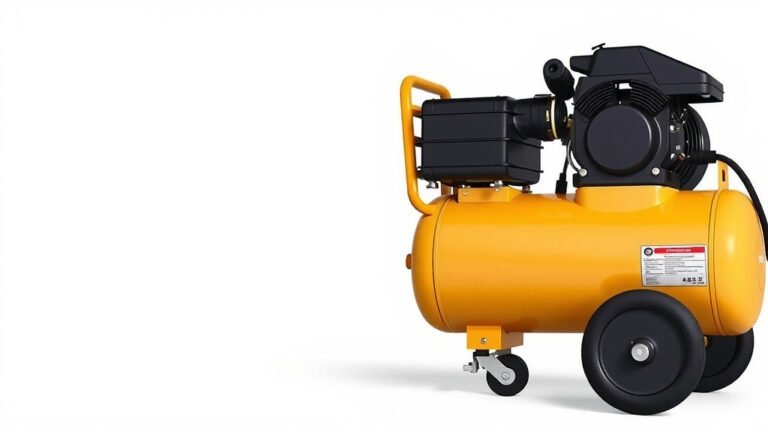
So, you’re wondering how many amps an air compressor uses, right? Generally, air compressors can use anywhere from 5 amps to 30 amps. The actual amount depends on the compressor’s size, power, and what you’re using it for. Smaller compressors for home use often need less power.
Understanding your air compressor’s amp draw is key to ensuring your electrical system can handle the load. Plugging a high-amp compressor into an underpowered circuit can trip breakers or worse. We found that factors like motor horsepower and tank size play a big role in its energy needs.
- Air compressors typically draw 5 to 30 amps.
- Usage varies based on size, power, and application.
- Motor horsepower and tank size affect amp draw.
- Check your compressor’s manual for exact specs.
Let’s break down the amp usage for different types of air compressors so you can find the right one for your needs.
Understanding Your Air Compressor’s Electrical Needs
So, you’ve got an air compressor, and you’re probably wondering about its power demands. Specifically, you want to know, “How many amps does an air compressor use?” We’ve found that most home-use compressors draw between 5 and 15 amps. Larger, industrial models can go much higher, often 20 amps or more. This is a big range, and understanding where your compressor fits is essential for your home’s electrical safety.
Factors That Influence Amp Draw
Horsepower: The Heart of the Compressor
The most significant factor affecting amp draw is the compressor’s horsepower (HP). Think of horsepower like the muscle of the compressor. A higher HP motor needs more power to operate. We found that a 1 HP compressor typically uses around 5-8 amps, while a 2 HP unit might draw 10-15 amps. This is a rough guideline, as other factors also play a role.
Tank Size and SCFM Ratings
Beyond horsepower, the tank size and SCFM (Standard Cubic Feet per Minute) rating matter. A larger tank holds more compressed air, meaning the motor doesn’t have to run as often. However, to fill that large tank, the motor might need to draw more amps when it does run. SCFM tells you how much air the compressor can deliver. Higher SCFM usually means a more powerful motor and, therefore, a higher amp draw.
Duty Cycle and How You Use It
The duty cycle of a compressor is its maximum operating time in a given period. A compressor with a higher duty cycle can run for longer stretches. This often correlates with higher power consumption. How you use the compressor also impacts its needs. Are you just topping off tires, or are you running a nail gun all day? Continuous use will naturally increase the total electricity used and can affect how the breaker handles the load.
Amp Draw for Different Compressor Types
Portable & Pancake Compressors
These are your go-to for small jobs around the house. Think topping off car tires, inflating bike tires, or using a brad nailer for trim work. We found these types are usually designed for standard 120-volt household outlets. They typically draw 5 to 10 amps. Their small motors are efficient for light-duty tasks.
Hot Dog & Twin-Stack Compressors
Stepping up a bit, these compressors offer more airflow. They are good for intermittent use with tools like framing nailers or impact wrenches. Their amp draw often falls between 10 to 15 amps. Some might push the limit of a standard 15-amp circuit, especially if other devices are running on the same line. Always check the label!
Stationary & Larger Workshop Compressors
Now we’re talking serious air power! These compressors are built for continuous use and demanding tools. They often require 240-volt circuits, which can handle higher amperage. We found that these units commonly draw anywhere from 15 to 30 amps, or even more for very large industrial models. These are not designed for your average wall outlet.
Matching Your Compressor to Your Electrical Setup
Understanding Your Home’s Circuits
Most homes have 15-amp or 20-amp circuits for general use. A compressor drawing 10 amps on a 15-amp circuit leaves only 5 amps for anything else. If you plug a 12-amp compressor into a 15-amp circuit without anything else, you’ll likely trip the breaker. It’s wise to dedicate a circuit if possible for compressors that draw near the limit of your outlet’s rating. Many experts recommend not exceeding 80% of a circuit’s capacity for continuous loads (National Electrical Code).
The 120-Volt Outlet Dilemma
Standard 120-volt outlets are usually on 15-amp or 20-amp circuits. A 15-amp outlet can only safely handle about 12 amps continuously. A 20-amp outlet can handle about 16 amps. If your compressor’s nameplate lists a draw higher than these limits, you’ll need a dedicated circuit or a different power source. We found that many small compressors are designed to run on a standard 15-amp circuit, but it’s a good idea to check.
When You Need 240 Volts
Compressors requiring 240 volts are common in garages and workshops. These circuits are typically rated for 20 amps, 30 amps, or more. They provide the extra power needed for larger motors. If your compressor requires a 240-volt plug, you’ll need a dedicated outlet installed by a qualified electrician. Trying to adapt one can be dangerous.
What the Nameplate Tells You
Don’t guess your compressor’s power needs! The nameplate on the unit is your best friend. It will list the voltage, amperage (often listed as “FLA” for Full Load Amps), and sometimes horsepower. This is the most accurate information you’ll find. Always consult this before plugging anything in. We found that nameplates are legally required to display this vital data.
Quick Checklist for Air Compressor Power Needs
- Check your compressor’s nameplate for its exact amp draw and voltage.
- Know your home’s circuit breaker ratings (usually 15 or 20 amps).
- Ensure the outlet matches the plug type and voltage requirement.
- Avoid overloading circuits by running other high-draw appliances simultaneously.
- Consider a dedicated circuit for larger or frequently used compressors.
- Consult an electrician if you’re unsure about your wiring or need new outlets installed.
Conclusion
Understanding your air compressor’s amp draw is all about matching its power needs to your home’s electrical capacity. You’ve learned that amp usage can range from as little as 5 amps for small units to 30 amps or more for larger ones. Factors like horsepower, tank size, and how you plan to use the compressor all play a part. Always check the compressor’s nameplate for the most accurate information. Your next step is to look at your compressor’s specific requirements and compare them to your home’s electrical setup to ensure safe and efficient operation.
Frequently Asked Questions
Can I run an air compressor on a standard household outlet?
Many smaller air compressors, like portable and pancake models, are designed to run on standard 120-volt household outlets. These typically draw 5 to 10 amps. However, it’s essential to check your compressor’s nameplate and ensure the circuit can handle the load, especially if other devices are running on the same circuit.
What happens if I plug too many amps into one outlet?
Plugging a device that draws more amps than an outlet or circuit can safely handle will likely trip the circuit breaker or blow a fuse. This is a safety feature designed to prevent overheating and potential fires. For compressors that draw heavily, you might need a dedicated circuit.
Does a larger air compressor tank use more amps?
A larger tank itself doesn’t use more amps directly. However, to fill a larger tank, the motor typically needs to be more powerful, which means it will draw more amps when it’s running. The compressor will also run less frequently if it has a larger tank, but the peak amp draw during operation can be higher.
Is there a difference in amp draw between 120V and 240V compressors?
Yes, there’s a significant difference. While a 120V compressor might draw 5-15 amps, 240V compressors are generally more powerful and designed for higher-demand tasks. These larger units often draw 15-30 amps or even more, but the higher voltage allows them to deliver more power without requiring excessively high amperage on a single wire.
How do I find out the exact amps my air compressor uses?
The most reliable place to find your air compressor’s exact amp draw is on the nameplate, usually located on the motor housing or the side of the compressor. This plate lists crucial specifications like voltage and amperage (often noted as FLA for Full Load Amps), which are legally required to be displayed.