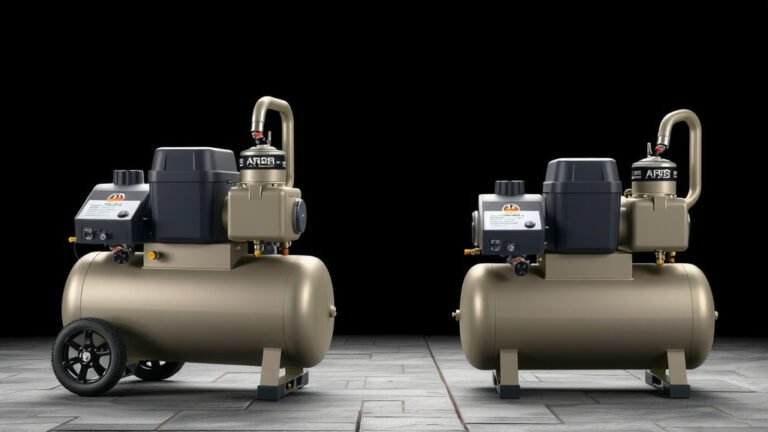
Two-Stage Air Compressor: How to Identify One
You can often tell if an air compressor is two-stage by checking its design and listening to its operation. Two-stage compressors have two separate cylinders, and they usually sound a bit different than single-stage models. They are built for heavier workloads.
These compressors compress air in two steps. First, it’s compressed in a smaller cylinder. Then, it’s sent to a larger cylinder for further compression. This makes them more efficient for sustained use and higher pressures. Many professionals prefer them for their durability.
- Look for two separate cylinders or the word “two-stage” on the label.
- Listen for a slightly deeper, more consistent sound compared to single-stage units.
- Two-stage models are generally designed for continuous operation.
- Check the compressor’s specifications for its pressure output.
Below, we’ll walk you through the key signs to look for so you can confidently identify if your air compressor is a two-stage model.
Identifying Your Compressor’s Stage Count
Figuring out if your air compressor is a two-stage model is a bit like being a detective. You’re looking for clues right there on the unit. Don’t worry, it’s not as complicated as it sounds! We’ll break down the easiest ways to tell. It mostly comes down to a little visual inspection and understanding how these machines work.
Visual Clues: The Cylinders Tell a Story
The most telling sign of a two-stage compressor is its cylinder setup. Think of it like this: a two-stage compressor has a bit of a team effort going on. We found that most of these units clearly show this arrangement if you look closely.
Spotting the Two Cylinders
When you look at the compressor’s pump head, you’ll often see two distinct cylinders. One cylinder will usually be smaller, and the other will be larger. This is the core of the two-stage design. The smaller cylinder does the first round of compression, and the larger one takes over for the second, more powerful compression (U.S. Department of Energy).
What If You Can’t See Them Clearly?
Sometimes, the cylinders might be tucked away or covered. In these cases, look for the manufacturer’s label or nameplate. Companies are usually quite proud of their two-stage compressors and will clearly label them as such. You might see “Two-Stage” or “2-Stage” printed right there.
Listening In: The Sound of Two Stages
If a visual check isn’t immediately clear, your ears can be a great tool. We’ve found that the sound a compressor makes can be a strong indicator.
The Distinctive Hum
Two-stage compressors tend to have a slightly different sound profile than their single-stage counterparts. While single-stage compressors often have a higher-pitched, more immediate sound, two-stage units often produce a deeper, more consistent hum. It’s like the difference between a quick tap and a steady beat.
Why the Sound Difference?
This sound difference comes from the two-step compression process. The initial compression in the smaller cylinder is less intense. Then, the air is cooled before entering the larger cylinder for the final, higher-pressure compression. This process is more controlled, leading to that characteristic deeper tone. Many users report that the sound feels more “powerful” or “controlled.”
Understanding Compressor Specifications
Beyond just looking and listening, checking the technical specifications can give you definitive answers. Manufacturers provide detailed information for a reason!
Pressure Output: A Key Indicator
Two-stage compressors are built for higher demands. We found that they typically operate at higher PSI (pounds per square inch) levels than single-stage models. If your compressor regularly hits 150 PSI or more, it’s a very strong sign it’s a two-stage unit (National Electrical Manufacturers Association). If your compressor regularly hits 150 PSI or more, it’s a very strong sign it’s a two-stage unit.
Continuous Duty Ratings
Another specification to look for is the duty cycle. Single-stage compressors are often rated for intermittent use, meaning they need to rest. Two-stage compressors, however, are designed for continuous or heavy-duty operation. If your compressor’s manual or label states it’s built for 50% duty cycle or higher, especially if it’s rated for continuous use, it’s likely a two-stage model.
The Role of Horsepower and Tank Size
While not as definitive as cylinder count or pressure ratings, horsepower (HP) and tank size can offer clues. Two-stage compressors generally require more power to do their work. You’ll often find them with higher HP ratings, typically starting around 3 HP and going up. Larger tank sizes also pair well with the sustained output of a two-stage compressor, allowing for longer run times before the pump needs to kick in again.
A Quick Checklist for Identification
Still not sure? Run through this quick checklist. We’ve gathered the most common identifiers to help you confirm your compressor’s stage count.
- Visual Check: Can you clearly see two cylinders (one smaller, one larger) on the pump head?
- Labeling: Does the manufacturer’s label explicitly state “Two-Stage” or “2-Stage”?
- Sound Profile: Does it have a deeper, more consistent hum rather than a high-pitched whine?
- Pressure Output: Does it commonly operate at or exceed 150 PSI?
- Duty Cycle: Is it rated for continuous or high-percentage duty cycles (e.g., 50% or more)?
- Intended Use: Is it marketed or designed for demanding, professional, or industrial applications?
| Feature | Single-Stage | Two-Stage |
|---|---|---|
| Cylinders | Typically one | Two (one small, one large) |
| Pressure Output | Lower (e.g., up to 125 PSI) | Higher (e.g., 150+ PSI) |
| Duty Cycle | Intermittent/Lower | Continuous/Higher |
| Sound | Higher-pitched, quicker | Deeper, more consistent |
| Typical Use | DIY, home use, light tasks | Professional, industrial, heavy tasks |
Conclusion
You now have the tools to confidently identify whether your air compressor is a two-stage model. By checking for dual cylinders, reviewing the manufacturer’s label, and listening to its unique hum, you can get a clear picture. Don’t forget to consider its pressure output and duty cycle ratings for confirmation. These visual and auditory cues, along with spec sheet checks, make the process straightforward. Your next step is to use this knowledge to ensure you’re using the right compressor for your specific tasks and to make informed decisions about future purchases.
Frequently Asked Questions
Can I tell if it’s a two-stage compressor just by looking at its horsepower?
Horsepower can be a clue, but it’s not a definitive indicator. Two-stage compressors typically have higher horsepower ratings, often 3 HP or more, because they require more power for their dual compression process. However, some high-end single-stage compressors might also have substantial horsepower.
Is there a way to tell if it’s two-stage without hearing it run?
Absolutely. The most reliable visual cue is the presence of two distinct cylinders on the pump head – usually one smaller and one larger. If you can’t see the cylinders clearly, check the compressor’s nameplate or manufacturer’s label; it should be clearly marked as “Two-Stage” or “2-Stage” if it is.
What if my compressor has only one visible cylinder, but I suspect it’s two-stage?
Some compressor designs might conceal the second cylinder or integrate it differently. In such cases, the manufacturer’s label is your best bet. Also, check the specifications for high pressure output (150 PSI+) and a continuous duty cycle rating, as these are strong indicators of a two-stage design.
How does the sound of a two-stage compressor differ from a single-stage one?
We’ve found that two-stage compressors generally produce a deeper, more consistent hum. Single-stage compressors often have a higher-pitched, quicker sound. This difference is due to the two-step compression process, which is more controlled and less abrupt.
Are two-stage compressors always larger and heavier than single-stage ones?
While they can be, size and weight aren’t always the best indicators. Two-stage compressors are built for demanding tasks, which often means they are more robust. However, you can find compact two-stage units and larger single-stage models, so focus on the other identification markers.