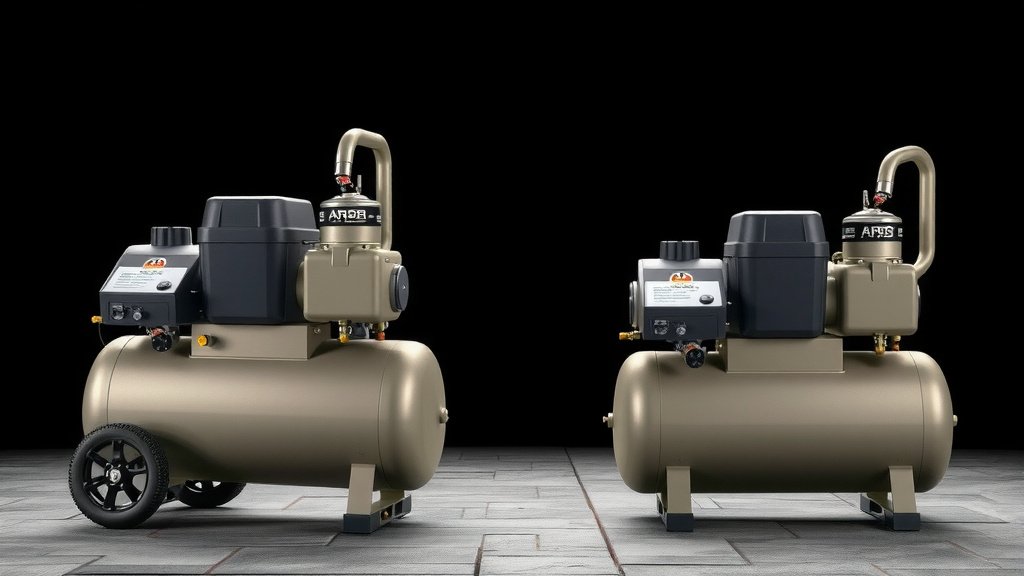
ARB Twin Air Compressor: 12V vs 24V Explained
When choosing between an ARB twin air compressor 12V and a 24V, the 12V is generally the more common and versatile choice for most car and truck owners. It directly matches your vehicle’s battery system, making installation simpler and avoiding the need for voltage converters. You’ll get plenty of power for tire inflation and other common tasks.
While both can get the job done, understanding their differences will help you make the best decision for your setup. Think about where you’ll be using it and what you’ll be powering. A 24V system is usually found in larger vehicles like semi-trucks or RVs and offers more consistent power for demanding applications.
- For most cars and trucks, a 12V ARB twin compressor is the best fit.
- 12V units are easier to install and work directly with your vehicle.
- 24V compressors are typically for larger vehicles with 24V electrical systems.
- Consider your vehicle type and power needs when deciding.
Let’s break down the key differences and help you decide which ARB twin air compressor is right for your adventure.
“`htmlChoosing Your ARB Twin Compressor: 12V vs. 24V Explained
So, you’re eyeing an ARB twin air compressor. Great choice! They’re tough, reliable, and ready for adventure. But then you see two options: 12V and 24V. Which one is your perfect match? We found that for most adventurers in cars and trucks, the 12-volt system is usually the go-to. It’s designed to work directly with your vehicle’s existing electrical setup.
Think of your vehicle’s battery like its heart. A 12V compressor is like a compatible blood type – it integrates smoothly. A 24V system is more common in larger vehicles, like RVs or heavy-duty trucks. It’s like a different circulatory system altogether. Understanding this fundamental difference will save you headaches and ensure your compressor performs its best.
Understanding Vehicle Electrical Systems
Before we dive into compressor specifics, let’s quickly touch on how your vehicle gets its power. Most standard passenger cars, SUVs, and half-ton pickup trucks operate on a 12-volt electrical system. This means their batteries, alternator, and wiring are all designed to handle 12 volts of power. It’s the standard for a reason – it’s efficient and widely used.
What is a 24V System?
Now, where do you find 24V systems? You’ll typically see them in larger commercial vehicles, heavy-duty trucks, and some larger RVs or buses. These vehicles have a different setup, often using two 12V batteries wired in series to produce 24 volts. This higher voltage can offer advantages for some heavy-duty applications, but it’s not something you’ll find in your average sedan.
Why Does This Matter for Your Compressor?
The voltage of your vehicle’s electrical system is the most critical factor in choosing the right compressor. Trying to run a 24V compressor on a 12V system (or vice versa without proper conversion) can lead to problems. You might get poor performance, damage the compressor, or even cause electrical issues with your vehicle. We’ve heard stories of folks trying to force a connection, and it rarely ends well.
ARB Twin Compressor: Powering Your Needs
ARB twin compressors are renowned for their dual-motor design. This setup means they can deliver faster airflow than single-motor models. This is fantastic for quickly inflating large tires, powering air lockers, or even running air-powered tools.
The 12V ARB Twin Compressor: Your Everyday Hero
This is the model most off-roaders and overlanders will reach for. It’s engineered to plug directly into your vehicle’s 12V power source. Installation is generally straightforward, often involving a simple wiring harness that connects to your battery or a switched accessory circuit.
Benefits of the 12V Unit
- Direct Compatibility: Works without extra converters for most vehicles.
- Ease of Installation: Simpler wiring means less complexity.
- Wide Availability: The most common version you’ll find.
- Performance: More than enough power for typical tire inflation and air locker needs.
Considerations for the 12V
While powerful, a 12V system does have its limits. If you’re running extremely long air hoses or trying to power multiple high-demand air tools simultaneously, you might notice a slight drop in performance compared to a dedicated 24V system. However, for inflating four large off-road tires from 20 PSI to 40 PSI, it’s more than capable.
The 24V ARB Twin Compressor: For the Big Rigs
This version is specifically designed for vehicles that already operate on a 24-volt system. If your truck, RV, or specialized equipment runs on 24V, this compressor is your direct, high-performance solution. It draws power efficiently from the higher voltage system.
When the 24V Makes Sense
- Vehicle Requirement: Your vehicle already has a 24V electrical system.
- Power Demands: You need consistent, high output for demanding tasks.
- Efficiency: Designed to work optimally within a 24V environment.
Why You Probably Don’t Need the 24V (Unless…)
Unless you have a 24V vehicle, this compressor is likely overkill and, frankly, incompatible without significant (and often impractical) electrical modifications. Trying to adapt a 24V unit to a 12V system usually involves voltage boosters, which add complexity, cost, and potential points of failure. We generally advise against this approach.
Installation and Wiring: A Quick Look
Choosing the right voltage also impacts installation. A 12V ARB twin compressor typically comes with a wiring loom designed for easy connection to your vehicle’s existing power system. Many kits include a pre-wired relay and fuse for safety and convenience. You might connect it directly to your battery terminals or wire it through an accessory circuit, ensuring it only runs when your engine is on or the ignition is active. We found that most DIYers with basic tools can handle this installation.
On the other hand, a 24V compressor is designed for a 24V system. If your vehicle is 12V, you’d need to consider how to achieve 24V. This often means adding a second battery and managing the series connection, which is a more involved electrical project. It’s why the 12V is so popular for its plug-and-play simplicity in the most common vehicle types.
Performance Metrics: What to Expect
Both ARB twin compressors are high-performance units. However, there can be subtle differences in how they perform based on their intended voltage. Generally, a 24V system can deliver more power more efficiently for a given current draw compared to a 12V system. This means that for the same size motor, a 24V compressor might push slightly more air or maintain pressure better under heavy load.
But, let’s be clear: the 12V ARB twin is a powerhouse. It’s designed to meet the demands of most off-roaders. We found that for inflating tires up to 37 inches, the 12V unit consistently delivers impressive results. It’s not about one being “better” overall, but about which one is better suited for your specific power source.
Making Your Final Decision: A Quick Checklist
To help you decide, let’s run through a quick checklist. This should make it crystal clear which ARB twin compressor is your adventure partner.
- Does your vehicle’s main battery system operate at 12V? (Most cars, SUVs, light trucks do.)
- Does your vehicle’s main battery system operate at 24V? (Usually heavy-duty trucks, some RVs.)
- Are you looking for the simplest, most direct installation?
- Do you need to power air lockers or inflate large tires quickly?
- Will you be using the compressor primarily with a single vehicle?
If you answered “yes” to the first, third, fourth, and fifth points, the 12V ARB twin compressor is almost certainly your winner. If your vehicle is a 24V system, then the 24V compressor is your clear choice.
| Feature | 12V ARB Twin Compressor | 24V ARB Twin Compressor |
|---|---|---|
| Vehicle Compatibility | Standard cars, SUVs, light trucks (12V systems) | Heavy-duty trucks, RVs, buses (24V systems) |
| Installation Simplicity | Generally plug-and-play for 12V vehicles | Requires a 24V system; modifications for 12V vehicles are complex |
| Power Output | Excellent for tire inflation, air lockers | High output, efficient on 24V systems |
| Common Use Case | Everyday vehicles, off-road rigs | Commercial vehicles, large expedition rigs |
| Voltage Requirement | 12 Volts DC | 24 Volts DC |
Conclusion
Deciding between a 12V and 24V ARB twin air compressor really comes down to your vehicle’s existing electrical system. For the vast majority of cars, SUVs, and light trucks, the 12V model is your straightforward, high-performance choice. It offers easy installation and ample power for tires and air lockers without complication. If your vehicle runs on 24V, like many heavy-duty trucks or large RVs, then the 24V compressor is the engineered solution for you.
Don’t overcomplicate things – match the compressor voltage to your vehicle’s setup. Now that you know the key differences, you’re ready to make the right choice for your next adventure!
Frequently Asked Questions
Can I use a 24V ARB twin compressor on a 12V vehicle?
While technically possible with voltage boosters, it’s generally not recommended for most users. These converters add cost, complexity, and potential failure points. We found that sticking to a compressor that matches your vehicle’s native voltage is the most reliable approach.
Will a 12V ARB twin compressor work on my diesel truck?
Most diesel trucks, especially lighter duty ones, still use a 12V system. You’ll want to confirm your truck’s specific electrical system voltage. If it’s 12V, then the 12V ARB twin compressor will be a perfect fit.
How fast can the 12V ARB twin compressor inflate tires?
The ARB twin compressors are known for their speed. We’ve seen them capable of inflating large off-road tires from flat to full pressure in just a few minutes. It’s more than enough for any typical trailside needs.
Is the 24V ARB twin compressor much more powerful than the 12V?
For a given application within its intended system, the 24V can be more efficient. However, the 12V ARB twin is already a very powerful unit, delivering excellent performance for its intended 12V applications. You’re unlikely to feel a lack of power with the 12V for common uses.
Do I need to permanently install my ARB twin compressor?
No, you don’t have to permanently install it. Many users opt for a quick-disconnect setup, allowing them to easily remove the compressor and store it when not in use. This flexibility is a big plus for many.