
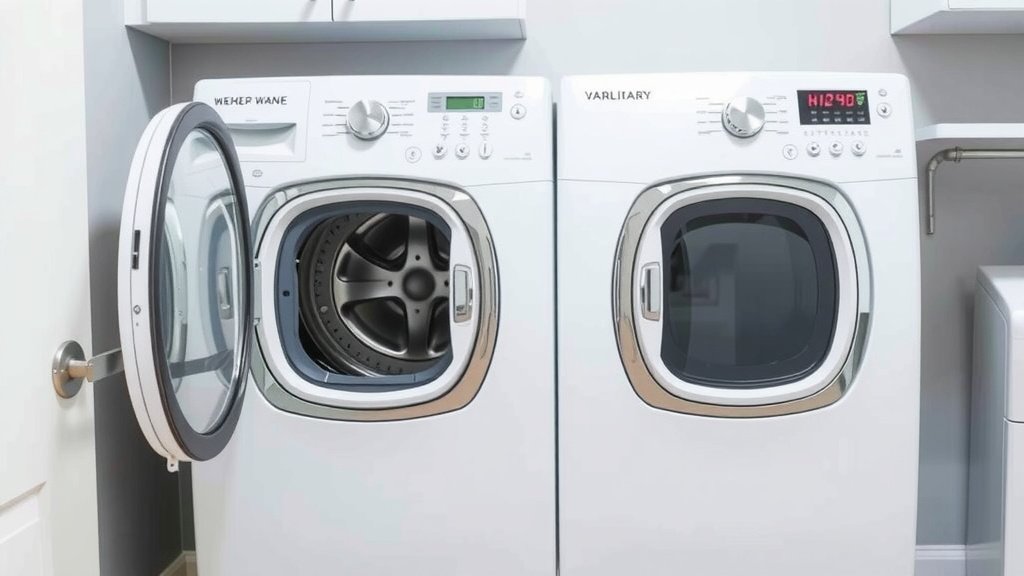
Washer and Dryer Size Guide: What to Expect
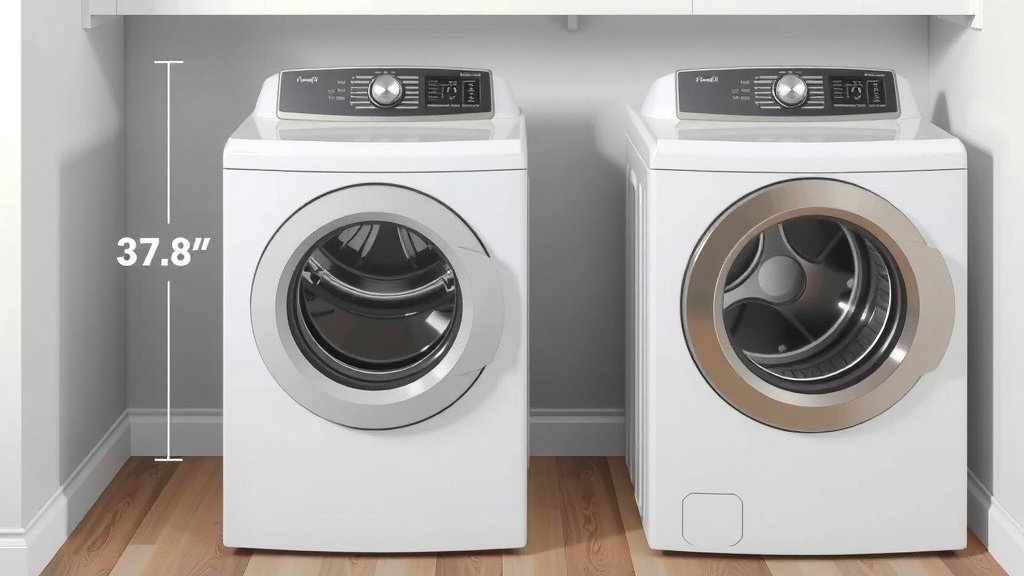
The size of a washer and dryer can vary, but most standard-sized units are about 27 inches wide. Height and depth also differ, with many front-loaders around 30-34 inches deep and 36-40 inches tall. Remember to measure your laundry space carefully before you shop to ensure a proper fit for your laundry appliances.
When considering washer and dryer dimensions, it’s helpful to think about both the appliance itself and the necessary clearance around it. You’ll need extra space for hoses, vents, and to open doors or lids fully. Many homeowners find that understanding the overall footprint helps prevent installation headaches.
- Standard washers and dryers are often 27 inches wide.
- Depth and height vary, typically from 30-34 inches deep and 36-40 inches tall.
- Always measure your laundry space, including doorways.
- Factor in clearance for doors, hoses, and vents.
- Compact models are available for smaller homes or apartments.
Let’s break down the common dimensions you’ll encounter and how to choose the right fit for your home.
Understanding Washer and Dryer Dimensions
When you’re looking for a new washer and dryer, knowing the typical sizes is key. Most standard washers and dryers are about 27 inches wide. This is a common size for front-load and top-load machines. You’ll want to keep this width in mind as you measure your laundry space.
Standard Sizing for Laundry Appliances
For a standard washer, you can expect it to be roughly 27 inches wide. The height usually ranges from 36 to 40 inches. The depth often falls between 30 and 34 inches. These dimensions are for the appliance itself, so remember you’ll need more space around it.
A standard dryer generally matches the width of the washer. So, expect around 27 inches there too. Dryer heights and depths are quite similar to washers. Many models are about 36 to 40 inches tall and 30 to 34 inches deep. This consistent sizing helps when you’re looking to buy a matching pair.
What About Stackable Units?
Stackable washer and dryer units are a great choice for saving space. Their dimensions are a bit different. The Stackable washer and dryer units are a great choice for saving space; learn more about the best options.width usually remains standard at about 27 inches. However, the height will nearly double when stacked. One unit might be around 30-35 inches tall. Stacked, they can reach 65 to 75 inches or even more. Always check the total stacked height to ensure it fits under any shelves or cabinets.
Space-Saving Stackables
If you live in an apartment or a smaller home, stackable units are often the way to go. They allow you to do laundry vertically. This frees up floor space for other uses. We found that many compact stackable sets are designed for smaller clearances. They can be a real lifesaver for tight laundry nooks.
Measuring Your Laundry Area: A Crucial Step
Before you fall in love with a specific washer or dryer, you must measure your laundry space. This step prevents costly mistakes and headaches later. It’s not just about the machines themselves; it’s about how they’ll fit and function in your home.
Width Considerations
The 27-inch width is a good starting point for standard machines. But what if your laundry area is narrower? Or what if you have a wider alcove? Measure the narrowest point where the machine will go. Also, measure the width of any doorways or hallways the appliance must pass through during delivery. A machine might fit in its spot but be impossible to get into the room!
Depth Matters for Door Swings and Vents
Depth is critical for a few reasons. First, you need space for the door or lid to open fully. A front-loader door swings out, typically adding another 1.5 to 2 feet to the required depth when open. Top-loaders need clearance above for the lid to lift. Second, you need space behind the machine for water hoses and the dryer vent hose.
We found that many experts recommend at least 4-6 inches of clearance behind the washer and dryer. This allows for proper ventilation and hose connections. Without this space, you risk kinking hoses, which can lead to leaks or reduced drying efficiency. It can also put stress on the connections.
Calculating Total Depth Needed
To get the total depth required for a front-loader, add the machine’s depth to the door swing. Then, add the recommended clearance behind it. For instance, a 32-inch deep machine with a 25-inch door swing and 5 inches for hoses equals about 62 inches of clear space needed when the door is open.
Height for Clearance and Ergonomics
While height isn’t usually the biggest constraint for standard machines, it’s still important. You need to ensure the machine fits under any existing cabinets or shelving. Also, consider how easy it will be for you to reach the controls. Most controls are on the front panel, but some older top-loaders have them on the back rim.
Specialty Appliances and Their Sizes
Beyond standard and stackable units, there are compact or apartment-sized washers and dryers. These are much smaller. They can be as narrow as 24 inches wide and significantly less deep. If space is extremely limited, these are worth investigating. Some are even designed for under-counter installation. Beyond standard and stackable units, there are compact or apartment-sized washers and dryers; explore the best options.
Compact vs. Standard: Which is Right for You?
Choosing between compact and standard sizes often comes down to your laundry needs and available space. Let’s look at the typical differences.
Compact Washer and Dryer Dimensions
Compact machines are designed for minimal space. We saw that the width can be around 24 inches. Depths might be closer to 24-27 inches. Heights are often similar to standard units, around 33-35 inches. Their capacity is also smaller. They are ideal for singles, couples, or very small living spaces. Think RVs, studios, or small apartments.
Standard Washer and Dryer Dimensions
Standard units, as we’ve discussed, are generally 27 inches wide. They offer larger capacities, which are better for families or busy households. If you do large loads of towels or bedding, standard machines are usually a better fit. They handle more laundry at once, meaning fewer loads overall.
Capacity Matters Most
Don’t just think about the external dimensions. The internal capacity is just as important. A larger capacity means you can wash and dry more clothes at once. This saves time and energy. For a family of four, we found that a medium to large capacity machine is often recommended (CDC guidelines for household appliance efficiency suggest looking at load size).
Checklist Before You Buy
To make sure you get the right fit, use this quick checklist:
- Measure the width of the laundry space and doorways.
- Measure the depth needed, including door swing and vent space.
- Measure the height to ensure it fits under cabinets.
- Consider the capacity needed for your household size.
- Check the total height if considering a stackable unit.
- Plan for ventilation and hose connections behind the units.
A Quick Comparison Table
Here’s a simplified look at common dimensions:
| Type | Approximate Width (inches) | Approximate Depth (inches) | Approximate Height (inches) |
|---|---|---|---|
| Standard Front-Load Washer/Dryer | 27 | 30-34 (machine) + 25 (door swing) + 4-6 (clearance) = ~60-65+ total depth needed when open | 36-40 |
| Standard Top-Load Washer/Dryer | 27 | 27-30 (machine) + 4-6 (clearance) = ~31-36+ total depth needed | 36-40 |
| Stackable Unit (each) | 27 | 27-30 | 33-35 |
| Compact Washer/Dryer | 24 | 24-27 | 33-35 |
Conclusion
You’ve learned that washer and dryer sizes vary, but standard units typically measure around 27 inches wide. Remember to account for the depth of the machine, the swing of the door, and essential clearance for hoses and vents. Stackable and compact models offer great solutions for smaller homes. Always measure your laundry space, including doorways, before you make a purchase. Taking these simple steps ensures your new appliances fit perfectly and function efficiently for years to come.
Frequently Asked Questions
How much space do I really need behind my washer and dryer?
You’ll generally need about 4 to 6 inches of clearance behind your washer and dryer. This space is essential for connecting water hoses and the dryer vent hose properly. It also allows for airflow, which helps your machines run more efficiently and prevents kinks that could cause damage.
Are stackable washer and dryer units the same width as regular ones?
Yes, stackable washer and dryer units usually maintain the standard 27-inch width. The main difference is in their height; when stacked, they nearly double in overall height, so always measure your vertical space to ensure they fit under cabinets or shelves.
Can a large-capacity washer fit through a standard doorway?
Most standard washers are about 27 inches wide, which typically fits through a standard 30-32 inch doorway. However, it’s always wise to measure the narrowest point of entry, including hallways and tight turns, to be absolutely sure your new appliance can be delivered to your laundry room.
What’s the difference in depth between a front-load and a top-load washer?
Front-load washers are generally deeper, often around 30-34 inches, and you must add space for the door swing (about 25 inches). Top-load washers are usually shallower, around 27-30 inches, and only require clearance for the lid to open fully.
Do compact washers and dryers have significantly smaller capacities?
Yes, compact washer and dryer models are designed for smaller spaces and typically have smaller drum capacities. While they are ideal for small living situations, you’ll be able to wash and dry fewer items per load compared to standard-sized units.
![7 The Best Top Loader Washing Machines [In 2026]](https://homeunderstandable.com/wp-content/uploads/2026/09/7-the-best-top-loader-washing-machines-in-2026-featured-768x432.jpg)
![7 Best Washing Machines For Small Spaces [In 2026]](https://homeunderstandable.com/wp-content/uploads/2026/08/7-best-washing-machines-for-small-spaces-in-2026-featured-768x432.jpg)
![7 Best Washer Dryers For Small Spaces [In 2026]](https://homeunderstandable.com/wp-content/uploads/2026/08/7-best-washer-dryers-for-small-spaces-in-2026-featured-768x432.jpg)

![7 Best Type Of Washing Machine [In 2026]](https://homeunderstandable.com/wp-content/uploads/2026/09/7-best-type-of-washing-machine-in-2026-featured-768x432.jpg)