
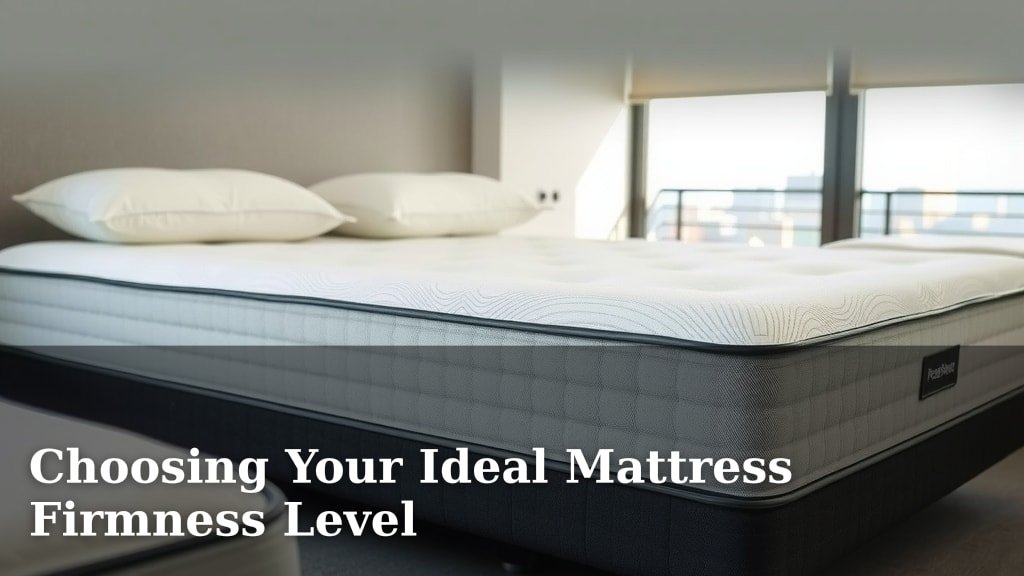
Choosing Your Ideal Mattress Firmness Level
Knowing what firmness of mattress you need is mostly about your body weight and sleeping position. Generally, lighter individuals and side sleepers do best with softer mattresses, while heavier people and back or stomach sleepers need a firmer feel for proper support. Finding your perfect match ensures restful sleep and fewer aches.
The right mattress firmness can truly transform your sleep. It’s not just about comfort; it’s about spinal alignment and pressure point relief. We’ve found that many people overlook this detail, leading to less-than-ideal sleep. Your mattress should feel like a hug, not a brick wall or a hammock.
- Your sleeping position is key.
- Body weight plays a big role.
- Softer is often better for side sleepers.
- Firmer suits back and stomach sleepers.
Ready to find your sleep sanctuary? Let’s walk through exactly how to determine the best mattress firmness for your unique needs.
Choosing the right mattress firmness is more than just a preference; it’s about ensuring your body gets the support it needs for a truly restorative night’s sleep. You’ve probably heard terms like “medium-firm” or “plush” thrown around, but what do they actually mean for *you*? Let’s break down how to pinpoint the perfect firmness level.
Finding Your Ideal Mattress Firmness Level
Determining your ideal mattress firmness is all about understanding how different firmness levels interact with your body and sleeping habits. It’s a personalized journey to find that sweet spot between too hard and too soft.
The Role of Your Body Weight
Your weight is a major player in how a mattress feels. Heavier individuals tend to sink more into a mattress, so a firmer option is often necessary to prevent excessive sinking and maintain proper spinal alignment. Lighter individuals, on the other hand, might not exert enough pressure to activate the comfort layers of a very firm mattress. This can lead to them feeling like they’re sleeping on a board.
Weight Ranges and Firmness Recommendations
We found that generally, these guidelines can help:
- Under 130 lbs: Often do best with a softer to medium-soft mattress. This allows them to sink in enough for pressure relief.
- 130-230 lbs: Typically find a medium-firm mattress to be the most comfortable and supportive.
- Over 230 lbs: Usually require a firm to extra-firm mattress for adequate support and to prevent the mattress from breaking down too quickly.
Keep in mind these are starting points. Your sleeping position (which we’ll discuss next) also plays a role.
How Your Sleeping Position Affects Firmness Choice
Where you rest your head at night makes a big difference. Think about how your body is positioned and where pressure points might occur.
Side Sleepers
If you sleep on your side, your weight is concentrated on smaller areas like your hips and shoulders. A mattress that’s too firm can create uncomfortable pressure points here, leading to stiffness and pain. You’ll likely want a softer to medium firmness. This allows your shoulder and hip to sink in slightly, keeping your spine in a neutral, straight line. Many experts suggest a medium-soft feel as a great starting point for side sleepers (Cleveland Clinic).
Back Sleepers
Sleeping on your back generally offers good weight distribution. However, you still need support to keep your spine’s natural curve. A mattress that’s too soft can cause your hips to sink too low, misaligning your spine. Back sleepers often find a medium-firm to firm mattress ideal. This provides enough support for your lower back while still offering comfort. You want to feel cradled, not swallowed.
Stomach Sleepers
This position can be tough on your spine. Sleeping on your stomach can cause your hips to sink into the mattress, leading to an unnatural arch in your lower back. To counteract this, stomach sleepers typically need a firmer mattress. A firmer surface helps keep your hips aligned with your shoulders, preventing that problematic sinking. We found that a medium-firm to firm option is often recommended here.
Combination Sleepers
Do you toss and turn throughout the night? Combination sleepers change positions frequently. Finding the right firmness can be a balancing act. A medium-firm mattress is often the best compromise. It’s generally supportive enough for back and stomach sleeping, yet offers enough give for side sleeping comfort. You want a mattress that responds well to movement without being too difficult to change positions on.
Understanding Mattress Firmness Scales
Mattress companies often use a scale, typically from 1 to 10, to describe firmness. This can be a helpful tool, but remember it’s not always standardized across brands.
| Firmness Level | Scale (Approximate) | Feel | Best For |
|---|---|---|---|
| Plush/Soft | 1-3 | Very yielding, deep contouring | Lighter individuals, strict side sleepers |
| Medium-Soft | 4 | Noticeable cushioning, some contouring | Lighter side sleepers, some combination sleepers |
| Medium | 5-6 | Balanced feel, good contouring and support | Most sleepers, especially combination sleepers |
| Medium-Firm | 7 | Slightly more supportive, minimal sinking | Average weight back and stomach sleepers |
| Firm | 8-9 | Very supportive, minimal contouring | Heavier individuals, stomach sleepers |
| Extra-Firm | 10 | Rigid, very little give | Heavier individuals needing maximum support |
When you’re shopping, look for descriptions that align with your needs. A “medium” in one brand might feel like a “medium-firm” in another. It’s why reading reviews and, if possible, testing a mattress is so important.
Don’t Forget About Mattress Type!
While firmness is key, the type of mattress can also influence how that firmness feels. For example:
- Innerspring mattresses tend to feel firmer and offer more bounce.
- Memory foam mattresses often provide deep contouring and pressure relief, sometimes feeling softer even at a firmer rating due to the hug-like feel.
- Latex mattresses offer responsive support and can range from soft to firm, with a more buoyant feel than memory foam.
- Hybrid mattresses combine coils with foam layers, aiming to offer the best of both worlds – support and comfort.
We found that hybrids are particularly popular because they can offer a good balance for many sleep preferences.
Putting It All Together: Your Mattress Firmness Checklist
Ready to narrow down your search? Ask yourself these questions:
- What is my typical sleeping position?
- What is my approximate body weight?
- Do I experience any pain points (hips, shoulders, back)?
- Do I prefer to sink into my mattress or sleep on top of it?
- What firmness level has worked (or not worked) for me in the past?
Answering these will put you on the right track to finding a mattress that supports your body and helps you wake up feeling refreshed and pain-free. Remember, the goal is comfort and proper alignment, not just a number on a scale.
Conclusion
You’ve learned that finding your ideal mattress firmness is a personalized process. It’s a balance between your unique body weight and your preferred sleeping position. By understanding how much support you need and where your pressure points lie, you can avoid common sleep pitfalls. Don’t just go by a number; consider how you sleep and how you want to feel. Take the checklist we provided and use it to guide your next mattress search. Your journey to better sleep starts with this informed decision.
Frequently Asked Questions
Can I test a mattress firmness before buying?
Yes, absolutely! Many mattress companies offer in-home trial periods, often 100 nights or more. This allows you to sleep on the mattress in your own home and see how it feels over time. If it’s not the right firmness, you can usually return it for a refund or exchange.
How does my partner’s weight affect mattress firmness choice?
If you share a bed, consider your partner’s body weight and sleeping position too. If there’s a significant weight difference, a medium-firm or hybrid mattress might offer a good compromise. Motion isolation is also important if one of you moves a lot during sleep.
Will a mattress feel firmer or softer over time?
Most mattresses will soften slightly over the first few months of use as the materials break in. This is normal and usually a small change. However, if a mattress feels significantly softer or develops sagging spots quickly, it might indicate a lower-quality mattress that isn’t providing adequate support.
What if I don’t know my exact body weight for recommendations?
If you’re unsure of your exact weight within the ranges, consider your sleeping position as the primary guide. If you’re on the border between two weight categories, a medium or medium-firm mattress is often a safe bet. You can always adjust during a trial period if it’s not quite right.
Does the type of mattress material change the firmness feel?
Yes, it does. Memory foam tends to hug your body, so a memory foam mattress might feel softer than an innerspring mattress of the same firmness rating because you sink in more. Latex offers a more buoyant, responsive feel. Hybrids combine coils with foam, aiming for a balanced support and comfort experience that can feel different from all-foam or all-coil options.
![What Is The Best Mattress for 220 lb Man [In 2026]](https://homeunderstandable.com/wp-content/uploads/2025/11/Best-Mattress-for-220-lb-Man.jpg)
![7 Best Mattress For Rv King [2026]](https://homeunderstandable.com/wp-content/uploads/2026/05/7-best-mattress-for-rv-king-2026-featured-768x432.jpg)
![What Is The Best Mattress for Metal Platform Bed [In 2026]](https://homeunderstandable.com/wp-content/uploads/2025/12/Best-Mattress-for-Metal-Platform-Bed.jpg)
![What Is The Best Mattress for Headaches [In 2026]](https://homeunderstandable.com/wp-content/uploads/2025/12/Best-Mattress-for-Headaches.jpg)