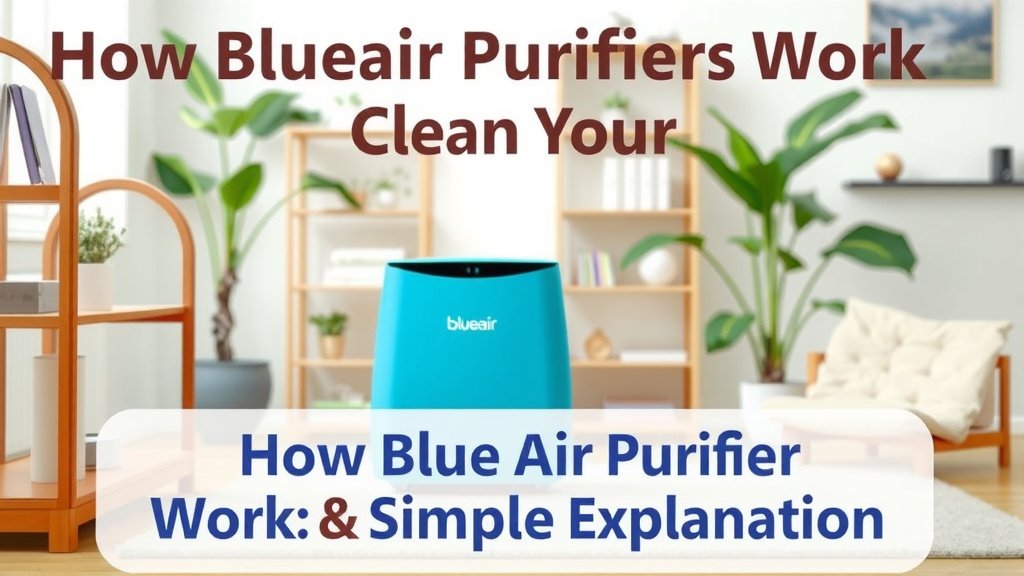
How Blue Air Purifiers Work: A Simple Explanation
A Blueair purifier works by pulling dirty air through its filters, trapping particles like dust and pollen, and then releasing cleaner air back into your room. It uses a multi-stage filtration system designed to capture even the smallest airborne pollutants. This process helps you breathe easier by reducing allergens and improving your overall indoor air quality. So, yes, it’s quite effective at making your home’s air feel fresher and cleaner.
The magic behind these purifiers often involves a combination of mechanical filtration and electrostatic attraction. Think of it like a super-powered vacuum cleaner for your air, but way more sophisticated. Many models also incorporate carbon filters to tackle odors and gases, giving you a more complete air purification experience. This dual approach ensures a wider range of contaminants are removed.
- Blueair purifiers clean your air using filters.
- They trap dust, pollen, and other tiny particles.
- Some models also remove odors and gases.
- It’s a way to improve your home’s air quality.
Ready to dive deeper into how your Blueair machine gets the job done? Let’s walk through exactly how these fantastic devices work step by step.
Understanding How Blueair Purifiers Clean Your Air
You might be wondering what makes your Blueair purifier so effective. It’s a clever system that works hard to remove tiny particles from your air. This process helps you and your family breathe cleaner air every day.
The Core Filtration Technology Explained
At its heart, your Blueair purifier uses a combination of advanced filtration methods. These work together to capture a wide range of airborne contaminants. It’s like having a personal air guardian in your home.
Mechanical Filtration: The First Line of Defense
Think of the mechanical filter like a fine sieve. It’s designed to trap larger particles as air passes through it. This includes things you can see, like dust bunnies and pet hair. It also catches smaller items like pollen and mold spores.
These mechanical filters are often made of special fibers. They create a dense network that physically blocks particles. The air is forced through this network, leaving the pollutants behind. Many experts point to this mechanical trapping as a key step in air cleaning (CDC).
Electrostatic Attraction: The Invisible Grab
Beyond just trapping, Blueair purifiers often use a second powerful technology. This is electrostatic attraction, also known as ion technology. Tiny particles in the air are given an electrical charge as they enter the purifier.
Then, these charged particles are drawn to oppositely charged filter surfaces. It’s like a magnet pulling in metal filings. This helps to capture even **very small particles** that might slip through a purely mechanical filter. Research shows that combining these methods can significantly boost capture rates (NCBI).
How the Charges Work Together
The system typically charges the incoming air particles. Then, the filter plates inside the unit are charged differently. This creates a strong pull. The combination ensures that everything from larger dust to microscopic bacteria gets caught. It’s a clever way to **maximize particle capture**.
The HEPA Filter Standard: What It Means for You
Many Blueair models use filters that meet or exceed the HEPA standard. HEPA stands for High-Efficiency Particulate Air. A true HEPA filter is certified to remove at least 99.97% of airborne particles 0.3 microns in size.
Why is 0.3 microns important? It’s considered the most penetrating particle size. This means if a filter can catch particles this small, it’s likely to catch even smaller and larger ones effectively. This standard is a benchmark for **excellent air purification**.
Beyond Particles: Tackling Odors and Gases
While particle removal is essential, you also want to tackle smells and invisible gases. Blueair purifiers often include an activated carbon filter for this purpose. This is a critical step for a truly clean-smelling home.
Activated Carbon: The Odor Sponge
Activated carbon is a special form of charcoal. It’s treated to be extremely porous. This creates a massive surface area within a small amount of material. Think of it like a sponge, but for gases and odors.
As air passes through the carbon filter, odor molecules and volatile organic compounds (VOCs) stick to its surface. VOCs are gases emitted from things like paints, cleaning supplies, and furniture. The carbon acts like a **molecular trap** for these unwanted airborne substances.
What Types of Odors Can It Handle?
This carbon filtration is effective against common household odors. This includes cooking smells, pet odors, smoke, and even the smell of certain chemicals. It helps make your living space smell fresher and cleaner, not just look cleaner.
The Airflow System: How Air Moves
All these filters wouldn’t do much without a good airflow system. Your Blueair purifier has a powerful yet quiet fan. This fan is the engine that drives the entire purification process.
Drawing Air In
The fan pulls room air into the purifier. It draws air from all around the unit. This ensures that the air in your entire room is circulated through the filters. It’s designed to create a **continuous cleaning cycle**.
Releasing Clean Air
Once the air has passed through all the filter stages, it’s pushed back out into your room. This clean, purified air helps to improve the overall air quality. The process is designed to be efficient, cleaning your air quickly and quietly.
Putting It All Together: A Multi-Stage Process
So, to recap, your Blueair purifier works in a series of steps. It’s a well-orchestrated sequence designed for maximum effectiveness. You can see how each part plays a vital role.
The Complete Cycle in Your Home
1. **Air Intake:** The fan draws in dirty room air.
2. **Particle Capture:** Air first passes through mechanical filters to grab larger particles.
3. **Electrostatic Charge:** Smaller particles are then charged to be easily attracted.
4. **Final Filtration:** Charged particles are captured by oppositely charged filter media.
5. **Odor & Gas Removal:** Activated carbon filters adsorb odors and VOCs.
6. **Clean Air Output:** Purified air is quietly released back into your room.
This multi-stage approach ensures that your Blueair unit tackles a broad spectrum of pollutants. It addresses both visible particles and invisible gases. Many users report a noticeable difference in air freshness after using these systems (Cleveland Clinic).
Checklist: What Your Blueair Purifier Does
- Traps dust and pet dander.
- Removes allergens like pollen and mold spores.
- Captures microscopic particles.
- Reduces common household odors.
- Filters out VOCs and gases.
- Releases cleaner, fresher air into your home.
Conclusion
You now understand how your Blueair purifier works its magic. It’s a clever system that combines mechanical trapping with electrostatic attraction to capture tiny particles. Plus, the activated carbon filter tackles unwanted odors and gases. This multi-stage process ensures you breathe cleaner, fresher air. To keep your purifier running at its best, remember to check your filters regularly and replace them as recommended. This simple step guarantees you continue enjoying the benefits of pure air in your home.
Frequently Asked Questions
How often should I replace my Blueair filters?
Filter replacement frequency depends on your specific Blueair model and the air quality in your home. Most manufacturers recommend replacing them every 6 to 12 months. Your purifier’s manual will have the exact guidance for your unit.
Will a Blueair purifier help with pet allergies?
Yes, Blueair purifiers are very effective at reducing pet allergens. The multi-stage filtration system, including the HEPA-standard filters, captures pet dander, hair, and other microscopic particles that trigger allergies.
Can Blueair purifiers really remove smoke smell?
Absolutely. The activated carbon filter in many Blueair models is designed to adsorb odors, including smoke. This filter traps odor molecules, making your air smell cleaner and fresher, even after cooking or if there’s smoke present.
Does the “electrostatic attraction” part create ozone?
Most modern Blueair purifiers are designed to operate with minimal or no ozone production. They use advanced technology to attract particles without generating harmful levels of ozone. Always check your specific model’s specifications for details.
Why do some Blueair filters have both fabric and carbon layers?
This design offers a dual benefit. The fabric-like layers handle particle capture, similar to mechanical filtration. The integrated carbon layer then works to absorb gases and odors, providing a more complete purification for both particles and smells in a single filter unit.
![What Is The Best Air Purifier for Closet [In 2026]](https://homeunderstandable.com/wp-content/uploads/2025/06/best-air-purifier-for-closet.jpg)