
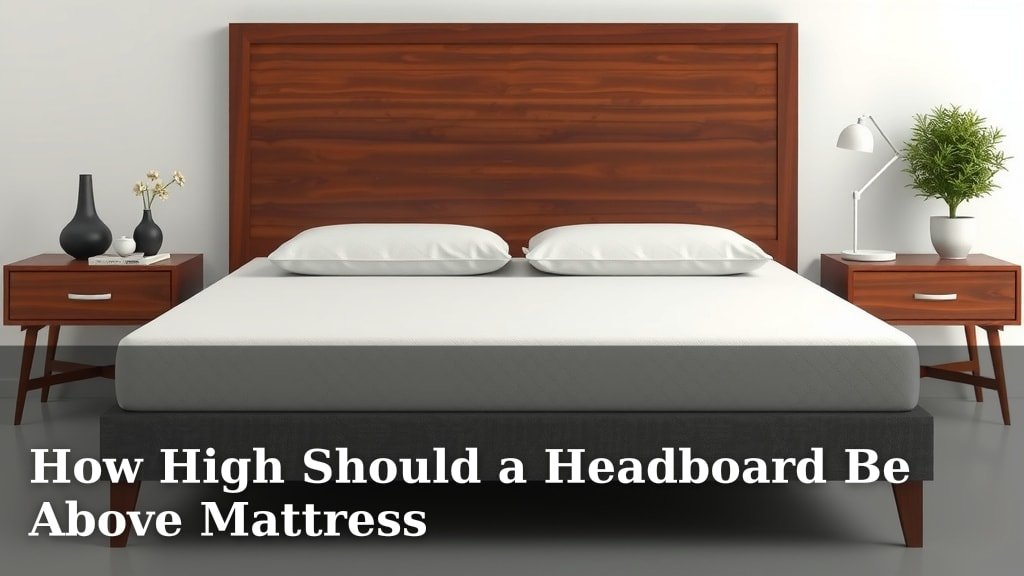
How High Should a Headboard Be Above Mattress
The ideal headboard height above your mattress can vary, but a good rule of thumb is to have it extend about **10 to 20 inches** above the mattress top. This height ensures it looks balanced and provides a comfortable backrest. For a visually pleasing look, consider the overall scale of your bed and room. A headboard that’s too short can look lost, while one that’s too tall might overwhelm the space.
We’ve researched standard design principles and found that headboard height plays a big role in bedroom aesthetics. Beyond just looks, a well-proportioned headboard can make your bed feel more like a cozy sanctuary. Many designers suggest a height that’s roughly **two-thirds the height of your mattress and box spring combined**. This helps create a harmonious and inviting bedroom atmosphere that feels both stylish and functional.
- Headboard height generally ranges from 10-20 inches above the mattress.
- Consider the bed’s scale and your room’s size.
- A balanced height makes the bed look good and feel cozy.
- Aim for a headboard height about two-thirds of your mattress/box spring combo.
Ready to find that perfect headboard height for your space? Let’s break down how to measure and choose wisely.
Finding the Perfect Headboard Height Above Your Mattress
Choosing the right headboard height is more art than exact science. It’s about creating a bedroom that feels just right for you. We’ve found that a common sweet spot exists, but your personal style and bed setup matter most. Let’s figure out what works best for your unique space.
The Essential Measurements: What to Consider
Before you fall in love with a headboard, grab a measuring tape. Understanding your mattress and box spring dimensions is key. This isn’t just about aesthetics; it impacts comfort and how your bed looks in the room.
Measuring Your Mattress and Box Spring
First, you need to know the total height of your sleeping surface. This includes both your mattress and your box spring. If you have a platform bed with no box spring, just measure your mattress height. Make sure you measure from the floor up to the very top of your mattress.
Many modern mattresses are quite thick. A standard mattress can range from 8 to 14 inches or even more. Add your box spring height to this. A typical box spring adds another 5 to 9 inches. This total number is your baseline for headboard planning.
The Two-Thirds Rule: A Designer’s Trick
Many interior designers use a simple guideline. They suggest the headboard should be about two-thirds the height of your mattress and box spring combined. This helps create a visually pleasing balance. It stops the headboard from looking too tall or too short.
For example, if your mattress and box spring together measure 24 inches high, your headboard’s total height might be around 16 inches (24 inches x 2/3 = 16 inches). This is a great starting point for visual harmony.
Headboard Height Above the Mattress: The Sweet Spot
Once you know your bed’s total height, you can determine how high the headboard should sit above the mattress. This is where the “visible” portion of the headboard comes into play.
The General Recommendation: 10 to 20 Inches
For most standard beds, we found that a headboard extending 10 to 20 inches above the top of your mattress is ideal. This range usually provides enough visual presence. It also offers a comfortable backrest for reading or lounging.
A headboard that’s too low might seem to disappear. It won’t give your bed that anchored, finished look. Conversely, a headboard that’s excessively high can feel imposing. It might make your ceiling seem lower.
Why This Height Works
This height range ensures your headboard commands attention without overwhelming the bed. It acts as a beautiful backdrop. It also offers practical support. You don’t want to be craning your neck to lean against the wall. A bit of elevation makes lounging much more comfortable.
Factors Influencing Your Headboard Choice
While the general rules are helpful, your specific situation might call for adjustments. Several factors can tip the scales in favor of a taller or shorter headboard.
Room Scale and Ceiling Height
Think about the size of your bedroom. A king-sized bed in a large room can handle a taller headboard. A queen bed in a smaller room might look better with a more moderately sized one. High ceilings can accommodate taller headboards gracefully. Low ceilings might make a very tall headboard feel cramped.
We found that visual weight is important. A large, ornate headboard will have more visual weight than a simple, slim one. Match the headboard’s presence to the room’s overall scale. This prevents the bed from looking out of place.
Bed Frame Design and Height
The design of your bed frame itself matters. Some bed frames have built-in headboards that are quite low. Others are essentially just a box spring holder, leaving the wall bare. This impacts how much space you have to work with.
A very low bed frame means your mattress sits closer to the floor. You’ll likely need a headboard that extends higher above the mattress to achieve the desired visual effect. Conversely, a high-rise bed frame might mean your mattress is already quite elevated. This could allow for a shorter, more proportional headboard.
Your Personal Comfort Needs
How do you use your bed? If you love to sit up in bed with a stack of pillows, a taller headboard is a good idea. It provides a solid surface for your pillows to rest against. This prevents them from falling behind the bed.
If you just need a simple backdrop and rarely sit up, a shorter headboard might be perfectly fine. Consider your habits. Do you enjoy reading in bed? Do you often prop yourself up to watch movies? Your comfort should guide your decision.
The Visual Impact: Making a Statement
A headboard isn’t just furniture; it’s a design element. Its height plays a huge role in its visual impact.
Too Short: The Lost Headboard
If a headboard is too short, it can get lost behind the mattress and pillows. It might look like an afterthought. It fails to anchor the bed as the focal point of the room. This can make the entire bed area feel unfinished.
Too Tall: The Overpowering Presence
On the flip side, a headboard that’s too tall can dominate the space. It might make your room feel smaller. It can also create an unbalanced look, especially if it reaches too close to the ceiling. This can detract from the overall bedroom serenity you’re trying to create.
A Quick Headboard Height Checklist
Ready to make a decision? Run through this quick checklist to ensure your headboard height is just right:
- Measure your mattress and box spring height combined.
- Calculate two-thirds of that measurement for a guideline height.
- Aim for 10-20 inches of headboard visible above the mattress.
- Consider your room’s ceiling height and overall scale.
- Think about how you use your bed for comfort and support.
- Does the headboard visually anchor your bed without overpowering it?
When to Break the Rules
While guidelines are helpful, sometimes you just know what looks good. If you have a unique bed frame or a specific design vision, don’t be afraid to deviate. The most important thing is that your bedroom feels like a comfortable and stylish sanctuary for you.
Ultimately, the perfect headboard height is the one that makes you happy. It’s the one that contributes to a bedroom you love. Trust your instincts, and enjoy the process of creating your ideal space.
Conclusion
Finding the perfect headboard height above your mattress is about balancing aesthetics with personal comfort. You’ve learned that a range of 10 to 20 inches often works best for visual appeal and function. Remember to consider your room’s scale and how you use your bed. Don’t be afraid to use the two-thirds rule as a helpful starting point. Now that you have the key measurements and design principles, you’re ready to select or adjust your headboard height to create a bedroom sanctuary you truly love. Take your tape measure and start designing!
Frequently Asked Questions
What if my bed frame already has a headboard attached?
If your bed frame includes a headboard, you’ll need to measure from the top of your mattress to the top of that existing headboard. This height should ideally fall within the 10-20 inch range for optimal visual balance. If it’s significantly outside this, you might consider if it’s still working for your room’s aesthetic.
How does the thickness of my mattress affect headboard height?
A thicker mattress means your sleeping surface is higher off the ground. This often requires a headboard that extends higher above the mattress to maintain the desired visual proportion. Always measure from the top of your mattress to determine the visible headboard height.
Can I use a headboard that’s much taller than 20 inches above the mattress?
Yes, you can, especially in rooms with high ceilings or if you have a large bed. A taller headboard can make a dramatic statement. Just ensure it doesn’t overwhelm the room or make the ceiling feel lower. Measure your total wall space to be sure.
What if I have a platform bed with no box spring?
If you have a platform bed, you’ll only measure your mattress height. You can then apply the two-thirds rule to your mattress height to get a guideline for your headboard’s total height. The visible portion above the mattress should still aim for that 10-20 inch sweet spot.
How do pillows affect the visible headboard height?
When you arrange your pillows, they will cover some of the headboard. If you use many or very thick pillows, you might want your headboard to be on the higher end of the 10-20 inch recommendation. This ensures a good portion of the headboard remains visible and functional.
![What Is The Best Firm Hybrid Mattress for Side Sleepers [In 2026]](https://homeunderstandable.com/wp-content/uploads/2025/06/best-firm-hybrid-mattress-for-side-sleepers-ultimate-comfort-and-support-guide.jpg)
![What Is The Best Air Mattress for Two Adults [In 2026]](https://homeunderstandable.com/wp-content/uploads/2025/06/best-air-mattress-for-two-adults.jpg)


![What Is The Best Mattress for Joint Problems [In 2026]](https://homeunderstandable.com/wp-content/uploads/2025/12/Best-Mattress-for-Joint-Problems.jpg)