
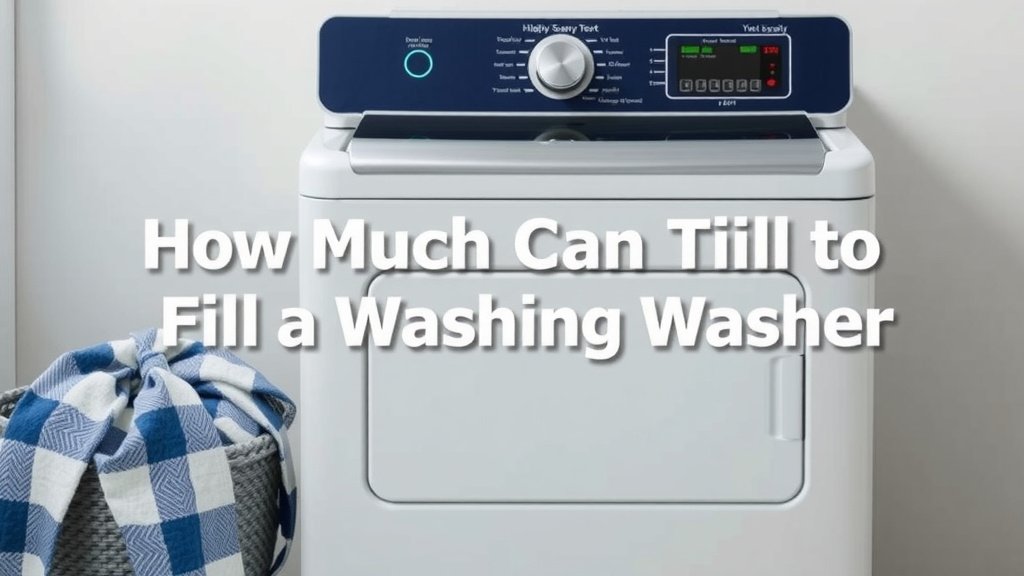
How Much to Fill a Top Load Washer
You can fill a top-load washing machine until the water covers the clothes, but do not stuff it too tightly. Overloading can prevent clothes from moving freely, leading to a less effective wash and potential damage to your machine. Aim for a loose load where items can tumble with ease.
Finding that sweet spot is key to getting your laundry sparkling clean. Too little, and you’re wasting water and time. Too much, and you risk poor cleaning performance and wear on your appliance. Many people wonder about the right amount, and we’ve looked into it.
- Don’t pack the machine too full.
- Clothes should move freely for a good wash.
- Overloading can harm your washer and clothes.
- The water should cover the items, but not be packed solid.
Let’s walk through exactly how to fill your top-load washer for the best results, so you can avoid common laundry day frustrations.
“`htmlHow Full Should Your Top-Load Washer Be?
You’re probably wondering just how much laundry you can toss into your trusty top-load washing machine. The general rule of thumb is simple: fill it enough so the water can saturate your clothes, but not so much that everything is packed in tight. Think of it like giving your clothes room to dance, not a mosh pit!
When your washer is loaded correctly, the water can circulate freely. This allows the detergent to reach every fiber. It also means your clothes can agitate and tumble properly, which is how they get clean. We’ve found that a loosely filled machine is the key to truly spotless laundry.
Understanding Your Top-Load Washer’s Capacity
Top-load washers come in various sizes, much like people do. Some are petite and perfect for a small household, while others are giants capable of handling a family’s worth of weekly washing. Knowing your machine’s capacity helps you avoid overfilling or underfilling.
Standard vs. High-Efficiency (HE) Models
The biggest difference you’ll notice between older, standard top-loaders and newer High-Efficiency (HE) models is the water level. Standard machines often fill up with a lot of water, sometimes completely submerging clothes. HE models, on the other hand, use much less water.
This means you’ll never see an HE machine filled to the brim with water like the older ones. For HE machines, the goal is a damp load where clothes tumble through a smaller amount of water and detergent. You might even feel like it’s not using enough water, but trust us, it’s designed that way (Energy Star).
What Does “Capacity” Really Mean?
When manufacturers talk about capacity, they usually refer to the drum size in cubic feet. This is a measurement of the internal space available. However, it’s not a strict guideline for how many pounds of clothes you should put in.
Instead of focusing on pounds, think about the visual cue of how the clothes sit in the drum. You want them to be loose and airy. It’s about volume, not weight. A heavy, wet towel takes up less space than a pile of fluffy towels. So, just because it fits doesn’t mean it’s a good load.
The Art of Loading: What to Aim For
Loading your washer correctly is more of an art than a science. It’s about achieving a balance that ensures your clothes get clean without straining your machine.
The “Loose Load” Principle
We’ve heard this phrase a lot, and for good reason: aim for a loose load. This means your clothes should be able to move freely within the drum. If you can easily stick your hand between the clothes and the top of the drum, you’re likely in a good spot.
Imagine your clothes are at a party. They should be able to mingle and move around, not be squeezed into a tiny corner. This movement is essential for effective cleaning and rinsing. It also helps prevent wrinkles from setting in permanently.
Water Levels: A Key Indicator
For older, standard top-loaders, the water level is a great guide. The water should come up and cover your clothes. However, you shouldn’t see a giant pool of water with only a few items floating on top. This would be an underfilled machine.
Conversely, if the clothes are packed so tightly that the water struggles to reach the items at the very top, that’s too much. You want the water to be able to reach everything without a struggle. Many experts suggest that the water should come up to just below the agitator (if you have one).
How to Check Your Load
Before you hit the start button, give your load a quick check. Can you see daylight between most of the clothes? Can you gently push down on the load and feel space underneath? If you answered yes, you’re probably good to go.
If the clothes are packed down tightly and you can’t easily push them around, remove some items. It’s better to do two smaller loads than one overloaded one. Your clothes and your washer will thank you for it!
Why Overloading is a Laundry Day Disaster
It might seem like a good idea to cram as much as possible into one load to save time. However, overloading your washing machine can lead to a host of problems. We’ve found that the consequences are rarely worth the perceived time savings.
Poor Cleaning Performance
When clothes are packed too tightly, they can’t move freely. This means detergent can’t circulate properly, and dirt and grime can’t be effectively washed away. You might end up with clothes that still have stains or look dingy, even after a wash cycle.
Think about trying to wash a greasy pan by stuffing it into a tiny sink with just a bit of water. It just won’t get clean. Your laundry works the same way. Proper movement and water flow are essential for clean clothes.
Damage to Your Washing Machine
Overloading puts a significant strain on your washing machine’s motor and other moving parts. The machine has to work much harder to try and agitate and spin a heavy, overloaded drum. This can lead to premature wear and tear.
We’ve seen that this extra stress can cause components like belts, bearings, and even the motor itself to fail sooner than expected (Consumer Reports). In severe cases, it can even damage the drum or the suspension system. Repairs can be costly, so prevention is key.
Damage to Your Clothes
Besides affecting the machine, overloading can also be tough on your clothes. When items are packed in too tightly, they rub against each other excessively. This can lead to increased pilling, snagging, and premature fading of colors.
Delicate fabrics are especially vulnerable to this kind of damage. Overloading essentially turns your washing machine into a clothes-tossing, fabric-shredding monster. It’s just not fair to your favorite sweater!
Quick Checklist for the Perfect Load Size
Here’s a simple way to remember how to load your top-load washer:
- See Daylight: Ensure you can see daylight between most of the clothes at the top.
- Hand Test: Your hand should easily fit between the clothes and the top rim.
- Loose Tumble: Items should be able to tumble freely during the cycle.
- Water Coverage (Standard Washers): Water should saturate clothes without struggle.
- Not Packed Tight: Never force clothes into the machine.
- HE Washer Tip: Damp, not soaking, is usually the goal with less water.
By following these guidelines, you can ensure your top-load washing machine performs at its best, keeping your clothes clean and your appliance running smoothly for years to come. It’s a small effort that makes a big difference in your laundry routine!
“`Conclusion
You’ve learned that filling your top-load washer correctly is simpler than you might think. The key is to avoid overpacking, allowing clothes to move freely for a thorough clean. Remember the visual cues: a loose load where you can see daylight or easily fit your hand. This simple approach ensures your clothes get clean and protects your washing machine from unnecessary strain. By aiming for a loose, airy load every time, you’ll get better results and extend the life of your appliance. Give it a try on your next laundry day!
Frequently Asked Questions
How do I know if I’m using too much water in my top-load washer?
If your clothes are swimming in water and barely moving during the cycle, you might be using too much. Standard top-loaders should have water covering the clothes, but not so much that items float around without resistance. For HE models, you’ll use much less water, so a damp load is normal.
Can I mix different types of fabrics in one top-load washer load?
Generally, it’s best to group similar fabrics together. Mixing heavy items like jeans with delicate items can cause damage to the lighter fabrics. Stick to washing like items together to ensure optimal cleaning and to prevent snags or tears.
What happens if I put only a few items in my top-load washer?
This is called an underfilled load. While it won’t harm your machine, it’s not efficient. You’ll use more water and energy than necessary for just a few items. It’s better to save up laundry until you have a load that fills the machine appropriately without being too packed.
Does the agitator in older top-loaders affect how much I can fill the machine?
Yes, the agitator is central to the cleaning action. Clothes need space to move around it. If the machine is packed too tightly, the agitator can’t effectively move the clothes through the water. Aim for water to come up to just below the top of the agitator for a good load.
How does a top-load washer’s capacity in cubic feet relate to how much laundry I can put in?
The cubic feet measurement refers to the drum’s internal volume. While it gives you an idea of size, it’s not a weight limit. Focus on the visual cue of loose clothing rather than trying to fill it to a specific poundage. Always ensure clothes can tumble freely, regardless of the stated capacity.
![7 The Best Stackable Washer Dryer [In 2026]](https://homeunderstandable.com/wp-content/uploads/2026/09/7-the-best-stackable-washer-dryer-in-2026-featured-768x432.jpg)
![7 Best Washer Deals Right Now [In 2026]](https://homeunderstandable.com/wp-content/uploads/2026/09/7-best-washer-deals-right-now-in-2026-featured-768x432.jpg)
![7 Best Stackable Washing Machine And Dryer [In 2026]](https://homeunderstandable.com/wp-content/uploads/2026/09/7-best-stackable-washing-machine-and-dryer-in-2026-featured-768x432.jpg)