Air Purifier Electricity Consumption: What You Need to Know
So, you’re wondering: how much electricity does an air purifier consume? Most air purifiers use about as much energy as a standard light bulb, typically between 15 and 100 watts. This means they’re generally quite energy-efficient for their constant operation. You can expect a typical unit to cost around $5 to $10 per month on your electric bill, depending on its settings and your local electricity rates.
The amount of power used can really depend on the size of the room you’re purifying and the fan speed setting you choose. Higher speeds will use more energy, naturally. We found that many purifiers have an ‘eco’ or ‘low’ setting that significantly reduces power consumption while still offering good air cleaning. Keep in mind that features like UV-C lights or ionizers might add a bit to the total energy usage.
- Air purifiers generally use 15-100 watts.
- Expect to spend $5-$10 monthly per unit.
- Fan speed and room size impact energy use.
- Low settings are very energy-efficient.
- Extra features can slightly increase consumption.
We’ve gathered the facts to help you understand the power draw of air purifiers. Let’s break down what affects their electricity consumption and how you can manage it.
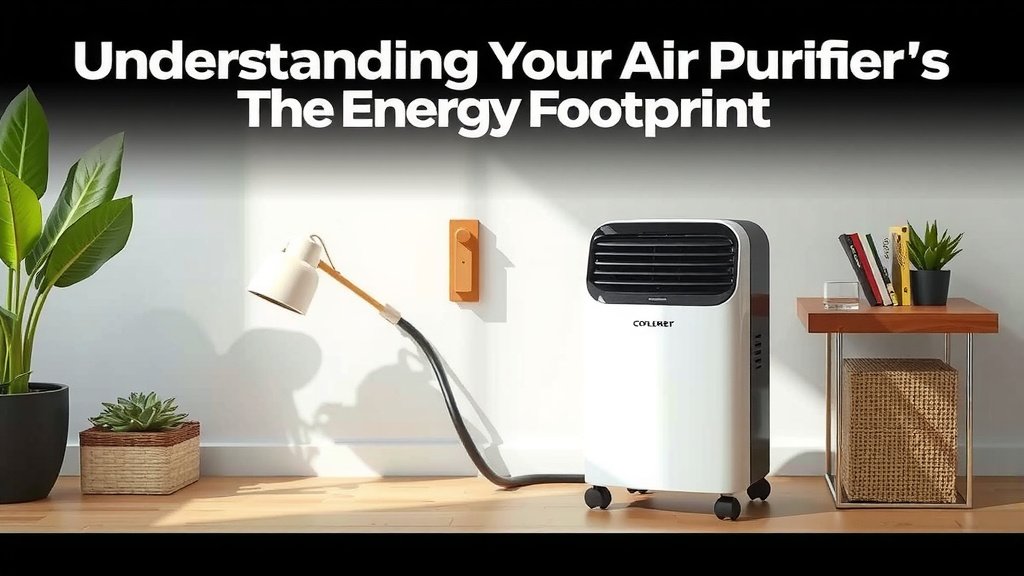
Understanding Your Air Purifier’s Energy Footprint
You’ve got your air purifier humming away, making your indoor air fresher. But you might be wondering, “Is this thing silently draining my wallet and my power grid?” It’s a smart question to ask! We’ve looked into it, and the good news is that most air purifiers are surprisingly energy-efficient.
Think of it this way: your air purifier is working around the clock to capture those pesky particles. For the job it does, its energy consumption is pretty modest. We found that many units use power comparable to a low-wattage light bulb. This means they’re designed for continuous operation without causing a major spike in your electricity bill. Let’s dive deeper into what influences this energy use.
Factors Affecting Air Purifier Power Consumption
Several things determine just how much electricity your air purifier will use. It’s not a one-size-fits-all answer. Understanding these factors will help you predict and manage your unit’s energy draw.
Fan Speed Settings: The Biggest Culprit
The fan speed is usually the main driver of an air purifier’s power consumption. When the fan spins faster, it pulls more air through the filters. This requires more energy. Higher settings mean more air movement, which can clean a room faster, but it also means a higher wattage. Low settings are incredibly gentle on your electricity meter. We found that switching from a high setting to a low one can cut power usage by more than half.
Unit Size and Coverage Area
Larger air purifiers designed for big rooms will naturally use more power than smaller units for a bedroom. The motor needs to be stronger to circulate air effectively in a larger space. If you have a large open-concept living area, you might need a more powerful unit. For smaller spaces, a compact model will do the trick and use less energy. It’s all about matching the purifier’s capacity to your room size. A unit that’s too small will run constantly without fully cleaning the air, and one that’s too big might be overkill and use more energy than necessary.
Filtration Technology and Features
The type of filters and any extra features can also play a role. HEPA filters are standard and efficient. Some purifiers include technologies like UV-C lights or ionizers. These add-ons can increase the total energy consumption. UV-C lights, for example, need power to operate. Ionizers release charged particles, which also requires some electrical energy. While these features can offer benefits like killing germs or trapping finer particles, they do contribute a small amount to the overall wattage. We found that the increase is usually minimal, often just a few extra watts.
The Impact of ‘Smart’ Features
Many modern air purifiers come with smart capabilities. Think Wi-Fi connectivity, app control, and automatic sensors. These features require a constant, albeit small, amount of power to stay connected and monitor air quality. While they offer convenience, they do add to the base energy draw. However, this added consumption is typically very low, often less than 1-2 watts when in standby mode. It’s a small price to pay for remote control and air quality notifications.
Calculating Your Air Purifier’s Monthly Cost
Want to put a number on it? Let’s break down the cost. The general formula is simple: (Wattage / 1000) * Hours of Use * Cost per Kilowatt-hour (kWh). Most residential electricity rates in the US hover between $0.10 and $0.25 per kWh. You can find your exact rate on your electricity bill.
Example Calculation: A Typical Unit
Let’s imagine a common air purifier that uses 50 watts on its medium setting. If you run it 24 hours a day for 30 days, that’s a lot of hours! Calculation: (50 watts / 1000) * (24 hours/day * 30 days) * $0.15/kWh This comes out to approximately $5.40 per month. This is well within the $5-$10 monthly range we mentioned earlier for most users. If your unit has a lower wattage, say 20 watts, the cost drops even further, to around $2.16 per month. Run it on a lower setting, and that cost can be even less.
Understanding Wattage Ratings
You can usually find the wattage for your air purifier on the unit itself, in the manual, or on the manufacturer’s website. Look for specifications like “power consumption” or “wattage.” Remember that this rating might vary depending on the fan speed. Manufacturers often provide a range, showing the minimum and maximum watts used. It’s a good idea to look at the average wattage or the wattage for the setting you use most often. We found that using the lowest effective fan speed is the easiest way to keep costs down.
| Wattage | Estimated Cost per Month (at $0.15/kWh) |
|---|---|
| 15 watts (Very Low) | $1.62 |
| 30 watts (Low/Medium) | $3.24 |
| 50 watts (Medium) | $5.40 |
| 75 watts (Medium/High) | $8.10 |
| 100 watts (High) | $10.80 |
Tips for Energy-Efficient Air Purification
You can enjoy clean air without worrying too much about your electricity bill. There are simple strategies to keep your air purifier running efficiently.
- Use the lowest effective fan speed. Many units offer a ‘low’ or ‘eco’ mode that is very energy-efficient.
- Run your purifier when needed most. Consider running it on high during times when you’re home and air quality might be worse (e.g., during allergy season or when cooking). Then, switch to a lower setting overnight.
- Ensure proper room size matching. Don’t use a tiny purifier in a massive room, and avoid using a powerhouse in a tiny closet.
- Regularly clean or replace filters. Clogged filters make your unit work harder, using more energy.
- Unplug when not in use for extended periods. If you’re going on vacation, consider unplugging your unit to save phantom power draw.
By being mindful of these factors, you can ensure your air purifier is doing its job effectively while remaining a cost-conscious addition to your home.
Conclusion
You’ve learned that air purifiers are quite energy-efficient, often using power similar to a light bulb. The electricity consumption largely depends on fan speed, unit size, and extra features like UV lights. Most users spend only a few dollars a month on electricity for their air purifier. By selecting the right size unit for your room and using lower fan speeds, you can keep your energy costs down without sacrificing air quality. Make informed choices about your air purifier’s settings and maintenance to enjoy cleaner air affordably. Your next step is to check your current unit’s wattage and compare it to the costs we’ve outlined, then try using a lower setting for a week!
Frequently Asked Questions
How much does it cost to run an air purifier 24/7?
Running an air purifier continuously will cost more, but it’s still surprisingly affordable for most units. Based on our calculations, a typical 50-watt air purifier running 24/7 at $0.15 per kWh would cost about $5.40 per month. Lower wattage units will cost even less, making constant air purification a budget-friendly option.
Can I use an air purifier in a small room without using too much electricity?
Yes, you absolutely can! For smaller rooms, choose a compact air purifier designed for that space. These units have smaller motors and fans, so they naturally consume less electricity. Using the lowest fan speed setting will further minimize power usage.
Do air purifiers with HEPA filters use more energy than those without?
No, HEPA filters themselves do not inherently increase energy consumption. The primary factor affecting power use is the fan motor’s speed. While some units might combine HEPA filters with other energy-consuming features like UV lights, the HEPA filter technology itself is efficient.
Is it better to run my air purifier on high or low for energy savings?
Running your air purifier on a low fan speed is significantly more energy-efficient. We found that lower settings can cut power usage by more than half compared to high settings. While high speeds clean air faster, the increased electricity cost is usually not necessary for continuous operation.
Will smart features like Wi-Fi connectivity on my air purifier increase my electric bill noticeably?
Smart features like Wi-Fi and app control use a very small amount of electricity, often just 1-2 watts when in standby mode. While they do add to the base energy draw, the increase in your monthly bill will be negligible. The convenience they offer typically outweighs this minimal extra cost.
![5 Best HEPA Filter Air Purifier for Home [In 2026]](https://homeunderstandable.com/wp-content/uploads/2025/05/best-hepa-filter-air-purifier-for-home-breathe-cleaner-air-today-768x512.jpg)