
Washer and Dryer Space: How Much Room Do You Need
You’ll need around 30 inches of width for a standard washer and dryer set. This accounts for both machines and a little wiggle room. Most homes have enough space, but it’s good to measure before you buy. This space allows for proper ventilation and easy access for hookups.
Figuring out the right dimensions is key to a smooth laundry day. You want enough room so your machines don’t feel cramped. It also helps prevent potential damage from poor airflow. We’ve found that many people underestimate the space needed for hookups and maintenance.
- Standard washer and dryer sets need about 30 inches of width.
- This includes space for the machines and easy access.
- Consider depth, too; some models are deeper than others.
- Don’t forget space for venting and utility hookups.
Below, we break down exactly how much space you should plan for your new washer and dryer setup.
“`htmlDetermining the Right Square Footage for Your Washer and Dryer
You’ve got your eye on a shiny new washer and dryer, but before you hit ‘buy,’ let’s talk space. Getting the measurements right is more than just fitting them in the room. It’s about ensuring they run smoothly and last longer. We’ve found that many homeowners overlook the actual space needed. It’s not just the machines themselves.
Standard Washer and Dryer Dimensions
Most standard washers and dryers are about 27 inches wide. They also tend to be around 28 to 34 inches deep. Height usually falls between 36 to 40 inches. These are just general figures, of course. Always check the specific dimensions of the models you’re considering. Appliances come in various sizes, from compact units to larger, high-capacity models.
Calculating the Width You Need
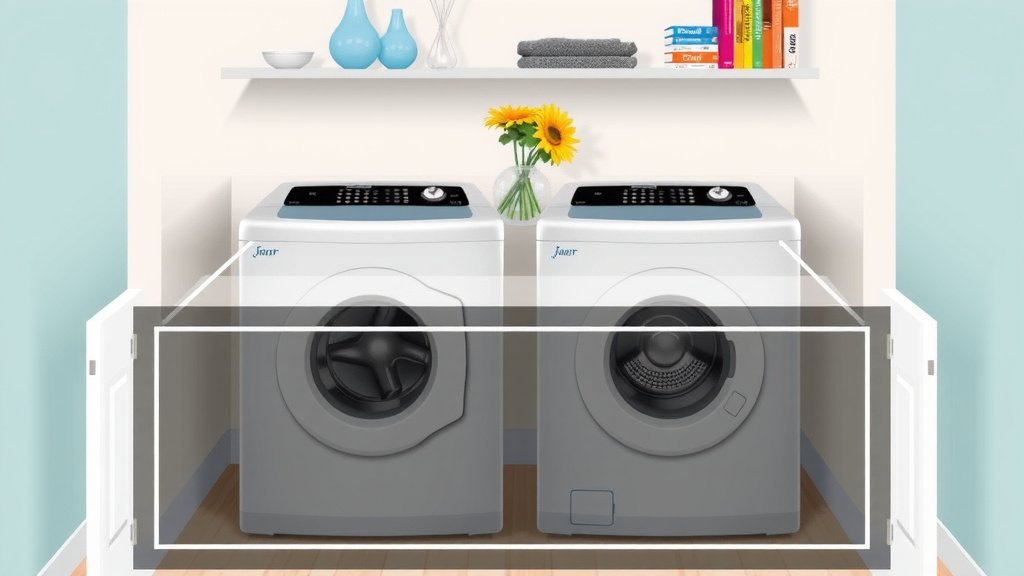
For a standard side-by-side washer and dryer setup, you’ll want at least 54 inches of width. This accounts for two 27-inch machines placed next to each other. But that’s not the whole story. You need breathing room! Experts recommend adding at least 1 to 2 inches of space on each side of the pair. This allows for easier installation and prevents the machines from bumping into walls or cabinets.
Allowing for Door Swing Clearance
Don’t forget about the doors! Washers and dryers have doors that swing open. You need enough clearance for these doors to open fully. This is crucial for loading and unloading laundry. A front-loading washer door might swing out 10 to 12 inches. A dryer door can swing either out or down. Measure this swing space. Ensure it doesn’t hit another appliance, a wall, or a doorway.
What About Stackable Units?
Stackable washer and dryer units save floor space. They are a great option for smaller homes or apartments. A typical stackable washer is about 27 inches wide and 30 inches deep. The dryer sits directly on top. The combined height can be 70 inches or more. So, while they use less floor area, you still need sufficient width for the unit itself, usually around 27-30 inches. You also need enough height to accommodate both machines plus a bit of extra room for access.
Considering the Depth and Beyond
Depth is often underestimated. Remember that the machines won’t sit flush against the wall. You need space for the hoses and electrical cords at the back. A general rule is to add at least 4 to 6 inches to the depth measurement for these connections. This ensures you don’t kink the hoses, which can lead to leaks or reduced water flow. We found that not accounting for this can cause major headaches later.
Utility Hookups and Ventilation
Your washer needs water hookups and a drain. Your dryer needs a power outlet and a vent. These hookups require space behind and around the machines. For dryers, proper ventilation is key to efficiency and safety. A clogged or restricted vent is a fire hazard. Ensure your vent hose has a clear path to the outside. It shouldn’t be crushed or kinked by the appliance. Many local building codes recommend specific clearances for ventilation systems (CDC).
Service and Maintenance Access
Think about future repairs or maintenance. Can you easily pull the machines out if needed? Having just enough space to squeeze them in might make service calls a nightmare. Technicians need room to work. Aim for at least 18 to 24 inches of clear space in front of the machines. This makes routine cleaning and any unexpected fixes much simpler for everyone involved.
Creating a Laundry Room Layout Checklist
Planning your laundry space involves more than just the machines. Here’s a quick checklist to help you visualize:
- Measure the exact width and depth of your intended laundry spot.
- Add space for door swings on both washer and dryer.
- Factor in 4-6 inches behind the machines for hoses and cords.
- Ensure adequate clearance for ventilation.
- Allow at least 18-24 inches of clear space in front for access.
- Consider shelving or storage space nearby for detergents and supplies.
Comparing Common Washer and Dryer Setups
Let’s look at some typical scenarios to give you a clearer picture:
| Setup Type | Approximate Width Needed | Approximate Depth Needed (with hookups) | Key Considerations |
|---|---|---|---|
| Side-by-Side Standard Units | 54-60 inches | 32-40 inches | Door swing clearance, space between units. |
| Stacked Units | 27-30 inches | 30-36 inches | Vertical height, access to top controls. |
| Compact/Apartment Units | 24-30 inches | 24-30 inches | Smaller capacity, often fit in closets. |
As you can see, the space requirements can vary quite a bit. It’s always best to measure your specific area and compare it to the appliance’s specifications. You want your laundry setup to be functional and frustration-free.
“`
Conclusion
We’ve walked through the essential measurements for your new washer and dryer. Remember that proper space isn’t just about fitting the machines. It’s about ensuring they operate efficiently and safely. You need to account for door swings, utility hookups, and even future service access. By carefully measuring your space and considering these factors, you’ll set yourself up for a frustration-free laundry experience. Before you commit to a purchase, take a moment to review these guidelines and measure your intended laundry area. This small step can prevent big headaches down the line.
Frequently Asked Questions
How much space do I need in front of my washer and dryer?
You should aim for at least 18 to 24 inches of clear space in front of your washer and dryer. This allows for easy loading and unloading of laundry. It also provides technicians with enough room to perform maintenance or repairs if needed. Don’t cram them in too tightly; accessibility is key.
Can I put my washer and dryer in a closet?
Yes, you can often place washer and dryer units in a closet, especially compact or stackable models. Ensure the closet is wide enough for the machines themselves, plus adequate clearance for door swings and ventilation. Check that the closet has proper venting and electrical access for both appliances.
Do I need extra space for dryer venting?
Absolutely. You need to ensure the dryer vent hose has a clear path to the outside without being kinked or crushed. Plan for at least a few inches of space behind the dryer for the vent connection. Improper ventilation can reduce efficiency and pose a fire risk, so don’t overlook this.
What if my laundry area has a tight corner?
If your laundry area is tight, consider stackable units. They take up less floor space. You’ll still need to measure the combined height and ensure clearance for the washing machine door. For side-by-side units in a tight spot, prioritize machines with reversible doors if possible, and ensure they don’t block pathways.
How much space is needed for a compact washer and dryer?
Compact or apartment-sized washers and dryers typically measure around 24 to 30 inches wide and 24 to 30 inches deep. You’ll still need to add space for door swings and utility hookups, usually about 4 to 6 inches behind the units. Always check the specific dimensions of compact models you are considering.
![7 Best Top Loading Washer Machine [In 2026]](https://homeunderstandable.com/wp-content/uploads/2026/09/7-best-top-loading-washer-machine-in-2026-featured-768x432.jpg)
![7 Best Washer For Small Apartment [In 2026]](https://homeunderstandable.com/wp-content/uploads/2026/08/7-best-washer-for-small-apartment-in-2026-featured-768x432.jpg)

![7 Best Stackable Electric Washer Dryer [In 2026]](https://homeunderstandable.com/wp-content/uploads/2026/09/7-best-stackable-electric-washer-dryer-in-2026-featured-768x432.jpg)