
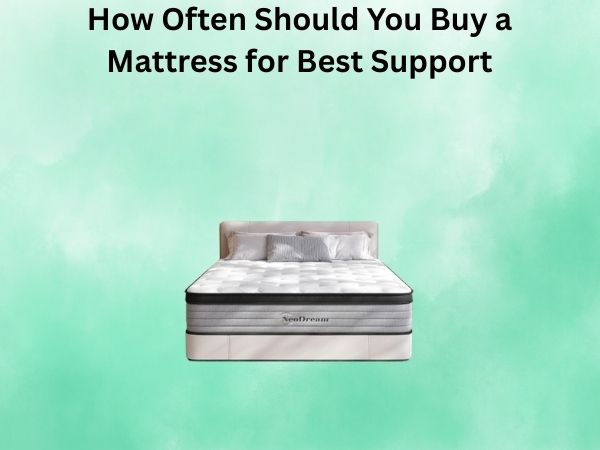
How Often Should You Buy a Mattress for Best Support? A Complete Guide
Let me ask you something: when was the last time you actually thought about your mattress? Most people don’t give it much consideration until they’re waking up with back pain or their bed feels like sleeping on a bag of rocks. Your mattress is one of those purchases that can dramatically impact your quality of life, yet we often neglect to replace it until it’s absolutely falling apart.
I’m here to walk you through everything you need to know about mattress replacement cycles, the signs that tell you it’s time for a new one, and how to make sure you’re getting the support your body truly deserves. Trust me, this is information that could literally change how you sleep tonight.
The Standard Mattress Lifespan: What the Experts Say
Here’s what you need to know upfront: most mattresses should be replaced somewhere between seven and ten years. But hold on—this isn’t a one-size-fits-all answer. Think of your mattress like a car. Sure, some vehicles last 200,000 miles while others start falling apart at 100,000. The same principle applies to your bed.
The National Sleep Foundation and many sleep experts agree that seven to ten years is the sweet spot for mattress replacement. However, the actual timeline depends on several factors that are unique to your situation. Let’s dig deeper into what those factors are.
Why Seven to Ten Years?
You might be wondering why seven to ten years specifically. Well, that’s when most mattresses begin to lose their structural integrity and support capabilities. The materials inside start breaking down, the foam compresses, and the springs lose their bounce. After this period, you’re essentially sleeping on a mattress that’s not giving your spine the support it needs.
Think about it like this: your mattress is constantly being compressed by your body weight night after night. Over time, that repetitive pressure takes its toll. The materials fatigue, just like your muscles do after a workout, except mattress materials don’t recover the way your body does.
Seven Clear Signs Your Mattress Needs Replacing Right Now
Rather than waiting for the calendar to hit that magic seven-year mark, pay attention to these warning signs. Your body is incredibly smart at communicating when something isn’t right.
1. You Wake Up with Aches and Pains
This is probably the most obvious indicator that your mattress is past its prime. If you’re consistently waking up with lower back pain, neck stiffness, or shoulder soreness, your mattress isn’t providing adequate support anymore. I’m talking about pain that disappears shortly after you get out of bed—that’s the telltale sign that your mattress is the culprit, not some underlying health condition.
2. You Notice Visible Sagging or Indentations
Take a look at your mattress surface. Do you see a permanent body-shaped depression where you sleep? That’s sagging, and it’s a red flag. Even small indentations that are visible to the naked eye suggest that the material underneath has lost its ability to support your weight evenly. This creates pressure points and poor spinal alignment.
3. The Mattress Makes Creaking or Squeaking Sounds
If your mattress sounds like an old wooden floor when you roll over, the internal structure is likely compromised. Whether it’s the springs degrading or the foam breaking down, those sounds indicate that components are failing. This is especially true with innerspring mattresses where you can often hear the metal coils losing their resilience.
4. You Feel Motion Transfer More Than Ever
Are you being jolted awake every time your partner rolls over? Motion transfer—the ability of a mattress to isolate movement—decreases significantly as mattresses age. If your mattress used to handle partner movements well but now you’re feeling every shift and turn, it’s deteriorating.
5. You’re Experiencing Increased Allergies or Respiratory Issues
Older mattresses accumulate dust mites, dead skin cells, and other allergens more easily. If you’ve noticed an uptick in nighttime sneezing, congestion, or asthma symptoms, your mattress might be playing host to a microscopic colony of these unwelcome guests. Even the cleanest person will see this happen eventually.
6. Your Mattress Has Become Visibly Stained or Damaged
Stains aren’t just unattractive—they often indicate that liquids have penetrated the mattress layers, which can lead to mold and mildew growth. If you’ve got permanent stains, rips, or tears, especially ones that expose the internal materials, it’s probably time to retire that mattress.
7. You Can’t Remember When You Last Replaced It
If you genuinely can’t recall the last time you bought this mattress, and it’s been more than seven years, that’s your answer right there. Your mattress has earned its retirement.
How Your Sleeping Position Affects Mattress Longevity
Here’s something most people don’t consider: your sleeping position actually impacts how quickly your mattress wears out. Different sleeping positions put different amounts of pressure on different areas of the mattress.
Side Sleepers and Faster Wear
If you’re a side sleeper, your mattress might wear out slightly faster than average. Side sleeping concentrates your body weight on a smaller surface area—your hip and shoulder. This creates more intense pressure points and can lead to faster degradation in those specific zones. You might find yourself needing a mattress replacement closer to the seven-year mark rather than ten.
Back Sleepers Experience More Even Wear
Back sleepers typically distribute their weight more evenly across the mattress surface. This tends to result in more uniform wear patterns and potentially longer mattress lifespan. If you sleep on your back, you might be able to stretch your mattress closer to that ten-year mark without major issues.
Stomach Sleepers and Concentrated Pressure
Stomach sleepers create significant pressure on the lower back and midsection. This can accelerate wear in those areas, similar to side sleepers. Additionally, stomach sleeping isn’t ideal for spinal alignment anyway, so a worn mattress makes the situation worse.
The Impact of Mattress Materials on Replacement Timeline
Not all mattresses are created equal, and the materials inside them definitely affect how long they’ll last. Let’s break this down by type.
Memory Foam Mattresses
Memory foam mattresses typically last between seven and ten years. The foam gradually loses its ability to respond to your body temperature and pressure over time. You’ll often notice the foam stops returning to its original shape as quickly, and indentations become more permanent. Quality matters here—premium memory foam mattresses from well-known brands tend to last longer than budget options.
Innerspring Mattresses
Traditional innerspring mattresses might actually have a slightly shorter lifespan, often closer to five to seven years. The metal coils can rust, lose tension, or break entirely. If you hear persistent squeaking from an innerspring mattress, the coils are definitely deteriorating. Cheaper innerspring mattresses wear out much faster than high-quality ones with better coil construction.
Hybrid Mattresses
Hybrid mattresses combine springs with foam or latex layers. These often last around seven to nine years, sitting in the middle of the lifespan spectrum. The durability depends heavily on the quality of both the coil system and the foam layers used.
Latex Mattresses
Here’s the good news: latex is one of the most durable mattress materials available. Natural latex mattresses can last ten to fifteen years or even longer. They’re resistant to breakdown and maintain their support better than foam. The trade-off is that latex mattresses tend to be more expensive upfront, but they offer excellent long-term value.
How Your Body Weight Influences Mattress Durability
I’m not here to judge anyone’s weight, but physics is physics: heavier individuals will compress mattress materials faster than lighter individuals. It’s simply more pressure on the same materials.
If you’re a heavier sleeper, you might notice your mattress wearing out closer to the five to seven year mark rather than the full ten years. Additionally, you might benefit more from mattresses specifically designed for heavier sleepers, which use firmer materials and more supportive constructions.
The good news is that high-quality mattresses designed for heavier individuals are built with this in mind and will last longer than a standard mattress would under the same conditions. It’s worth investing in the right mattress for your body type.
The Relationship Between Mattress Age and Sleep Quality
Let me share something interesting: studies have shown that sleeping on an old, unsupportive mattress can actually reduce sleep quality significantly. Your body struggles to maintain proper spinal alignment, and you unconsciously toss and turn more, fragmented sleep.
How Worn Mattresses Disrupt Sleep Cycles
When your mattress isn’t supporting you properly, your body doesn’t fully relax. You might achieve REM sleep, but you’re not getting the deep, restorative sleep your body desperately needs. This can lead to daytime fatigue, mood changes, and reduced cognitive function. Essentially, you’re not getting the recovery your body requires.
The Cumulative Impact on Health
Over months and years of poor sleep on a degraded mattress, the health consequences compound. Poor sleep is linked to weight gain, weakened immunity, increased inflammation, and even mental health issues. Investing in a new mattress isn’t just about comfort—it’s an investment in your overall health.
Cost-Benefit Analysis: Why Replacing Your Mattress Makes Financial Sense
I know a new mattress isn’t cheap. Quality mattresses can range from several hundred to several thousand dollars. But let’s look at this from a cost-per-night perspective.
If you buy a $1,200 mattress that lasts eight years, that’s roughly $0.41 per night. Considering how much you use your bed—ideally around eight hours per day—that’s an incredibly small price for something that directly impacts your sleep quality, health, and daily functioning.
Compare that to what you might spend on healthcare related to poor sleep, back pain, or other sleep-related issues. Chiropractor visits, massage therapy, pain medication, and doctor’s appointments add up quickly. A new mattress often pays for itself in health benefits alone.
Maintenance Tips to Extend Your Mattress Lifespan
While you can’t stop a mattress from aging, you can certainly slow down the process with proper care.
Rotate Your Mattress Regularly
Rotating your mattress every three to six months helps distribute wear more evenly. Some newer mattresses are designed not to be flipped, but rotating them from head to foot still helps. This prevents deep indentations from forming in one specific area.
Use a Quality Mattress Protector
A good mattress protector is like an insurance policy for your bed. It keeps dust mites, allergens, liquids, and other contaminants off the mattress surface. This simple step can significantly extend your mattress lifespan and keep it cleaner.
Keep Your Bedroom Clean and Dry
Moisture is the enemy of mattress longevity. Ensure your bedroom has proper ventilation and humidity control. Mold and mildew thrive in damp conditions and will destroy your mattress from the inside out.
Avoid Jumping on the Mattress
This is especially important if you have kids, but even adults should avoid unnecessary bouncing. Jumping stresses the internal support structure prematurely.
Provide Adequate Support Underneath
Your mattress needs proper support from below. Whether it’s a box spring, platform, or slatted base, make sure it’s sturdy and properly supporting the entire mattress. A sagging foundation will destroy even a quality mattress.
When to Replace Your Mattress Sooner Than Expected
Sometimes you need a new mattress well before that seven to ten-year window. Life circumstances matter.
After Significant Life Changes
If you’ve gained significant weight, developed new health conditions, or changed your sleeping position, your old mattress might not be suitable anymore. What worked for you five years ago might not work for you today.
Following an Injury or Health Diagnosis
If you’re experiencing back problems, arthritis, or other pain conditions, an old mattress is only making things worse. A new, properly supportive mattress can be part of your recovery strategy.
When Couples Have Incompatible Needs
Sometimes one partner needs firmness while the other needs softness, or one person is disrupting the other’s sleep. A new mattress designed for couples—with zoned support or motion isolation—might be exactly what you need.
How to Choose Your Next Mattress Wisely
Once you’ve decided it’s time for a replacement, don’t just buy the first thing you see. A mattress is a significant purchase that you’ll be using for years.
Test Before You Buy
Spend at least fifteen minutes lying on any mattress you’re considering. Your body needs time to adjust and you need to assess how it feels. If a store won’t let you lie on it, that’s a red flag.
Consider Your Sleep Needs
What do you need from a mattress? Firmness? Cooling? Motion isolation? Price point? Make a list of your priorities and find mattresses that match them.
Read Reviews from Real Users
Online reviews can tell you a lot about long-term durability and real-world performance. Look for patterns in what people say, not just individual opinions.
Check the Warranty and Trial Period
A good mattress company will stand behind their product with a substantial warranty and return period. This gives you peace of mind and time to ensure the mattress is right for you.
Conclusion
So, how often should you buy a mattress? The answer is typically every seven to ten years, but this depends on several factors including the mattress material, your body weight, your sleeping position, and the quality of the mattress itself. Rather than strictly following a timeline, pay attention to your body’s signals. If you’re waking up with pain, noticing visible sagging, or sleeping poorly, it’s probably time for a replacement regardless of how old your mattress is.
Remember that your mattress is one of the most important pieces of furniture in your home. You spend roughly one-third of your life in bed, so investing in quality sleep is investing in your health, happiness, and productivity. Don’t wait until your mattress is completely falling apart. When the time comes, choose your next mattress carefully and maintain
![7 Best Mattress For Roof Top Tent [2026]](https://homeunderstandable.com/wp-content/uploads/2026/05/7-best-mattress-for-roof-top-tent-2026-featured-768x432.jpg)

![What Is The Best Camping Air Mattress for Two [In 2026]](https://homeunderstandable.com/wp-content/uploads/2025/06/best-camping-air-mattress-for-two.jpg)
![What Is The Best Air Mattress for Older Adults [In 2026]](https://homeunderstandable.com/wp-content/uploads/2025/06/best-air-mattress-for-older-adults.jpg)