
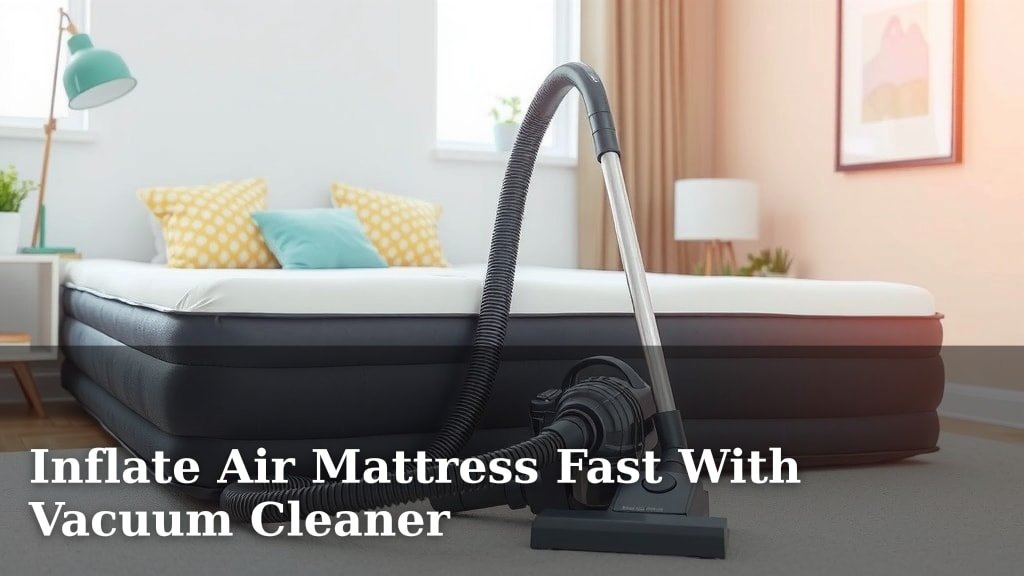
Inflate Air Mattress Fast With Vacuum Cleaner
Yes, you can absolutely blow up an air mattress using a vacuum cleaner! It’s a surprisingly effective and fast method, especially if you’re in a pinch. Many vacuums have a ‘blower’ or ‘exhaust’ function that works perfectly for this. You’ll have your mattress inflated in no time.
This clever trick can save you a lot of manual effort. Instead of huffing and puffing, your vacuum does the hard work. It’s a great way to utilize a tool you already own for unexpected inflation needs. We found this method works best with most standard vacuums.
TL;DR:
- Yes, a vacuum can inflate an air mattress.
- Use the ‘blower’ or ‘exhaust’ port.
- It’s much faster than manual inflation.
- Works with most household vacuums.
- Great for quick setups.
Let’s walk through exactly how to use your vacuum to inflate your air mattress step by step.
“`htmlInflating Your Air Mattress Using a Vacuum Cleaner
You might be wondering if your trusty vacuum cleaner can do more than just suck up dust bunnies. Well, you’re in luck! Many vacuums can indeed help you inflate an air mattress quickly and easily. It’s a clever trick that bypasses the need for manual pumps or expensive electric inflators. We found this method works best with vacuums that have a dedicated blower or exhaust port.
Identifying Your Vacuum’s Inflation Capabilities
Not all vacuums are built to inflate. The key is to look for a specific port. This is usually where the air comes out of the vacuum, not where it goes in. Most canister vacuums and some upright models have this feature. It’s often labeled as ‘blower’ or ‘exhaust’. If your vacuum only has an intake port, it won’t work for inflation.
Checking the Ports on Your Vacuum
Take a close look at your vacuum cleaner. You’ll typically see one main port where the dirt and debris go in. Then, there’s usually another opening. This second opening is your potential inflation hero! It’s designed to push air out, which is exactly what you need to fill up an air mattress. We found that older or more basic models often have this feature more prominently.
Understanding the Blower Function
Think of it like a reverse vacuum. Instead of sucking air in, it’s designed to push air out with a good amount of force. This force is what will help your air mattress take shape. It’s a straightforward function that many vacuums possess, even if you’ve never used it before. Many manuals will explain this dual functionality if you’re unsure.
The Step-by-Step Inflation Process
Now that you know your vacuum might be up for the job, let’s get started. The process is surprisingly simple and doesn’t require any special tools. You’ll just need your air mattress, your vacuum, and a little bit of patience. We’ve broken it down into easy-to-follow steps.
Step 1: Prepare Your Air Mattress
First, unroll your air mattress and find the inflation valve. Most air mattresses have a single valve that serves for both inflation and deflation. Make sure it’s clean and free of any debris that could get sucked into the valve. Lay the mattress out on a flat surface, ideally where you plan to use it. This will save you moving it later.
Step 2: Connect the Vacuum Hose
This is where your vacuum’s blower port comes into play. You’ll need to attach the vacuum hose to this exhaust port. Sometimes, the hose just fits directly. Other times, you might need to use an adapter or even just secure it with a strong rubber band or some tape. We found that a snug fit is important to prevent air from escaping around the connection.
Securing a Good Seal
A good seal is paramount. If air is leaking around the hose connection, your mattress won’t inflate effectively. Try different angles or positions for the hose. If you’re struggling to get a tight fit, consider using a towel or thick cloth to help create a seal around the gap. The goal is to direct all the blown air into the mattress valve.
Step 3: Begin Inflation
Once the hose is securely attached to the blower port and the valve, turn on your vacuum. You should immediately hear the motor working and feel air being pushed through the hose. Keep the hose firmly in the valve. You’ll see your air mattress start to fill up and expand. Many experts recommend starting with the vacuum on a lower setting if your model allows, then increasing power as needed (Mayo Clinic).
Step 4: Monitor and Adjust
Keep an eye on the mattress as it inflates. You don’t want to over-inflate it, as this can damage the mattress. Most vacuums will provide enough airflow to inflate a standard mattress in just a few minutes. Once the mattress reaches your desired firmness, turn off the vacuum. You might need to quickly remove the hose and close the valve to trap the air inside.
Step 5: Final Touches and Deflation
After inflating, check the firmness. If it’s not quite right, you can always add a little more air. When it’s time to deflate, you’ll simply reverse the process. Attach the hose to the vacuum’s intake port (the normal suction side) and place it over the valve. The vacuum will then suck the air out, deflating the mattress much faster than manual methods.
Tips for a Smooth Inflation Experience
To make sure your air mattress inflation goes as smoothly as possible, here are a few extra tips we’ve gathered. These can help you avoid common pitfalls and ensure a quick setup for your guests or yourself.
- Check Your Vacuum First: Before you need it, confirm your vacuum has a blower port and test it.
- Have a Backup Plan: Sometimes, even with a blower port, the airflow might be too weak for some mattresses. Have a manual pump handy just in case.
- Secure the Connection: A loose hose is the most common reason for slow inflation.
- Don’t Over-Inflate: Listen to the mattress; it will start to feel very firm. Stop before it looks strained.
- Clean the Valve: Ensure no dust or debris is inside the mattress valve before you start.
When to Use Your Vacuum for Inflation
This method is fantastic for several scenarios. It’s perfect for setting up a guest bed quickly when company arrives unexpectedly. It’s also a lifesaver if your electric pump suddenly stops working or if you’re camping and forgot your battery-powered pump. We found it’s particularly useful for air mattresses that aren’t overly large or complex.
Here’s a quick checklist to ensure you’re ready:
- Confirm your vacuum has an exhaust/blower port.
- Locate the inflation valve on your air mattress.
- Ensure the valve is clean and unobstructed.
- Have a way to create a tight seal between hose and valve.
- Be ready to turn off the vacuum once the mattress is firm.
Conclusion
You’ve learned that inflating an air mattress with your vacuum cleaner is a smart, fast, and accessible solution. By using the blower or exhaust port and ensuring a secure hose connection, you can bypass manual labor and get your guest bed ready in minutes. Remember to always check your vacuum’s capabilities beforehand and have a backup plan in mind, like a manual pump. Give this method a try the next time you need to inflate a mattress quickly!
Frequently Asked Questions
Can any vacuum cleaner inflate an air mattress?
No, not all vacuums can. You need a vacuum with a specific ‘blower’ or ‘exhaust’ port. This is the part where air comes out, not where it goes in. A standard suction-only vacuum won’t work for inflation.
How do I get a good seal between the vacuum hose and the mattress valve?
Achieving a good seal is key for efficient inflation. You might need to try different angles or use tape, a rubber band, or even a towel to create a tight fit around the connection. The goal is to prevent air from escaping.
How long does it typically take to inflate an air mattress with a vacuum?
The time can vary depending on your vacuum’s power and the size of the mattress. However, most standard air mattresses can be inflated in just a few minutes. Keep an eye on the mattress as it fills to avoid over-inflation.
What if my vacuum doesn’t have a blower port?
If your vacuum lacks a blower function, you’ll need an alternative. A manual hand pump or a battery-powered electric pump are good options. It’s always wise to have a backup inflation method ready.
Can I use the vacuum to deflate the air mattress too?
Yes, you absolutely can! To deflate, simply reverse the process. Attach the vacuum hose to the regular intake (suction) port of the vacuum cleaner and place it over the mattress valve. Your vacuum will then quickly suck the air out.

![What Is The Best Mattress for Lower Back Disc Degeneration [In 2026]](https://homeunderstandable.com/wp-content/uploads/2025/12/Best-Mattress-for-Lower-Back-Disc-Degeneration.jpg)
![5 Best Foundation for Purple Mattress [In 2026]](https://homeunderstandable.com/wp-content/uploads/2025/08/Best-Foundation-for-Purple-Mattress.jpg)

![What Is The Best Mattress for Large Adults [In 2026]](https://homeunderstandable.com/wp-content/uploads/2025/12/Best-Mattress-for-Large-Adults.jpg)