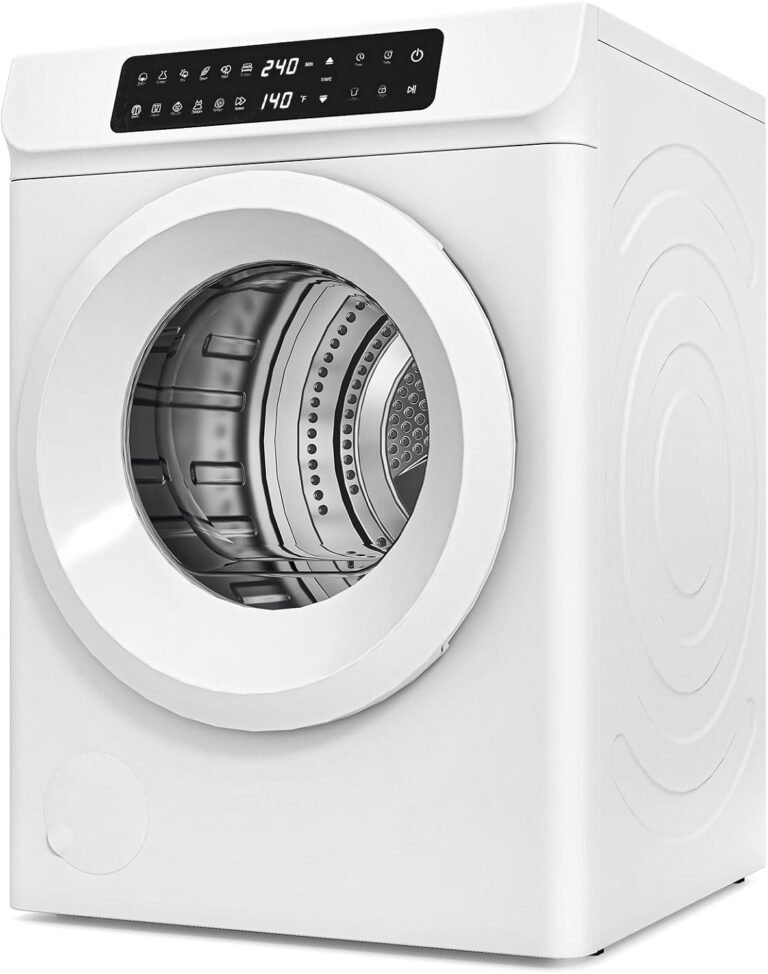
How to Choose a Clothes Dryer: A Buyer’s Guide
The best way to choose a good clothes dryer is to match the size and type to your household needs. You also need to consider your budget and your home’s available space and power source. Consider a heat pump dryer if you want maximum energy efficiency, but a traditional vented dryer is the cheapest and most effective option for most families.
We found that most people focus only on the price tag, but that is a mistake. The real cost of a dryer includes its energy usage and how gently it treats your clothes over time. Your lifestyle and laundry habits matter when deciding between a vented, condenser, or heat pump model.
- Measure your space first to know if you need a full-size or compact unit.
- Check your outlet—most homes have 240V, but some need a standard 120V plug.
- Heat pump dryers save the most energy but cost more upfront.
- Vented dryers are fast and cheap but need an outside vent.
- Look for moisture sensors—they prevent over-drying and shrink less fabric.
Below, we break down everything you need to know about picking the perfect dryer for your home. Let’s walk through the features, sizes, and costs step by step so you can buy with total confidence.
Picking a Dryer That Fits Your Life and Laundry Room
Alright, let’s get down to the nitty-gritty. Choosing a new dryer is more than just grabbing the shiniest model on the sales floor. You need a machine that works with your home’s setup and your daily routine. We found that starting with your space and your electrical hookup saves you from a major headache down the line.
Before you fall in love with a specific color or fancy dial, measure your space. We found that many people buy a 29-inch wide dryer only to realize their laundry closet is only 27 inches wide. That is a costly mistake. Also, check the wall outlet. A 240-volt outlet is standard for most dryers. But, some compact or ventless models just need a regular 120-volt plug. Knowing this one detail narrows your choices instantly.
Measuring Your Space for the Perfect Fit
Grab a tape measure before you do anything else. You need the width, depth, and height of the area where the dryer will sit. Do not forget to leave a little breathing room. The manual for most dryers requires a small gap on all sides for airflow and to prevent overheating.
You also need to think about the door swing. Can you fully open the dryer door where it sits? Or will a shelf or a wall block it? Many modern dryers let you reverse the door hinge. But, you still need that full swing to load and unload big comforters. We found that checking these clearances during the planning stage saves you a frustrating delivery day.
Matching Your Dryer to the Power Source
Most full-size dryers need a 240V outlet. This is the big plug that looks like a larger version of a standard outlet. However, some apartments and older homes only have a 120V outlet available for the laundry area. If that is the case, you are limited to a specific category of dryers.
These 120V dryers are often called “plug-in” or “combo” units. They take longer to dry a load because they use less power. If you have a 240V outlet, you have the freedom to choose almost any type of dryer you want. If you only have 120V, you must stick with the lower-voltage models to avoid tripping your breaker constantly.
Breaking Down the Main Types of Dryers
Now that you know your space and power, it is time to pick the technology. There are three main types of dryers on the market. Each one handles moisture differently. Your choice here affects your energy bill, your clothes’ lifespan, and even your home’s air quality.
The first type pushes wet air outside. The second type collects water in a tank. The third type recycles heat to dry clothes without a vent. Let us walk through each one so you can see which fits your needs best. We found that understanding these mechanics is the secret to buying a dryer you will love for years.
The Classic Vented Dryer
These are the workhorses of the laundry world. Vented dryers pull in room air, heat it up, and blow it through your clothes. The damp, hot air is then pushed out of the house through a flexible duct. They are simple, effective, and generally the least expensive to buy upfront.
The biggest catch is the vent. You must have an exterior wall, floor, or ceiling to route the duct to. If the duct is too long or bent too sharply, lint can build up and slow drying times. You also need to clean the lint trap before every single load to prevent house fires. The US Fire Administration stresses that this lint build-up is a leading cause of dryer fires.
Are Vented Dryers Cheaper to Run?
Actually, they are usually the most expensive to run. Because they constantly pull in cold air and heat it, they use more energy than other types. They also blow your conditioned indoor air outside. During summer, your AC has to work harder to replace that lost cool air. It is the quickest drying option, but it costs more on your utility bill.
The Ventless Condenser Dryer
If you cannot vent air outside, this is your best friend. Condenser dryers use the same heating method as vented ones, but they cool the air to turn the moisture back into water. That water collects in a removable tank that you have to empty after a few loads, or it drains down a hose into a sink or drain pipe.
You can put these dryers almost anywhere—in a closet, a kitchen, or a bathroom. They are perfect for apartments and condos. The trade-off is that they take longer to dry a load than a standard vented model. They also run a bit warmer, which means you need to be careful with delicate fabrics.
The High-Tech Heat Pump Dryer
This is the luxury and eco-friendly option. A heat pump dryer works like a reverse air conditioner. It recycles the warm air inside the drum. It removes the moisture and re-heats the same air, so the heat is trapped inside the machine. This makes it dramatically more energy-efficient.
Many experts say that heat pump models use about half the energy of a traditional vented dryer. They are easier on your clothes too because they dry at much lower temperatures. This means less shrinking and less wear and tear on those expensive jeans. They are the best choice for heavy items like towels and thick sweaters.
Why the Higher Upfront Price Is Worth It
Yes, heat pump dryers cost more at the store. We found that this sticker shock scares many people away. But, the savings on your electricity bill can make up for that difference over a few years. They also work great for people who have allergies, as they do not blow dust and lint around the house.
Dryer Size and Capacity: Bigger Is Not Always Better
Dryer capacity is measured in cubic feet of drum volume. You want a drum that is big enough for your weekly loads. But a huge drum can actually be a problem if you only dry a few items at a time. The clothes roll around and may not trigger the machine’s sensors properly.
For a one or two-person household, a standard 4.0 to 5.5 cubic foot model is usually perfect. For a family of four or more, you will want a larger 7.0 to 8.0 cubic foot model. This extra room lets bulky comforters and large loads of towels fluff up properly without getting crushed.
Can a Bigger Dryer Lower Your Energy Bills?
It might sound counterintuitive, but yes. If you mount a large load in a too-small dryer, it blocks the airflow, meaning the machine runs longer and uses more energy. A larger drum allows the air to circulate better around the clothes. This prevents overdrying and saves energy because your clothes dry faster at a lower temperature.
Must-Have Features to Look For
Do not waste your money on a basic machine that cycles for a set amount of time and then shuts off. A good dryer needs smart sensors. A moisture sensor is a game-changer for your fabric. The machine uses this sensor to detect when your clothes are dry and automatically turns off. This prevents overdrying.
Overdrying is the number one cause of stiff towels and staticky sheets. It also wastes electricity. We found that a machine with a reliable moisture sensor pays for itself in the first year. Also, look for a steam cycle if you want to freshen up clothes without washing them. Check our guide to clothes dryer temperature settings to avoid overheating your delicates.
Understanding the Best Cycle Options
You want a dryer that has a gentle cycle for delicates and a heavy-duty cycle for jeans. A “Sanitize” cycle is excellent for killing germs on bedding, especially during flu season. Many higher-end models also have a “Wrinkle Shield” feature that periodically tumbles clothes after the cycle ends.
This tumbler action keeps wrinkles from settling in. It is a great feature for busy parents who forget to unload the dryer right away. Other helpful features include a drum light, a drying rack for shoes or sweaters, and a quiet operation motor.
Comparing Dryer Costs: Upfront vs. Long-Term
It is time to talk about money. The price tag on the dryer is just the beginning. We found that you also have to factor in installation costs, electricity, and maintenance. A vented dryer might cost $500 at the store, but can add $150 a year to your power bill.
A heat pump dryer might cost $1,200 upfront, but it might only add $50 a year in energy costs. Over a lifetime of ten years, the more expensive machine wins the money battle. Let’s look at the average breakdown in a simple table to compare your options clearly.
| Feature | Vented Dryer | Condenser Dryer | Heat Pump Dryer |
|---|---|---|---|
| Upfront Cost | Lowest | Mid-Range | Highest |
| Installation | Requires Vent | Easy (No Vent) | Easy (No Vent) |
| Energy Use | Highest | High | Lowest |
| Drying Time | Fastest | Slow | Slowest |
| Fabric Care | Good | Fair | Best |
| Installation Flexibility | Low | High | High |
As you can see, there is no single “perfect” dryer. It is all about balancing your priorities. Are you on a tight budget right now? A vented dryer is likely your best bet. Do you live in an apartment without external vents? Then you need a condenser or heat pump model.
Signs You Are Looking at the Right Dryer
As you shop, keep an eye out for specific details that guarantee a good purchase. Look for a stainless steel drum. It is more durable than porcelain and resists rust and chipping. Also, check for a long power cord and a quality vent connection kit at home. You do not want to buy extra installation parts.
Checking Noise Levels and Vibration
If your dryer is near the living room, noise matters. Some dryers are incredibly loud when they run. Look for models that advertise “inverter motors” or “quiet operation.” Also, make sure the floor is level. A dryer that is not level will vibrate and make a thumping sound. Cotton ball type pads underneath can absorb some of that vibration.
Why You Should Measure Your Door Opening
Before your dryer is delivered, measure the width of your doorways and hallways. Dryers need to be squeezed through tight spaces. The delivery team will usually measure this, but it is good to know your limitations. If you live in a walk-up apartment, make sure the new unit can actually fit up the stairs. Many companies will not deliver to inaccessible areas.
Shopping Checklist for Your New Dryer
- Measure openings: Verify the width and height of your laundry room and hallways.
- Confirm the power source: Check if you have a 240V or 120V outlet near the laundry hookup.
- Decide on venting: Determine if you have access to an outside wall for a vented dryer.
- Pick the right size: Match the drum capacity to the size of your household.
- Look for moisture sensors: Avoid buying a basic timer-only model if possible.
- Calculate total cost: Estimate the energy bill, not just the purchase price.
Do You Need a Smart Dryer?
Smart dryers connect to your phone via an app. You can start or stop a cycle from the couch. You get notifications when the load is done. While this is convenient, it is not necessary for a good drying experience. Many older, basic models dry clothes perfectly well without any Wi-Fi capabilities.
Do not pay extra for smart features if you have a simple routine. If you forget to move clothes to the dryer often, a smart notification might save you from re-washing musty loads. That feature is handy if you have a habit of forgetting your chores.
The Bottom Line on Smart Features
Conclusion
Choosing the right dryer comes down to three things: your space, your power source, and your budget. You now know that vented dryers are fast and affordable, while heat pump models save the most energy and protect your fabrics. Both are great options, depending on your home setup.
Don’t overthink this decision. Start with a tape measure and check your outlet. That alone will rule out half the models on the market. Then, pick the size that matches your household. Finally, look for a moisture sensor so you never bake your clothes again.
Your next step is simple: grab your measurements and visit a local appliance store to see your top two choices in person. That hands-on look will confirm which dryer feels right for your home.
Frequently Asked Questions
How long should a good clothes dryer last?
A quality dryer should last between 10 and 15 years with regular maintenance. You can extend its life by cleaning the lint filter after every load. Also, check the vent hose once a year to prevent blockages that strain the motor.
Is it worth paying more for a dryer with a steam cycle?
Yes, if you hate ironing or want to freshen clothes between washes. A steam cycle removes wrinkles and odors without a full wash. It is a nice bonus, but you can skip it if you rarely need those features.
Should I buy a matching washer and dryer set?
Matching sets look great, but they are not necessary for good performance. Your existing washer will work fine with any dryer that has the right hookup. You only need to match them if you want the convenience of a stacked unit or a specific aesthetic.
Can I put a ventless dryer in a small closet?
Absolutely. Ventless dryers are perfect for tight spaces because they don’t need an outside vent. Just make sure the closet has enough clearance for airflow around the machine. You will also need to empty the water tank regularly or connect a drain hose.
Why do my clothes smell musty after using the dryer?
This usually happens when clothes sit in the drum too long after the cycle ends. You can use a wrinkle shield feature to keep the drum tumbling periodically. If the smell comes from the dryer itself, run an empty cycle with a dryer cleaning tablet to remove built-up residue.