
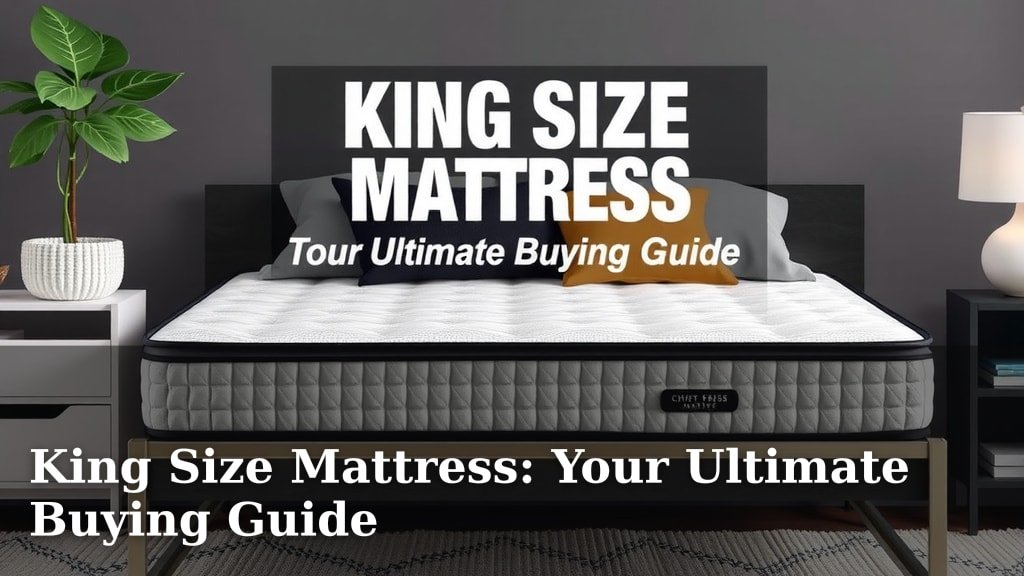
King Size Mattress: Your Ultimate Buying Guide
Choosing the right king size mattress means finding one that fits your sleep style and budget. Key factors include firmness level, material type like memory foam or innerspring, and your preferred sleeping position. Consider the mattress’s durability and any sleep trial periods offered.
A king size mattress is a big purchase, so doing your homework is wise. We found that many people overlook the importance of edge support and motion isolation, especially if they share the bed. Your ideal mattress balances comfort with the need for proper spinal alignment.
- Consider your sleeping position (side, back, stomach).
- Decide on your preferred firmness (soft, medium, firm).
- Think about mattress materials (memory foam, hybrid, innerspring).
- Check for sleep trials and warranty information.
Let’s walk through exactly how to pick the perfect king size mattress for your bedroom.
Picking Your Perfect King Size Mattress
Finding the right king size mattress is a journey, not a race. You’re investing in your sleep, and good sleep is essential for your overall health. We know it can feel overwhelming with so many options out there. Let’s break down the key things to consider so you can make a confident choice.
Understanding Mattress Types: What’s Inside Matters
The materials inside your mattress make a big difference in how it feels and performs. Different types offer unique benefits, and knowing them helps you narrow down your search.
Innerspring Mattresses: The Traditional Choice
These are the mattresses many of us grew up with. They use a system of steel coils for support. The number and type of coils can vary, affecting firmness and durability. Some people find innerspring mattresses to be very responsive and breathable.
Pros of Innerspring
- Generally offer good airflow, helping you stay cool.
- Often more affordable than other types.
- Provide a bouncy feel that some sleepers prefer.
Cons of Innerspring
- Can sometimes transfer motion more easily, meaning your partner’s movements might wake you.
- May offer less pressure relief for side sleepers.
- Edge support can vary widely.
Memory Foam Mattresses: The Contouring Comfort
Memory foam is known for its ability to mold to your body’s shape. This offers excellent pressure relief, especially for your joints. If you tend to toss and turn or sleep in a specific position, memory foam can cradle you.
Pros of Memory Foam
- Superior motion isolation, great for couples.
- Excellent pressure relief for hips and shoulders.
- Conforms closely to your body for a “hugged” feeling.
Cons of Memory Foam
- Can sometimes trap heat, though newer technologies are improving this.
- Some people dislike the slow response and sinking feeling.
- Edge support may not be as robust as other types.
Hybrid Mattresses: The Best of Both Worlds
Hybrid mattresses combine the supportive coil system of innerspring with comfort layers of foam (like memory foam or latex). This aims to give you the benefits of both: the bounce and airflow of coils, plus the contouring comfort and pressure relief of foam.
Pros of Hybrid
- Offer a good balance of support and comfort.
- Generally provide better edge support than all-foam.
- Good airflow due to the coil base.
Cons of Hybrid
- Can be heavier and more expensive.
- Motion isolation can vary; check reviews for specifics.
- May have a firmer initial feel compared to all-foam.
Finding Your Ideal Firmness Level
Firmness is subjective, but it’s a critical factor for comfort and spinal alignment. It’s usually rated on a scale from 1 (softest) to 10 (firmest). For a king size mattress, especially if you share it, finding a middle ground is often wise.
Soft (3-4 on the scale)
These mattresses offer a deep sink. They are best for lighter individuals and side sleepers who need extra cushioning for their hips and shoulders to prevent pressure points. If you prefer to feel like you’re sleeping *in* your mattress, soft might be for you.
Medium (5-7 on the scale)
This is the most popular range for a reason. A medium mattress provides a good balance of support and cushioning. It works well for a wide variety of sleeping positions and body types. Many couples find this firmness level agreeable.
Firm (8-9 on the scale)
Firm mattresses offer minimal sink and maximum support. They are often recommended for back sleepers, stomach sleepers, and heavier individuals who need substantial support to keep their spine aligned. You’ll feel like you’re sleeping *on top* of a firm mattress.
Considering Your Sleeping Position
Your preferred sleeping position is a major clue to the firmness and type of mattress that will suit you best. Experts often point to this as a primary factor in mattress selection (Cleveland Clinic).
- Side Sleepers: You need a mattress that cushions your hips and shoulders. A medium-soft to medium firmness, often found in memory foam or hybrid models, is ideal for pressure relief.
- Back Sleepers: You need support to maintain the natural curve of your spine. A medium to firm mattress, whether innerspring, hybrid, or foam, will help keep your spine aligned.
- Stomach Sleepers: This position can put strain on your neck and spine. A firm mattress is generally recommended to prevent your hips from sinking too low.
- Combination Sleepers: If you switch positions often, a medium or medium-firm hybrid or responsive foam mattress will offer a good balance of support and ease of movement.
Key Features to Look For in a King Size Mattress
Beyond the basics of material and firmness, a few specific features can greatly enhance your sleep experience on a king size mattress.
Motion Isolation
If you share your king size bed, motion isolation is a lifesaver. This is the mattress’s ability to absorb movement so you don’t feel your partner tossing and turning. Memory foam and some hybrid designs excel here.
Edge Support
Good edge support means the perimeter of the mattress is reinforced. This makes it easier to get in and out of bed and also provides a more stable sleeping surface near the edges. Hybrids and some higher-quality foam mattresses offer the best edge support.
Temperature Regulation
Some mattress materials, especially older memory foams, can trap heat. If you tend to sleep hot, look for mattresses with cooling features like gel-infused foam, breathable covers, or a coil system for airflow.
Don’t Forget the Practicalities: Sleep Trials and Warranties
Buying a mattress online or in-store usually comes with important safeguards. These are designed to give you peace of mind.
Sleep Trial Periods
Most reputable mattress companies offer a sleep trial, often 100 nights or more. This allows you to test the mattress in your own home to see if it truly works for you. Research the return policy carefully before purchasing.
Warranty Information
A good mattress should last many years. Check the warranty length and what it covers. Most warranties address manufacturing defects and excessive sagging. Understanding the terms can save you trouble down the road.
Your King Size Mattress Checklist
Ready to make your choice? Use this quick checklist to guide you:
- Confirm your preferred firmness level based on your sleeping position.
- Decide on the mattress type (innerspring, foam, hybrid) that fits your needs.
- Prioritize motion isolation if you sleep with a partner.
- Consider the importance of edge support for overall usability.
- Look for a generous sleep trial and a solid warranty.
Conclusion
You’ve now got a clear roadmap to selecting your perfect king size mattress. We’ve covered mattress types, firmness levels, and essential features like motion isolation and edge support. Remember, your ideal mattress supports your spine and provides deep comfort for restful sleep. Take your time, use your sleep trial, and invest in the sleep you deserve. Your next step is to compare a few models that fit your new criteria and begin your in-home testing!
Frequently Asked Questions
How heavy can a king size mattress be?
King size mattresses can be quite heavy, often weighing between 70 to 200 pounds or more. This weight depends heavily on the materials used, such as dense memory foam or a robust coil system in hybrids. You’ll likely need help moving it, so plan accordingly.
Is a king size mattress worth the extra cost?
For many people, a king size mattress is absolutely worth it if you have the space and desire for extra sleeping room. It provides ample personal space, which can lead to better sleep quality, especially for couples or those with pets or children who join you in bed.
Can I use my old box spring with a new king size mattress?
It’s generally not recommended to use an old box spring, especially if it’s sagging or damaged. Most modern mattresses, particularly foam and hybrid types, require a solid or slatted foundation for proper support and to maintain their warranty. Check the manufacturer’s recommendations for your specific mattress.
How long does a king size mattress typically last?
A quality king size mattress typically lasts between 7 to 10 years. This lifespan can vary based on the materials, construction, and how well you care for it. Rotating or flipping your mattress (if applicable) and using a mattress protector can help extend its life.
What’s the best way to test a king size mattress before buying?
The best way to test a king size mattress is to use the sleep trial period offered by most reputable brands. This allows you to sleep on it in your own home for at least 30-100 nights, which is far more revealing than a few minutes in a showroom. Pay attention to how you feel when you wake up.
![7 Best Mattress For Stroke Patients [2026]](https://homeunderstandable.com/wp-content/uploads/2026/05/7-best-mattress-for-stroke-patients-2026-featured-768x432.jpg)
![What Is The best mattress for craftmatic bed [In 2026]](https://homeunderstandable.com/wp-content/uploads/2025/12/Best-mattress-for-craftmatic-bed.jpg)
![What Is The Best Mattress for Firm and Soft [In 2026]](https://homeunderstandable.com/wp-content/uploads/2025/12/Best-Mattress-for-Firm-and-Soft.jpg)
![What Is The Best Cooling Mattress for Couples [In 2026]](https://homeunderstandable.com/wp-content/uploads/2025/06/best-cooling-mattress-for-couples.jpg)
![7 Best Mattress For Plus Size Sleepers [2026]](https://homeunderstandable.com/wp-content/uploads/2026/05/7-best-mattress-for-plus-size-sleepers-2026-featured-768x432.jpg)
![What Is The Best Mattress for College Students [In 2026]](https://homeunderstandable.com/wp-content/uploads/2025/06/best-mattress-for-college-students-top-picks-for-comfort-and-support-768x512.jpg)