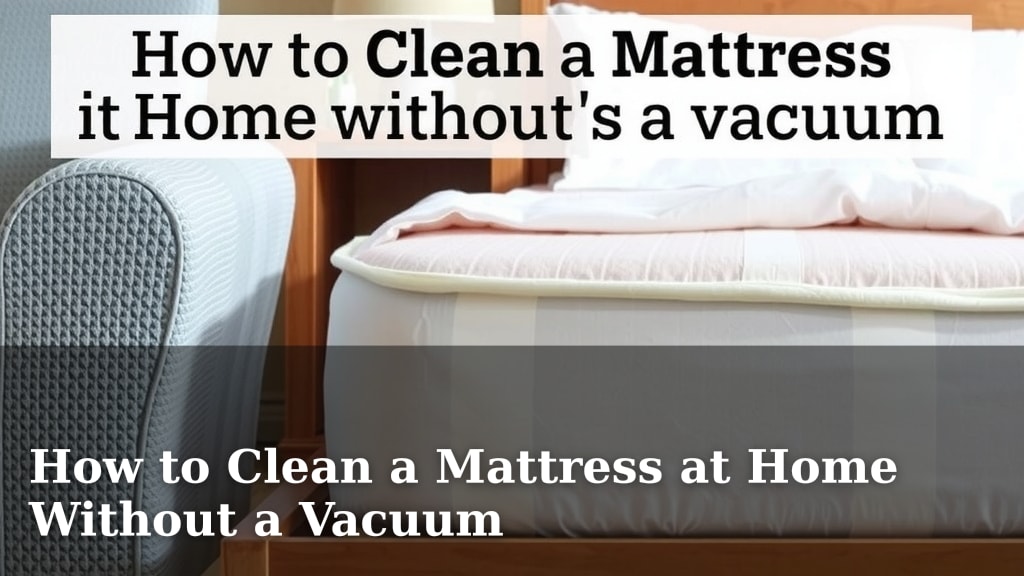
How to Clean a Mattress at Home Without a Vacuum
Yes, you can absolutely clean your mattress at home without a vacuum! The easiest way involves using a combination of baking soda, common household cleaners, and a little elbow grease. You can tackle stains and odors effectively with supplies you likely already have.
Keeping your mattress fresh is key to a good night’s sleep. A clean mattress can mean a healthier sleep environment. We’ve found that regularly addressing spills and dust can prevent bigger issues down the road. Your mattress deserves some TLC!
- Sprinkle baking soda to absorb odors.
- Use a mild cleaner for stain removal.
- Allow ample drying time.
- Air out your bedroom well.
Ready to give your mattress a refresh? Let’s walk through exactly how to get it clean, step by step, using just everyday items.
Refreshing Your Mattress Without a Vacuum Cleaner
You absolutely can get your mattress clean and fresh without needing a special vacuum attachment. It might sound like a big chore, but it’s totally doable with items you probably already have around your house. We’ll guide you through it step-by-step.
Preparing Your Mattress for Cleaning
Before you start attacking stains or odors, a little prep work goes a long way. Think of it like getting your kitchen ready before you tackle a greasy stovetop. A clean slate makes for a cleaner outcome.
Strip Your Bedding
First things first, pull off all your bedding. This includes sheets, pillowcases, mattress protectors, and anything else covering the mattress. Toss them straight into the washing machine. This is a great opportunity to give your bedding a good wash too!
Assess Your Mattress
Take a good look at your mattress. Are there any obvious spills or stains? Do you notice any particular areas that smell a bit off? Identifying these problem spots helps you focus your cleaning efforts where they’re needed most. We found that looking for discoloration is the first step to figuring out what kind of stain you might be dealing with.
Tackling Odors with Baking Soda
Baking soda is a true unsung hero when it comes to freshening things up. It’s a natural deodorizer that works wonders on mattresses. Many cleaning experts recommend it for absorbing unwanted smells. It’s safe, inexpensive, and effective.
Generously Apply Baking Soda
Sprinkle a generous, even layer of baking soda all over the entire surface of your mattress. Don’t be shy with it! You want to create a powdery blanket. Think of it like a thick dusting of powdered sugar on a cake, but for odor absorption. We found that a thicker layer works better than a thin one.
Let It Sit and Work Its Magic
Now comes the waiting game. You need to let that baking soda sit on the mattress for at least 30 minutes. For tougher odors, letting it sit for a few hours, or even overnight, can make a big difference. During this time, the baking soda is busily absorbing moisture and neutralizing odors.
Gentle Removal of Baking Soda
After the waiting period, you’ll need to remove the baking soda. Since you don’t have a vacuum, a stiff brush can work well. You might also use a clean, dry cloth. Gently brush or wipe the baking soda off the mattress. Do this in sections to make sure you get most of it. Some fine dust might remain, but that’s okay.
Addressing Mattress Stains Without Harsh Chemicals
Stains happen. Whether it’s a spilled drink, sweat, or something else entirely, you can tackle most common mattress stains with simple household solutions. The key is to act fast and use the right method for the stain type.
Common Stain Removal Solutions
For most general stains, a mild solution is your best bet. You can create one by mixing a small amount of dish soap with water. A 1:1 ratio of mild dish soap and water is often recommended. You can also use a mixture of equal parts white vinegar and water.
Spot Cleaning Technique
Dampen a clean cloth with your chosen cleaning solution. Don’t soak the cloth; it should be just damp. Gently blot the stained area with the damp cloth. Avoid rubbing aggressively, as this can push the stain deeper into the mattress fibers or spread it. Work from the outside of the stain inward.
Rinsing the Area
Once you’ve treated the stain, you’ll want to rinse the area. Dampen a *separate* clean cloth with plain water. Blot the treated spot again to help remove any soap residue or cleaning solution. This is important to prevent a sticky residue from forming.
Dealing with Specific Stains
Some stains need a slightly different approach. For example, blood stains can be tricky. Many sources suggest using cold water immediately, as hot water can set blood stains. For yellow urine stains, a paste made of baking soda and a little hydrogen peroxide (test in an inconspicuous spot first!) can sometimes help lift them.

Drying Your Mattress Thoroughly
This is a critical step that many people overlook. A damp mattress can lead to mold and mildew growth, which is the last thing you want. You need to ensure your mattress is completely dry before putting bedding back on.
Air Circulation is Key
Open windows in your bedroom to allow for good airflow. If you have a fan, set it up to blow directly onto the mattress surface. This will significantly speed up the drying process. Think of it like trying to dry your hair – a fan helps a lot!
Allow Ample Drying Time
Drying can take several hours, depending on how damp the mattress got and how humid the air is. Resist the urge to rush it. You want the mattress to be bone dry all the way through. You can check by pressing down on the mattress; if it feels cool or damp, it needs more time.
Final Touches for a Fresh Mattress
Once your mattress is clean and dry, you’re almost done! A few final steps will leave your sleeping surface feeling and smelling wonderful.
Deodorizing Again (Optional)
If you still detect any faint odors, you can repeat the baking soda step, but this time for a shorter period (e.g., 15-30 minutes), followed by gentle brushing. Or, you might simply try airing out the room for an extended period.
Check for Residue
Do a final feel test to make sure no cleaning solution residue was left behind. A lightly damp cloth can be used to wipe down the surface one last time if needed, followed by more drying time.
Consider a Mattress Protector
Once your mattress is sparkling clean and dry, we highly recommend investing in a good quality mattress protector. This simple barrier can help prevent future stains and make cleaning much easier down the line. It’s like putting a shield on your mattress!
Quick Mattress Cleaning Checklist
- Gather your supplies: baking soda, mild dish soap, white vinegar, clean cloths, stiff brush.
- Strip all bedding and wash it.
- Sprinkle baking soda generously and let it sit.
- Brush or wipe away baking soda.
- Treat stains with a mild cleaning solution, blotting gently.
- Rinse treated areas with a damp cloth.
- Ensure the mattress is completely dry before remaking the bed.
Conclusion
You’ve learned how to refresh your mattress without a vacuum cleaner. Baking soda tackles odors effectively. Mild cleaning solutions handle everyday stains. Proper drying prevents mold and mildew. Following these steps means you can enjoy a cleaner, healthier sleep space. Your mattress will feel like new with just a little effort. Ready to start? Your first step is to gather your supplies so you’re prepared for a fresh start!
Frequently Asked Questions
How often should I clean my mattress?
We recommend a deep clean, like the one you just learned, at least twice a year. However, spot cleaning any spills as they happen is always best. Regularly airing out your bedroom and mattress can also help maintain freshness.
Can I use essential oils with baking soda?
Yes, you can add a few drops of essential oils like lavender or tea tree to your baking soda before sprinkling it. This can add a pleasant scent and some oils have natural antimicrobial properties. Just make sure the oils are safe for fabric and don’t add too much liquid.
What if a stain won’t come out?
For stubborn stains, you might need to repeat the spot cleaning process a few times. You could also try a slightly stronger mixture, like hydrogen peroxide mixed with a bit of baking soda into a paste (always test in an inconspicuous area first!). If it persists, it might be time to consider professional cleaning.
How long does it take for a mattress to dry?
Drying time varies significantly based on humidity and how damp the mattress got. It can take anywhere from 6 to 12 hours, and sometimes even longer. Ensuring good airflow with open windows and fans is key to speeding this up. Your mattress must be completely dry before you put bedding back on.
Can I clean a memory foam mattress without a vacuum?
Yes, you can clean memory foam mattresses without a vacuum using the same methods. Be extra gentle when blotting stains, as memory foam can be sensitive. Ensure it dries thoroughly, as excessive moisture can damage memory foam.
![5 Best Mattress Topper for Back And Shoulder Pain [In 2026]](https://homeunderstandable.com/wp-content/uploads/2025/06/best-mattress-topper-for-back-and-shoulder-pain.jpg)