Choosing the Right Air Compressor Size: A Guide
Determining the right air compressor size involves matching its CFM rating to your tools’ needs. You need to calculate the total CFM required by all the tools you’ll use simultaneously. This ensures your compressor can keep up without running constantly or struggling.
Think of CFM as the airflow your compressor can deliver. Most household tools need a lower CFM. Industrial tools often demand a much higher CFM output. Getting this wrong means your tools won’t perform well, or your compressor might break down.
- Figure out the CFM your tools need.
- Add up the CFM for all tools used at once.
- Look for a compressor with a higher CFM than your total.
- Consider PSI for specific tool requirements.
- Check tank size for consistent airflow.
Let’s walk through exactly how to figure out the perfect air compressor size for your projects.
Choosing the Right Air Compressor Size for Your Workshop
You’ve got projects lined up and need the right tool for the job. An air compressor is a powerhouse for many tasks, from inflating tires to running nail guns. But picking the wrong size can lead to frustration. Let’s figure out what capacity you really need.
Understanding Air Compressor Ratings: CFM and PSI Explained
Before you shop, you need to understand two key numbers: CFM and PSI. These tell you how powerful the compressor is and what it can do.
What is CFM? Airflow Matters Most
CFM stands for Cubic Feet per Minute. Think of it as the volume of air the compressor can deliver. It’s the most important factor for powering your air tools effectively. If your tool needs more air than the compressor can provide, it will sputter or stop working.
Most air tools have a minimum CFM requirement listed on their packaging or in their manual. You’ll find this number is usually around 90 PSI. It’s essential to match this requirement.
What is PSI? Pressure for Specific Jobs
PSI stands for Pounds per Square Inch. This measures the force or pressure of the air. Many tools require a specific PSI to operate correctly. For instance, a framing nailer might need 90 PSI, while a delicate paint sprayer might need only 40 PSI.
Almost all compressors can reach the typical PSI needs of common tools. The real challenge is ensuring they can deliver enough air volume (CFM) at that pressure. You generally need to set your compressor’s regulator to the tool’s required PSI.
How to Calculate Your Total CFM Needs
This is where you become a detective for your own tools. You need to know what you’ll be powering.
Step 1: List Your Air Tools
First, make a list of all the air tools you own or plan to use regularly. Think about sanders, grinders, impact wrenches, spray guns, and nail guns. Each tool has its own CFM demand.
Step 2: Find Each Tool’s CFM Requirement
Check the manual or the tool itself for its CFM rating. This is usually listed at a specific PSI. If you can’t find it, a quick online search for your tool model should give you the information. Many common tools require around 5 CFM.
Step 3: Determine Simultaneous Tool Use
This is a critical step. Ask yourself: “How many air tools will I run at the exact same time?” Most DIYers only use one tool at a time. If you’re working alone, you’ll likely only need to consider the CFM of your most demanding single tool.
However, if you have a partner helping, or if your workflow involves using multiple tools back-to-back rapidly, you’ll need to add their CFM requirements together. For example, if one person is running a sander (6 CFM) and another is using a nail gun (4 CFM) simultaneously, you need at least 10 CFM. (Source: Popular Mechanics research).
Step 4: Add a Safety Margin – The Golden Rule
Never buy a compressor that *barely* meets your calculated CFM. You need some breathing room. It’s wise to add 30-50% to your total CFM requirement. This ensures the compressor doesn’t strain itself.
For example, if your most demanding tool needs 5 CFM, aim for a compressor that offers at least 6.5 to 7.5 CFM. This extra capacity means the compressor will run less often, last longer, and provide consistent airflow. Many manufacturers recommend this buffer (Tooling Industry Alliance).
What About Tank Size? Storing Your Air Supply
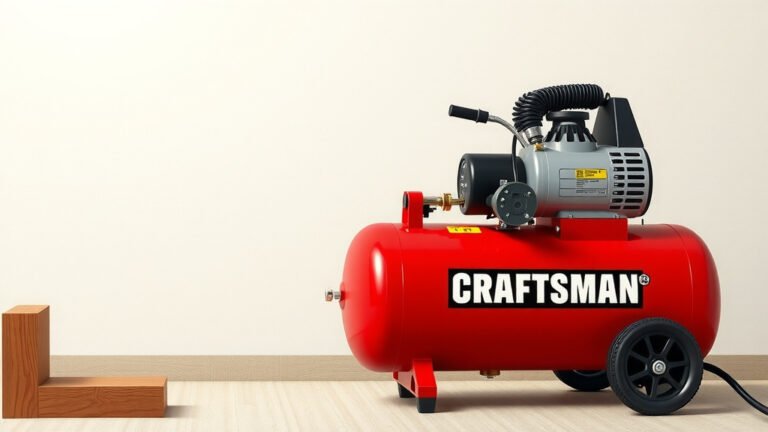
The tank stores compressed air, acting like a buffer. A larger tank means you can run tools for longer before the compressor motor needs to kick in and refill it.
Small Tanks (1-20 Gallons)
These are good for intermittent tasks like blowing dust, inflating tires, or occasional nail gun use. You won’t get long, continuous bursts of air. The motor will cycle on and off more frequently.
Medium Tanks (20-60 Gallons)
These are great for most home garages and DIY workshops. They can handle longer tasks like using impact wrenches or running multiple nail guns for short periods. You get a more consistent supply of air.
Large Tanks (60+ Gallons)
If you’re running demanding tools continuously, like a large sander or a spray gun for an entire project, a big tank is essential. These are often found in professional shops and provide a steady, uninterrupted air supply.
Think about your projects. If you’re just doing small repairs, a smaller tank might be fine. If you’re painting a car or doing extensive woodworking, you’ll want a bigger tank to avoid frustrating pauses.
Putting It All Together: A Quick Checklist
Here’s a simple way to remember the key steps:
- List Your Tools: Write down every air tool you use.
- Find CFM Ratings: Note the CFM needed for each tool, usually at 90 PSI.
- Identify Max Simultaneous Use: How many tools run *at the same time*?
- Calculate Total CFM: Add up CFM for tools used together.
- Add Safety Margin: Boost your total CFM by 30-50%.
- Consider Tank Size: Match tank size to the duration of your air tool use.
Conclusion
Finding the right air compressor size is about smart matching. You’ve learned to focus on CFM for your tools’ airflow needs and PSI for their pressure requirements. Remember to calculate your total CFM demand, especially if you use multiple tools at once. Always add that safety margin of 30-50% for efficiency and longevity. Consider your tank size based on how long you’ll be running your tools. With these steps, you’re ready to choose a compressor that powers your projects perfectly. Your next step is to make that tool list and start looking for your ideal compressor!
Frequently Asked Questions
What if I can’t find the CFM rating for one of my tools?
Don’t worry if you can’t find a specific CFM rating. A good rule of thumb is to check similar tools online or consult tool forums. Many common DIY tools, like a standard nail gun, typically require around 2-4 CFM at 90 PSI. For more demanding tools like grinders or sanders, research their expected CFM needs.
Do I really need to add a safety margin to my CFM calculation?
Yes, absolutely. Adding a 30-50% safety margin is highly recommended by manufacturers and pros. This buffer ensures your compressor isn’t constantly running at its maximum capacity. It prevents overheating, extends its lifespan, and provides a more consistent air supply for your tools.
How does the tank size affect my compressor’s performance?
The tank acts as an air reserve. A larger tank lets you run tools for longer periods before the motor has to refill it. If you have short, intermittent tasks, a smaller tank might suffice. For longer projects or continuous tool use, a bigger tank prevents frustrating pauses as the compressor catches up.
Can I use a compressor with a higher CFM than my tools require?
Yes, it’s generally better to have a compressor with a higher CFM than your tools need. You can always regulate the pressure (PSI) down to what your tool requires. Having extra CFM capacity means your compressor will work less, run cooler, and deliver air more smoothly than one struggling to keep up.
What’s the difference between a “portable” and a “stationary” air compressor size?
Portable compressors often have smaller tanks and lower CFM ratings, making them easier to move around your shop or job site. Stationary compressors are typically larger, with bigger tanks and higher CFM outputs, designed for permanent installation in a workshop where mobility isn’t a concern.