
How to Properly Dispose of Air Purifier Filters
Disposing of your used air purifier filter is usually quite simple! Most filters can be safely tossed into your regular household trash. Some manufacturers, however, offer special recycling programs, so it’s always a good idea to check your filter’s packaging or the manufacturer’s website first. This ensures you’re disposing of it in the most environmentally friendly way possible.
Your air purifier works hard to trap dust, pollen, pet dander, and other airborne particles. Over time, these particles build up, making the filter less effective. Knowing how to properly remove and discard the old filter is key to maintaining your air quality. We found that understanding your filter type, whether it’s HEPA or activated carbon, can sometimes influence disposal options. Look for a recycling symbol or specific instructions.
Here’s what you need to know about tossing that filter:
- Check manufacturer instructions first.
- Most filters go in regular trash.
- Look for special recycling programs.
- Consider filter type for specific disposal.
Let’s walk through the best ways to handle your old air purifier filter. We’ll cover the common options and how to figure out what’s right for your specific situation.
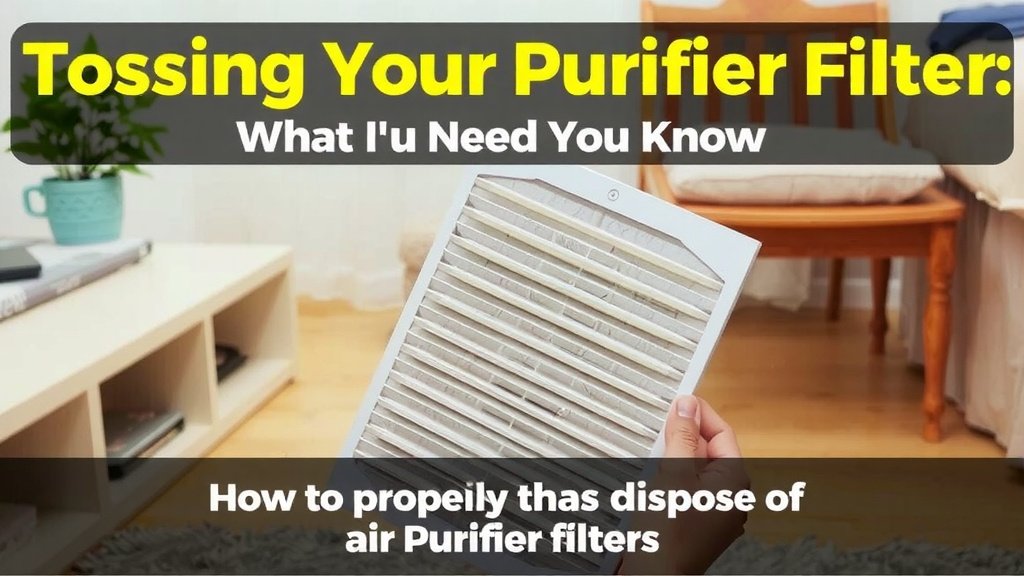
Tossing Your Old Air Purifier Filter: What You Need to Know
So, your air purifier filter has seen better days. It’s done its job, trapping all sorts of tiny unwanted guests from your air. Now, you’re wondering what to do with it. It’s not quite like throwing out a coffee filter or a tea bag. We’ve researched the best practices, and here’s what you need to know about disposing of it properly.
Understanding Your Filter Type First
Before you even think about the trash can, let’s quickly touch on filter types. Most people have either a HEPA filter or an activated carbon filter, or often a combination of both. These filters are designed to capture different things. HEPA filters are fantastic at trapping physical particles like dust and pollen. Activated carbon filters excel at absorbing odors and gases. Knowing this can sometimes help, though most disposal methods are similar.
What About Those Little Symbols?
You might find a tiny recycling symbol on your filter or its packaging. This is a great clue! Some manufacturers are really on top of their environmental game. They might have a specific program to recycle their used filters. It’s worth keeping an eye out for these indicators. They’re like a little breadcrumb trail leading you to the eco-friendliest option.
The Most Common Disposal Method: Your Household Trash
For the vast majority of air purifier filters, the simplest and most widely accepted method is tossing them into your regular household trash. We found that most municipal waste systems are equipped to handle these filters. They’re generally made of materials that don’t pose a hazard when properly contained in a landfill. Think of it as giving the filter a well-deserved rest after its hard work.
Is It Safe to Just Throw It Away?
Yes, generally speaking. Air purifier filters trap particles, but they don’t typically contain hazardous materials. The particles themselves are usually common household dust, pet dander, pollen, and smoke residue. These aren’t considered toxic waste. The filter material itself is usually paper, plastic, or a synthetic fiber. So, once it’s bagged up, it’s safe for your garbage bin.
Bagging It Up Properly
When you remove the old filter, it’s a good idea to put it in a plastic bag before tossing it. This helps contain any loose dust or debris that might still be clinging to it. It’s a small step that keeps your trash can cleaner and prevents those captured particles from floating around your home again, even briefly. We found this is a good habit to get into.
Exploring Manufacturer Recycling Programs
Some brands go the extra mile. They might offer a special recycling program for their filters. This is fantastic for reducing waste. How do you find out about these? The best place to look is either on the filter’s packaging itself or on the manufacturer’s official website. They usually have a dedicated section about product end-of-life or recycling options.
How These Programs Typically Work
These programs often involve mailing the used filter back to the company. They might provide a prepaid shipping label, or you might need to pay for shipping. Once received, the manufacturer can then process the filter to recover usable materials or dispose of it in a more specialized, eco-friendly way. We found that participation can vary, so check the specifics for your brand.
Checking the Filter’s Packaging
When you get your new air purifier filter, take a quick peek at the box it came in. Manufacturers often print disposal instructions or recycling information right there. Sometimes, it’s a small icon, and other times it’s a short paragraph. It’s the most direct source of information for that specific filter. This is often easier than hunting down the website.
Searching the Manufacturer’s Website
If the packaging is unhelpful, the next step is the manufacturer’s website. Navigate to the support or product section for your specific air purifier model. Look for FAQs, user manuals, or dedicated pages about filter maintenance and disposal. This is where they’ll usually detail any special recycling initiatives or provide clear disposal guidance. We found this to be a reliable method.
What About Activated Carbon Filters Specifically?
Activated carbon filters often get saturated with odors and gases. While they aren’t typically hazardous, some people wonder if they require special treatment. We researched this, and in most cases, they can still be disposed of in regular trash. The activated carbon is usually made from materials like charcoal, which is safe for landfills.
Are There Any Special Considerations?
If your home environment has had particularly strong odors (think heavy smoke damage or strong pet smells), the carbon filter might be quite saturated. While still not hazardous, you might want to be extra sure it’s sealed well in a bag. This is mainly for odor containment in your trash bin, not for safety reasons. It’s a common-sense step.
When to Be Extra Cautious
There are rare instances where a filter might have come into contact with something unusual. If your air purifier was used in an environment with potential contaminants, like certain industrial settings or areas with mold remediation, you might need to check local regulations or consult with disposal experts. However, for typical home use, this is rarely a concern.
Potential for Special Waste Streams
In very specific, non-household scenarios, filters might be considered industrial waste. This is uncommon for standard home air purifiers. If you’re unsure because of your specific usage, it’s always best to err on the side of caution. Contact your local waste management authority. They can provide guidance tailored to your situation and location.
A Quick Checklist for Proper Disposal
To make things super easy, here’s a quick rundown:
- Check the filter packaging for any specific instructions.
- Visit the manufacturer’s website for their recommended disposal method.
- If no special program exists, bag the filter securely to contain dust.
- Place the bagged filter in your regular household trash.
- Consider the environment and look for recycling options first.
- If in doubt due to unusual use, contact local waste services.
Recycling vs. Trash: Making the Best Choice
Ultimately, the goal is responsible disposal. If your manufacturer offers a recycling program, and it’s feasible for you to participate, that’s often the most environmentally conscious choice. It helps reduce landfill waste and conserve resources. However, if such a program isn’t available or practical, using your regular trash is a perfectly acceptable and safe method for most household air purifier filters.
Conclusion
Properly disposing of your air purifier filter is simpler than you might think. We’ve seen that most filters can safely go into your regular household trash after being bagged. However, taking a moment to check the filter’s packaging or the manufacturer’s website is always a smart move. This allows you to discover any special recycling programs your brand might offer, which is the most environmentally friendly option. By following these steps, you ensure you’re maintaining your home’s air quality and being responsible with your waste. Your next step is to simply remove your old filter, bag it up, and dispose of it according to your findings.
Frequently Asked Questions
Are there different disposal rules for HEPA vs. activated carbon filters?
Generally, no. Both HEPA and activated carbon filters from standard home air purifiers can usually be thrown in your regular trash. Activated carbon filters might hold more odors, so bagging them well is a good idea. Special disposal is rarely needed unless specified by the manufacturer.
How can I tell if my air purifier filter is recyclable?
Look for a recycling symbol directly on the filter or its packaging. The manufacturer’s website is also a great resource. They will often clearly state if they have a take-back or recycling program available for their used filters.
What if my air purifier was used in a place with mold or smoke?
For typical home use, even with strong odors or dust, standard disposal is usually fine. If the filter was used in an environment with potentially hazardous contaminants (like mold remediation sites), it’s best to check with your local waste management authority for guidance.
Is it okay to just throw the old filter in the trash without a bag?
We strongly recommend bagging the filter before placing it in the trash. This helps contain any loose dust or particles that may still be clinging to it. It prevents the dust from scattering in your trash bin and makes disposal cleaner and easier.
How do I find out if my specific air purifier brand has a recycling program?
The best ways to find out are by checking the filter’s packaging or visiting the manufacturer’s official website. Look for sections on “disposal,” “recycling,” “sustainability,” or “product end-of-life.” They will typically outline their recommended procedures.
![What Is The Best Air Purifier for Closet [In 2026]](https://homeunderstandable.com/wp-content/uploads/2025/06/best-air-purifier-for-closet.jpg)

![5 Best Air Purifier for Dog Allergies [In 2026]](https://homeunderstandable.com/wp-content/uploads/2025/06/best-air-purifier-for-dog-allergies-top-picks-for-pet-owners-768x512.jpg)