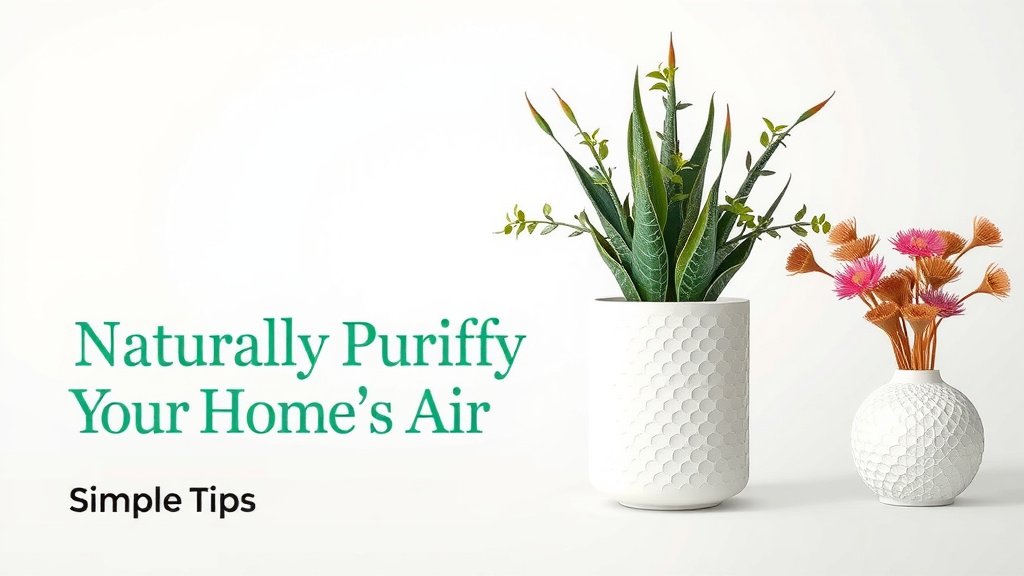
Naturally Purify Your Home’s Air: Simple Tips
You can naturally purify the air in your home by using houseplants, opening windows for ventilation, and reducing indoor pollutant sources. Many studies show that certain plants are surprisingly good at filtering common household toxins like formaldehyde and benzene, making your air cleaner and fresher. It’s about creating a healthier living space with simple, accessible methods.
Beyond plants, think about how you use everyday products. Things like air fresheners and certain cleaning supplies can release chemicals. Choosing natural alternatives and ensuring good airflow are key steps. We found that even small changes can make a big difference in your home’s air quality over time.
- Bring in air-purifying houseplants.
- Open windows regularly for fresh air.
- Minimize sources of indoor pollutants.
- Consider natural cleaning and personal care products.
Let’s walk through some easy, natural ways you can start improving your home’s air quality today.
Natural Ways to Freshen Your Home’s Air
Ready to breathe a little easier at home? You’ve already seen how houseplants and open windows can help. But there’s more you can do to naturally purify your indoor air. We’ve gathered some simple, effective methods. Let’s make your home a healthier haven.
Harnessing the Power of Plants
We talked about houseplants, but let’s dive a bit deeper. Certain plants are like nature’s own air filters. They absorb common toxins. These include things like formaldehyde, benzene, and xylene. These chemicals can off-gas from furniture, paints, and cleaning products.
Top Air-Purifying Houseplants
Which plants do the heavy lifting? Research points to a few stars. The snake plant (Sansevieria trifasciata) is a champ. It’s also super low-maintenance. The spider plant (Chlorophytum comosum) is another excellent choice. It’s easy to care for and produces little “spiderettes” you can propagate. We found that the peace lily (Spathiphyllum) is also great. It adds a touch of elegance while cleaning your air.
Other notable plants include:
- Boston Fern (Nephrolepis exaltata): Great for humidity and filtering formaldehyde.
- Areca Palm (Dypsis lutescens): Known for its high transpiration rate, adding moisture to the air.
- English Ivy (Hedera helix): Effective against airborne mold and even fecal matter particles.
- Chinese Evergreen (Aglaonema): Tolerant of low light and good at removing toxins.
Caring for Your Green Air Filters
To get the most out of your plants, you need to care for them. Ensure they get the right amount of sunlight. Overwatering can lead to root rot. Underwatering can stress the plant. Healthy plants are better at purifying air. We found that a little regular attention goes a long way.
The Magic of Fresh Air Ventilation
It might seem obvious, but opening windows is incredibly effective. It allows stale indoor air to escape. It also brings in fresh, oxygen-rich outdoor air. This simple act can significantly reduce pollutant levels.
When and How to Ventilate
Aim to open windows for at least 15-30 minutes each day. Doing this during cooler parts of the day is best. This helps avoid letting too much heat or cold into your home. If you live in a busy area, be mindful of outdoor air quality. Consider ventilating when traffic is lighter.
Cross-ventilation is key. Open windows on opposite sides of your home. This creates a natural airflow. It pushes stale air out and pulls fresh air in efficiently. We found that this makes a noticeable difference in how fresh your home feels.
Mechanical Ventilation Systems
Some homes have mechanical ventilation systems. These include exhaust fans in kitchens and bathrooms. Make sure these are clean and working properly. They vent moisture and pollutants directly outside. This is especially important when cooking or showering. Using them regularly helps prevent mold growth.
Reducing Sources of Indoor Pollutants
The best way to purify air is to stop pollutants from entering your home in the first place. Many everyday items can release harmful chemicals. Reducing their use or choosing alternatives makes a big impact. We found that tackling the source is often more effective than trying to filter the air later.
Be Mindful of Cleaning Products
Many conventional cleaning products contain harsh chemicals. Things like ammonia and bleach can irritate your lungs. They also release VOCs (volatile organic compounds). Look for cleaning supplies labeled “natural” or “eco-friendly.” Better yet, make your own simple cleaners.
Vinegar and baking soda are powerful natural cleaners. A diluted vinegar solution can clean surfaces. Baking soda is great for scrubbing and deodorizing. Always ensure good ventilation when cleaning, even with natural products. We found that these simple ingredients can tackle most household messes effectively.
Choose Natural Personal Care Products
Air fresheners, scented candles, and even some perfumes can release chemicals. Opt for unscented or naturally scented versions. Essential oil diffusers can offer a pleasant aroma. Ensure you use high-quality, pure essential oils. Some synthetic fragrances can be just as problematic as chemical air fresheners.
Careful with Home Furnishings and Decor
New furniture, carpets, and paint can off-gas chemicals for a long time. When possible, choose items made from natural materials. Look for low-VOC paints. Air out new items before bringing them into your main living space. This is sometimes called “off-gassing.” We found that giving these items some breathing room outside can help.
Additional Natural Air Purification Tips
Beyond plants, ventilation, and reducing sources, other steps help. These are small changes that can add up. They contribute to a cleaner, healthier indoor environment. We found that consistency is key to maintaining good air quality.
Control Humidity Levels
High humidity can encourage mold and dust mites. These can worsen allergies and air quality. Use exhaust fans in bathrooms and kitchens. Fix any leaks promptly. A dehumidifier can help in very damp climates. Aim for a humidity level between 30-50% (CDC).
Regular Cleaning and Dusting
Dust itself can carry allergens and pollutants. Regular cleaning is essential. Use a damp cloth or microfiber duster. This traps dust rather than scattering it. Vacuum carpets and upholstery often. A vacuum with a HEPA filter is best for capturing fine particles. We found that consistent dusting really makes your air feel cleaner.
Air-Purifying Checklist
Here’s a quick checklist to help you:
- Add 2-3 air-purifying houseplants to your home.
- Open windows for at least 15 minutes daily.
- Use natural or DIY cleaning products.
- Opt for unscented or naturally scented personal care items.
- Ensure kitchen and bathroom vents are working.
- Dust and vacuum regularly with a HEPA filter.
Conclusion
You’ve learned that creating cleaner indoor air naturally is achievable. By incorporating air-purifying plants, ensuring regular ventilation, and minimizing pollutant sources, you can significantly improve your home’s air quality. Simple changes like using natural cleaning products and being mindful of furnishings make a real difference. Consistent effort in these areas will help you build a healthier living environment for you and your family. Start today by choosing one area to focus on, like adding a new plant or opening your windows wider each day.
Frequently Asked Questions
How many houseplants do I really need to purify my air?
Research suggests that having 2-3 air-purifying plants per 100 square feet can make a noticeable difference. More plants can offer even greater purification benefits. Ensure they are healthy and well-cared-for to maximize their air-cleaning potential.
Is opening windows enough to purify my air, or do I need other methods?
Opening windows is a fantastic way to bring in fresh air and reduce indoor pollutants. However, it’s most effective when combined with other strategies. Reducing pollutant sources inside your home and using plants can further enhance your air quality.
What are the easiest air-purifying plants for beginners?
The snake plant and spider plant are excellent choices for beginners. They are very forgiving and require minimal care. Both are known to effectively filter common household toxins. They can thrive in various light conditions, making them ideal for most homes.
Can natural air purification methods really remove strong odors?
Yes, natural methods can help with odors. Opening windows allows fresh air to circulate, naturally dissipating smells. Using plants can also absorb some airborne particles that contribute to odors. Reducing pollutant sources, like synthetic air fresheners, is key to long-term odor control.
How often should I dust and vacuum for the best air quality?
Regular dusting and vacuuming are essential. Aim to dust surfaces at least once a week. Vacuum carpets and upholstery two to three times a week, especially if you have pets or allergies. Using a vacuum with a HEPA filter traps the smallest particles effectively.