Stackable Washer Dryer Width: What You Need to Know
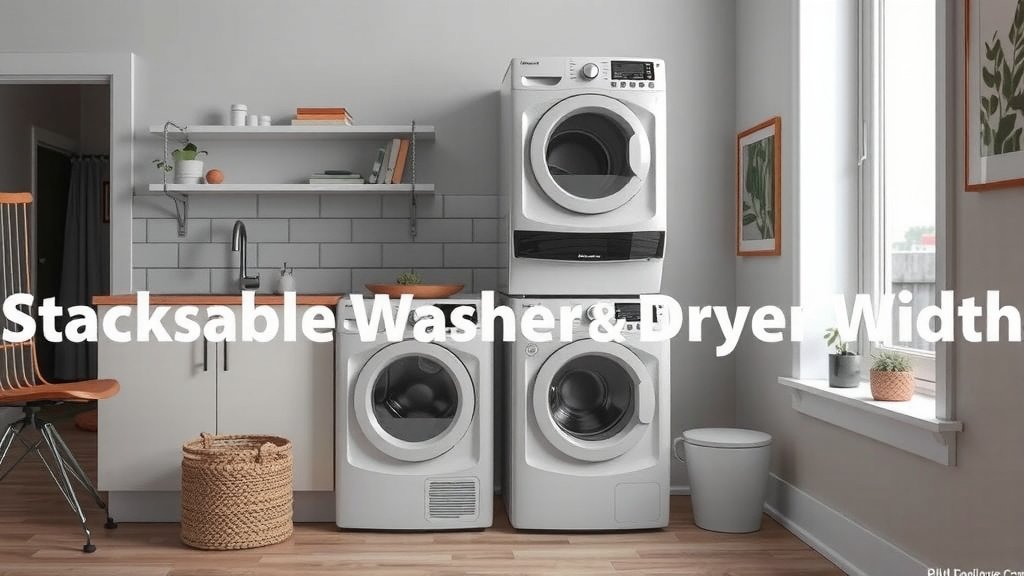
A standard stackable washer and dryer unit typically measures around 27 inches wide. This common width is designed to fit through most standard doorways and into typical laundry closet spaces in homes across the US. You’ll find this width is consistent across many popular brands and models.
When planning for a stackable pair, it’s important to remember this 27-inch width applies to each individual unit when separated and the overall footprint when stacked. We also found that height and depth are key considerations, as they can vary more between models, affecting whether your chosen set will fit your specific laundry room layout and vertical space.
- Stackable washer and dryer units are usually 27 inches wide.
- This width allows them to fit through standard doors.
- Check individual model dimensions for exact measurements.
- Height and depth also vary and are important to measure.
Ready to find the perfect fit for your laundry space? Let’s dive into the specific dimensions and what you need to know about choosing your stackable washer and dryer.
Understanding Stackable Washer and Dryer Width
You’re probably wondering about the width of stackable washer and dryer units. This is a super common question for anyone planning a laundry room makeover. Most standard stackable pairs are designed with a specific width in mind. We found that the most typical width for these units is around 27 inches. This measurement applies to both the washer and the dryer individually when they are meant to be stacked.
Why 27 inches? It’s a smart design choice. This width is often chosen because it allows the units to fit through most standard doorways in American homes. It also means they can slide into many typical laundry closets or alcoves without a wrestling match. So, when you see “stackable,” think 27 inches as your starting point for width.
Dimensions: What to Expect
While width is often the most talked-about dimension, other measurements are just as critical for fitting your new laundry appliances. You’ve got the width, but don’t forget about the height and depth!
The Standard Width Explained
The 27-inch width is a widely adopted standard. Manufacturers aim for this measurement to ensure broad compatibility. It’s like a universal key for laundry spaces. This allows for easy installation without major modifications to your home’s existing structure. We’ve seen this dimension hold true across many brands and models, from budget-friendly options to more premium selections.
Beyond Width: Height and Depth Considerations
Now, let’s talk about the other dimensions. Height and depth can vary more significantly than width. This is where you really need to measure your space. A unit that’s 27 inches wide might have a height that reaches almost 80 inches when stacked. Depth can also range from about 30 to 35 inches, sometimes more if you include hoses or panels.
Why Height Matters
The height of a stacked unit is particularly important. You need to ensure there’s enough vertical clearance. Think about your ceiling height. Also, consider if you’ll need access to the top for any reason. Many stackable units have controls on the front of the dryer, which is usually on top. Ensure you can comfortably reach them. We found that taller units can be beneficial for larger families needing more capacity, but they require adequate headroom.
The Depth Dilemma
Depth is another factor. You don’t want your washer and dryer sticking out too far into your walkway. Measure the depth of your laundry closet or the space where the units will go. Remember to account for the space needed behind the appliances for ventilation hoses and water hookups. Leaving a few inches of space is often recommended. This helps with airflow and makes maintenance easier.
| Dimension | Typical Range | Notes |
|---|---|---|
| Width | 27 inches | Most common for both units. |
| Height (Stacked) | 70 – 80 inches | Varies by model and capacity. |
| Depth | 30 – 35 inches | Measure space including ventilation. |
Compact vs. Standard Stackable Units
It’s worth noting that there are also more compact stackable washer and dryer options available. These are often found in RVs, small apartments, or tiny homes. While the 27-inch width is standard for full-sized units, compact models might be narrower, sometimes around 24 inches. These are great space-savers but usually come with smaller capacities.
Full-Size Convenience
Most homeowners opt for the standard 27-inch width because it offers a good balance. You get decent washing and drying capacity without taking up an excessive amount of floor space. These full-size stackable units are designed to handle typical family laundry loads efficiently. Many models also come with advanced features like steam cycles or smart technology.
When to Consider Compact Models
If you have a very tight space or extremely limited needs, a compact stackable unit might be your best bet. Think about how much laundry you do. If it’s just for one or two people and you wash smaller loads frequently, a 24-inch wide unit could work perfectly. However, for most households, the 27-inch standard offers the best combination of performance and size.
Measuring Your Space: A Quick Checklist
Before you get too excited about a new washer and dryer, let’s make sure it fits! A few minutes with a tape measure can save you a lot of hassle. Here’s a quick checklist to guide you:
- Measure the width of your laundry area or closet.
- Measure the height from floor to ceiling.
- Measure the depth of the space available.
- Don’t forget to account for door swings or open appliance doors.
- Check the path from your entrance to the laundry area – can the units get there?
- Measure doorways, hallways, and stairwells if applicable.
By taking these measurements, you can confidently choose a stackable washer and dryer that not only fits but also functions perfectly in your home. Remember, the 27-inch width is a great starting point, but the full picture includes height, depth, and the journey to get them into place!
Conclusion
You’ve learned that most stackable washer and dryer units measure around 27 inches wide, making them a great fit for standard doorways and laundry closets. Remember, while width is consistent, you’ll need to measure your space carefully for height and depth to ensure a perfect fit. Compact models offer narrower options, but the 27-inch standard usually provides the best balance for most homes. Now that you know the key dimensions, your next step is to measure your specific laundry area and compare it against appliance specifications before making your purchase.
Frequently Asked Questions
Are all stackable washers and dryers exactly 27 inches wide?
While 27 inches is the most common width for standard stackable units, you might find some slight variations. We’ve found that manufacturers aim for this standard for compatibility, but it’s always wise to check the exact product specifications for the model you’re interested in.
Can a 27-inch wide stackable unit fit through any standard door?
Yes, the 27-inch width is specifically designed to accommodate most standard interior doorways in US homes. This is why it’s such a popular size for stackable pairs, allowing for easier delivery and installation into your laundry space.
What if my laundry closet is narrower than 27 inches?
If your space is narrower than 27 inches, you’ll want to look for compact stackable washer and dryer units. These models are often around 24 inches wide, offering a solution for very tight spaces, though they typically have a smaller capacity.
Does the 27-inch width apply to both the washer and the dryer unit?
Yes, the 27-inch width measurement generally applies to both the individual washer unit and the dryer unit when they are designed to be stacked. This ensures they align perfectly when placed one on top of the other.
Should I measure the width before or after stacking?
You should measure the width of each unit individually, and they should both be approximately 27 inches wide. The height will change significantly when stacked, but the width remains consistent for both appliances in the pair.
![7 Best Washing Machine With Impeller [In 2026]](https://homeunderstandable.com/wp-content/uploads/2026/08/7-best-washing-machine-with-impeller-in-2026-featured-768x432.jpg)
![7 Best Washer Deals [In 2026]](https://homeunderstandable.com/wp-content/uploads/2026/09/7-best-washer-deals-in-2026-featured-768x432.jpg)
![7 Best Brand Of Stackable Washer And Dryer [In 2026]](https://homeunderstandable.com/wp-content/uploads/2026/09/7-best-brand-of-stackable-washer-and-dryer-in-2026-featured-768x432.jpg)