Indoor Grill vs Air Fryer: Which One Deserves Your Counter Space?
When you’re standing in your kitchen wondering what appliance to invest in next, the choice between an indoor grill and an air fryer can feel overwhelming. Both promise delicious, healthier meals with minimal effort, but they work in completely different ways. I’ve spent countless hours researching and testing these kitchen workhorses, and I’m here to help you figure out which one actually makes sense for your lifestyle and cooking style.
The truth is, there’s no one-size-fits-all answer. Your decision should depend on what you actually cook, how much space you have, and what your family enjoys eating. Let’s dive deep into this comparison so you can make a confident choice.
Understanding the Basics: How These Appliances Work
What Exactly Is an Indoor Grill?
An indoor grill is essentially a countertop version of your backyard barbecue. It uses heat from either electric coils or ceramic surfaces to cook food from below, mimicking the experience of outdoor grilling. Think of it as bringing the smoky, charred flavors of outdoor cooking directly into your kitchen, minus the smoke (well, mostly).
Most indoor grills come with a cooking surface that heats up quickly and maintains consistent temperature. Some models have adjustable heat settings, while others offer fixed temperatures. The basic principle remains the same: you place your food directly on the hot surface, and it cooks through direct contact with that heat source.
What’s the Deal with Air Fryers?
Air fryers operate on an entirely different principle. They circulate extremely hot air at high speeds around your food, creating a crispy exterior through a process called the Maillard reaction. It’s kind of like having a mini convection oven that works at lightning speed. The air circulates at temperatures typically between 300 to 400 degrees Fahrenheit, cooking food quickly and evenly from all angles.
The beauty of air fryers is that they require little to no oil, yet they produce that satisfying crispiness we all crave. This is what makes them so popular among people trying to eat healthier without sacrificing taste.
Cooking Methods and Results: The Flavor Factor
The Grilling Experience You Get from Indoor Grills
If you’ve ever grilled outdoors and fell in love with those beautiful grill marks and slightly charred edges, an indoor grill can deliver similar results. The direct heat creates that distinctive seared crust on your meats, vegetables, and even fruits. This Maillard reaction that happens on the grill’s surface adds depth and complexity to flavors.
However, I’ll be honest with you: indoor grills won’t give you that authentic smoky flavor you get from charcoal or gas grills outside. Some models come with special grill plates that attempt to mimic wood smoke, but the effect is subtle at best. You’re trading authentic outdoor flavors for convenience and year-round cooking capability.
The Crispy Perfection from Air Fryers
Air fryers excel at creating that golden, crispy exterior without deep frying. Whether you’re cooking frozen French fries, chicken wings, or homemade vegetable chips, the results are consistently excellent. The high-speed air circulation ensures even cooking on all sides, which means fewer burnt spots and undercooked centers.
The texture you get from an air fryer is similar to deep frying, but with significantly less oil. For people who love fried foods but want a healthier alternative, this is genuinely a game-changer. The food comes out crispy on the outside and tender on the inside, exactly as you’d want it.
Space Considerations: Does It Fit Your Kitchen?
Counter Space Requirements for Indoor Grills
Indoor grills tend to be larger and take up more counter real estate. A typical model might measure 15 to 20 inches wide and 10 to 14 inches deep. Some compact models are smaller, but if you want enough cooking surface to feed a family, you’re looking at a fairly substantial footprint.
The advantage is that many indoor grills have a slim profile when viewed from the side, so if you have a narrow shelf or countertop, a grill might work better than a bulkier air fryer. You need to consider where you’ll actually store it when not in use.
The Footprint of Air Fryers
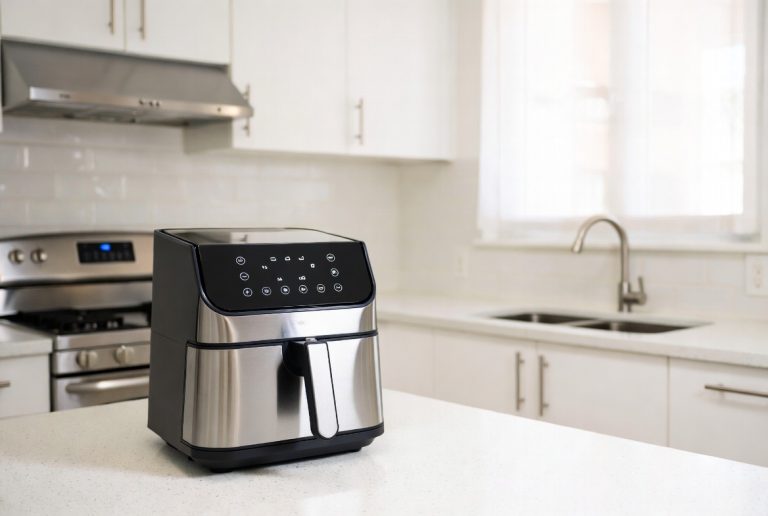
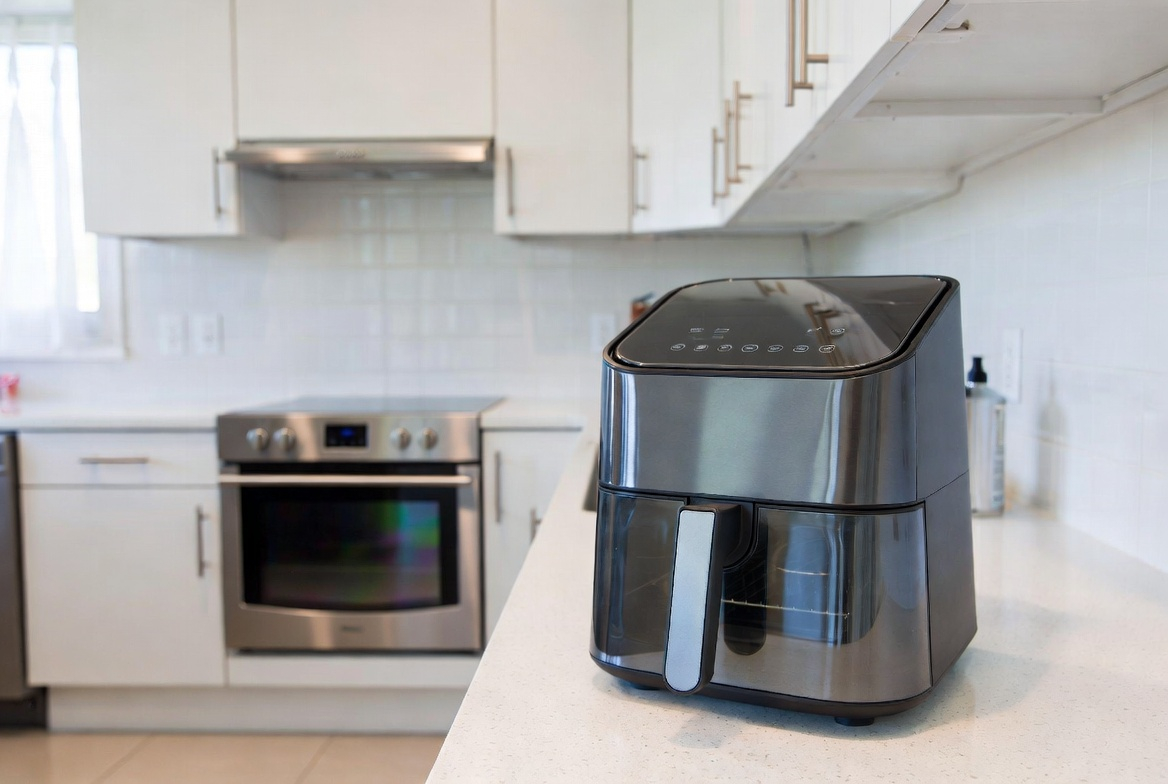
Air fryers vary widely in size, from compact single-serve models to large family-sized units. A medium-sized air fryer typically measures about 10 by 10 inches and stands 12 inches tall. Some larger basket-style air fryers are taller and deeper, requiring more vertical and horizontal space.
The good news is that air fryers are vertical appliances, meaning they take up less counter space compared to their actual capacity. If you have limited counter real estate, a compact air fryer might actually be your better bet than a sprawling indoor grill.
What Can You Actually Cook in Each?
Indoor Grill Cooking Possibilities
Indoor grills shine when you’re cooking foods that benefit from that seared, grilled exterior. Here’s what works exceptionally well:
- Steaks, burgers, and ground meat patties
- Chicken breasts and thighs
- Fish fillets and whole fish
- Vegetables like zucchini, bell peppers, and asparagus
- Pineapple, peaches, and other firm fruits
- Panini sandwiches and pressed foods
- Sausages and hot dogs
The key is that your food should be able to handle direct heat without falling apart. Delicate fish, for instance, requires careful handling and a well-seasoned grill to prevent sticking.
What Air Fryers Do Best
Air fryers have an impressive range of cooking capabilities, though they excel in different areas than grills:
- Frozen foods like French fries, chicken nuggets, and mozzarella sticks
- Chicken wings and drumsticks
- Fish and shrimp
- Vegetables and veggie chips
- Baked goods and reheating leftovers
- Homemade fried foods with minimal oil
- Small portions of meat and poultry
- Toasting and roasting nuts and seeds
Air fryers are incredibly versatile, and honestly, many people find themselves using theirs for far more than just making crispy foods. Some people even use them for baking small cakes or cookies.
Health Considerations: Which Is Healthier?
The Health Case for Indoor Grills
Grilling allows excess fat to drip away from your food, which can actually make grilled items healthier than pan-fried alternatives. When you grill a steak or burger, the fat rendered during cooking drips down onto the heating element, reducing the overall fat content of the finished dish.
However, there’s a catch. When you grill at very high temperatures, it can create compounds like heterocyclic amines (HCAs) and polycyclic aromatic hydrocarbons (PAHs). While these occur in tiny amounts that likely won’t harm most people, some health-conscious cooks prefer to minimize exposure by grilling at moderate temperatures or marinating their proteins first.
The Health Benefits of Air Frying
Air fryers win the health competition in one specific area: they require minimal to no oil for cooking. If you’re someone who loves fried foods but wants to drastically reduce your oil consumption, an air fryer is genuinely beneficial. You get the satisfaction of crispy, delicious food without the excess calories from deep frying.
That said, air fryers aren’t a magic weight-loss solution. You still need to watch portion sizes and choose nutritious ingredients. A large batch of air-fried cookies is still cookies. But for replacing traditional deep-fried foods, an air fryer is undoubtedly a healthier option.
Ease of Use and Learning Curve
Getting Started with Your Indoor Grill
Most people find indoor grills straightforward to use. You plug it in, let it preheat, place your food on the hot surface, and cook for the appropriate time. However, mastering grill technique takes practice. You need to understand temperature management, when to use direct versus indirect heat, and how to prevent sticking.
The learning curve increases significantly if you want to achieve professional-looking grill marks or perfectly cooked proteins with a grill-marked exterior and juicy interior. It’s a skill worth developing, but it requires patience and experimentation.
Air Fryer Simplicity
Air fryers are genuinely user-friendly from day one. You place food in the basket, set the temperature and time, and press start. Most models beep when cooking is complete. There’s very little technique involved, which means you’ll get great results even on your first try.
This simplicity appeals to people who want reliable results without spending time learning cooking techniques. It’s hard to mess up air fryer cooking, which is part of its appeal.
Cleaning and Maintenance: The Unglamorous Reality
Keeping Your Indoor Grill Clean
Cleaning an indoor grill requires some effort. You need to let it cool, then scrape off stuck-on food from the cooking surface. Some models have removable grill plates that are dishwasher safe, which is convenient. Others have fixed surfaces that demand more elbow grease.
Fat splatter can occur during cooking, and you may need to wipe down the exterior and surrounding countertop. If you have a model that doesn’t have a drip tray, you might also need to deal with fat and juices running off the sides.
Air Fryer Maintenance and Cleaning
Air fryers are significantly easier to clean. Most have removable baskets and trays that go straight into the dishwasher. Even the interior is simple to wipe down with a damp cloth. There’s minimal mess during cooking since everything stays contained within the basket.
This ease of cleaning is a huge advantage if you use your air fryer frequently. You’re more likely to use an appliance regularly when cleanup isn’t a hassle.
Cost Comparison: What Will You Actually Spend?
Indoor Grill Pricing
Indoor grills range dramatically in price. You can find basic models for around $30 to $50, while premium brands like George Foreman or Cuisinart models range from $80 to $200 or more. Professional-grade models can exceed $300.
The price differences usually reflect build quality, non-stick coating durability, temperature control options, and additional features like removable plates or multiple heat zones.
Air Fryer Investment
Air fryers also have wide price ranges. Basic compact models start around $40 to $60, while quality mid-range options cost $80 to $150. Premium large-capacity models or specialty models (like dual-basket designs) can reach $200 to $300.
Here’s the interesting part: per dollar spent, air fryers generally offer more versatility. You can cook more variety of foods in an air fryer than in an indoor grill, which might justify the investment if cooking flexibility matters to you.
Which Fits Your Cooking Style?
Choose an Indoor Grill If You Love Grilling
If you’re someone who absolutely loves grilled foods and wants to grill year-round regardless of weather, an indoor grill is your answer. You’re willing to learn grilling techniques, enjoy the seared exterior that grilling provides, and have the counter space available.
Grills are also ideal if your household frequently eats grilled meats and vegetables. If steak dinners, grilled chicken, and veggie kabobs are part of your weekly rotation, an indoor grill will get plenty of use.
An Air Fryer Makes Sense If You Want Versatility
Choose an air fryer if you want a do-everything countertop appliance that requires minimal skill to operate. You appreciate the convenience of quick cooking, enjoy crispy foods, and want to reduce oil consumption. Air fryers are also perfect if you frequently cook frozen foods or want an alternative to deep frying.
Air fryers are ideal for busy people who need meals on the table quickly, families with picky eaters who love fried-style foods, and anyone with limited counter space who still wants a multi-functional kitchen appliance.
Can You Own Both? The Best of Both Worlds
Here’s something people don’t always consider: you don’t necessarily have to choose. If you have the space and budget, owning both an indoor grill and an air fryer means you have access to an incredibly diverse range of cooking methods.
You’d use your grill for grilled meats, vegetables, and foods that benefit from that distinctive seared exterior. Your air fryer handles everything else, from frozen foods to crispy sides to reheating. Together, they cover most cooking situations you’d encounter in a typical week.
However, if budget or space is limited, you need to make a choice based on your actual cooking habits and what you’ll realistically use most often.
Safety Features and Considerations
Indoor Grill Safety
Indoor grills get extremely hot, and burns are a genuine risk if you’re not careful. Always ensure your grill has a cool-touch exterior and a secure cord. Some models have automatic shut-off features, which is helpful for safety. Keep the grill away from edges where children or pets might access it accidentally.
Ensure your grill has adequate ventilation space around it. Some models produce more smoke than others, so proper air circulation in your kitchen is important.
Air Fryer Safety
Air fryers also get hot, but because they’re enclosed, the risk of accidental touching is lower. The basket and tray get extremely hot, so always use the pull-out handle when removing them. Most air fryers have a safety auto-shutoff when you open the basket, which is a nice feature.
Ensure your air fryer has adequate space above it for air circulation. Don’t place it under cabinets or in enclosed spaces.
The Verdict: Making Your Final Decision
After examining every angle, here’s what matters most: your actual cooking habits and kitchen lifestyle. Ask yourself these questions honestly:
- Do you genuinely enjoy grilled flavors, or do you prefer crispy fried-style textures?
- How much counter space can you realistically spare?
- Are you willing to learn grilling techniques, or do you prefer simple, straightforward cooking?
- What foods does your family eat most frequently?
- Do you value versatility or specialized performance?
- How important is ease of cleaning?
If you’re a grill enthusiast at heart, get the indoor grill. If you’re looking for an all-around, easy-to-use kitchen workhorse, go with the air fryer. Both are solid investments for the right person.
Conclusion
The indoor grill versus air fryer debate doesn’t have a universal winner because these appliances serve different purposes and appeal to different cooking styles. An indoor grill excels at creating seared, grilled flavors and is perfect for people who love outdoor grilling but need an indoor solution.
![What Is The Best Chicken Thigh Recipe for Air Fryer [In 2026]](https://homeunderstandable.com/wp-content/uploads/2026/03/Best-Chicken-Thigh-Recipe-for-Air-Fryer-768x516.jpg)

![5 Best Air Fryer Cookbooks for Beginners [In 2026]](https://homeunderstandable.com/wp-content/uploads/2026/03/5-Best-Air-Fryer-Cookbooks-for-Beginners.jpg)