

Microwave vs Air Fryer Energy Consumption: Which Kitchen Appliance Really Saves You Money?
Have you ever stood in front of your kitchen wondering which appliance would be better for your wallet and the planet? I’ve been there too. Today’s kitchens are filled with gadgets that promise to make cooking faster, easier, and more efficient. Two appliances that have been competing for counter space in millions of homes are the microwave and the air fryer. Both have loyal fans, but when it comes to energy consumption, which one actually wins out?
This is more than just a simple question about which device uses less electricity. It’s about understanding your cooking habits, recognizing your priorities, and making an informed decision that aligns with your lifestyle and budget. Let me walk you through everything you need to know.
Understanding Energy Consumption Basics
What Does Wattage Really Mean?
Before we dive into the specifics of microwaves and air fryers, let’s talk about what energy consumption actually means. When manufacturers list the wattage of an appliance, they’re telling you the maximum amount of power that device can draw. Think of it like the maximum speed of a car—just because your vehicle can go 120 miles per hour doesn’t mean it always does.
Energy consumption is measured in kilowatt-hours, or kWh. One kilowatt-hour represents 1,000 watts of power used for one hour. This is what your utility company actually charges you for. So if you run a 1,000-watt appliance for one hour, you’ve consumed one kWh of electricity.
How Do We Calculate Your Energy Bills?
Your electricity bill is determined by multiplying the number of kilowatt-hours you use by your local electricity rate. For example, if you use 100 kWh in a month and your rate is $0.12 per kWh, you’d pay $12 for that electricity (before any fixed charges or taxes). This simple formula helps us compare appliances fairly.
What is a Microwave and How Does It Work?
The Science Behind Microwave Cooking
A microwave is like a magical little box that heats food from the inside out, and it’s been a kitchen staple for decades. Here’s how it actually works: the microwave generates electromagnetic radiation at a frequency of about 2.45 gigahertz. This radiation excites water molecules in your food, causing them to vibrate rapidly and generate heat.
What makes this interesting is that not all foods contain the same amount of water. Foods with higher water content heat up faster in a microwave. A cup of coffee will warm up in seconds, while a dense potato might take several minutes.
Typical Power Ratings for Microwaves
Most household microwaves range from 600 to 1,200 watts in terms of their maximum output. However—and this is crucial—they don’t always run at full power. Many microwaves use a cycling system where they turn on and off to maintain your selected power level. So if you set your microwave to 50 percent power, it’s actually turning on and off repeatedly to achieve that level.
Common microwave categories include:
- Compact microwaves: 600-800 watts
- Standard microwaves: 800-1,000 watts
- Large or commercial-style microwaves: 1,000-1,200 watts
What is an Air Fryer and How Does It Operate?
The Technology Behind Air Frying
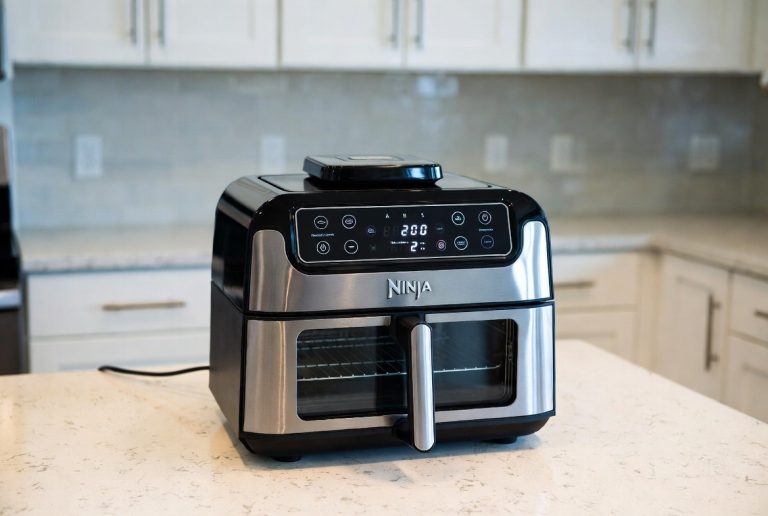
Air fryers are the newer kids on the block, and they’ve completely changed how some people approach cooking. Despite their name, air fryers don’t actually fry with air alone. Instead, they use rapid air circulation combined with high heat to cook your food. It’s similar to a convection oven, but much more compact and intense.
Inside an air fryer, a heating element gets extremely hot—typically reaching 300 to 400 degrees Fahrenheit. A powerful fan then circulates this hot air around your food at high speed. This rapid air movement creates a dry cooking environment that produces crispy textures without needing oil (or with minimal oil).
Power Consumption Ranges for Air Fryers
Here’s where things get interesting. Air fryers typically draw between 800 and 1,700 watts depending on the model and size. Many popular air fryers sit in the 1,200 to 1,500 watt range. Some of the larger basket-style air fryers can demand up to 1,700 watts, while smaller compact models might use only 800 watts.
Unlike microwaves that cycle their power, air fryers generally run at a consistent wattage once they’re turned on. This makes calculating their energy consumption more straightforward.
Power Ratings: Microwave vs Air Fryer
Direct Wattage Comparison
On paper, microwaves and air fryers look quite similar in terms of power draw. A standard 1,000-watt microwave and a 1,500-watt air fryer are using comparable amounts of electricity in terms of maximum output. However, maximum output doesn’t tell the whole story. We need to look at actual operating time and efficiency.
The key difference is that most microwaves don’t run at full power constantly, while air fryers maintain their set wattage throughout the cooking cycle. This is an important distinction when calculating total energy consumption.
Efficiency Ratings and Real-World Performance
Energy efficiency isn’t just about watts—it’s about how effectively those watts cook your food. A microwave might be rated at 1,000 watts, but only about 65 percent of that energy actually goes into heating your food. The rest is lost as heat from the appliance itself and through the microwave’s enclosure.
Air fryers have a similar efficiency range, typically converting 60 to 70 percent of their electrical input into actual cooking heat. The difference is negligible, but both appliances are reasonably efficient compared to traditional ovens, which might only be 10 to 15 percent efficient.
Real-World Energy Usage Comparison
What You Actually Use Each Day
Here’s where the rubber meets the road. Instead of just comparing maximum wattage, let’s think about what you’re actually doing. Say you use your microwave to heat up a cup of coffee for 2 minutes every morning. That’s about 120 seconds at, let’s say, 800 watts average (since it’s probably not running at full power). That’s roughly 0.027 kWh per day just for coffee.
Now imagine using an air fryer to cook a batch of chicken wings for dinner, which takes about 15 minutes at 1,400 watts. That single meal uses about 0.35 kWh. Just from that one comparison, you can see that cooking time plays a massive role in total energy consumption.
Seasonal Variations in Energy Use
Your energy consumption patterns likely change with the seasons. In summer, you might use your microwave more for quick meals and beverages because you don’t want to heat up your kitchen with a hot oven. Conversely, in winter, you might reach for the air fryer more often since the extra heat it produces isn’t wasted.
This seasonal shift affects your overall energy consumption differently for each appliance. It’s something to consider when thinking about annual costs.
Cooking Time and Its Impact on Energy Costs
Speed is King in Energy Consumption
Here’s a truth that often gets overlooked: the speed at which an appliance cooks directly impacts energy consumption. A microwave reheats leftovers in 2-3 minutes, while a traditional oven might take 15-20 minutes. Even though the oven might use more power per minute, the short cooking time of the microwave often results in less total energy used.
Let me give you a concrete example. Reheating a plate of food:
- Microwave: 3 minutes at 600 watts average = 0.03 kWh
- Traditional oven: 12 minutes at 2,500 watts = 0.5 kWh
- Air fryer: 5 minutes at 1,400 watts = 0.117 kWh
In this scenario, the microwave is significantly more efficient simply because it cooks so quickly. But this advantage doesn’t apply to all cooking tasks.
Air Fryer Advantages for Larger Quantities
Where the air fryer shines is when you’re cooking larger quantities for multiple people. If you’re preparing dinner for a family and need to cook chicken breasts, fries, and vegetables, the air fryer might actually be more efficient than using a microwave (which doesn’t handle all those items well) or a traditional oven (which takes much longer to preheat and cook).
The air fryer’s rapid heat circulation means food cooks in roughly half the time a conventional oven would require. This time savings directly translates to energy savings.
Cost Analysis: Monthly and Yearly Expenses
Calculating Your Monthly Energy Bills
Let’s put some real numbers on this. The average American pays about $0.12 per kilowatt-hour for electricity, though this varies widely by location. Let’s say you use your microwave for 30 minutes per day at an average of 700 watts (accounting for various power levels):
- Daily consumption: 0.35 kWh
- Monthly consumption: 10.5 kWh
- Monthly cost: approximately $1.26
- Yearly cost: approximately $15.12
Now let’s compare with an air fryer used for 30 minutes per day at 1,200 watts:
- Daily consumption: 0.6 kWh
- Monthly consumption: 18 kWh
- Monthly cost: approximately $2.16
- Yearly cost: approximately $25.92
Individual Usage Patterns Matter
Of course, these calculations are based on assumptions about how much you’d use each appliance. Your actual usage depends entirely on your cooking habits. Someone who uses an air fryer just once a week will see vastly different numbers than someone using it daily.
The real key is understanding your own habits. Do you tend to grab quick microwave meals, or do you prefer the crispy results of air-fried food? Your preference directly impacts your energy costs.
Environmental Impact of Both Appliances
Carbon Footprint Considerations
Beyond your utility bill, there’s the broader environmental impact to consider. The carbon footprint of the electricity you use depends on your region’s power sources. If you live in an area relying heavily on renewable energy, your environmental impact is lower. Conversely, areas dependent on fossil fuel power plants have a higher environmental cost.
Since air fryers typically use more electricity per cooking session than microwaves, they generally produce a larger carbon footprint for the same meal. However, if your electricity comes from renewable sources, this difference becomes negligible.
Manufacturing and Lifespan Considerations
It’s not just about operating energy—there’s also the environmental cost of manufacturing and disposing of these appliances. An air fryer is a relatively new technology, and manufacturing plants are still scaling up production. A microwave is an established technology with optimized manufacturing processes.
If you’re buying a new appliance, consider the total lifespan cost. A microwave that lasts 10 years might actually have a better overall environmental impact than an air fryer used for the same period, even if the air fryer uses more electricity during operation.
Which Foods Cook More Efficiently in Each?
Microwave Efficiency Champions
Microwaves excel at tasks where you want quick results with minimal energy waste. These include:
- Reheating beverages and leftovers
- Defrosting food quickly
- Cooking foods with high water content like vegetables and fish
- Melting butter or chocolate
- Preparing instant meals and soups
For these tasks, the microwave’s speed advantage means it uses less total energy than alternatives.
Air Fryer Efficiency Champions
Air fryers show their strength when you need crispy textures and are cooking in larger quantities:
- Frozen fries and snacks
- Chicken wings and other protein-based dishes
- Baked goods and pastries
- Roasted vegetables
- Preparing multiple servings for a family
When comparing an air fryer to a traditional oven for these tasks, the air fryer’s superior efficiency becomes clear. It heats up faster, cooks quicker, and the rapid air circulation means better results in less time.
Foods Where Both Are Equally Inefficient
Some foods simply aren’t well-suited to either appliance. Dense root vegetables like beets or whole potatoes cook slowly in both microwaves and air fryers. For these items, a stovetop or traditional oven might actually be more practical, even if the numbers don’t show dramatic energy differences.
Hidden Energy Costs You Might Not Consider
Preheating and Standby Power
Here’s something most people don’t think about: preheating. Many air fryers require 3-5 minutes of preheating before cooking begins. During this time, they’re drawing full power without producing any food. A microwave doesn’t require preheating and starts heating food immediately, making it more efficient for quick tasks.
Additionally, if you leave your air fryer plugged in permanently, it draws a small amount of standby power even when turned off. Modern microwaves have minimal standby draw, but older models might use more.
Replacement and Upgrade Costs
Air fryers are newer technology with a shorter track record. Many people upgrade to newer models within 3-5 years as new features become available. This replacement cycle means you’re constantly buying new appliances, each with its own manufacturing energy cost.
Microwaves, being more established, are often used for longer without replacement. This extended lifespan reduces the


![What Is The Best Chicken Wing Recipe for Air Fryer [In 2026]](https://homeunderstandable.com/wp-content/uploads/2026/03/Best-Chicken-Wing-Recipe-for-Air-Fryer-768x516.jpg)