Microwave Convection Oven vs Air Fryer: A Complete Buying Guide for Your Kitchen
Are you standing in your kitchen wondering which countertop appliance deserves a permanent spot in your cooking arsenal? You’re not alone. The decision between a microwave convection oven and an air fryer has become one of the most common dilemmas home cooks face today. Both promise faster cooking, healthier meals, and convenience, but they work in entirely different ways. Let me walk you through everything you need to know to make the right choice for your lifestyle.
Understanding What Each Appliance Does
Think of your kitchen as having different tools for different jobs, just like a toolbox. A hammer isn’t better than a screwdriver—they just serve different purposes. The same applies to microwave convection ovens and air fryers. Before we dive into the nitty-gritty, you need to understand what each appliance actually does and how it fundamentally differs from the other.
The Basic Philosophy Behind Each Device
When you’re shopping for cooking appliances, you’re essentially choosing between two different cooking philosophies. One is about speed and convenience, while the other is about combining speed with superior texture. Understanding this distinction will help you narrow down which appliance aligns better with your cooking needs and lifestyle.
How Microwave Convection Ovens Work
A microwave convection oven is like having two appliances merged into one device. It combines the speed of microwaves with the browning and crisping capabilities of a traditional convection oven. Clever engineering, right?
The Microwave Component
The microwave part uses electromagnetic radiation to agitate water molecules in your food. This rapid molecular movement creates heat from within the food itself, which is why microwaves are incredibly fast. You could thaw chicken or heat last night’s pizza in minutes that would take a regular oven much longer.
The Convection Component
The convection feature uses a heating element and a fan to circulate hot air throughout the cooking chamber. This is the part that gives your food that golden exterior you’d get from a traditional oven. When you use both functions together, you get speed from the microwave and browning from the convection element.
How They Work Together
When operating in combination mode, the microwave heats the food quickly while the convection oven browns and crisps the exterior. It’s like having an express lane to dinner. You’re sacrificing some of that perfect Maillard reaction that you’d get from a conventional oven, but you’re gaining tremendous time savings.
How Air Fryers Work
An air fryer is fundamentally different from a microwave convection oven, even though some people mistakenly think they’re similar. An air fryer uses rapid air circulation technology to cook food. There’s no actual frying happening—the name is a bit misleading, but I’ll explain why it’s called that.
The Rapid Air Circulation Method
Inside an air fryer, a heating element gets extremely hot, and a powerful fan circulates this hot air at high speed around your food. The air moves so quickly that it creates a convection effect that cooks the outside of your food extremely fast while keeping the inside moist. This rapid heat transfer is what makes air fryers so effective.
Why It’s Called “Frying” Without Oil
The reason it’s called an air fryer is because the end result resembles deep-fried food in texture and appearance. When food is exposed to this intense, circulating heat, it undergoes the Maillard reaction—the same chemical process that makes french fries crispy and golden. You achieve that fried texture with little to no oil, which is why health-conscious cooks love this appliance.
The Temperature and Speed Factor
Air fryers typically reach very high temperatures, often between 300 to 400 degrees Fahrenheit. They preheat quickly and cook food at a pace that’s comparable to or faster than a microwave convection oven for most applications.
Cooking Speed Comparison
Let’s talk about what really matters to most people: how fast do these appliances cook your food? Speed is often the deciding factor for busy households.
Microwave Convection Oven Speed
Microwave convection ovens are fastest when you use the microwave function alone. A frozen pizza takes about 8 to 12 minutes in a microwave convection oven, depending on the thickness and your specific model. If you use the combination or convection-only mode, you’re looking at closer to 15 to 20 minutes because the convection element needs time to preheat and work its magic.
Air Fryer Speed
Air fryers preheat incredibly quickly—usually in just 3 to 5 minutes. Once preheated, the actual cooking time for most foods is very competitive. That same frozen pizza you’d cook in 8 to 12 minutes in a microwave convection oven takes about 12 to 15 minutes in an air fryer, but you get much better texture.
Speed Winner: It Depends
For pure speed, the microwave function of a convection oven wins when you’re just reheating or defrosting. For achieving crispy, well-cooked food quickly, the air fryer takes the crown because the final texture is superior, even if the total time is slightly longer.
Food Quality and Taste Results
Now we’re getting to the heart of the matter. What does your food actually taste like when it comes out of each appliance?
Texture Quality from a Microwave Convection Oven
When you use the microwave function, you often end up with uneven cooking. Some parts of your food heat faster than others. The exterior might be hot while the interior is still cool. Using the convection function alone takes longer but gives you more even, browning results. The combination mode tries to balance both, but it doesn’t always succeed perfectly.
A microwave convection oven is excellent if you’re just reheating or defrosting. Your leftover pasta will taste fine. But if you’re looking for restaurant-quality crispy chicken wings or perfectly golden french fries, you’ll be disappointed.
Texture Quality from an Air Fryer
This is where air fryers shine. The rapid air circulation creates incredibly crispy exteriors while keeping the inside juicy and tender. Chicken thighs come out with skin that’s golden and crispy, vegetables caramelize beautifully, and frozen foods taste nearly as good as if you’d deep-fried them. The texture consistency is remarkable.
Taste Factor
Taste is subjective, but generally, air-fried food tastes more like traditionally cooked food than microwave-cooked food. The Maillard reaction creates complex flavors that simply don’t develop in a microwave.
Energy Efficiency Analysis
Let’s talk about what this costs you in terms of electricity. Over a year, this adds up.
Microwave Convection Oven Energy Consumption
Microwave convection ovens typically use between 800 to 1200 watts when operating. Microwaves are actually quite efficient because they transfer energy directly into the food rather than heating the air around it. The convection function uses more energy because it needs to heat the air.
Air Fryer Energy Consumption
Air fryers use between 1200 to 1800 watts, making them slightly more energy-intensive than microwave convection ovens. However, because they cook faster, the total energy used per meal might actually be comparable or even less.
The Efficiency Winner
Microwave convection ovens are marginally more efficient, but the difference is minimal. The time savings from an air fryer might offset any extra energy consumption.
Space and Design Considerations
Your kitchen probably isn’t enormous, and counter space is precious real estate.
Microwave Convection Oven Footprint
These units tend to be larger because they need to accommodate both the microwave cavity and the convection heating element. They’re typically bulkier and might require more vertical clearance. If you’re replacing an existing microwave, you might need to reassess your counter space.
Air Fryer Footprint
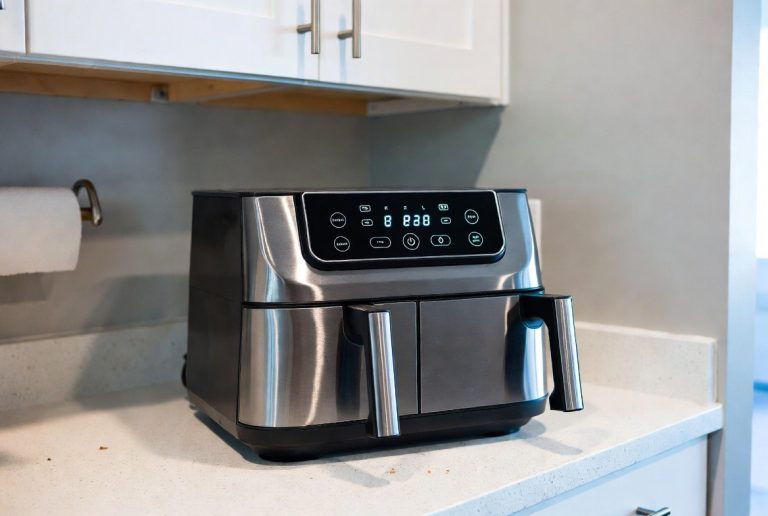
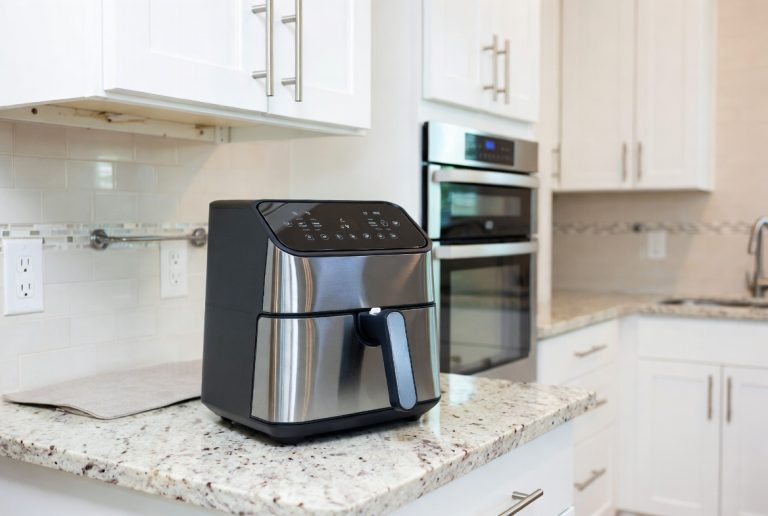
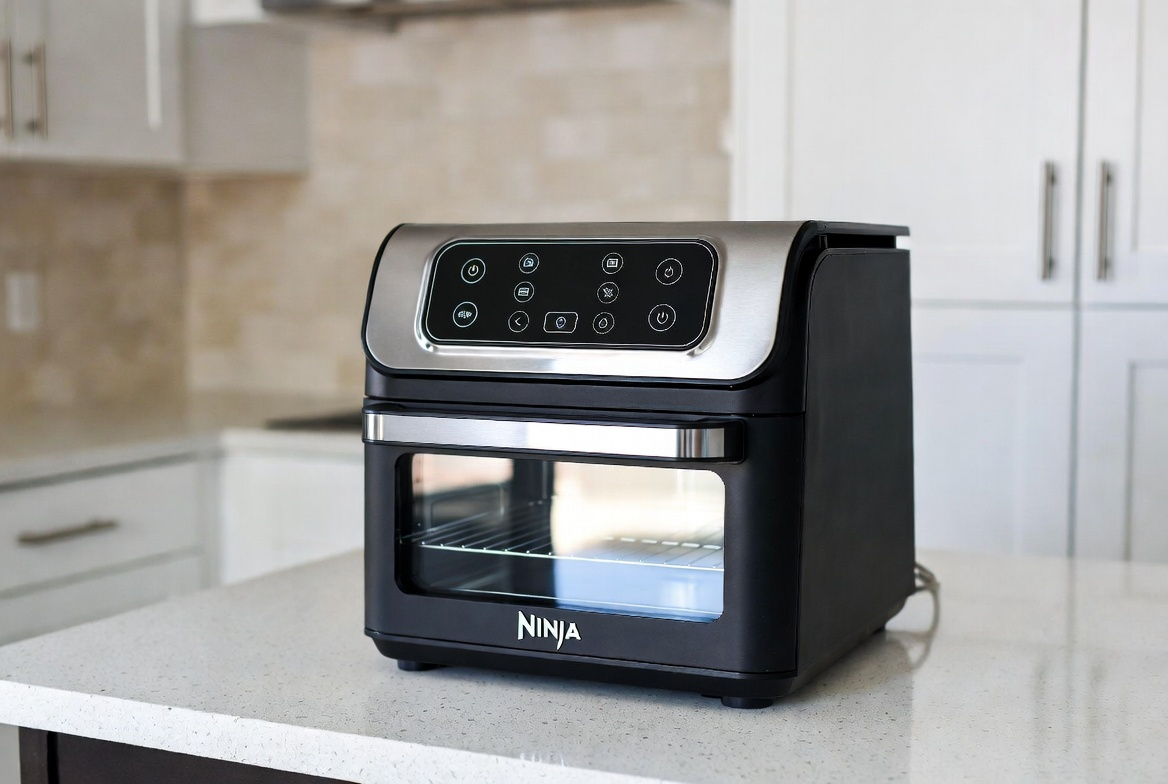
Air fryers come in various sizes, from compact models to larger basket versions. Many are more compact than microwave convection ovens, though larger air fryers can take up significant space. The advantage is that they’re usually taller than wide, which works well on counters with limited horizontal space.
Aesthetic Considerations
Modern air fryers come in sleek designs with stainless steel finishes that look contemporary on most countertops. Microwave convection ovens tend to have a more utilitarian appearance. This matters if you care about your kitchen’s visual appeal.
Versatility in the Kitchen
How many different things can each appliance actually do? This determines whether it becomes indispensable or just another gadget.
What a Microwave Convection Oven Can Do
- Reheat leftovers quickly
- Defrost frozen items
- Cook rice and grains
- Make popcorn
- Bake small cakes and brownies
- Roast vegetables with the convection function
- Cook casseroles
- Steam fish and vegetables
What an Air Fryer Can Do
- Fry chicken, fish, and meat
- Cook frozen foods
- Roast vegetables
- Bake biscuits, cookies, and pastries
- Reheat pizza and fried foods
- Dehydrate fruits and vegetables
- Make homemade donuts
- Cook eggs and breakfast items
- Grill or char vegetables
Versatility Winner: Air Fryer
Air fryers can do more diverse things, especially when it comes to achieving that desirable crispy texture. However, microwave convection ovens are better at defrosting and have a slight edge for certain baking applications.
Price Point Comparison
Your budget matters, and both appliances come at different price points.
Microwave Convection Oven Pricing
These typically range from $300 to $800, depending on brand and features. Higher-end models with smart technology and larger capacities push toward the upper end of this range. Budget options start around $200 to $300.
Air Fryer Pricing
Air fryers are generally more affordable, with quality models available between $80 to $300. You can find excellent air fryers for under $150, while premium brands might cost up to $400 or more.
Price Winner: Air Fryer
If budget is your primary concern, air fryers offer better value. You get excellent performance without spending a fortune.
Ease of Use and Cleaning
An appliance is only useful if you actually want to use it. Complicated operation and tedious cleaning can relegate a device to the back of the cabinet.
Using a Microwave Convection Oven
These are straightforward if you’ve used a microwave before. You punch in time and power level for microwave mode, or set temperature and time for convection mode. The learning curve is minimal.
Using an Air Fryer
Air fryers are even simpler. Set the temperature, set the timer, and go. Most models have a dial or digital buttons. There’s virtually no learning curve. Some premium models have preset programs for different foods, which is convenient.
Cleaning Microwave Convection Ovens
Cleaning the interior can be tedious. The turntable is removable, but the walls need regular wiping. Spills can bake on if not cleaned promptly. The convection function can distribute grease and splatter more widely.
Cleaning Air Fryers
This is one of the biggest advantages of air fryers. Most baskets are removable and dishwasher safe. Even hand-washing is quick because the surface is non-stick. You’ll spend significantly less time scrubbing.
Ease of Use and Cleaning Winner: Air Fryer
Air fryers win decisively in this category. They’re simpler to operate and dramatically easier to clean.
Health Benefits Breakdown
Both appliances are marketed as healthy cooking options. Let’s separate fact from marketing hype.
Health Benefits of Microwave Convection Ovens
The microwave function preserves nutrients well because the cooking time is short. However, the microwave doesn’t require any oil, while the convection function also cooks without adding fat. These are genuine health advantages for people watching their oil intake.
Health Benefits of Air Fryers
Air fryers achieve crispy textures with little to no oil. You can cook foods that would traditionally require deep frying in a fraction of the oil or even oil-free. The rapid cooking also preserves some heat-sensitive vitamins better than slower cooking methods.
Comparative Health Analysis
Both are healthier than traditional deep frying. Both are healthier than stovetop cooking with added oils. The difference between them in terms of health is marginal—it comes down to cooking results. If you’re more likely to use an air fryer because the food tastes better, you’ll stick with it, making it healthier in practical terms.
Noise Levels and Kitchen Environment
Does noise matter when you’re cooking? If you live in an apartment or have a sleeping household, it absolutely does.
Microwave Convection Oven Noise
These are remarkably quiet. The microwave function is nearly silent except for the turntable spinning. The convection function makes a slight humming sound from the fan, but it’s minimal.
![5 Best Air Fryer for $50 [In 2026]](https://homeunderstandable.com/wp-content/uploads/2026/03/5-Best-Air-Fryer-for-50.jpg)