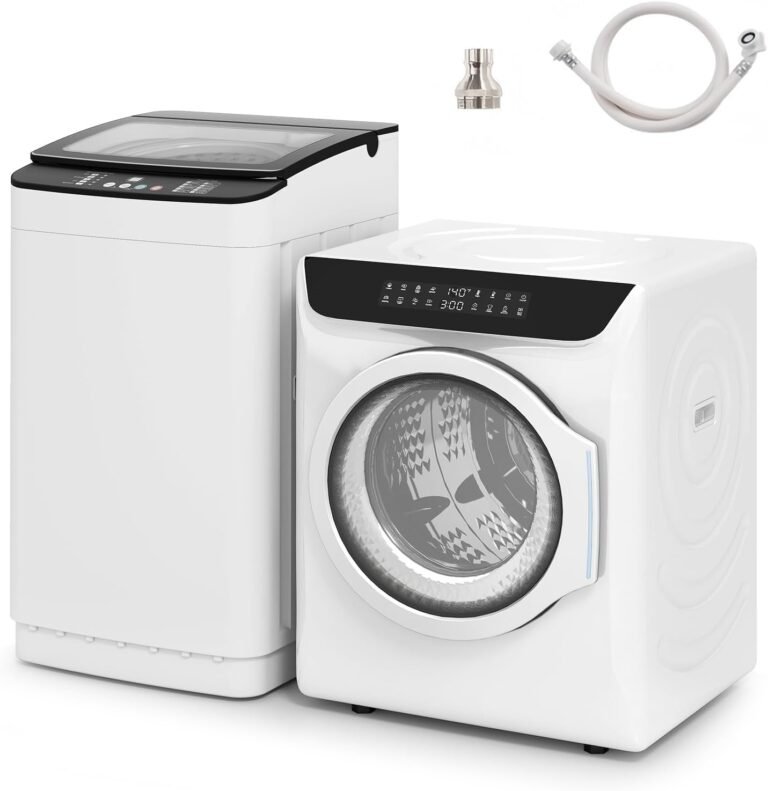
Heat Pump Dryers: What They Are and How They Work
A clothes dryer heat pump is a dryer that reuses hot air instead of venting it outside, making it way more energy-efficient than a traditional dryer. Think of it like a recycling system for heat, not a machine that just blows it away. We found this technology is a great way to save money and protect your clothes.
You might have seen “heat pump” on air conditioners or fridges, and this works on a similar principle. The key is that it’s a closed-loop system that warms your clothes at a lower temperature. Because it doesn’t need a vent, it offers flexible installation options anywhere in your home. Many experts say this gentler process also causes less wear and tear on your fabrics.
- A heat pump dryer is a ventless dryer that reuses hot air instead of exhausting it.
- They typically cost more upfront but are much cheaper to run each month.
- Most models are gentler on your clothes, reducing shrinkage and fabric damage.
- They don’t require external venting, giving you more freedom on where to place the appliance.
- It’s a plug-and-play 120V appliance in many cases, but you should always check your space.
Below, we break down exactly how this machine works and why it might be the perfect fit for your laundry room.
Understanding the Heat Pump Dryer Basics
A heat pump dryer works differently than your old vented model. Instead of pushing hot, wet air outside, it captures that air and recycles it. This simple change makes a huge difference in how much energy you use every week.
You can think of it like a dehumidifier paired with a heater, all wrapped in one drum. The machine pulls in room air, heats it up, and sends it through your tumbling clothes. Then, that damp air passes over a cold coil inside the unit. The moisture condenses into water and drains away, and the now-dry air gets reheated for another pass.
This closed-loop process means almost no heat escapes the machine. We found that this design is what drives the big energy savings you hear about.
How the Closed-Loop System Operates
The magic happens inside a sealed circuit with refrigerant. Your compressor squeezes the refrigerant into a hot gas, which warms the air in the drum. After the air picks up moisture from your laundry, it flows over the evaporator coil.
That coil is very cold, so the water vapor turns back into liquid. This water collects in a tank you empty manually or in a drain hose you connect to a floor drain. Once the air loses its moisture, it passes back over the hot coil and starts the cycle again.
Because the air never leaves the machine, the room around the dryer stays cooler and less humid. We found that this also means no bulky metal vent hose running through your wall.
Where Does the Water Go?
You have two main choices for getting rid of the collected water. Most machines come with a removable reservoir that slides out from the front or top. You will need to pour this out after every one or two loads, depending on the size.
Or, you can attach a small drain hose that runs from the unit to a nearby floor drain or laundry sink. This is perfect for a permanent laundry setup because you never have to think about the water tank again.
Why Energy Efficiency Is a Big Win
This is the core reason folks switch to heat pump technology. A standard electric dryer uses a heating element that gets extremely hot and then blows that heat right out the vent. That is a lot of wasted energy.
Heat pump dryers reuse that same heat over and over, which cuts electricity use dramatically. Research and found data from ENERGY STAR shows these models use about 60 to 70 percent less energy than conventional dryers. That is not a tiny difference; it is a serious drop in your monthly utility bill.
Over a year, this can save you around 100 to 150 dollars, depending on how often you do laundry and your local electricity rates. We found that the savings add up fast for big households that run multiple loads every day.
Comparing Energy Use in Real Terms
Think about this simple math. If you dry five loads a week, a regular dryer might use around 50 kilowatt-hours per month just for that task. A heat pump dryer might use only 15 to 20 kilowatt-hours for the exact same workload.
That difference is like switching from a gas-guzzling SUV to a hybrid for your daily commute. You still get to the same destination, but the trip costs you a whole lot less.
The Gentle Drying Advantage on Your Fabrics
Heat pump dryers run at lower peak temperatures than traditional machines. Most conventional dryers cycle between 135 and 150 degrees Fahrenheit. Heat pump models typically stay in the 110 to 120 degree range.
That might sound like a small difference, but it matters a lot for your clothes. High heat is what causes shrinkage, color fading, and damage to elastic fibers. By keeping things cooler, your favorite t-shirts and jeans stay looking newer for much longer.
Many experts say that lower heat also reduces wrinkles. Your clothes come out less creased, which means less ironing time for you. That is a quiet little bonus that you will appreciate on a busy morning.
What Fabrics Benefit the Most
Delicate items like silk blouses, workout gear, and wool sweaters do exceptionally well in a heat pump dryer. The gentle tumbling action and lower temperatures are far safer than a blast of intense hot air.
You will still need to check care labels for the “tumble dry low” instruction on some items. But overall, you gain more flexibility in what you can safely toss in the machine.
Ventless Design Opens Up Placement Options
Here is where things get really convenient. Because a heat pump dryer does not need to duct air outside, you are not stuck with a laundry room that has a vent in the wall. That single feature changes everything about where you can put the machine.
You can install it in a closet, a hallway, an apartment bathroom, or even under a counter. As long as you have access to a standard 120V outlet and enough floor space, you are good to go.
This is a huge deal for people living in condos, apartments, or older homes without existing dryer vents. We found that many renters also appreciate this because they can take the dryer with them when they move, without patching holes in a wall.
Plug-and-Play Convenience for Many Homes
Most heat pump dryers run on a regular 120-volt household circuit. That means you can simply plug them into a standard outlet, just like you would a toaster or a space heater. No electrician needed for a special 240V line.
Even better, you can stack a matching heat pump washer dryer combo unit in a tight vertical space. This is ideal for small laundry closets where floor space is at a premium.
Upfront Costs and Long-Term Payoff
Let us be honest with you. The sticker price on a heat pump dryer is higher than a conventional unit. You might spend anywhere from 800 to 1,500 dollars upfront, compared to 400 to 700 dollars for a standard model.
But here is what we found in the math. The lower operating cost pays you back over time. In a household with average dryer usage, the payback period is usually between two and four years. After that, you are just pocketing the monthly savings.
Many experts say that if you factor in the longer lifespan of your clothes, the total value is even stronger. You are not just saving energy; you are reducing how often you need to replace damaged garments.
A Quick Cost Comparison Table
| Feature | Traditional Vented Dryer | Heat Pump Dryer |
|---|---|---|
| Average upfront cost | 400 – 700 dollars | 800 – 1,500 dollars |
| Annual energy cost | Approximately 150 dollars | Approximately 50 dollars |
| Installation requirements | Needs vent duct and 240V outlet | Needs standard 120V outlet only |
| Heat exposure to clothes | High, up to 150 degrees | Lower, around 120 degrees |
Potential Drawbacks You Should Know
We like to give you a balanced view, so here is the honest side. Heat pump dryers take longer to dry a load than traditional ones. A standard dryer might finish a bath towel load in about 50 minutes. A heat pump model can take 70 to 90 minutes.
That slower drying time is not a flaw; it is just a trade-off for the energy savings. You will need to plan ahead a little more, especially if you are used to running a load right before bed.
Also, the units are slightly heavier and more complex inside, so repairs can cost more if something breaks. Many experts say that with proper maintenance and regular cleaning of the filters, these machines last a long time without major issues.
Maintenance That Keeps It Running Smoothly
You have two filters to clean on most models. The first is the standard lint filter you pull out after every load. The second is a secondary filter that catches fine dust from the condenser coils.
We found that cleaning this secondary filter every month or two makes a big difference. When it gets clogged, airflow drops, and your drying time gets even longer.
Perfect Scenarios for Choosing a Heat Pump Dryer
This machine is not for everyone, so let us help you figure out if it fits your life. You are an ideal candidate if you live in a space without a dryer vent. That alone makes the choice pretty obvious.
You also want one if you care a lot about energy bills or reducing your carbon footprint. The efficiency gains are the best you can get from any residential dryer technology right now.
If you dry a lot of delicate fabrics, like workout clothes, silks, or wools, the lower heat will keep those items in better shape. That is a benefit you will notice within the first few weeks of ownership.
Things to Check Before You Buy
Measure your space carefully. These units are typically about 27 inches wide, similar to regular dryers, but they are a bit deeper. Make sure you have room for the door to swing open completely.
Check the power cord situation. While they use 120V, the amperage draw might be higher than some older circuits can handle. A dedicated 15-amp circuit is usually recommended.
Getting the Most Out of Your New Dryer
Once you plug in your heat pump dryer, there are a few habits to adopt. Always clean the main lint screen after every single load. This is non-negotiable for proper airflow and safety.
Do not overload the drum. Air needs room to circulate freely around each piece of clothing. A loosely packed load dries faster and more evenly than a jam-packed one.
Empty the water reservoir when you see the indicator light. If you let it fill up completely, the machine will automatically stop the cycle until you drain it.
A Simple Pre-Installation Checklist
Before you schedule a delivery or drag the machine home, run through this quick list to avoid surprises:
- Measure the width and depth of your planned installation space.
- Confirm you have a 120V outlet within six feet of the machine location.
- Decide on water drainage method: internal tank or a floor drain hose.
- Check that the floor is level to prevent excess vibration.
- Make sure the room temperature stays above 50 degrees for best performance.
- Leave a few inches of clearance on all sides for airflow.
Take your time with these steps, and your dryer will thank you. A little planning now saves you from a headache later.
Conclusion
Choosing a clothes dryer heat pump comes down to what matters most in your home. You get serious energy savings, gentler care for your fabrics, and the freedom to place the unit almost anywhere. The upfront price is higher, but the monthly savings and longer-lasting clothes make it a smart investment for many households.
We found that this technology pays for itself in just a few years while making laundry day less stressful. If you are tired of high utility bills or you live in a space without a vent, this is your best option. Measure your space, check your outlet, and pick a model that fits your budget. Your clothes and your wallet will thank you.
Frequently Asked Questions
Can a heat pump dryer be vented outside?
No, you do not need to vent a heat pump dryer outside. It uses a closed-loop system that recycles the air internally. The moisture collects in a water tank or drains through a hose.
Are heat pump dryers worth the higher price tag?
We found that they are worth it for most people who do laundry regularly. The energy savings of 60 to 70 percent typically cover the price difference within two to four years. Plus, your clothes last longer because the lower heat is gentler on fabrics.
Do heat pump dryers require special electrical outlets?
Most models plug into a standard 120V household outlet, just like a regular appliance. You might need a dedicated 15-amp circuit for best performance. Check your breaker panel and the manual before installation.
How long does a heat pump dryer take to dry clothes?
Expect drying times to be longer than a traditional vented dryer. A typical load can take 70 to 90 minutes compared to about 50 minutes on a standard unit. That extra time is the trade-off for using so much less energy.
Can you put a heat pump dryer in a small apartment or closet?
Yes, that is one of the biggest advantages of this type of dryer. Since there is no vent pipe, you can install it in tight spaces like a closet, hallway, or under a counter. Just make sure you leave a few inches of clearance for airflow around the unit.