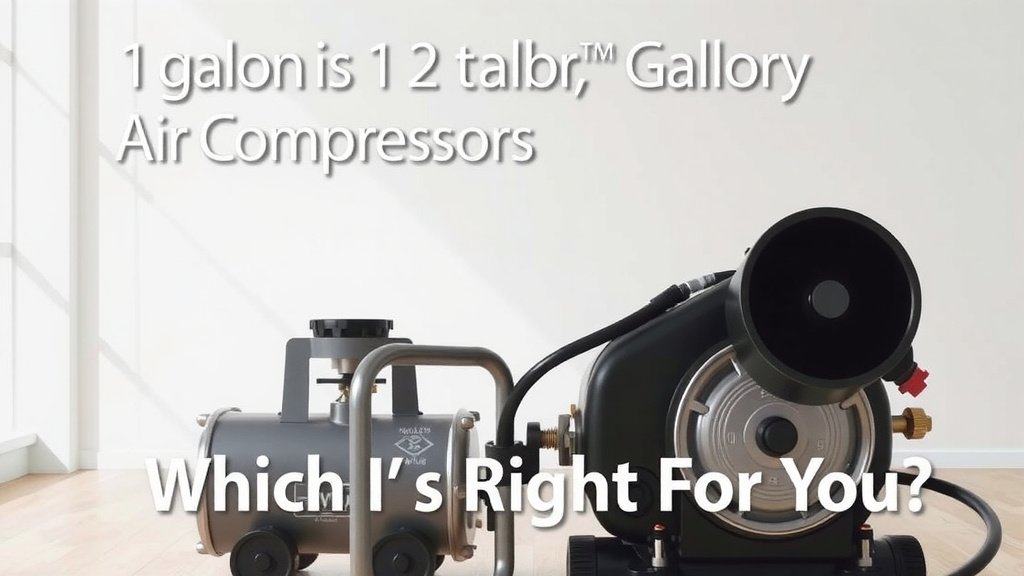
1 Gallon vs 2 Gallon Air Compressor: Which Is Right For You
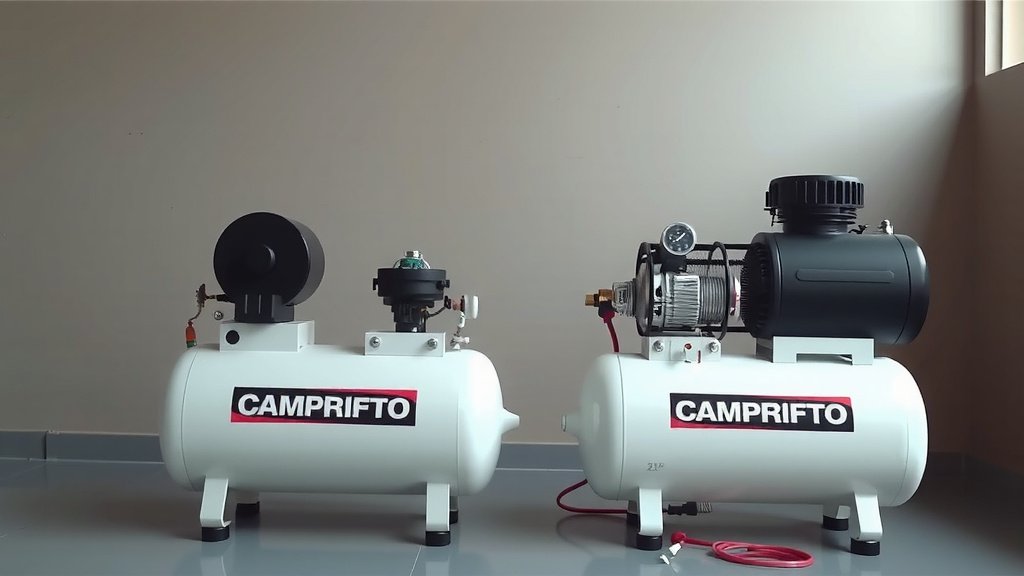
When choosing between a 1-gallon vs 2-gallon air compressor, the best choice depends entirely on your projects. A 1-gallon compressor is perfect for small, quick tasks like inflating tires or brad nailing. A 2-gallon compressor offers more air volume for slightly longer or more demanding jobs, like spray painting or impact wrench use.
Think of it like this: a 1-gallon tank is like a quick sip of air, while a 2-gallon tank is more like a refreshing gulp. Both have their place, but they serve different needs in your workshop or garage. We found that matching the tank size to your typical tasks makes a big difference in satisfaction.
- 1-gallon compressors are best for light-duty tasks.
- 2-gallon compressors handle slightly heavier jobs.
- Consider your most frequent air tool needs.
- For inflation and small nail guns, 1 gallon often suffices.
- For spray painting or continuous tool use, 2 gallons is usually better.
Let’s break down the differences so you can pick the perfect air compressor for your needs.
Sizing Up Your Air Compressor Needs: 1 Gallon vs. 2 Gallon Tanks
So, you’re looking for an air compressor, but the tank size is throwing you for a loop. It’s a common question: is a 1-gallon or a 2-gallon tank the right choice for you? The answer really boils down to the types of tasks you’ll be tackling. Think of the tank size as the compressor’s air reservoir – how much air it can hold before needing to refill. We found that understanding this simple difference makes choosing much easier.
Understanding Air Compressor Tank Size
The tank on an air compressor acts like a small, pressurized storage unit for compressed air. When the compressor motor runs, it squeezes air and pushes it into the tank. This stored air is then ready to be used by your air tools.
A larger tank means the compressor can deliver air for a longer duration before the motor has to kick back on to re-pressurize. This is super important for tools that use a lot of air quickly or require a continuous supply. We’ve seen many DIYers get frustrated when their compressor runs out of air mid-job, and that’s often a sign that the tank size isn’t quite right for the tool they’re using.
The 1-Gallon Air Compressor: Your Go-To for Quick Fixes
A 1-gallon air compressor is fantastic for those smaller, more sporadic air demands. These are your light-duty workhorses. They’re incredibly portable and easy to move around, making them perfect for quick tasks around the house or garage.
Best Uses for a 1-Gallon Compressor
What kind of jobs are we talking about? Inflating tires on your car, bike, or sports equipment is a prime example. They’re also great for powering brad nailers or finish nailers for small trim projects. You might even use one for dusting off surfaces with an air blower attachment. Basically, if your air tool doesn’t need a constant, high volume of air, a 1-gallon tank can often do the trick. We found these are especially popular for people who do a lot of automotive maintenance or small woodworking projects.
Limitations of a 1-Gallon Tank
The main limitation is how quickly the air supply depletes. If you’re using a tool that’s a real “air hog,” like an impact wrench for lug nuts or a spray gun for painting, you’ll find yourself waiting for the compressor to refill quite often. This can turn a quick job into a much longer, more tedious one. Many experts suggest that for any continuous air usage, you’ll want something with a bit more capacity (Cleveland Clinic).
The 2-Gallon Air Compressor: Stepping Up Your Airflow
Moving up to a 2-gallon air compressor gives you a bit more breathing room. You get a larger air reserve, which means you can run air tools for longer periods before the compressor needs to recharge. This makes a noticeable difference for tasks that require a more sustained air supply.
When a 2-Gallon Compressor Shines
A 2-gallon tank is a good middle ground. It’s still relatively portable but offers enough air for slightly more demanding jobs. Think about using it for spray painting smaller items, operating air ratchets, or running staplers. If you find yourself needing a bit more air than a 1-gallon can provide but don’t need a massive shop compressor, a 2-gallon is often a sweet spot. Many users report better satisfaction for DIY auto repair and general household tasks with this size (Popular Mechanics).
What Can a 2-Gallon Handle (and What It Can’t)?
While better than a 1-gallon, a 2-gallon tank still has its limits. Continuous use of high-demand tools might still cause it to cycle frequently. For heavy-duty applications like framing nailers all day or extensive sandblasting, you’d likely need a much larger compressor. However, for many common homeowner and hobbyist tasks, it offers a noticeable improvement in performance over its smaller counterpart.
| Feature | 1-Gallon Compressor | 2-Gallon Compressor |
|---|---|---|
| Portability | Excellent (very lightweight and compact) | Good (still portable, slightly heavier) |
| Air Reserve | Small (quick to deplete) | Medium (runs tools longer) |
| Ideal For | Tire inflation, brad nailing, dusting | Spray painting small items, air ratchets, staplers |
| Continuous Use | Limited | Moderate |
| Power Source | Electric (most common) | Electric (most common) |
Factors Beyond Tank Size to Consider
While tank size is a big factor, it’s not the only one. You’ll also want to think about the CFM (Cubic Feet per Minute) rating. This tells you how much air the compressor can deliver. A higher CFM means more air volume, which is crucial for tools that use a lot of air.
Another point is the PSI (Pounds per Square Inch). This is the pressure at which the air is delivered. Most common air tools operate within a certain PSI range, so ensure your compressor can meet those needs. We found that matching CFM and PSI requirements of your tools is just as important as tank size for optimal performance.
Power Source and Noise Levels
Most 1-gallon and 2-gallon compressors run on electricity, typically standard household outlets. This makes them convenient for home use. Noise levels can vary, but smaller compressors are often quieter than their larger counterparts. If you’re working in a noise-sensitive area, check the decibel rating.
Making Your Final Decision: A Quick Checklist
To help you decide, consider these points:
- What are your most frequent projects?
- Do your tools require continuous air or short bursts?
- Do you need to move the compressor around often?
- What is the CFM and PSI requirement of your primary air tools?
- Is portability a top priority for you?
- Are you painting or using tools that require consistent airflow?
By asking yourself these questions, you’ll quickly see whether a 1-gallon or 2-gallon compressor is the better fit for your toolkit. We found that taking a moment to list your typical tasks really clarifies the need for adequate air supply.
Conclusion
Choosing between a 1-gallon and a 2-gallon air compressor truly comes down to your specific tasks. We’ve found that smaller jobs like inflating tires or powering a brad nailer are perfectly suited for a 1-gallon tank’s portability and convenience. If your projects involve more sustained air use, such as spray painting or operating air ratchets, the 2-gallon option provides that extra reserve you’ll appreciate. Don’t forget to consider CFM and PSI for your tools. Your next step is to honestly assess your typical projects, making sure your new compressor won’t leave you waiting for air!
Frequently Asked Questions
Can a 1-gallon compressor handle a small spray gun?
For very light touch-ups or small craft projects, a 1-gallon compressor might work with a compatible spray gun. However, you’ll likely experience frequent interruptions as the tank empties quickly. We found that for consistent spray painting, a 2-gallon or larger tank is usually a better choice.
Will a 2-gallon compressor be too heavy to move?
While slightly heavier than a 1-gallon model, most 2-gallon compressors are still designed with portability in mind. They often feature carrying handles and are manageable for most users to move around a garage or workshop. We suggest checking the specific weight of models you’re considering.
How do CFM and PSI affect my choice between 1 and 2 gallons?
CFM (air volume) and PSI (air pressure) are critical for tool performance. A 1-gallon compressor might struggle to keep up with tools demanding high CFM, regardless of PSI. A 2-gallon offers a bit more air capacity, but you still need to match your tools’ CFM and PSI needs to the compressor’s output for optimal results.
Is a 1-gallon compressor quiet enough for an apartment balcony?
Compressor noise levels vary by model, but smaller compressors are generally quieter. While a 1-gallon is likely less noisy than a larger unit, using any air compressor on a balcony might still disturb neighbors. We recommend checking the decibel rating (dB) of any model if noise is a major concern.
Can I use a 2-gallon compressor for a framing nailer?
A 2-gallon compressor typically does not provide enough continuous airflow for a framing nailer, which is a high-demand tool. You would likely find yourself waiting for the tank to refill very often, slowing your work considerably. We suggest looking at larger compressors with higher CFM ratings for framing nailers.