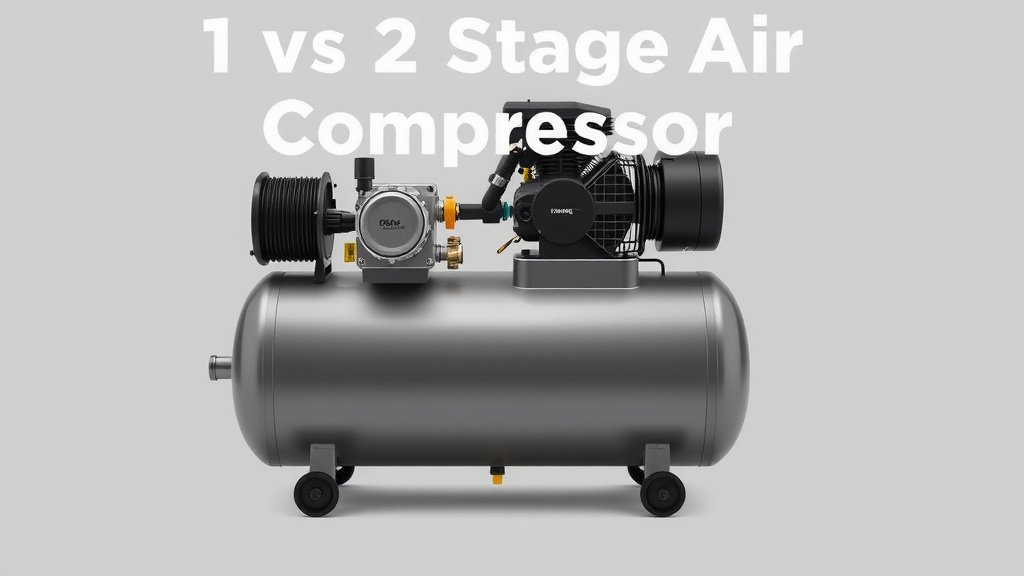
1 vs 2 Stage Air Compressor: Which is Right for You
Choosing between a 1-stage and a 2-stage air compressor depends on your specific needs, with 2-stage models offering more power and consistency for demanding tasks. A 1-stage compressor is great for light-duty jobs, while a 2-stage compressor excels where you need a steady supply of high-pressure air for extended periods.
Think of it like this: your tools have different appetites for air. If you’re just topping off tires or running a small nail gun, a 1-stage will likely do the trick. But if you’re powering multiple tools, sandblasting, or using tools that need a lot of air consistently, you’ll appreciate the extra oomph and reliable performance of a 2-stage compressor. We found that understanding your tool’s air demands is key to making the right choice.
- A 1-stage compressor is best for lighter, intermittent tasks.
- A 2-stage compressor delivers more power and consistent air for heavy-duty use.
- Consider the CFM (Cubic Feet per Minute) and PSI (Pounds per Square Inch) requirements of your tools.
- 2-stage compressors are generally more efficient for continuous, high-demand applications.
Ready to figure out which type of air compressor will best suit your workshop? Let’s break down the differences and help you make the most informed decision.
Understanding the Difference Between 1-Stage and 2-Stage Air Compressors
When you’re looking for an air compressor, you’ll quickly notice there are two main types: 1-stage and 2-stage. The one you choose really depends on what you plan to do with it. Think of them as different tools for different jobs, each with its own strengths.
How a 1-Stage Air Compressor Works
A 1-stage compressor is pretty straightforward. It draws air in, compresses it to a certain pressure in a single stroke, and then sends that air out to your tools. It’s like a simple pump that does one job and does it well for lighter tasks. We found that these are often the go-to choice for hobbyists or for shops that don’t need a constant, high-pressure air supply.
Key Characteristics of 1-Stage Compressors
- Simpler Design: Fewer moving parts generally mean less maintenance.
- Lower Pressure Output: They typically max out around 125 PSI.
- Best for Intermittent Use: Great for tasks where you don’t need air flowing non-stop.
How a 2-Stage Air Compressor Works
A 2-stage compressor adds a bit more finesse to the process. It takes air and compresses it in the first cylinder, then sends it to a second, smaller cylinder for a second round of compression. This two-step process increases the air pressure and also helps cool it down. We found that this results in a more consistent and powerful air output.
Why the Extra Stage Matters
This second stage is where the magic happens for demanding jobs. It means you get a higher PSI output, often reaching 175 PSI or more. Plus, the cooling between stages makes the compressor more efficient. Many experts say this efficiency is key for businesses that rely on air tools all day long (U.S. Department of Energy).
Comparing Performance: CFM and PSI
When you’re comparing air compressors, two numbers are super important: CFM and PSI. Think of them as the “how much” and “how hard” of your air supply. Getting these right is critical for your tools to perform at their best.
What is PSI?
PSI stands for Pounds per Square Inch. It tells you the maximum pressure the compressor can deliver. Higher PSI means more force. For example, a small air brad nailer might only need 90 PSI, but a sandblaster could require 150 PSI or more. A 1-stage compressor usually tops out around 100-125 PSI, while a 2-stage can push much higher, often 150-175 PSI.
What is CFM?
CFM means Cubic Feet per Minute. This is the volume of air the compressor can supply. It’s like the flow rate of your water faucet. The more CFM your compressor can deliver, the more air-hungry tools you can run at the same time, or the longer you can run a tool that uses a lot of air without the pressure dropping.
CFM Needs for Common Tools
Different tools have different appetites. You need to match your compressor’s CFM output to the highest CFM requirement of any tool you plan to use. Many guidelines suggest adding a buffer of 30-50% to the tool’s CFM requirement to ensure consistent performance (National Electrical Manufacturers Association).
| Tool | Approximate CFM Needed |
|---|---|
| Brad Nailer | 0.5 – 2 CFM |
| Impact Wrench | 5 – 7 CFM |
| Paint Sprayer (HVLP) | 8 – 12 CFM |
| Air Hammer | 5 – 10 CFM |
| Sandblaster | 15 – 30+ CFM |
1-Stage vs. 2-Stage: CFM and PSI in Practice
Generally, 1-stage compressors are designed for lower CFM needs, often in the 2-10 CFM range. They’re great for a single, less demanding tool. 2-stage compressors, on the other hand, are built for higher CFM demands, frequently starting at 10 CFM and going up from there. This makes them ideal for running multiple tools or very air-intensive equipment simultaneously.
Efficiency and Duty Cycle: What’s the Difference?
Efficiency and duty cycle are important terms. They help you understand how hard your compressor can work and for how long. Getting a handle on these will save you headaches later on.
Compressor Efficiency Explained
A more efficient compressor uses less electricity to produce the same amount of compressed air. We found that 2-stage compressors often have an edge here. Because they compress air in two stages with cooling in between, they can reach higher pressures more effectively without wasting as much energy as a 1-stage trying to do the same thing.
Understanding Duty Cycle
Duty cycle is a rating that tells you how long a compressor can run within a given time period before needing to cool down. It’s usually expressed as a percentage. For instance, a 50% duty cycle means the compressor can run for 5 minutes out of every 10 minutes. A 75% duty cycle means it can run for 7.5 minutes out of 10.
Which Duty Cycle Do You Need?
- 1-Stage Compressors: Often have lower duty cycles, maybe 50-75%. They are meant for shorter bursts of work.
- 2-Stage Compressors: Typically boast higher duty cycles, often 75-100%. This means they can run almost continuously, which is crucial for heavy-duty applications.
When to Choose a 1-Stage Compressor
So, when does a 1-stage compressor make the most sense for your setup? We found that these are excellent for lighter, DIY tasks and occasional use. If you’re just starting out or your air tool needs are modest, this is likely your best bet.
Ideal Use Cases for 1-Stage
- Inflating tires or sports equipment.
- Running small air tools like brad nailers or staplers.
- Light-duty automotive tasks, like changing a tire.
- Basic airbrushing or cleaning with an air duster.
If your tools don’t demand a lot of air or you only use them for short periods, a 1-stage unit will probably serve you well. It’s a cost-effective entry point into the world of compressed air.
When to Choose a 2-Stage Compressor
You’ll want to look at a 2-stage compressor when your projects get more serious. If you plan on using your compressor frequently or for tasks that require a consistent, high-pressure air supply, this is the way to go. Many professionals lean towards 2-stage for their reliability and power.
Ideal Use Cases for 2-Stage
- Running multiple air tools simultaneously.
- Powering high-demand tools like impact wrenches, sanders, or grinders.
- Continuous painting or spraying applications.
- Automotive repair shops and industrial settings.
- Any job requiring sustained airflow at high pressure.
The extra power and consistent output of a 2-stage compressor mean your tools will perform better and you won’t have to wait for the tank to refill as often. This can significantly speed up your work.
Making Your Final Decision: A Quick Checklist
Choosing the right compressor boils down to understanding your needs. Let’s quickly recap with a checklist. Ask yourself these questions:
- Do I need to run multiple tools at once?
- Are my tools high-demand or low-demand for air?
- How often will I be using the compressor?
- What is the highest PSI and CFM my tools require?
- What’s my budget for this purchase?
- Do I need a portable or stationary unit?
By answering these, you’ll get a clearer picture of whether a 1-stage or 2-stage compressor is the better fit for your workshop or garage. We found that clarity on your tool’s requirements is the biggest step towards making the right choice.
Conclusion
You’ve learned that the main difference between 1-stage and 2-stage air compressors comes down to power and consistency. A 1-stage unit is perfect for your lighter, less frequent tasks, offering a simpler, more budget-friendly solution. For those heavy-duty projects or when you need a steady, high-pressure air supply, a 2-stage compressor is the clear winner. It handles demanding tools and continuous use with greater efficiency.
Your next step is to assess your tool’s CFM and PSI needs carefully. Use that information to choose the compressor that will keep your tools running at their best, making your projects smoother and more efficient. Happy compressing!
Frequently Asked Questions
Can a 1-stage air compressor power an impact wrench?
Generally, a 1-stage compressor might struggle with an impact wrench, especially if you’re using it continuously. Impact wrenches typically require higher CFM and PSI than most 1-stage units can consistently deliver. You might find it works for very short bursts, but you’ll likely experience pressure drops.
Is a 2-stage compressor overkill for a home garage?
It depends on your projects. If you only do light DIY tasks like inflating tires or occasional nailing, a 2-stage might be more than you need. However, if you plan on using higher-demand tools like grinders or sanders regularly, or want the reliability for professional-level work, a 2-stage is a smart investment.
How often should I drain the tank on my air compressor?
You should drain your air compressor tank regularly, ideally after each use. This process removes accumulated moisture, which can cause rust and damage the tank over time. For 2-stage compressors used frequently, checking and draining daily is a good practice.
What does a 75% duty cycle mean for a 2-stage compressor?
A 75% duty cycle on a 2-stage compressor means it can run for 7.5 minutes out of every 10 minutes. This higher rating indicates it’s built for more demanding, longer work sessions compared to a compressor with a lower duty cycle. You can expect reliable performance for extended periods.
Can I use a 1-stage compressor for painting with a spray gun?
For most basic spray painting, a 1-stage compressor can work if the spray gun has low CFM requirements. However, if you’re using an HVLP (High Volume, Low Pressure) spray gun or require a very consistent finish, a 2-stage compressor is usually recommended. The higher and more stable CFM output ensures a better paint application.