
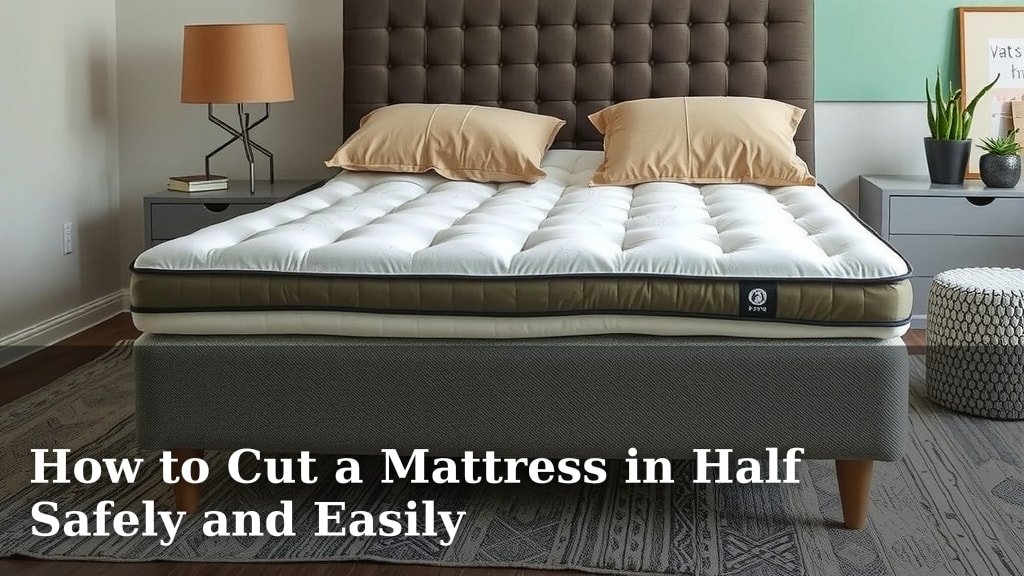
How to Cut a Mattress in Half Safely and Easily
Yes, you can cut a mattress in half, but it’s a **messy job** that requires the right tools and approach. You’ll need a **sharp, long blade** and a plan to manage the foam and fabric. This guide will help you do it safely and effectively.
Cutting a mattress is often done for **practical reasons**, like fitting it into a smaller space or disposal. While it might seem straightforward, the process can get **surprisingly dusty**. Understanding the materials inside your mattress is key to a successful cut.
- Gather sharp cutting tools.
- Protect your workspace from debris.
- Cut slowly and steadily.
- Dispose of the pieces properly.
- Consider the mattress type first.
Ready to tackle this project? Let’s walk through exactly how to cut your mattress in half, step by step.
Getting Your Mattress Ready for a Cut
So, you’ve decided to cut your mattress in half. That’s a **bold move**! Before you grab any old knife, let’s make sure you’re prepared. This isn’t like slicing a loaf of bread. You’ll need the right tools and a good understanding of what you’re cutting through. Getting this right means less mess and a cleaner result.
Understanding Your Mattress’s Layers
Most mattresses have several layers. Knowing these helps you choose the best cutting tool. You’ll typically find a comfort layer on top. This could be memory foam, latex, or polyfoam. Below that is usually a support core. This is often made of innersprings or denser foam. Some mattresses also have a fire barrier and a cover. We found that understanding these layers can prevent you from hitting a spring unexpectedly (Sleep Foundation).
Common Mattress Materials
- Foam Mattresses: These are generally easier to cut. The foam is uniform.
- Innerspring Mattresses: These have metal coils. You’ll need to cut through springs and foam.
- Hybrid Mattresses: These combine coils and foam layers. They can be trickier.
Gathering Your Tools and Supplies
Having the right gear makes a huge difference. You don’t want to struggle with a dull blade. It can make the job harder and more dangerous. Here’s what you’ll need to gather before you start.
Essential Cutting Tools
The most important tool is your **cutting instrument**. A long, sharp blade is key. Think about what you’ll be cutting. For most foam mattresses, an electric carving knife or a long utility knife works well. If you have a mattress with springs, a reciprocating saw (like a Sawzall) might be necessary. Many DIY guides suggest a **serrated bread knife** for softer foams if you don’t have power tools, but it will take longer.
Safety Gear and Workspace Protection
This job can get **dusty**, especially with foam. You’ll want to protect yourself and your surroundings. Wear gloves to protect your hands. Safety glasses are a must to keep foam particles out of your eyes. A dust mask will help you breathe easier. We found that laying down a large tarp or old sheets will catch most of the debris. Doing this outside or in a garage is ideal.
The Cutting Process: Step-by-Step
Now that you have your tools and have prepped your space, it’s time to make the cut. Go slow and steady. Rushing this can lead to mistakes and a messier finish.
Preparing the Mattress for the Cut
First, move the mattress to your prepared workspace. Ensure you have plenty of room to maneuver. If you’re cutting it in half lengthwise, you’ll want enough space to work along the full length. Lay it flat on the floor or a sturdy surface. You might want to prop up one side slightly if it makes access easier. Make sure the mattress cover is pulled taut. Wrinkles can make the cut uneven.
Making the First Cut
Decide where you want to make the cut. Most people cut lengthwise down the middle. For foam mattresses, start by making a small incision. Then, slowly saw through the foam. Use long, even strokes. If using an electric knife, let the tool do the work. Don’t force it. For spring mattresses, you’ll hit the coils. You might need to saw back and forth to cut through the metal. This part can be **noisy and tough**.
Dealing with the Mattress Cover
The fabric cover can sometimes get caught in the blade. Try to hold the fabric away from the cutting line as you go. If you’re using a sharp blade, it should slice through easily. Many sources suggest cutting the cover slightly ahead of the foam to prevent snagging. We found that a sharp blade makes this step much smoother.
Completing the Second Side and Halving It
Once you’ve made the cut down one side, you’ll need to finish the job. If it’s an innerspring mattress, you might need to reach underneath to cut any remaining springs or fabric. Carefully flip the mattress or reach around to make sure the cut goes all the way through. Once it’s fully separated, you’ll have two halves. Be prepared for the halves to expand slightly once the tension is released.
Tips for a Cleaner Cut and Easier Handling
Cutting a mattress can be a **messy affair**. Here are a few tricks to make it less so and to manage the resulting pieces.
Controlling Dust and Debris
Foam dust can get everywhere. If possible, perform this task outdoors. If you’re indoors, consider using a shop vacuum with a brush attachment to clean up as you go. This will catch many of the loose particles. Many people recommend using a spray bottle with a little water to lightly mist the cutting area. This can help keep dust down. It’s not a perfect solution, but it helps.
Handling the Mattress Halves
Mattress halves can be unwieldy. If you’re moving them, it’s best to have a helper. Foam can be surprisingly heavy. You might consider wrapping each half in plastic wrap or old blankets for easier transport and to keep them cleaner. This is especially useful if you’re trying to fit them through tight doorways or down stairs.
Disposing of Mattress Pieces
Proper disposal is important. Check with your local waste management services for guidelines. Some areas have special pickup days for large items. Others may require you to take them to a recycling center. You might also be able to arrange for bulk trash pickup. Many companies offer mattress disposal services for a fee. We found that calling your city’s sanitation department is the **best first step**.
Checklist for Mattress Cutting Success
- Gather sharp cutting tools (electric knife, utility knife, or saw).
- Don protective gear: gloves, safety glasses, and a dust mask.
- Lay down tarps or old sheets to protect your workspace.
- Ensure good ventilation or work outdoors.
- Cut slowly and deliberately, managing fabric as you go.
- Clean up dust and debris immediately.
Conclusion
You’ve learned that cutting a mattress in half is absolutely doable. It’s a project that requires preparation and the right tools. Remember, a **sharp blade** and **safety gear** are your best friends here. Taking the time to protect your workspace will save you a lot of cleanup later. Once it’s cut, plan for **proper disposal** according to your local guidelines. If you’re ready to move forward, the next step is to gather your supplies and pick a day to tackle this task.
Frequently Asked Questions
Will cutting a mattress void the warranty?
Yes, cutting a mattress will almost certainly void any manufacturer’s warranty. Warranties typically cover defects in materials and workmanship, not alterations made by the owner. You should consider this a permanent modification and proceed only if you’re certain you no longer need the warranty.
Can I use a regular kitchen knife to cut a mattress?
A regular kitchen knife is generally not recommended for cutting a mattress. Mattresses are made of dense foam, springs, and thick fabric. A kitchen knife is likely too short and not sharp enough, making the process difficult, messy, and potentially dangerous. It’s better to use tools designed for tougher materials.
How much dust is created when cutting a mattress?
Cutting foam mattresses can create a significant amount of fine dust. We found that the dust can get everywhere if you’re not careful. Working outdoors or using a shop vacuum to clean as you go can greatly minimize the mess. Wearing a dust mask and safety glasses is essential for your protection.
What’s the best way to dispose of a cut mattress?
Disposing of mattress halves depends on your local regulations. Many municipalities offer bulk trash pickup for large items, or you may need to take the pieces to a designated recycling or waste transfer station. It’s always best to call your local sanitation department first to understand their specific rules and options.
Is it safer to cut a mattress on its side or flat?
Cutting a mattress flat on the floor or a stable surface is generally safer and easier. This provides a stable base and allows you to maintain consistent pressure with your cutting tool. Cutting on its side can be more unstable, making it harder to get a straight cut and increasing the risk of the mattress shifting during the process.
![7 Best Mattress Pad For Twin Xl [2026]](https://homeunderstandable.com/wp-content/uploads/2026/07/7-best-mattress-pad-for-twin-xl-2026-featured-768x432.jpg)

![7 Best Mattress On Amazon For Back Pain [2026]](https://homeunderstandable.com/wp-content/uploads/2026/05/7-best-mattress-on-amazon-for-back-pain-2026-featured-768x432.jpg)

![5 Best Firm Mattress for Heavy Couples [In 2026]](https://homeunderstandable.com/wp-content/uploads/2025/06/best-firm-mattress-for-heavy-couples.jpg)